Destination

Florence, Italy

Florence student group travel guide for teachers: the Renaissance city as a walking classroom. Uffizi, Duomo, Oltrarno — an educational travel itinerary for high school and middle school groups.

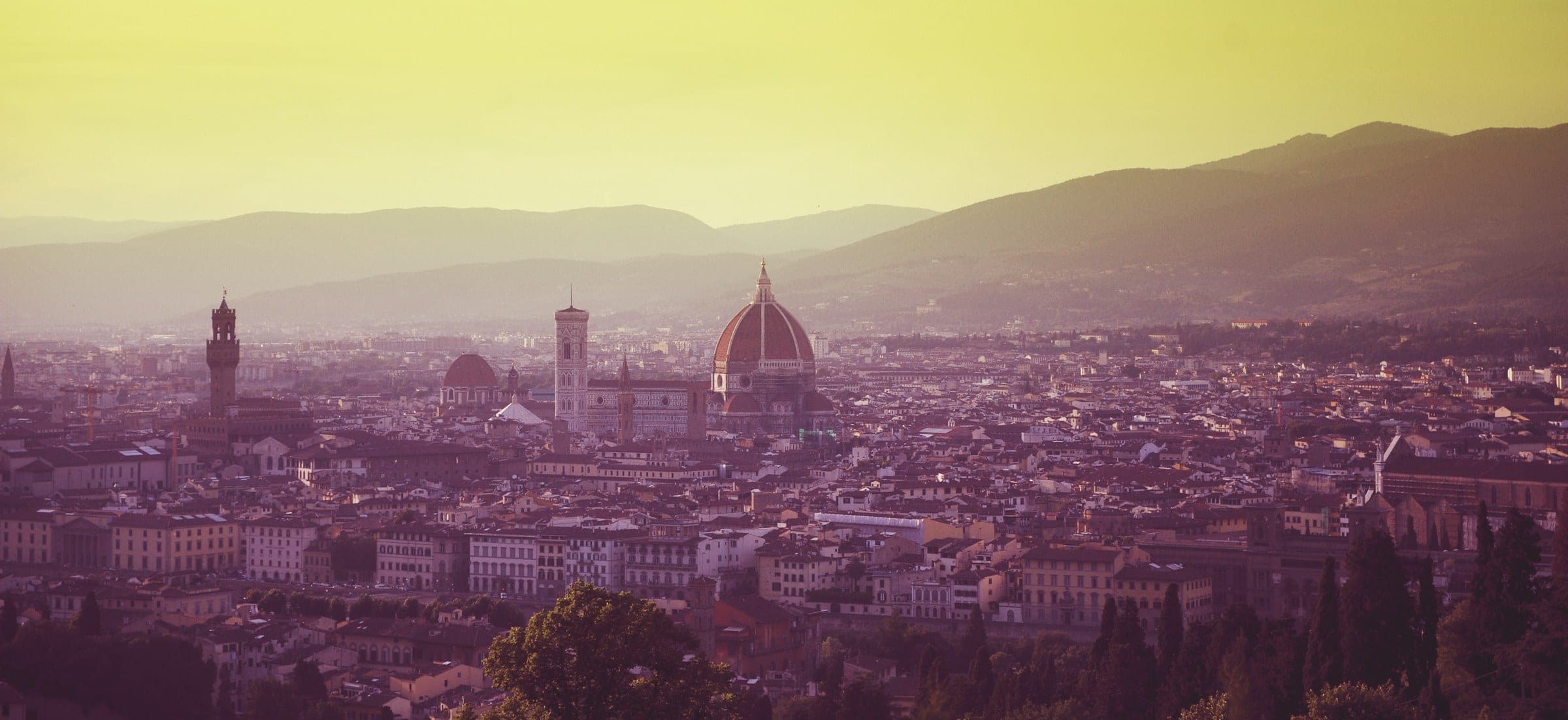
white and black concrete buildings at golden hour
On this page
  • Where Florence sits and why the whole center is walkable for a school group
  • Six sights worth knowing — Duomo, Uffizi, Accademia, Ponte Vecchio
  • What to eat: bistecca, ribollita, and the gelato tell
  • When to go, what to pack, and whether Florence is safe for students
  • Practical logistics for teachers: ZTL, dress codes, early-morning planning
← All city guidesCountry guide: Italy
Plan a trip

A quick introduction

Florence is where the Renaissance starts. Not metaphorically — literally. Brunelleschi invented linear perspective here. The Medici family funded Botticelli and Michelangelo from a palace we still walk past. The cathedral dome over the skyline took 16 years and a custom herringbone brickwork pattern to stay up.

For a student group, Florence is the most concentrated art-history visit on our European catalog. The entire historic center sits inside a 15-minute walk; the Uffizi, the Duomo, the Accademia, and the Ponte Vecchio are minutes apart. The upside is that everything is reachable without a bus. The downside is that summer crowds in the Uffizi are no joke — booking windows matter.

Day by day

Top things to see and do

The Duomo complex

The Duomo complex

Cathedral, baptistery, Giotto's bell tower, and Brunelleschi's dome. The 463-step climb is worth it for the view and the engineering lesson on the way up. Separate timed ticket.

Uffizi Gallery

Uffizi Gallery

Short list: Botticelli's Birth of Venus and Primavera, Leonardo's Annunciation, Michelangelo's Doni Tondo, Caravaggio's Medusa. The walk-up line burns 90 minutes.

Accademia Gallery

Accademia Gallery

Michelangelo's David lives here. One room, one masterpiece, a clean 30-minute visit. If the group has seen it before, skip and reallocate the slot.

Ponte Vecchio & the Oltrarno

Ponte Vecchio & the Oltrarno

Cross the river and tourist density drops sharply. Artisan workshops, smaller churches, Piazza Santo Spirito for a grounded lunch.

Piazzale Michelangelo

Piazzale Michelangelo

The classic skyline view. Twenty-minute uphill walk from the Ponte alle Grazie; sunset is the money moment.

Santa Croce

Santa Croce

The "Italian Pantheon." Tombs of Michelangelo, Galileo, Machiavelli, and a cenotaph for Dante. Underrated vs. the cathedral; history payoff is higher per minute.

Weather by season

When to go

  • Apr - Jun — spring sweet spot

    The classic window for educational travel to Florence. Daytime highs 16-26°C, long daylight, wisteria blooming in Oltrarno. Crowds build steadily through June but museums are still manageable if you book timed entries a few weeks ahead.

  • Jul - Aug — peak heat, peak crowds

    Daytime highs 32-36°C, Uffizi lines at 9 AM, and many Florentines leaving town in August. Still works for determined summer student groups — start the museum day at opening (8:15 for the Uffizi, 8:30 for the Accademia) (Passports books the timed slots when the group count locks).

  • Sep - Oct — shoulder-season gold

    The best-kept secret among teacher-led tours. Temperatures drop to 18-24°C, light turns golden, Tuscan harvest kicks off, and the tourist volume drops sharply after the second week of September. A September / October high school group trip is the move if your school calendar allows it.

  • Nov - Mar — quiet winter

    Short daylight (sunset around 4:45 PM in December), occasional rain, no museum lines at all. A small group can see the Uffizi in 90 minutes flat. Some trattorias close for vacation in January. Great for interim-term or MLK-week trips, harder for photo-heavy itineraries.

What to order

Food and culture

Bistecca alla fiorentina

Bistecca alla fiorentina

A massive T-bone from Chianina cattle, served rare. Restaurants price by weight — split one between three.

Ribollita

Ribollita

Tuscan "reboiled" bread-and-bean soup. Peasant food originally, now standard on trattoria menus. Perfect cold-weather lunch.

Lampredotto

Lampredotto

Tripe sandwich from a street cart. Locals eat it; the braver half of your group will love it.

Cantucci + vin santo

Cantucci + vin santo

Almond biscotti dipped in sweet dessert wine. Traditional finish to a Tuscan dinner.

Gelato — the real thing

Gelato — the real thing

The good shops serve flat (not mounded) scoops from covered tubs. Mounded rainbow displays in storefronts are the tourist tell.

Packing essentials

What to pack

  • Documents

    Passport valid 6+ months past travel date, two printed copies (one for the student, one for the Tour Director's file), insurance card, and the Passports group packet. No visa required for US citizens on a stay under 90 days in the Schengen area.

  • Clothing

    Layers for variable spring and autumn weather; modest dress (shoulders and knees covered) is enforced inside every major church. A light scarf that can double as a shoulder cover solves most dress-code moments on the fly.

  • Footwear

    Serious, broken-in walking shoes. Florence is cobblestones end-to-end and a student group will log 10,000-12,000 steps a day. Do not buy new shoes for the trip. Ankle-support sneakers beat fashion sneakers by a wide margin.

  • Tech

    Italy uses Type C / F plugs (European two-prong) — bring a universal adapter. A portable battery earns its weight on full museum days. T-Mobile / Google Fi work out of the box; others should buy a TIM or Vodafone eSIM on the way in or at FLR airport.

  • Extras

    A small daypack for museum days (anything larger has to be checked), a reusable water bottle (the Florentine nasoni fountains pour cold mountain water for free), sunscreen in spring / summer, and a compact umbrella November through March.

The parent-meeting question

Is it safe?

Yes. Italy's US State Department rating is Level 2 ("exercise increased caution") — the same as France, the UK, Germany, and most of Western Europe — and the elevated level reflects generic European terrorism risk, not anything specific to Florence. Violent crime against travelers is genuinely rare. The actual risk in Florence is pickpocketing at a handful of predictable hotspots: the Uffizi entry queue, Ponte Vecchio at sunset, the #12 and #22 buses up to Piazzale Michelangelo, and the Santa Maria Novella train station.

On a Passports teacher-led trip, the group is never on public transport alone, the Tour Director runs a pickpocket-awareness briefing on the first evening, and every hotel is pre-vetted for 24-hour reception and secure room storage. We operate a 24/7 emergency line out of Boston, keep parents on a daily-update channel, and have English-speaking medical contacts in every city we visit. For most teachers running their first student group travel to Italy, the logistics feel easier than a domestic field trip.

🛡️

Personal safety

Pickpocketing is the real risk; violent crime is rare. Cross-body bags in front, phones off café tables, and a Day 1 briefing cover 90% of it. Hotels are vetted for 24-hour reception, in-room safes, and English-speaking front desks.

⚕️

Health & medical

Tap water is excellent — the nasoni public fountains pour cold mountain water. No special vaccines required beyond CDC routine. Careggi University Hospital and Santa Maria Nuova both run 24-hour emergency rooms to international standards, and both take US travel insurance.

🚐

Roads & transport

The historic center is pedestrian-only (the ZTL); coach drops at designated stops and the Tour Director walks the group in. No students on scooters, no student-driven vehicles at any point. The FLR and PSA airport transfers are by private coach.

🌪️

Natural hazards

Tuscany sits in a low-seismic zone. The Arno flood risk is historical (1966 was the dramatic one); modern flood defenses keep the river in its banks. Summer heat is the most common practical concern — plan museum mornings and shade afternoons.

Practical tips

  • The center is walkable — the center has no cars

    The ZTL (limited-traffic zone) covers most of the historic core. Buses drop groups at designated coach stops; the Tour Director walks the group in from there.

  • Churches enforce dress codes

    Shoulders and knees covered. Scarves are sold nearby for groups who didn't plan for it.

  • Early mornings and late afternoons

    Museums open at 8:15 and the Duomo piazza at dawn is almost empty. Plan priority visits before 11 AM.

  • Cash is fine but not required

    Contactless is near-universal. Small cash helps at Oltrarno artisan stalls and at the occasional soda in smaller towns.

Five facts

Good to know

🏛️

The dome stays up on geometry alone

No supporting framework, no central column. Brunelleschi reverse-engineered the Pantheon dome from scratch in 1436 and it's still the largest masonry dome in the world.

🗿

David wasn't meant for the Accademia

Michelangelo carved him for a buttress of the Duomo. The city moved him to Piazza della Signoria on day one and he's been indoors since 1873.

📜

Italian was codified here

Dante's Divine Comedy was written in the Florentine Tuscan dialect, which became the basis for standard Italian.

🚶

Vasari Corridor

The elevated passage over the Ponte Vecchio was built so the Medici could cross the river without mixing with the public. Reopening in phases after restoration.

Calcio storico

Medieval football, played in Piazza Santa Croce every June, with teams of 27 and minimal rules. A spectacle worth planning a June trip around.

Tours that go here

Tours that stop in Florence

See all tours →
Gondolier
Italy · Switzerland

Bel Viaggio

Rome · Florence · Venice · Milan · Lucerne

Large-groupLanguage-immersion
See itinerary
Gondolier
Italy

Italian Vistas

Venice · Montecatini Terme · Florence · Sorrento · Rome

Language-immersion
See itinerary
Aerial View on Port of Nice and Luxury Yachts
Spain · France · Italy

On Mediterranean Shores

Barcelona · Avignon area · Nice · Florence · Rome

Adult-recommended
See itinerary
Panorama of Monaco
France · Italy

Paris, the Riviera and Rome

Paris · Nice · Florence · Rome

See itinerary
Venice canal
United Kingdom/England · France · Germany · …

The Three Capitals

London · Paris · Munich · Innsbruck · Venice · Florence · Rome

See itinerary
Gondolier
Italy

Venezia, Firenze, Roma!

Venice Lido · Florence · Rome

Small-groupLanguage-immersion
See itinerary
Classroom material

Lesson plans about Florence

See all →
ItalyHistoryGrade 11-12

Medieval Europe (476-1450): Dante's Divine Comedy: Inferno (Hell)

In part 1 of this full analysis of Dante's Divine Comedy, through an in-depth analysis of various primary and secondary sources, students in this lesson will identify, understand and be able to explain the images and stories of characters f…

View lesson
ItalyHistoryGrade 11-12

Medieval Europe (476-1450): Dante's Divine Comedy: Paradiso (Heaven)

In part 3 of this full analysis of Dante's Divine Comedy, through an in-depth analysis of various primary and secondary sources, students in this lesson will identify, understand and be able to explain the images and stories of characters f…

View lesson
ItalyHistoryGrade 11-12

Medieval Europe (476-1450): Dante's Divine Comedy: Purgatorio (Purgatory)

In part 2 of this full analysis of Dante's Divine Comedy, through an in-depth analysis of various primary and secondary sources, students in this lesson will identify, understand and be able to explain the images and stories of characters f…

View lesson
ItalyArtGrade 11-12

Renaissance Florence: Brunelleschi's Dome on the Duomo

Through the use of various primary and secondary sources, students in this lesson will identify, understand and be able to explain why building the dome on Florence's Duomo presented such a daunting task and Filippo Brunelleschi's mathemati…

View lesson
ItalyArtGrade 11-12

Renaissance Florence: Donatello

Through the use of various primary and secondary sources, students in this lesson will identify, understand and be able to explain Donatello's place in early Renaissance Florentine society, both in terms of the importance of his own artisti…

View lesson
ItalyArtGrade 11-12

Renaissance Florence: Giotto: Father of Renaissance Art

Through the use of various primary and secondary sources, students in this lesson will identify, understand and be able to explain Giotto's role in revolutionizing artistic techniques in the late medieval period, how he used linear perspect…

View lesson
From our blog

Blog posts about Florence

See all →
The Tour Director’s Secret Handbook: Insider Tips Teachers Swear By
for group leaders

The Tour Director’s Secret Handbook: Insider Tips Teachers Swear By

Tour Directors share their best insider tips for teachers leading student groups abroad, from the two-minute departure rule to handling unexpected hiccups on the road

Read post
Spontaneous Dancing on Florence’s Ponte Vecchio
destinations

Spontaneous Dancing on Florence’s Ponte Vecchio

Passports travelers spontaneously broke into dance on Florence's iconic Ponte Vecchio, turning an unplanned moment into an unforgettable travel memory

Read post
The Best European Cities for Art Lovers
destinations

The Best European Cities for Art Lovers

Europe's best cities for art lovers span from Paris's Louvre to Prague's National Gallery, covering must-visit museums, galleries, and street art scenes across 10 destinations

Read post
Italian Culinary Tours: Educational and Delicious Journeys for Students
culture and food

Italian Culinary Tours: Educational and Delicious Journeys for Students

Italy's culinary regions offer students hands-on lessons in pasta, pizza, and gelato — this guide covers immersive food experiences in Rome, Naples, and Florence

Read post
Exploring Europe’s Historical Treasures: A Guide for History Enthusiasts and Educators
destinations

Exploring Europe’s Historical Treasures: A Guide for History Enthusiasts and Educators

Europe's most historically rich cities offer student groups vivid, hands-on learning across ancient, medieval, and Renaissance eras. This guide covers Rome, Athens, Prague, Edinburgh, Florence, and Paris

Read post
Beyond the Itinerary! Dive into some of our most popular itineraries with us!
destinations

Beyond the Itinerary! Dive into some of our most popular itineraries with us!

Passports Educational Travel highlights popular student group itineraries covering Venice, Florence, and Rome, three of Italy's most iconic and enriching destinations

Read post
On the ground

More places in Italy

Country guide: Italy →
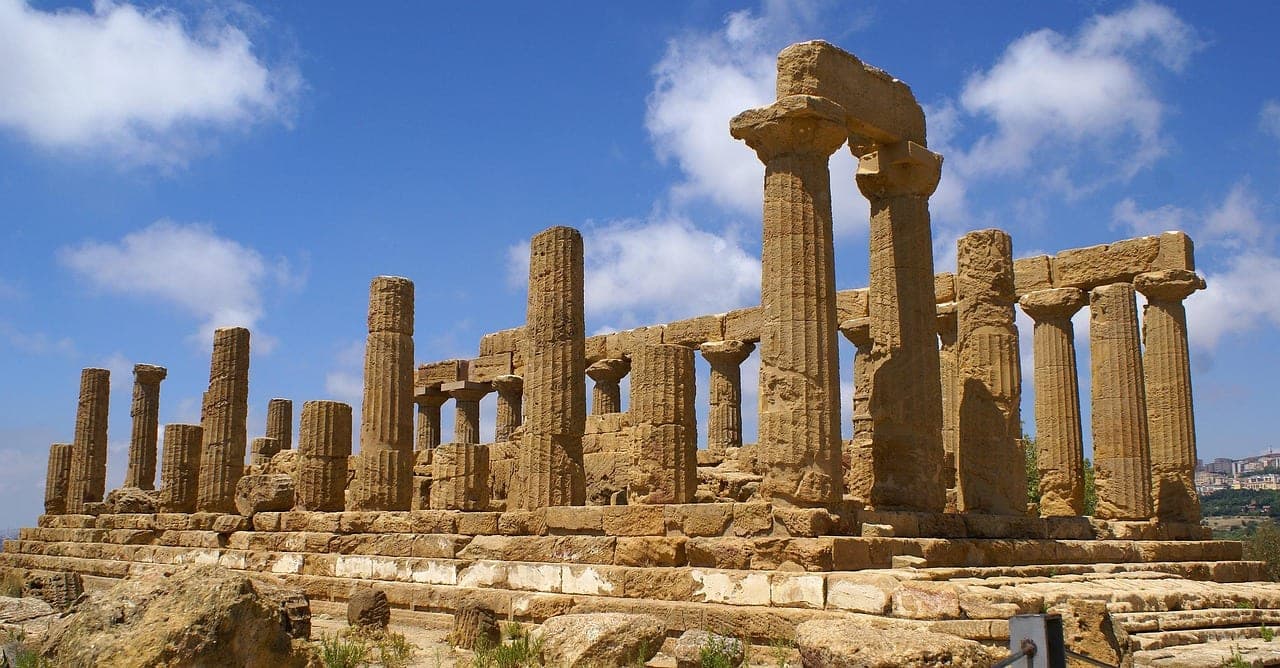
Greek temples of the Valley of the Temples at Agrigento lit by Sicilian sunset

Agrigento, Italy

Agrigento student group travel for teachers: Sicily's Valley of the Temples, Greek ruins, and educational tours for teacher-led Italian high school group trips.

Colorful fishing boats lining the harbor of Fiumicino on the Tiber estuary near Rome

Fiumicino, Italy

Fiumicino student group travel guide for teachers: Rome's coastal gateway with Ostia Antica, Portus, and seafood — educational travel for school group tours.

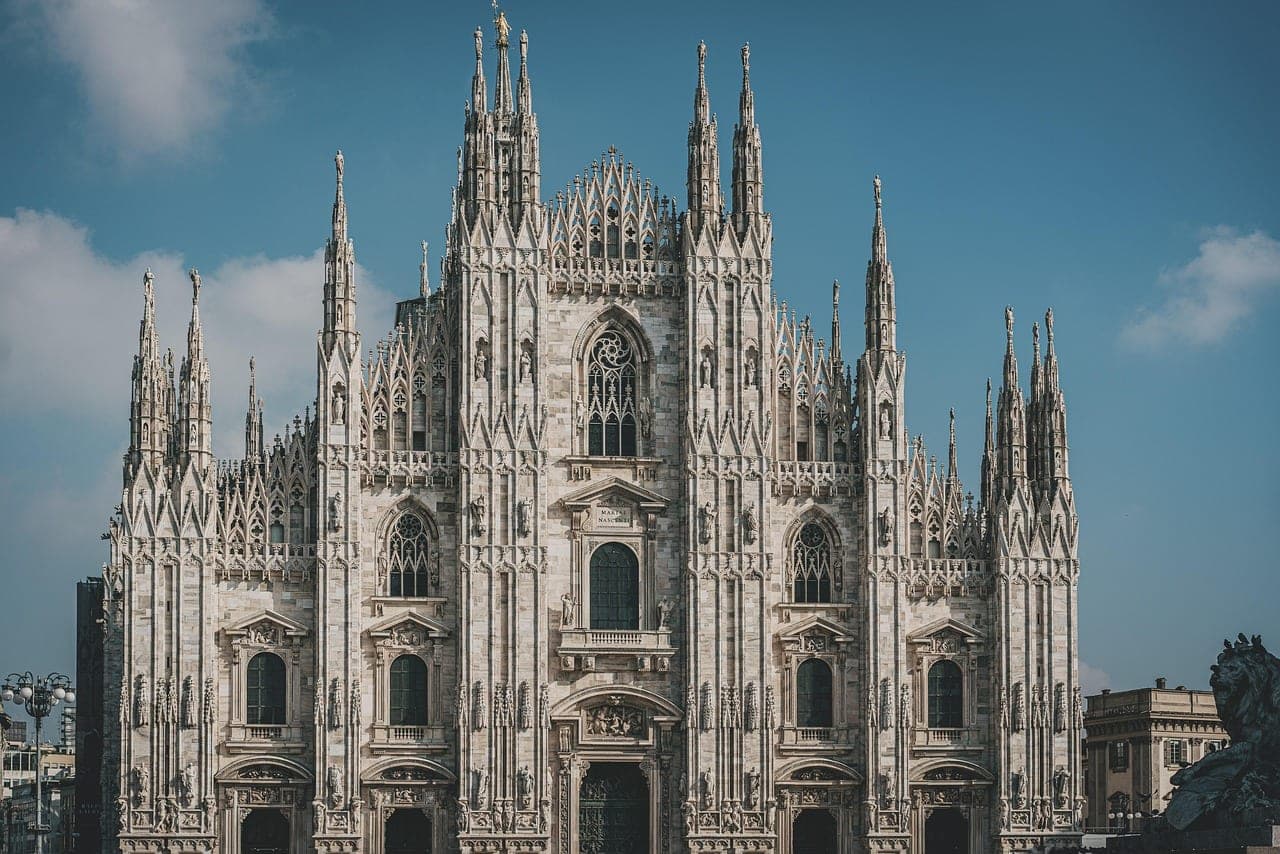
Milan Duomo cathedral facade with Gothic spires under blue sky in Piazza del Duomo

Milan, Italy

Milan student group travel for teachers: the Duomo, La Scala, the Last Supper, and design district fieldwork on teacher-led educational tours of Lombardy.

Pastel-colored seaside village on the Italian Riviera coast with beach and turquoise water

Moneglia, Italy

Moneglia student group travel for teachers: a quiet Ligurian seaside base near Cinque Terre on teacher-led educational tours and high school group trips.

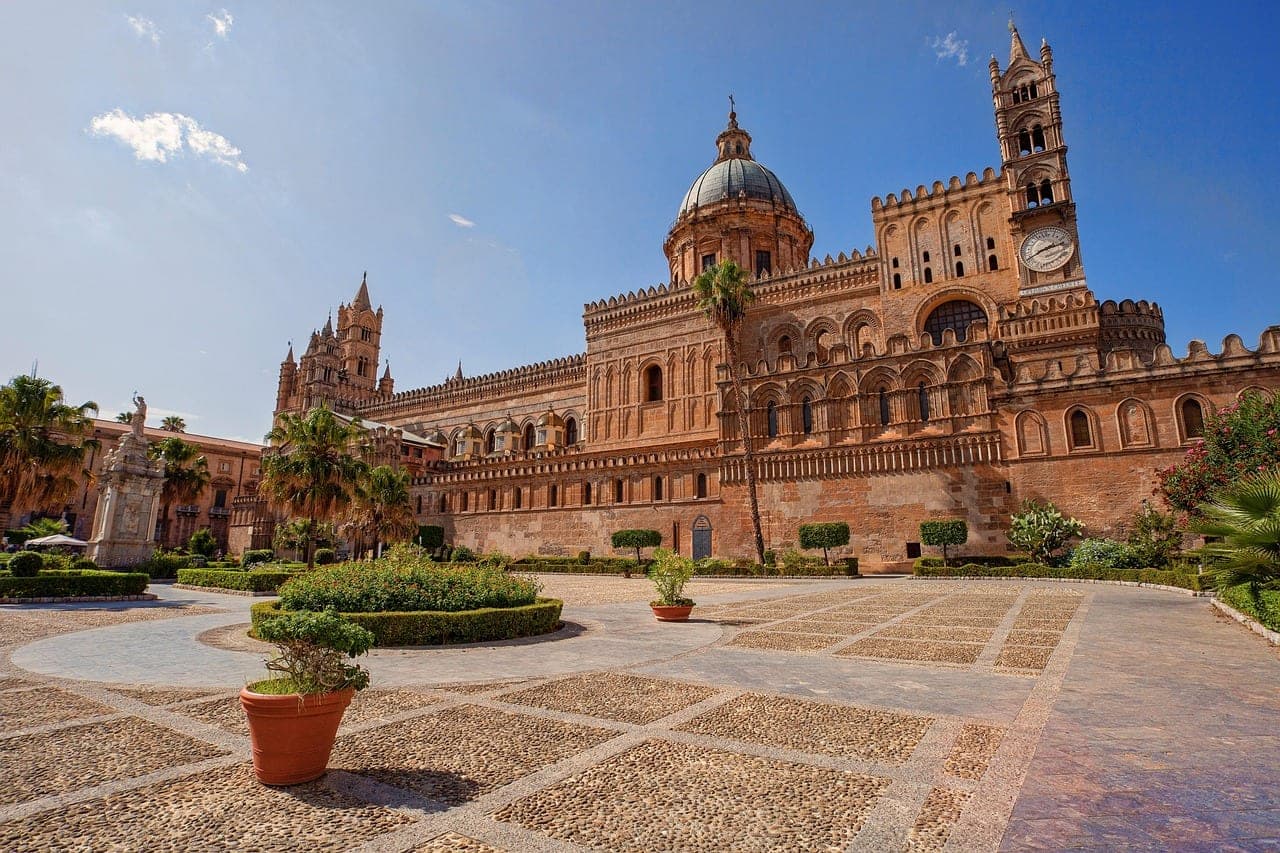
Palermo cathedral with Norman-Arab architecture and palm trees against blue Sicilian sky

Palermo, Italy

Palermo student group travel for teachers: Sicily's capital, the Norman cathedral, markets, and street food on teacher-led educational tours of the south.

Rome Colosseum exterior with arches and ancient stone glowing in golden evening light

Rome, Italy

Rome student group travel for teachers: the Colosseum, Vatican, Forum, and Pantheon on teacher-led educational tours and high school group trips through Italy.

Bring your group to Florence, Italy.

Every Passports trip is built around a teacher and a group — from first itinerary sketch to the last day on the ground. Tell us what you have in mind and we’ll take it from there.

Plan a trip