- RegionLiguria, Italy
- LanguageItalian
- CurrencyEuro (EUR)
- Best seasonMay - Jun, Sep - early Oct
- TimezoneCentral European Time (UTC+1)
A quick introduction
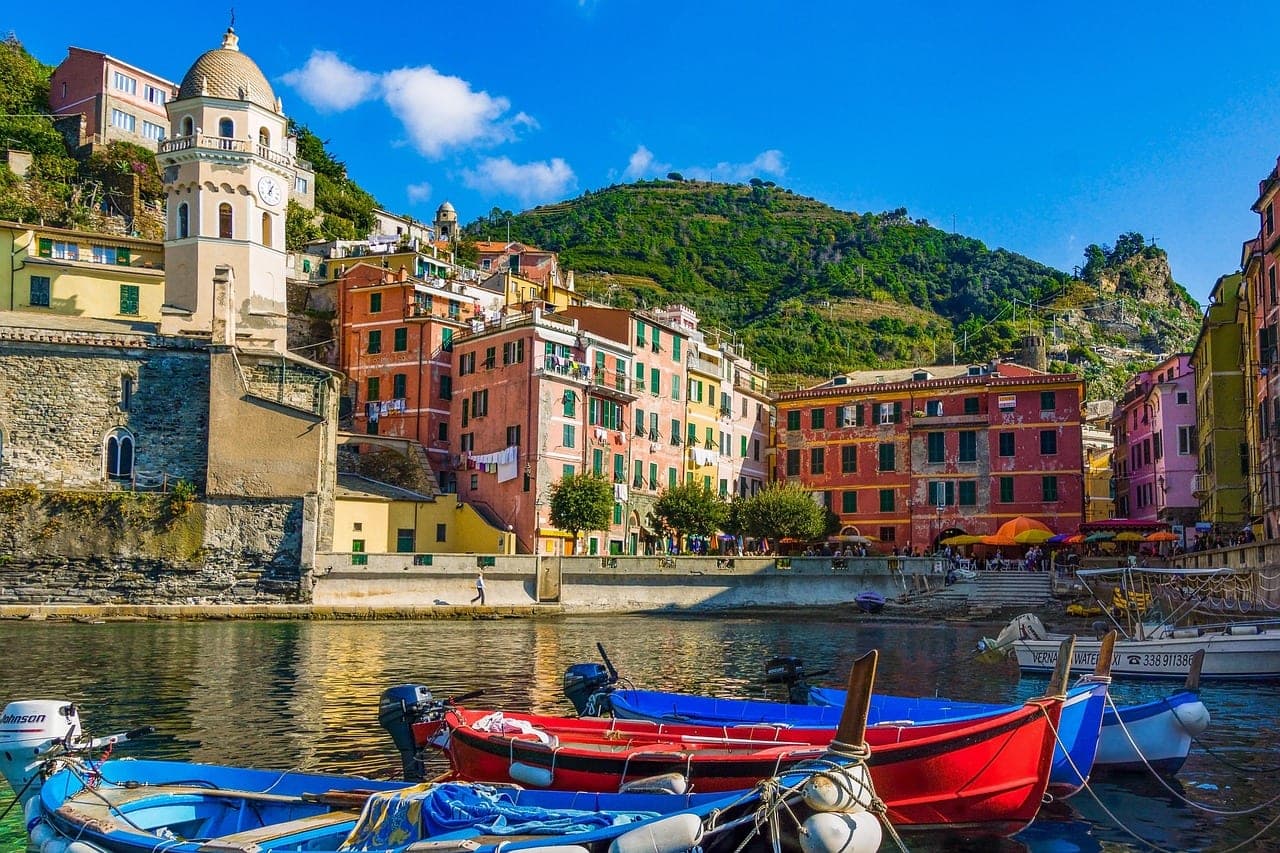
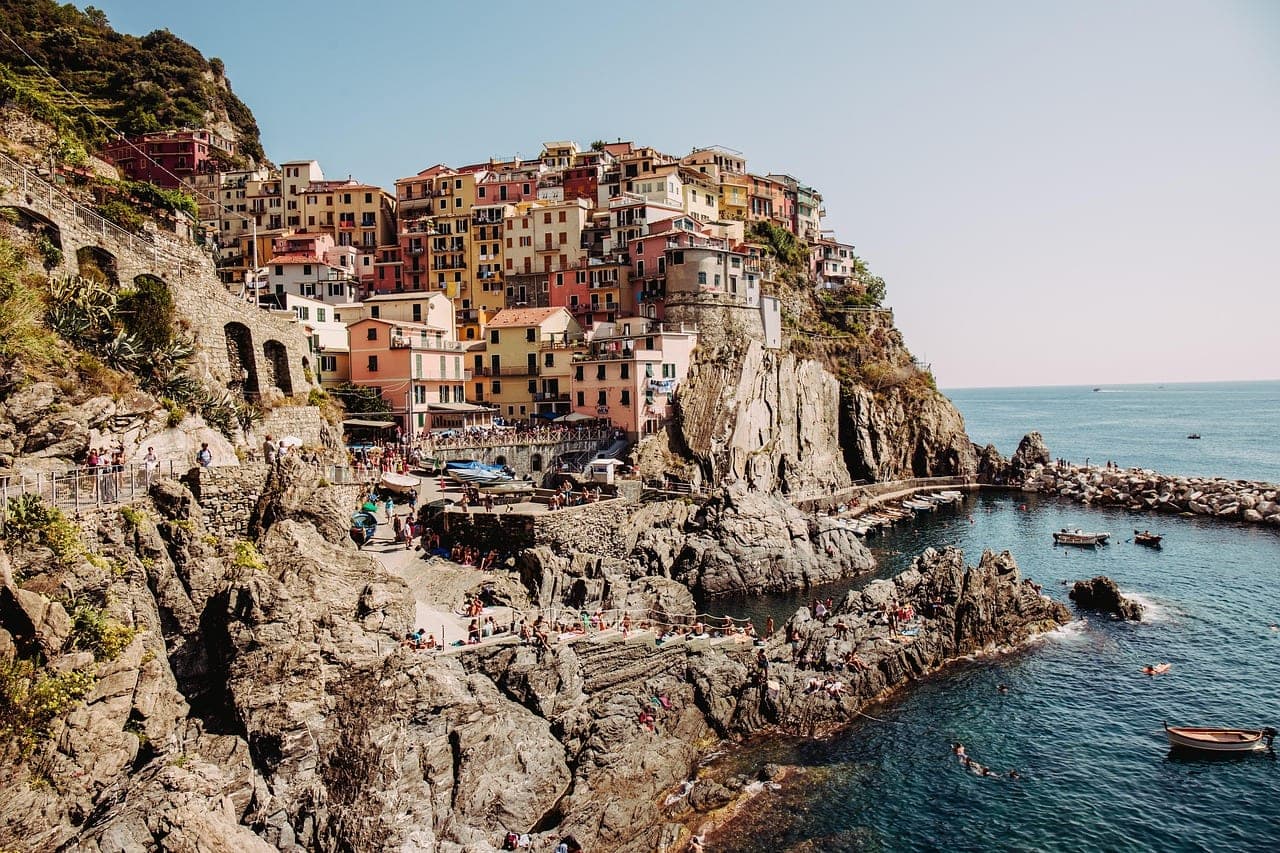
Moneglia is a small Ligurian seaside town of about 2,800 residents, tucked between two single-lane road tunnels on the coastline halfway between Genoa and La Spezia. The Doria family fortified it in the 12th century — two of the original castle ruins still crown the headlands at either end of the bay — and the historic center is a pedestrian grid of pastel facades and trompe-l'œil painted shutters that runs down to a long, sandy beach.
For a student group, Moneglia is a quiet alternative to staying inside Cinque Terre itself. The hotels are bigger, the beaches are sand (not pebble), the prices are saner, and the train into the five villages is a 25-minute ride. We use it as the base for a coastal block on educational tours that pair Florence or Pisa with the Italian Riviera — a slower second-week setting on a teacher-led high school group trip after the heavy art-history days inland.
Top things to see and do


When to go
- May - Jun — the spring window
Sea temperatures hit swimmable in early June, daytime highs run 19-26°C, and the wisteria over the village lanes is in full bloom in May. The strongest window for student group travel — warm enough for the beach, cool enough for the trails.
- Jul - Aug — full Italian summer
Highs 28-31°C, water at 24°C, and a real Italian-family beach crowd takes over August. The town is at capacity but operates smoothly. Plan trails and Cinque Terre day trips for early morning, beach for afternoons.
- Sep - early Oct — second sweet spot
September is the underrated month: water still warm from summer, daytime highs 22-26°C, and the Italian crowds gone after the 1st. The classroom-travel pick if the school calendar allows it.
- Nov - Apr — quiet off-season
Mild but variable (highs 11-17°C), regular Atlantic-front rain, and most beach businesses shuttered. Hotels stay open year-round but Moneglia is fundamentally a warm-weather base — the educational tours that overnight here run May to October.
Food and culture

Focaccia genovese
Olive-oil bread, dimpled with thumbprints and salt, baked all morning at every neighborhood bakery. Eat it warm out of the bag; it's the regional snack.

Trofie al pesto
Hand-twisted Ligurian pasta with pesto, green beans, and potato cubes — the pesto is the original, basil grown in the hills between Moneglia and Genoa.

Acciughe al limone
Fresh anchovies cured in lemon juice and olive oil. The Ligurian sea-snack par excellence; a starter at any harbor restaurant.

Farinata
A chickpea-flour pancake baked in a wood oven and cut into wedges. Vegan by accident, savory and golden, the cheap perfect bite from a farinateria.

Gelato — seaside style
The promenade has three or four artisan shops; the Ligurian lemon and the gianduja (hazelnut chocolate) are the two orders to make.
What to pack
- Documents
Passport valid 6+ months past travel date, two printed copies (one for the student, one for the Tour Director's file), insurance card, and the Passports group packet. No visa for US citizens on Schengen-area stays under 90 days.
- Clothing
Beach gear plus modest layers for hill churches (shoulders and knees covered for the Doria-era chapel and at any Cinque Terre church). Evenings on the promenade run cool even in July; one long-sleeve layer per student is enough.
- Footwear
Two pairs: water shoes for the rocky stretches around the moles and a pair of broken-in trail-grade walking shoes for the coastal path and the Cinque Terre day. Flip-flops only for hotel-to-beach.
- Tech
Italy uses Type C / F plugs — bring a universal adapter. Cell coverage is solid in town; the coastal trail has dead spots between villages, so the Tour Director carries the group radio.
- Extras
Sunscreen (high SPF — the Mediterranean sun reflecting off the water is no joke), reusable water bottle, swim goggles for students who want to see the rocks, and a small dry-bag for wallet-phone on the beach.
Is it safe?
Yes. Italy carries a US State Department Level 2 advisory ("exercise increased caution") — the same as France, Germany, and most of Western Europe — and that elevation reflects generic European terrorism risk, not anything specific to Moneglia. This is one of the calmest stops on our Italian catalog: a small town where the Carabinieri know every shopkeeper and where the train station is a 90-second walk from the main square. The actual risk profile is sun and sea — heat, swimming, and the rocky ends of the bay.
On a Passports teacher-led trip, the group never swims without a designated chaperone on the beach, the Tour Director runs a water-and-sun briefing on Day 1, and every hotel is pre-vetted for 24-hour reception and secure room storage. We operate a 24/7 emergency line out of Boston, keep parents on a daily-update channel, and maintain English-speaking medical contacts up the coast in Sestri Levante and Lavagna. For teachers running their first student tours to Italy, Moneglia is the easy stop.
Practical tips
- The tunnels are one-way on a clock
Both tunnels into town alternate direction every 15 minutes. Drivers wait at the light; the coach driver and the Tour Director plan around the schedule for any timed Cinque Terre train.
- The Cinque Terre Express is the move
The all-stops regional train hops the five villages every 30-45 minutes in summer. A single Cinque Terre Card covers train + trail access; the Tour Director handles passes for the group as part of our school group tours operations.
- Lunch closes from 2 to 7
Italian coastal restaurants close between lunch and dinner. Plan late lunches (1-1:30) or early dinners (7); bakeries and gelato shops bridge the gap.
- The beach is a mix of sand and stone
The middle stretch is true sand; both ends transition to pebble and then to large rock by the moles. Water shoes save ankles on the moles.
- Cash for the small shops
Contactless works at the larger restaurants and the stabilimenti, but the bakeries and the farinateria still run cash-only. Pull euros from the Banca di Lavagna ATM near the church.