Description
Through an analysis of primary and secondary sources, students in this lesson will identify, understand and be able to explain the details, ideas and motivations behind Robespierre’s Jacobin Terror phase of the French Revolution, the basic structure and powers of the Committee of Public Safety, and how the Terror finally collapsed with Robespierre’s death and the victory of more conservative elements in the Thermidorian Reaction.
Objectives
- Students will identify, understand and be able to explain the events surrounding the Terror of the French Revolution as organized and carried out by the Committee of Public Safety under Maximilien Robespierre.
- Students will identify, understand and be able to explain the objectives and motives of the Jacobin leaders in the radical phase of the French Revolution and whether or not they were able to achieve those objectives.
- Students will identify, understand and be able to explain how and why the Terror collapsed and what happened to Robespierre and the Jacobins.
Essential questions
- Who was Maximilien Robespierre?
- What goals did Robespierre have for the revolution?
- Why did the Bourgeois phase of the revolution fail to accomplish its goals?
- What led to the rise of the Jacobins and Robespierre in the National Convention? Where did they draw their strength?
- What was the Committee of Public Safety and what powers did it have to complete its duties?
- What was the “Terror” of 1793-1794?
- What eventually happened to Robespierre and the Jacobins?
- Why were they unsuccessful in creating their “Republic of Virtue”?
Key terms
- 1st Estate
- 2nd Estate
- 3rd Estate
- Bourgeois / Bourgeoisie
- Committee of Public Safety
- Declaration of the Rights of Man
- Estates General
- Jacobins
- National Assembly
- National Convention
- Reign of Terror
- Robespierre
- Sans-Culottes
Academic summary
It was the best of times, it was the worst of times, it was the age of wisdom, it was the age of foolishness, it was the epoch of belief, it was the epoch of incredulity, it was the season of Light, it was the season of Darkness, it was the spring of hope, it was the winter of despair, we had everything before us, we had nothing before us….
Charles Dickens, A Tale of Two Cities, 1859
On 28 July 1794, in the center of a public square then called the “Place de la Revolution” (now known as the “Place de la Concorde”), Maximilien Robespierre, chairman of the Committee of Public Safety, was beheaded on orders from the National Convention (France’s ruling assembly at the time). The execution brought to an end an era in the revolution known as the “Terror” where over 25,000 French citizens were executed in less than 11 months (2639 in Paris alone).
A year earlier Robespierre had been untouchable. By late 1792, the Bourgeois phase of the revolution had failed miserably. Robespierre and the Jacobins, a radical faction in the National Convention, called for a “Republic of Virtue” based on their notion of civic virtue from the writings of Rousseau. Calling for a social overturning of society and the de-Christianization of France, the Jacobins gained more and more power during the spring of 1793, largely due to Robespierre’s personal charismatic authority and his appeal with the Paris mob. With the war with Austria going badly, the National Convention formed the Committee of Public Safety and granted it almost unlimited powers, including the power to oversee the organization of the nation’s defenses, all foreign policy, and the supervision of ministers. Righteous perhaps in its initial goals, the Committee quickly turned to terror as a means of dealing with its national and personal enemies. Ultimately this decision led to the death of thousands of French citizens, many executed with little or no evidence against them. By July 1794, Robespierre’s enemies finally had enough power to arrest and execute the man himself.
Through an analysis of primary and secondary sources, students in this lesson will identify, understand and be able to explain the details, ideas and motivations behind Robespierre’s Jacobin Terror phase of the French Revolution, the basic structure and powers of the Committee of Public Safety, and how the Terror finally collapsed with Robespierre’s death and the victory of more conservative elements in the Thermidorian Reaction.
Procedure
I. Anticipatory Set
- Writing / Question: Why did the Bourgeois phase of the Revolution fall short of its goals? (5 min)
- Handouts – Copies of documents and readings from the websites listed (5 min)
II. Body of Lesson
- Lecture / PPT – Radical / Jacobin Phase of the French Revolution (20 min)
- Video – La Revolution Francaise: Robespierre’s Fall (15 min for both parts)
- Independent Activity – Students read the articles and sources on the Radical Phase of the French Revolution, taking notes as appropriate. (25 min)
- Suggestion: Have the students read some of these articles and sources for homework before class.
- Group Activity – Socratic Seminar: Discussion on the Terror and the Radical phase of the French Revolution. Focus on the goals of the Committee of Public Safety and whether the Terror was necessary to achieve those goals. (15 min)
- Suggestion: Split students into groups that correspond to the different factions of the National Convention.
III. Closure
- Exit Ticket / Assessment – Short Essay: Explain the role of Robespierre and the Committee of Public Safety in furthering the ideals of the French Revolution. Were his methods behind the Terror necessary or did he simply use his power for personal gain?
Extension
On tour: Place de la Concorde
While on tour, you will visit the Place de la Concorde. The square, the largest in the French capital, originally bore the name “Place Louis XV.” During the French Revolution, the square was renamed “Place de la Revolution.” It was here where such people as Louis XVI, Marie Antoinette, Maximilien Robespierre and thousands of others were beheaded in front of cheering crowds. The name was changed to its current one during the period known as the “directory” (after 1795). Students will have the opportunity to see for themselves where the excesses of the Revolution took place. It is said that at its height, the Revolution executed so many people on a daily basis that blood ran down the street to the Seine River. Was this what the Jacobins meant when they mentioned Robespierre’s “Republic of Virtue”?
Tour sites
Places our tours visit that bring this lesson to life.
- Place de la Concorde
- Palais de Justice
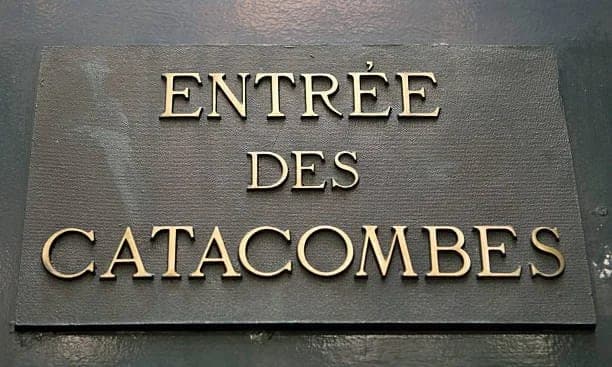
- Paris Catacombs
Further reading
Lesson Plan Websites
- ic.ucsc.edu/~traugott/hist171/readings/1793FoundationsOfTheTerror
“Foundations of the Terror” (primary sources) – from Professor Mark Traugott’s History 171: Revolutions in France, 1789-1871 class at the University of California Santa Cruz - www.historyworld.net/wrldhis/PlainTextHistories.asp?ParagraphID=mag
History of France: Revolution – article on History World website. Good summary of the basic events of the French Revolution. - www.fordham.edu/Halsall/mod/1793levee.asp
“Levee en Masse” (primary source on the Committee of Public Safety’s call for mass conscription) from the Internet History Sourcebook at Fordham University - www.fordham.edu/Halsall/mod/robespierre-terror.asp
“Maximilien Robespierre: Justification of the Use of Terror” (primary source) from the Internet History Sourcebook at Fordham University - history.hanover.edu/texts/stjust.html
“St. Just, Republican Institutes” – excerpts from the notes of a Committee of Public Safety that show how Saint-Just, Robespierre, and their sympathizers proposed to elaborate and to carry out, at the cost of no matter how much bloodshed, the ideas of Rousseau, of whom they were ardent disciples. At the Hanover College (IN) website. - www.historyguide.org/intellect/lecture13a.html
The French Revolution: the Radical Stage, 1792-1794 (lectures on Modern European Intellectual History on the History Guide website). - www.youtube.com/watch?v=cA1HMMEj8oM
History Channel: The French Revolution (video) – outstanding video with great images and explanations. Note: this video is 1 ½ hours long, but in the end, it is well worth it for students and teachers. - www.youtube.com/watch?v=F_ouNRA1K-I
“Terror: Robespierre and the French Revolution” – video from the BBC - www.teachingchannel.org/videos/choosing-primary-source-documents?fd=1
Reading Like a Historian: Primary Source Documents (video) – great 2-minute video on how to incorporate primary sources into the Common Core and history classes. From Shilpa Duvoor of Summit Preparatory Charter High School in Redwood City, CA – highly recommended for teachers. - www.youtube.com/watch?v=TC3Z6NuoFz8
La Revolution Francaise: Robespierre’s Fall (Part 1) – French film with English subtitles - www.youtube.com/watch?v=myUyc2S_JBA
La Revolution Francaise: Robespierre’s Fall (Part 2) – French film with English subtitles - www.historyteacher.net/APEuroCourse/PowerpointPresent/FrenchRevolution-2.ppt ;
“The French Revolution: Radical Phase” PowerPoint by Susan Pojer, AP European History teacher at Horace Greeley HS in Chappaqua, NY
Background Information
- en.wikipedia.org/wiki/Jacobin
“Jacobin” – Wikipedia article - en.wikipedia.org/wiki/Maximilien_Robespierre
“Maximilien Robespierre” – Wikipedia article - en.wikipedia.org/wiki/Reign_of_Terror
“Reign of Terror” – Wikipedia article - www.passports.com/group_leaders/on_the_road/france/paris
On the Road: Paris – from Passports Educational Travel - www.passports.com/group_leaders/on_the_road/france/louvre
On the Road: Louvre – from Passports Educational Travel
Other Relevant Passports Lesson Plans
- www.passports.com/lesson_plans/france/age-of-enlightenment-rousseau
Enlightenment in France – Rousseau - www.passports.com/lesson_plans/france/voltaire-candide
Enlightenment in France – Voltaire’s Candide - www.passports.com/lesson_plans/france/french-revolution-napoleon-domestic-plan
French Revolution – Napoleon’s Domestic Plan - www.passports.com/lesson_plans/france/french-revolution-bourgeois-phase
French Revolution – Bourgeois Phase 1789-92
Credit
© Copyright 2014 Passports, Inc., All rights reserved.