Description
Through an analysis of primary and secondary sources, students in this lesson will identify, understand and be able to explain the structure, details and purposes behind Napoleon’s Domestic Plan through a comprehensive investigation of the Napoleonic Code, his educational reforms and the establishment of the Bank of France.
Objectives
- Students will identify, understand and be able to explain the events surrounding the coronation and establishment of Napoleon Bonaparte as French emperor in 1804.
- Students will identify, understand and be able to explain the objectives and provisions of Napoleon’s domestic reforms, especially with regards to the institutions listed below. a. French legal system – Napoleonic Code b. French education system – establishment of the lycees (high schools) and universities c. French banking system – establishment of the Bank of France
- Students will identify, understand and be able to explain how the domestic reforms undertaken by Napoleon served the dual purposes of furthering revolutionary ideas and uniting the French people behind the emperor himself, something Napoleon would need in the years to follow.
Essential questions
- Who was Napoleon Bonaparte? How and why was he able to take control of the French Republic in a coup by 1799?
- What goals did Napoleon have for the French Revolution?
- How and why did Napoleon have himself declared emperor by 1804? Why did he crown himself in the coronation?
- What were the major points of Napoleon’s domestic plan (some undertaken before 1804)?
- Napoleonic Code
- French Education System
- Establishing the Bank of France
Key terms
- Banque of France
- Code Napoleon
- Lycee
- Napoleon Bonaparte
Academic summary
It was the best of times, it was the worst of times, it was the age of wisdom, it was the age of foolishness, it was the epoch of belief, it was the epoch of incredulity, it was the season of Light, it was the season of Darkness, it was the spring of hope, it was the winter of despair, we had everything before us, we had nothing before us….
Charles Dickens, A Tale of Two Cities, 1859
On 18 May 1804, in the cathedral of Notre Dame, Napoleon Bonaparte, dressed in the style of an ancient Roman emperor while he himself was but the obscure fourth child of a Corsican lawyer who had risen to prominence through his service in the French Army, took the title of “His Imperial Majesty, By the Grace of God and the Constitutions of the Republic, Emperor of the French”, not by having the crown placed upon his head by any bishop, pope or priest, but rather by doing it himself. The act was quintessential Napoleon: dramatic yet graceful, forceful yet civilized. Not given the right to rule by divine right, Napoleon instead claimed the right to rule by virtue of Enlightenment ideas behind the social contract. The French people loved it.
While many people choose to focus on the emperor’s military campaigns, including the disaster of his Russian invasion in 1812, Napoleon was also a child of the Enlightenment and a son of the French Revolution. Napoleon was simultaneously a traditional monarch, embracing all the pomp and formalities of the monarchic customs, and a revolutionary, bringing sweeping–and lasting– changes to the regions under his rule. In becoming Emperor, Napoleon set about instituting sweeping domestic reforms. He made all French citizens equal under the law, and brought the Napoleonic Code, which today remains the basis for many of the world's legal systems. The educational network of lycees (high schools) and universities that he fostered remains the cornerstone of the French education system, and the French financial system still centers on the Bank of France that he established.
Through an analysis of primary and secondary sources, students in this lesson will identify, understand and be able to explain the structure, details and purposes behind Napoleon’s Domestic Plan through a comprehensive investigation of the Napoleonic Code, his educational reforms and the establishment of the Bank of France.
Procedure
I. Anticipatory Set
- Writing / Question: How much control should a government have over domestic reforms? (5 min)
- Handouts – Copies of documents and readings from the websites listed. (5 min)
II. Body of Lesson
- Lecture / PPT – Napoleon’s Domestic Plan and Reforms (20 min)
- Video – Napoleon: Coronation (15 min)
- Independent Activity – Students read the articles and sources on Napoleon’s Domestic Plan, taking notes as appropriate. (25 min)
- Suggestion: Have the students read some of these articles and sources for homework
- Group Activity – Socratic Seminar: Discussion on Napoleon’s Domestic Plan – focus his reforms in law, education and banking and what his goals were in instituting the changes. (15 min)
III. Closure
- Assessment – Essay / DBQ: Explain in detail the provisions of Napoleon’s reforms in the legal, education and banking systems of France and how those reforms served the dual purposes of furthering revolutionary ideas and uniting the French people behind the emperor himself, something Napoleon would need in the years to follow.
Extension
On tour: Louvre
While on tour, you will visit the Louvre, where some of France’s most important and well known works of art can be seen, including the famous “Coronation of Napoleon I” painting by Jacques-Louis David, Napoleon’s court artist. Students can see firsthand works of art covering France’s entire history, from its prehistoric days over 4000 years ago to the modern age.
Tour sites
Places our tours visit that bring this lesson to life.
- Les Invalides
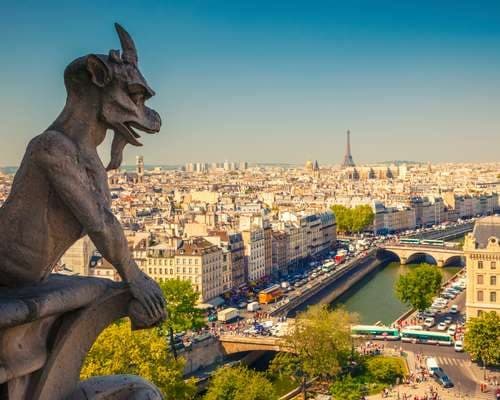
- Notre Dame
- Tuileries Garden
- Louvre
- Hotel de Toulouse, Bank of France
Further reading
Lesson Plan Websites
- www.napoleon-series.org/research/government/c_code.html
“Research Subjects: Government and Politics: The Civil Code” – full text of the Napoleonic Code in English - www.louvre.fr/en/oeuvre-notices/consecration-emperor-napoleon-and-coronation-empress-josephine-december-2-1804
“The Consecration of the Emperor Napoleon and the Coronation of the Empress Josephine on December 2, 1804” – painting by Jacques Louis David at the Louvre museum website - www.napoleon-series.org/research/society/c_education.html
“The Revolution, Napoleon and Education” – article by J. David Markham, noted historian and President of the International Napoleonic Society - www.napoleonicsociety.com/english/stark.htm
“Reforms under Napoleon Bonaparte” – article by Nicholas Stark on the International Napoleonic Society website - www.banque-france.fr/en/banque-de-france/history/the-milestones/1800-creation-of-the-banque-de-france.html
“1800 Creation of the Banque de France” (website) – short history of the creation of the Bank of France - www.slideshare.net/coachflo/world-history-unit9-french-revolution-presentation
French Revolution PowerPoint (81 slides) covering all phases of the revolution, including Napoleon’s domestic reforms (slides 56-61 of the presentation) - www.historyworld.net/wrldhis/PlainTextHistories.asp?ParagraphID=mag
History of France: Revolution – article on History World website. Good summary of the basic events of the French Revolution. - www.fordham.edu/Halsall/mod/1806catechism-napoleon.asp
“The Imperial Catechism, 1806” – from the Internet History Sourcebook at Fordham University - www.historyguide.org/intellect/lecture15a.html
Europe and the Superior Being: Napoleon – from the Lectures on Modern European Intellectual History at the History Guide website - www.teachingchannel.org/videos/choosing-primary-source-documents?fd=1
Reading Like a Historian: Primary Source Documents (video) – great 2 minute video on how to incorporate primary sources into the Common Core and history classes. From Shilpa Duvoor of Summit Preparatory Charter High School in Redwood City, CA – highly recommended for teachers. - www.historywiz.com/concordat.htm
The Concordat of 1801 – (website) – briefly explains the treaty signed by Napoleon and Pope Pius VII which achieved reconciliation with the Catholic Church, much to the happiness of the majority of French citizens. This website also contains a link to the full text version of the Concordat itself. - www.youtube.com/watch?v=cA1HMMEj8oM
History Channel: The French Revolution (video) – outstanding video with great images and explanations. This video is 1 ½ hours long, but in the end, it is well worth it for students and teachers - www.youtube.com/watch?v=J4-hcmBsll0
Napoleon - Coronation – (video)
Background Information
- en.wikipedia.org/wiki/Napoleon
“Napoleon” – Wikipedia article - en.wikipedia.org/wiki/Crown_of_Napoleon
“Crown of Napoleon” – Wikipedia article - en.wikipedia.org/wiki/Napoleonic_Code
“Napoleonic Code” – Wikipedia article - www.passports.com/group_leaders/on_the_road/france/napoleon
On the Road: Napoleon – from Passports Educational Travel - www.passports.com/group_leaders/on_the_road/france/paris
On the Road: Paris – from Passports Educational Travel - www.passports.com/group_leaders/on_the_road/france/louvre
On the Road: Louvre – from Passports Educational Travel
Other Relevant Passports Lesson Plans
- www.passports.com/lesson_plans/france/age-of-enlightenment-rousseau
Enlightenment in France – Rousseau - www.passports.com/lesson_plans/france/voltaire-candide
Enlightenment in France – Voltaire’s Candide - www.passports.com/lesson_plans/france/french-revolution-bourgeois-phase
French Revolution – Bourgeois Phase 1789-92 - www.passports.com/lesson_plans/france/french-revolution-robespierre-and-the-terror
French Revolution – Jacobin Terror 1792-94
Credit
© Copyright 2014 Passports, Inc., All rights reserved.