Description
Through an analysis of primary and secondary sources, students in this lesson will identify, understand and be able to explain the details, ideas and motivations behind the Bourgeois phase of the French Revolution, the basic structure and points both the Declaration of the Rights of Man and Citizen and the liberal French Constitution of 1791, and how the bourgeois phase collapsed due to a disastrous war program and the rise of radicals who were determined to “cleanse” France and to remake society from top to bottom.
Objectives
- Students will identify, understand and be able to explain the events surrounding the opening of the Bourgeois phase of the French Revolution in 1789, included but not limited to the calling of the Estates General by Louis XVI, the Oath of the Tennis Court and the sitting of the National Assembly.
- Students will identify, understand and be able to explain the objectives and motives of the Bourgeois leaders in the first phase of the French Revolution and whether or not they were able to achieve those objectives, and finally how the monarchy reacted to the Bourgeois phase of the revolution.
- Students will identify, understand and be able to explain the major points of the Declaration of the Rights of Man and Citizen of 1789.
- Students will identify, understand and be able to explain the major points of the French Constitution of 1791.
- Students will identify, understand and be able to explain why the Bourgeois phase of the French Revolution ultimately failed and why the people turned to extreme radicalism.
Essential questions
- Why was the Estates General called back into session by Louis 16th in 1789 after 175 years of inactivity?
- Why did Bourgeois leaders take control of the Estates General in the spring of 1789? What did they want from the government? What was the Oath of the Tennis Court?
- What were the points of the Declaration of the Rights of Man of 1789? How did the monarch respond to it?
- What were the major features of the French Constitution of 1791? How did the monarch respond to it?
- Why did the Bourgeois phase fail to achieve its goals?
Key terms
- 1st Estate
- 2nd Estate
- 3rd Estate
- Bourgeois / Bourgeoisie
- Declaration of the Rights of Man
- Estates General
- National Assembly
Academic summary
It was the best of times, it was the worst of times, it was the age of wisdom, it was the age of foolishness, it was the epoch of belief, it was the epoch of incredulity, it was the season of Light, it was the season of Darkness, it was the spring of hope, it was the winter of despair, we had everything before us, we had nothing before us….
Charles Dickens, A Tale of Two Cities, 1859
On 21 Jan 1793, in the center of a public square then called the “Place de la Revolution” (now known as the “Place de la Concorde”), Louis XVI, King of France with absolute power and the divine right to rule, was beheaded on orders from the National Convention (France’s ruling assembly at the time). His wife, Marie Antoinette, Queen of France, was executed on Dr. Guillotin’s apparatus a few months later on 16 Oct 1793. Thus ended the reign of the Ancien Régime (Old Regime) in France. Over the next year, thousands more would lose their heads in a revolutionary fervor that seemed to have run out of control as blood flowed through the streets of the French capital.
It didn’t begin that way. When the revolution started in the late spring of 1789, it was led by Bourgeois representatives of the Estates General debating, arguing and taking an oath in a royal tennis court, but not killing anyone. Later calling themselves the National Assembly, these same Bourgeois representatives drew up the Declaration of the Rights of Man and a liberal constitution for France, based largely on Enlightenment and Republican principles. This first phase of the revolution seemed to be headed towards creating a constitutional monarchy based on the English and American models, where the French king could rule alongside the people’s assembly, but what had started with so much promise and hope finally ended in chaos and bloodshed.
Through an analysis of primary and secondary sources, students in this lesson will identify, understand and be able to explain the details, ideas and motivations behind the Bourgeois phase of the French Revolution, the basic structure and points both the Declaration of the Rights of Man and Citizen and the liberal French Constitution of 1791, and how the bourgeois phase collapsed due to a disastrous war program and the rise of radicals who were determined to “cleanse” France and to remake society from top to bottom.
Procedure
I. Anticipatory Set
- Writing / Question: How did Louis XVI’s support for the American Rev get him in trouble?(5 min)
- Handouts – Copies of documents and readings from the websites listed. (5 min)
II. Body of Lesson
- Lecture / PPT – Bourgeois Phase of the French Revolution (20 min)
- Video – French Revolution: Bourgeois Phase (10 min)
- Independent Activity – Students read the articles and sources on the Bourgeois Phase of the French Revolution, taking notes as appropriate. (30 min)
- Suggestion: Have the students read some of these articles and sources for homework before class.
- Group Activity – Socratic Seminar: Discussion on Bourgeois phase of the French Revolution. Focus on the goals of the Bourgeoisie and whether or not the Declaration of Man and the Constitution of 1791 are the fulfillment of those goals. (15 min)
- Suggestion: Split students into groups that correspond to the estates
III. Closure
- Assessment – Essay: What were the goals of the Bourgeoisie during the first phase of the French Revolution? Were they able to achieve those goals?
- Homework Assignment: Compare the Declaration of the Rights of Man and Citizen (1789) to the English Bill of Rights (1689) and the American Bill of Rights (1791).
Extension
On tour: Musée Carnavalet
While on tour, find time to visit the Musée Carnavalet at 23 Rue de Sevigne in the center of the city, where some of France’s most important and well known works of art can be seen, including the famous sketch of the Tennis Court Oath by Jacques-Louis David (seen above in this lesson plan). Students can see firsthand works of art covering Paris’s entire history, from its prehistoric days over 4000 years ago to the modern age.
Tour sites
Places our tours visit that bring this lesson to life.
- Place de la Bastille
- Place de la Concorde
- Palais de Justice
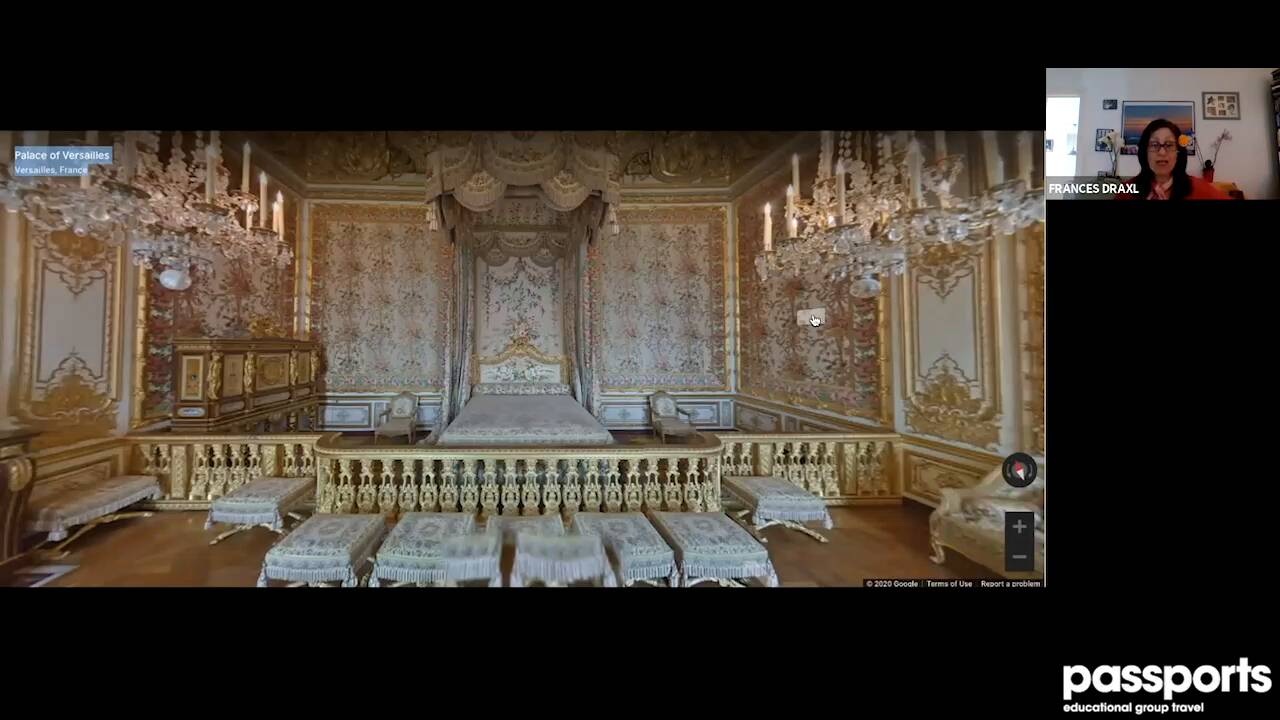
- Palace of Versailles
- Cathedral Basilica of St. Denis
- Musée Carnavalet
Further reading
Lesson Plan Websites
- www.historyworld.net/wrldhis/PlainTextHistories.asp?ParagraphID=mag
History of France: Revolution – article on History World website. Good summary of the basic events of the French Revolution. - www.fordham.edu/Halsall/mod/sieyes.asp
“Abbe Sieyes: What is the Third Estate” (primary source – excerpts) from the Internet History Sourcebook at Fordham University - www.historyguide.org/intellect/tennis_oath.html
The Oath of the Tennis Court (primary source) - www.historyguide.org/intellect/lecture11a.html
Origins of the French Revolution (lectures on Modern European Intellectual History on the History Guide website) - www.historyguide.org/intellect/lecture12a.html
The French Revolution: The Moderate Stage, 1789-1792 (lectures on Modern European Intellectual History on the History Guide website) - ic.ucsc.edu/~traugott/hist171/readings/1789-08AugustDecrees
The Fourth of August Decrees (1789 – primary source) – decrees that abolished feudalism in France - ic.ucsc.edu/~traugott/hist171/readings/1789-02CahiersDeDoleances
“Cashiers de Doleances: Nobles of Roussillon” (primary source) – decrees passed by the National Assembly relating to the position of the nobility - ic.ucsc.edu/~traugott/hist171/readings/1789-11ChurchDecrees
Decrees (primary sources) passed by the National Assembly relating to the position of the Catholic Church - ic.ucsc.edu/~traugott/hist171/readings/1791-09ConstitutionOf1791
Declaration of the Rights of Man and Citizen of 1789 (primary source) and the Constitution of 1791 (primary source) - www.teachingchannel.org/videos/choosing-primary-source-documents?fd=1
Reading Like a Historian: Primary Source Documents (video) – great 2 minute video on how to incorporate primary sources into the Common Core and history classes. From Shilpa Duvoor of Summit Preparatory Charter High School in Redwood City, CA – highly recommended for teachers. - www.youtube.com/watch?v=cA1HMMEj8oM
History Channel: The French Revolution (video) – outstanding video with great images and explanations. Note: this video is 1 ½ hours long, but in the end, it is well worth it for students and teachers. - www.youtube.com/watch?v=sWQbnfWC-C8
“Bourgeois Phase of the French Revolution” – video of a PowerPoint lecture from an AP European History teacher - www.historyteacher.net/APEuroCourse/PowerpointPresent/FrenchRevolution-1.ppt
“The French Revolution: Bourgeois Phase” PowerPoint by Susan Pojer, AP European history teacher at Horace Greeley HS in Chappaqua, NY and web mistress of www.historyteacher.net.
Background Information
- en.wikipedia.org/wiki/Ancien_R%C3%A9gime
“Ancien Regime” – Wikipedia article - en.wikipedia.org/wiki/Louis_XVI_of_France
“Louis XVI of France” – Wikipedia article - en.wikipedia.org/wiki/Declaration_of_the_Rights_of_Man_and_of_the_Citizen
“Declaration of the Rights of Man and Citizen (1789)” – Wikipedia article - www.passports.com/group_leaders/on_the_road/france/versailles
On the Road: Versailles – from Passports Educational Travel - www.passports.com/group_leaders/on_the_road/france/le_chateau_de_versailles_walking_tour
On the Road: Versailles Walking Tour – from Passports Educational Travel - www.passports.com/group_leaders/on_the_road/france/paris
On the Road: Paris – from Passports Educational Travel
Other Relevant Passports Lesson Plans
- www.passports.com/lesson_plans/france/age-of-enlightenment-rousseau
Enlightenment in France – Rousseau - www.passports.com/lesson_plans/france/voltaire-candide
Enlightenment in France – Voltaire’s Candide - www.passports.com/lesson_plans/france/french-revolution-napoleon-domestic-plan
French Revolution – Napoleon’s Domestic Plan - www.passports.com/lesson_plans/france/french-revolution-robespierre-and-the-terror
French Revolution – Jacobin Terror 1792-94
Credit
© Copyright 2014 Passports, Inc., All rights reserved.