- RegionCentral Switzerland
- LanguageGerman (Swiss German)
- CurrencySwiss Franc (CHF) — not Euro
- Best seasonMay - Sep
- TimezoneCentral European Time (UTC+1)
A quick introduction
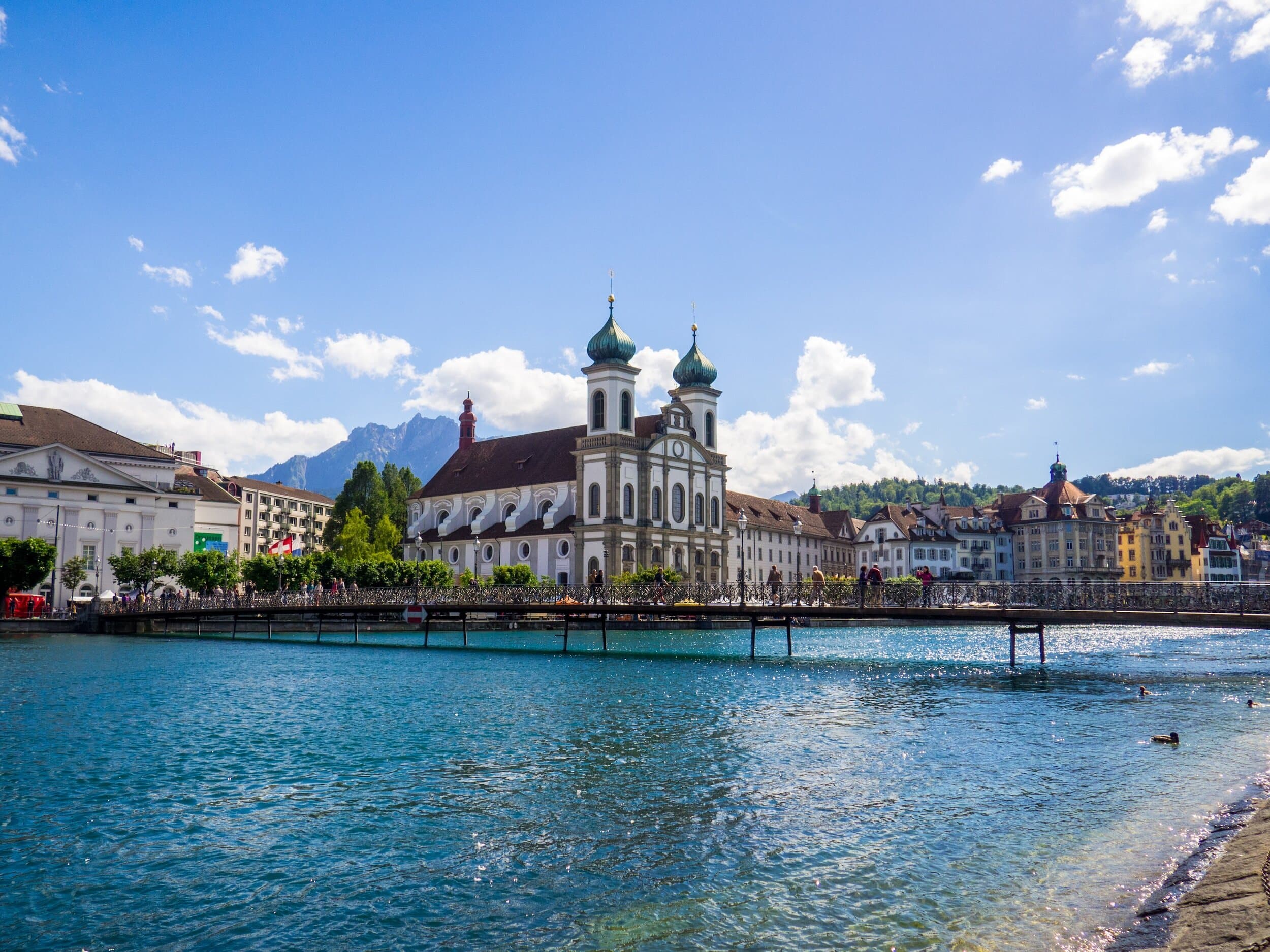
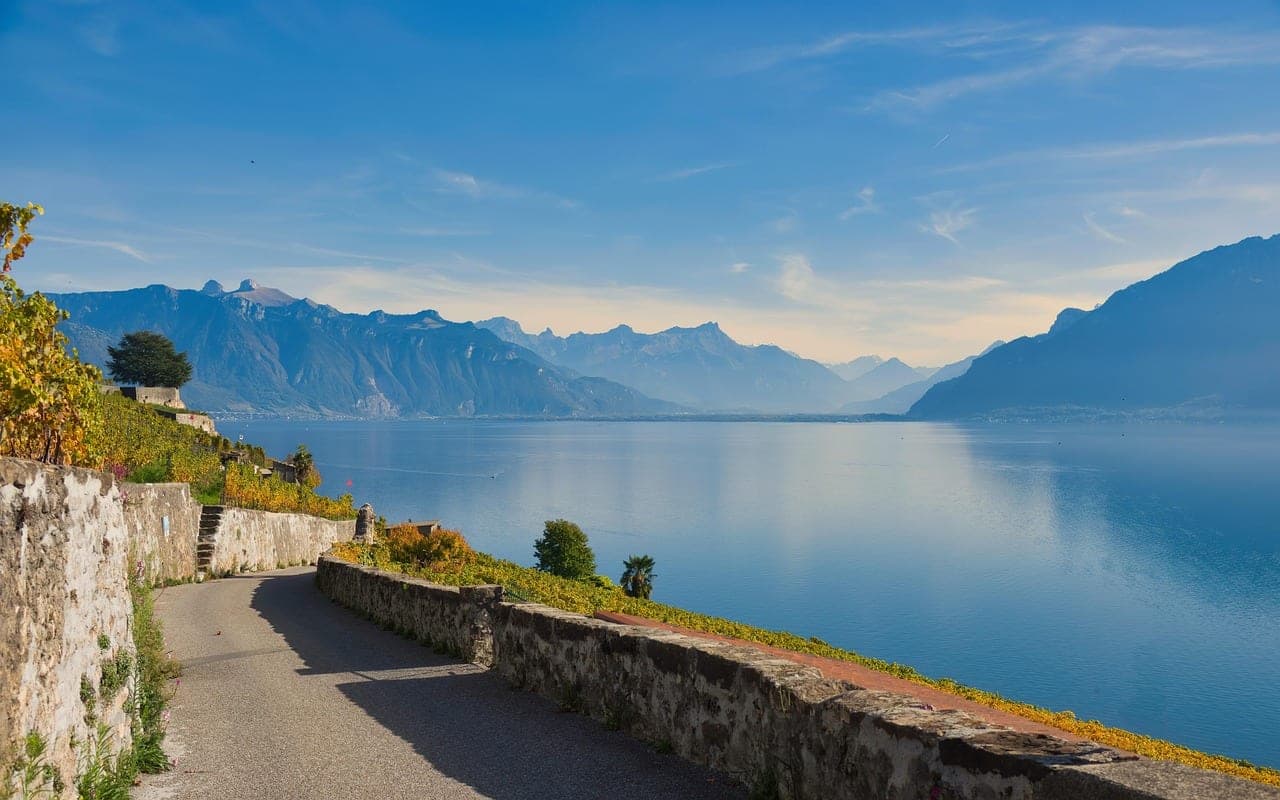
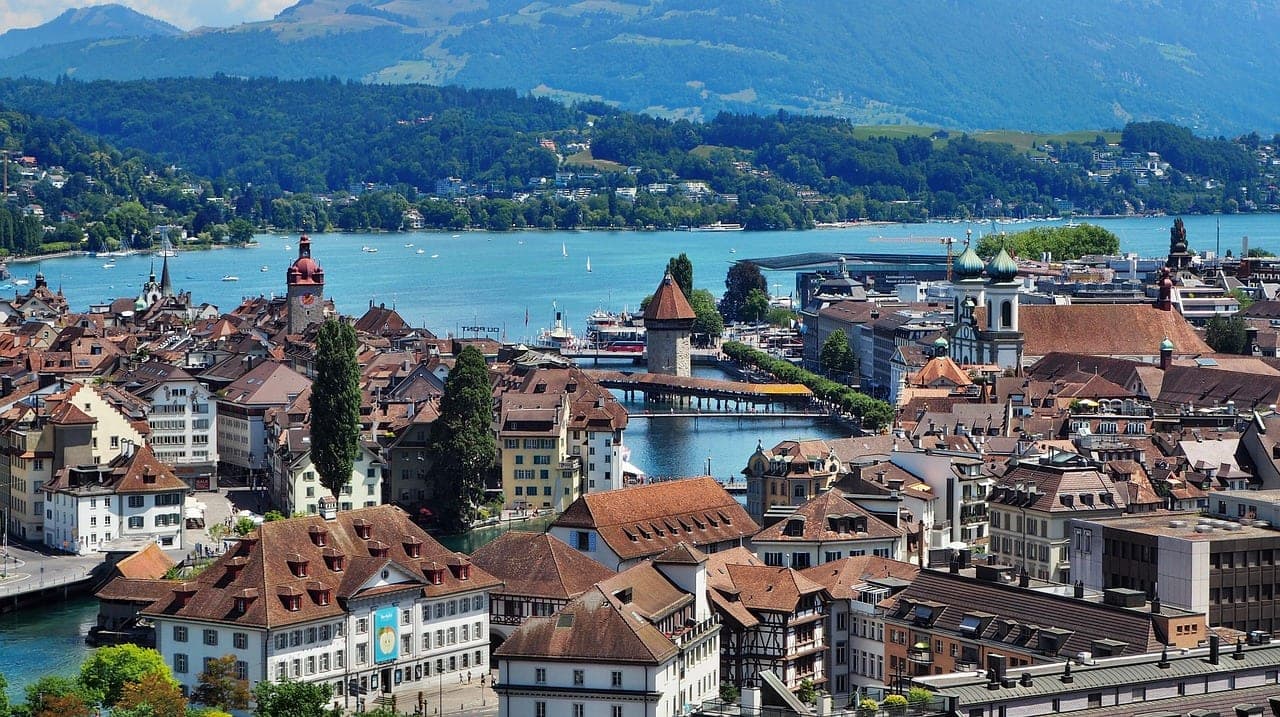
Lucerne is the lakefront city at the head of the Vierwaldstättersee — the four-cantons lake — where the Reuss River pours out toward the Aare. The city of 80,000 is small enough to walk end-to-end in half an hour, but it sits at the geographic and cultural center of Switzerland: this is the canton where the Rütli oath of 1291 was sworn, where the Swiss Confederation effectively starts, and where the language line shifts from French to Swiss German. Mt Pilatus rises straight out of the south shore to 2,128 meters; Mt Rigi rises out of the east shore to 1,797. Both have cogwheel railways that carry a school group to the summit in under an hour.
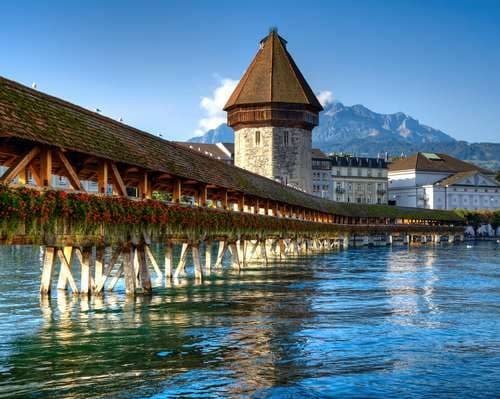
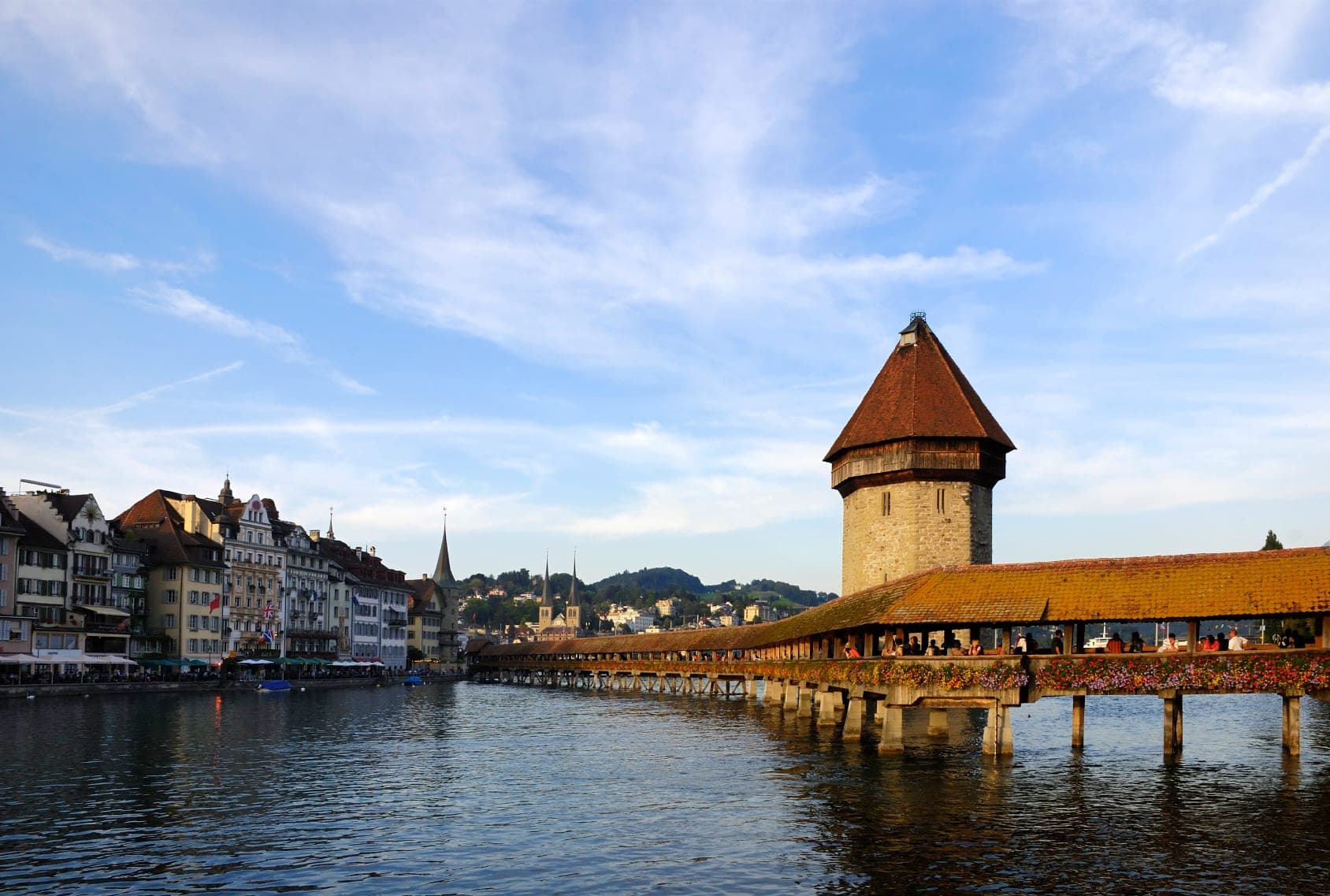
For a student group, Lucerne is the most photogenic stop on a Switzerland educational travel route — the 14th-century Chapel Bridge with its painted ceiling panels, the Renaissance frescoes on the merchant houses along the Kornmarkt, and the Lion Monument that Mark Twain called "the most mournful and moving piece of stone in the world." A teacher-led trip can pair the Old Town and Lion Monument in the morning with a Pilatus or Rigi summit run in the afternoon. It pairs cleanly with Zurich, Bern, or a Liechtenstein day trip on a longer high school student travel route.
Top things to see and do


When to go
- May - Jun — alpine spring
Daytime highs 16-22°C, the Pilatus and Rigi summits clear of snow by late May, and the lakefront promenade busy with locals. The sweet spot for educational travel — comfortable walking weather and the cogwheel railways are running but not yet at summer capacity.
- Jul - Aug — peak summer & festival
Daytime highs 22-27°C, lake swimming at the Lido, and the Lucerne Festival (orchestral, world-class) running through August at the KKL concert hall. Book hotels 4 months out for summer student group travel; the Chapel Bridge gets shoulder- to-shoulder by 11 AM.
- Sep - Oct — golden shoulder
The best-kept secret among teacher-led tours. Temperatures slip to 12-19°C, the Rigi and Pilatus larches turn copper, and the lake steamers are still running full schedule through mid- October. Crowds thin sharply at the Lion Monument and the transport museum.
- Nov - Mar — quiet, ski-adjacent winter
Daytime highs 1-6°C, frequent low cloud (the Hochnebel) over the lake, and short daylight. Pilatus runs year-round; the Rigi cogwheel runs reduced winter service. Engelberg-Titlis (a 45-minute train ride) is a serious ski hill — a winter high school group trip can pair Old Town mornings with afternoon slopes.
Food and culture

Chügelipastete
The Lucerne specialty — a tall puff-pastry shell filled with diced veal, mushrooms, and raisins in cream sauce. Invented for the city's Carnival (Fasnacht) and now on every traditional restaurant menu year-round.

Älplermagronen
The Alpine herder's macaroni — pasta, potatoes, cream, cheese, and crispy onions, with apple sauce on the side. High-altitude comfort food and a guaranteed crowd-pleaser for student group dinners.

Fondue moitié-moitié
The classic half-Gruyère, half-Vacherin Fribourgeois melt with bread cubes on long forks. Lose the bread in the pot, buy the table a round of white wine — that's the rule across the country.

Rösti
Golden pan-fried grated potato cake, eaten at any meal and often topped with a fried egg, melted cheese, or sausage. Originally a Bernese farmer's breakfast; now the house carb of German-speaking Switzerland.

Luzerner Lebkuchen
The local honey-and-spice gingerbread, sold at every Old Town bakery and stamped with the city's coat of arms. Perfect coach snack and souvenir for the parents back home.
What to pack
- Documents
Passport valid 6+ months past travel date, two printed copies (one for the student, one for the Tour Director's file), insurance card, and the Passports group packet. No visa for US citizens on a stay under 90 days — Switzerland is in Schengen, not the EU.
- Clothing
Layers in every season — temperature drops 6-8°C between the lakefront and the Pilatus summit even in July. A warm fleece and a wind shell for any cogwheel-railway day. Modest dress (shoulders covered) for the Hofkirche cathedral. Real winter coat from November through March.
- Footwear
Broken-in walking shoes — the Old Town is cobblestone end-to-end and a full-day Pilatus or Rigi visit involves boardwalks and occasional rocky paths near the summit. Light trail shoes earn their weight if your group plans the Mark Twain Trail down from the Rigi.
- Tech
Switzerland uses Type J plugs — the three-round-pin Swiss standard. Most European Type C two-prongs fit, but a Swiss or universal adapter is safer. T-Mobile and Google Fi work out of the box; Switzerland is NOT in the EU, so budget carriers with "Europe roaming" plans often bill Swiss data separately — check before you fly.
- Extras
A small daypack, a reusable water bottle (Lucerne tap water is alpine-grade and the city fountains pour drinkable cold water), sunscreen at altitude (UV doubles per 1,000 meters above the lake), and a compact umbrella. A few CHF coins make tram and bakery stops frictionless.
Is it safe?
Yes — Switzerland is one of the safest countries in the world for student group travel. The US State Department rating is Level 1 ("exercise normal precautions"), the lowest tier, and Swiss violent-crime statistics sit well below the US average. The realistic risks in Lucerne are low-grade pickpocketing on the Chapel Bridge at peak hours, the occasional uneven cobblestone in the Old Town, and the standard alpine cautions on Pilatus and Rigi — sudden weather changes and steep, sometimes-icy boardwalks near the summits.
On a Passports teacher-led trip, the group is never on public transport alone, the Tour Director runs a Day-1 briefing on cogwheel-railway etiquette, alpine-weather layering, and currency (CHF, not euros), and every hotel is pre-vetted for 24-hour reception and secure room storage. We operate a 24/7 emergency line out of Boston, keep parents on a daily-update channel, and have English-speaking medical contacts in every city on our school group tours roster. For most teachers running their first educational tours program, Lucerne logistics feel easier than a domestic field trip.
Practical tips
- Switzerland uses francs, not euros
CHF is pegged close to the US dollar (roughly 1:1). Many tourist-facing spots will accept euros, but at a punishing rate and with CHF change. Pull a modest amount of francs from an ATM on Day 1; contactless cards handle the rest.
- The Tell-Pass is the central-Switzerland skeleton key
A multi-day pass that covers every cogwheel railway, lake steamer, cable car, and most museum admissions in the four- cantons region. Most Lucerne hotels also issue a free Visitor Card at check-in that covers city buses for the length of the stay.
- The lake steamers are part of the city
The SGV operates five vintage paddle steamers and a fleet of modern motor ships out of Bahnhofquai — Vitznau (for Rigi), Alpnachstad (for Pilatus), Brunnen (for the Rütli meadow), and Flüelen are all reachable on a day pass.
- Swiss German is the everyday language
Lucerne is in German-speaking Switzerland, but locals speak Swiss German (Schwyzerdütsch) — a dialect that even Germans struggle with. Standard High German works in shops and restaurants, English is universal in tourism, and a grüezi on entering a shop is the expected hello.
- The summit cable cars run on schedule, not on demand
Cogwheel and cable-car departures are timed and the last downhill run leaves before sunset (usually 5 PM in shoulder season). Plan the Pilatus / Rigi day around the SGV ferry plus summit-railway timetable; the Tour Director sequences this before the group arrives.