- RegionBrandenburg, Germany
- LanguageGerman
- CurrencyEuro (EUR)
- Best seasonMay - Jun, Sep - Oct
- TimezoneCentral European Time (UTC+1)
A quick introduction
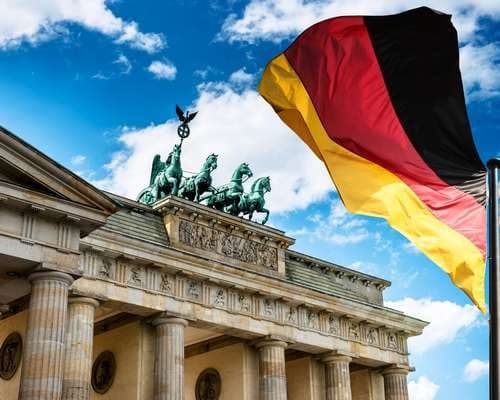
Berlin is where the 20th century actually happened. The Brandenburg Gate watched Prussia become an empire, the empire collapse into Weimar, Weimar collapse into the Third Reich, and the city itself get sliced in half for 28 years by a wall that ran past apartment buildings and U-Bahn stations. It's a metropolis of 3.8 million people spread across 892 square kilometers — nine times the land area of Paris — and the whole of it is a working textbook on how the last century played out.
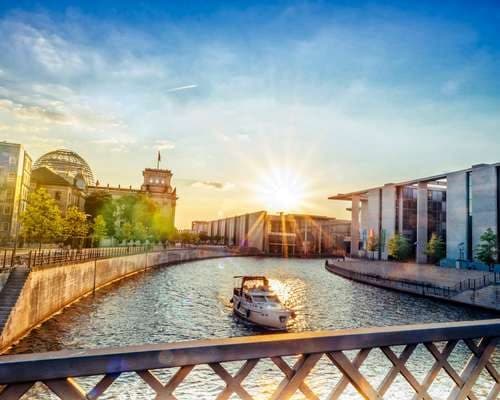
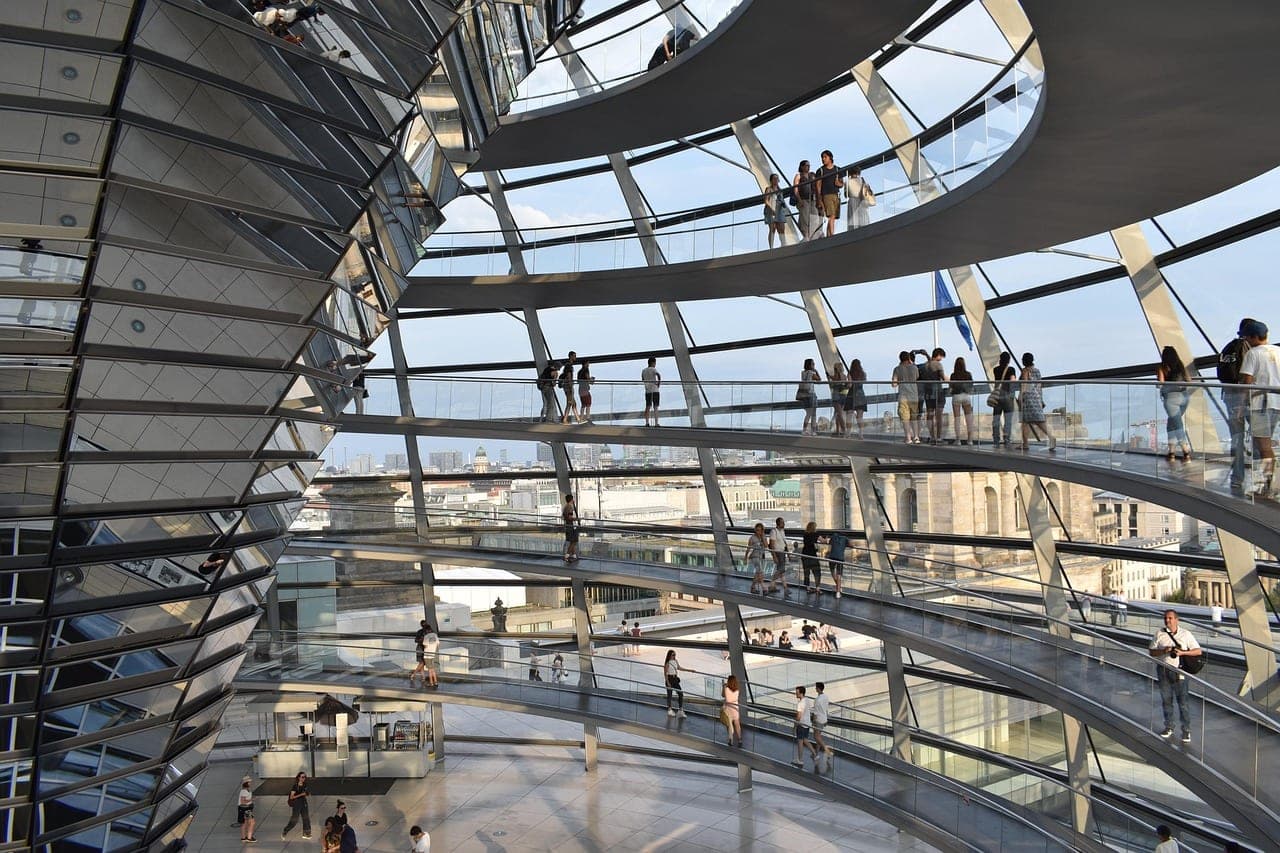
For a student group, Berlin is the most concentrated modern-history destination in our European catalog. The Reichstag, the Brandenburg Gate, the Memorial to the Murdered Jews of Europe, Checkpoint Charlie, the East Side Gallery, and the Topography of Terror are all either walkable or a two-stop U-Bahn ride from one another. That density makes Berlin an unusually efficient high school group trip — you can cover AP European History, AP Government, and AP Human Geography in the same walking morning. It's also one of the least expensive capitals in Western Europe, which keeps educational travel budgets honest.
Top things to see and do


When to go
- May - Jun — spring sweet spot
The best window for teacher-led tours to Berlin. Daytime highs 17-24°C, long northern daylight (sunset past 9 PM in June), beer gardens open, and the city's parks — Tiergarten, Tempelhofer Feld — fill up with locals. School groups find museum queues manageable and outdoor walking tours comfortable.
- Jul - Aug — warm and busy
Daytime highs 24-28°C with occasional heatwaves pushing into the low 30s. Museum Island lines are real; the Reichstag books out further. Still workable for summer student group trips (Passports books these timed slots when the group count locks; aim for plan for afternoon breaks — most of Berlin lacks air conditioning, including the U-Bahn).
- Sep - Oct — shoulder-season gold
The quiet favorite among teachers who've run the trip before. Temperatures drop to 12-20°C, Festival of Lights turns the landmarks into projection canvases in early October, and the tourist volume eases after the first week of September. A September or early-October high school group trip is the move if the school calendar allows it.
- Nov - Mar — quiet, cold, and Christmas markets
Short daylight (sunset around 4 PM in December), regular rain or snow flurries, and daytime highs often below freezing in January. The trade-off is serious: Christmas markets at Gendarmenmarkt and Charlottenburg in late November through December, no museum lines at all, and hotel rates at their lowest. Great for interim-term school group tours; pack layers seriously.
Food and culture

Currywurst
Sliced pork sausage doused in curry-spiced ketchup, served with a small fork and a pile of fries or a bread roll. The local working-class lunch since 1949 — Konnopke's in Prenzlauer Berg is the standard student-group stop.

Döner kebab
The Turkish-German sandwich that was arguably invented in Berlin in the 1970s and now outsells every other fast food in the city. Mustafa's Gemüse Kebap in Kreuzberg is the famous one; any neighborhood imbiss is honestly fine.

Schnitzel
Breaded veal or pork cutlet pounded thin and pan-fried, served with potato salad or fries and a wedge of lemon. Classic sit-down meal for a school group at a traditional gasthaus.

Pretzel (Brezel)
Big, chewy, salt-crusted, sold from bakery counters across the city for about a euro. The reliable morning snack on a long-walking day.

Berliner Pfannkuchen
The jelly-filled doughnut JFK accidentally referenced in 1963. Grab one from a bakery on the way to a morning museum — it's the cheapest piece of cultural history in the city.
What to pack
- Documents
Passport valid 6+ months past travel date, two printed copies (one for the student, one for the Tour Director's file), insurance card, and the Passports group packet distributed before departure. No visa required for US citizens on a stay under 90 days in the Schengen area.
- Clothing
Layers, always. Berlin weather turns inside an afternoon and most buildings are under-air-conditioned in summer and over-heated in winter. A waterproof shell, a warm mid-layer, and a scarf cover almost every day. Dress is casual — students do not need formal wear even for evening dinners.
- Footwear
Serious, broken-in walking shoes. Berlin groups routinely log 12,000-15,000 steps a day between U-Bahn transfers and museum floors. Do not buy new shoes for the trip. In winter, add a waterproof pair — cobblestones plus slush is a specific Central European misery.
- Rain + cold gear
A compact umbrella or packable rain jacket is essential nine months of the year, and a knit hat and gloves are non-negotiable November through March. The Baltic weather reaches Berlin quickly; one cold open-air Wall walk without gloves sells this line to any skeptical student.
- Tech
Germany uses Type C / F plugs (European two-prong) — bring a universal adapter. A portable battery earns its keep on long museum days. T-Mobile / Google Fi work out of the box; other carriers should grab a Vodafone or O2 eSIM on arrival at BER airport.
- Extras
A small daypack (anything larger gets checked at museums), a reusable water bottle (Berlin tap water is excellent), a notebook for the Holocaust Memorial and Topography of Terror visits, and a small amount of euro cash — some imbiss stands and bakeries are still card-hesitant.
Is it safe?
Yes. Germany's US State Department rating is Level 2 ("exercise increased caution") — the same as France, Italy, the UK, and most of Western Europe — and the elevated level reflects generic European terrorism risk rather than anything specific to Berlin. Violent crime against travelers is genuinely rare. The real risks in Berlin are ordinary urban ones: pickpocketing on the U-Bahn (especially lines U1, U2, and U8), around Alexanderplatz and Hauptbahnhof, and along the tourist stretch near Brandenburg Gate; plus occasional demonstrations in Mitte and Kreuzberg that any sensible group simply walks around.
On a Passports teacher-led trip, the group is never on public transport alone, the Tour Director runs a pickpocket-awareness and emergency-meeting-point briefing on the first evening, and every hotel is pre-vetted for 24-hour reception and secure room storage. We operate a 24/7 emergency line out of Boston, keep parents on a daily-update channel, and have English-speaking medical contacts in each city we visit. Berlin is one of the easier capitals in Europe to run a first-time school group tour through — the transit is legible, English is widely spoken, and the logistics feel easier than many domestic field trips.
Practical tips
- BVG day passes, not single tickets
A Berlin AB day pass (€9.90 as of 2026) covers the U-Bahn, S-Bahn, trams, and buses across the central zones. Buy one per student per day; stamp it once in the yellow validator. The honor system is genuinely enforced — ticket inspectors work in plainclothes.
- Museums close on Mondays
Pergamon, Neues, Alte Nationalgalerie, Jewish Museum, and most state museums are Monday-dark. Build Monday around outdoor sites — Wall Memorial on Bernauer Strasse, East Side Gallery, Topography of Terror, Tiergarten — and save the museum blocks for Tuesday through Sunday.
- Carry some cash
Card acceptance has improved fast but is still patchier than most US students expect. Imbiss stands, older bakeries, and the occasional Kneipe still want euro cash. €20-30 per day per student covers it.
- German helps but English is fine
English is widely spoken in central Berlin, especially among anyone under 40 and across the hospitality industry. Teach students bitte (please), danke (thanks), and Entschuldigung (excuse me / sorry) — that covers 90% of their interactions and reads as respectful. The Tour Director bridges anything more complicated.