- RegionBaden-Württemberg, Germany
- LanguageGerman
- CurrencyEuro (EUR)
- Best seasonMay - Jun, Sep - Oct
- TimezoneCentral European Time (UTC+1)
A quick introduction
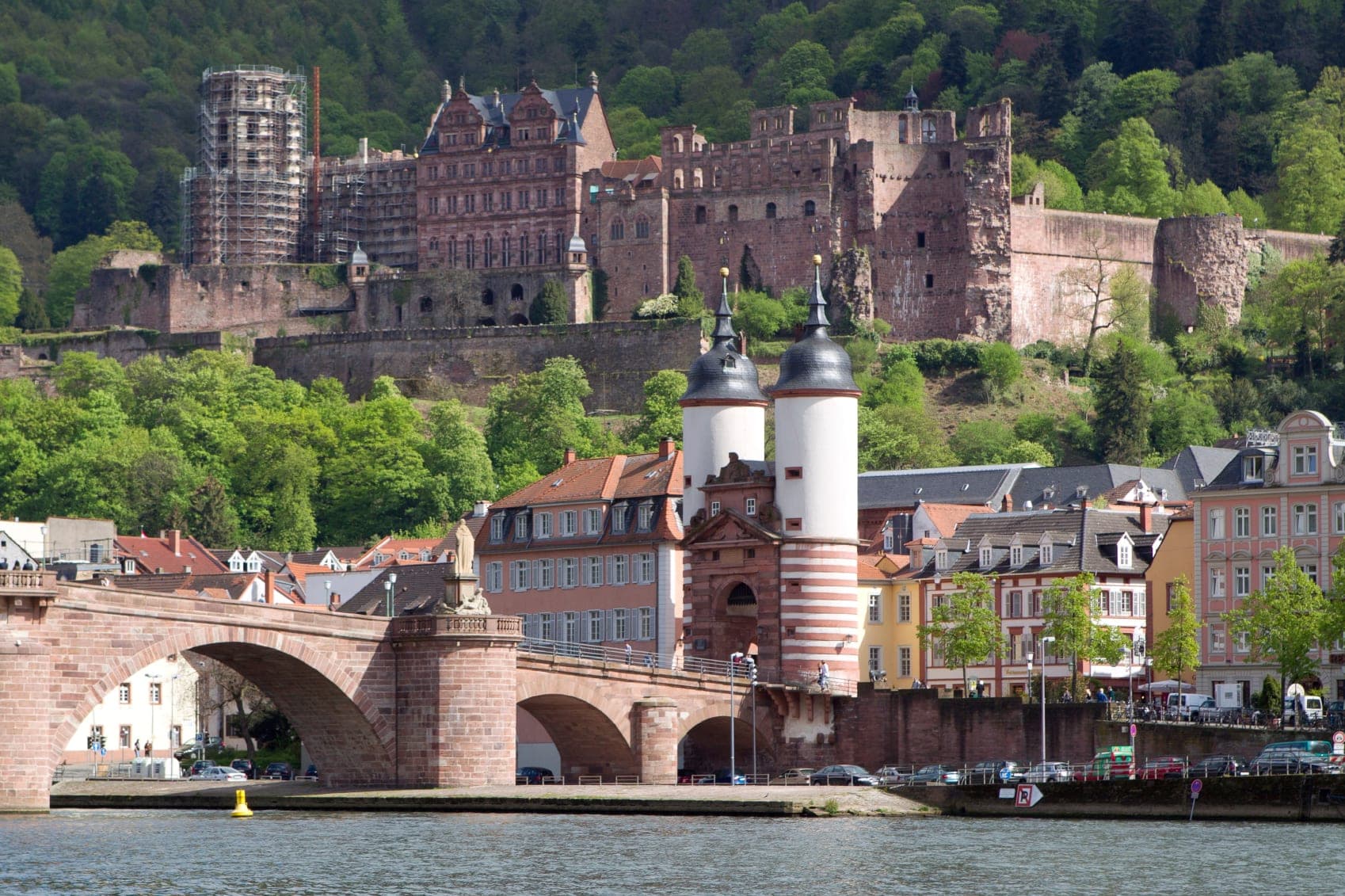
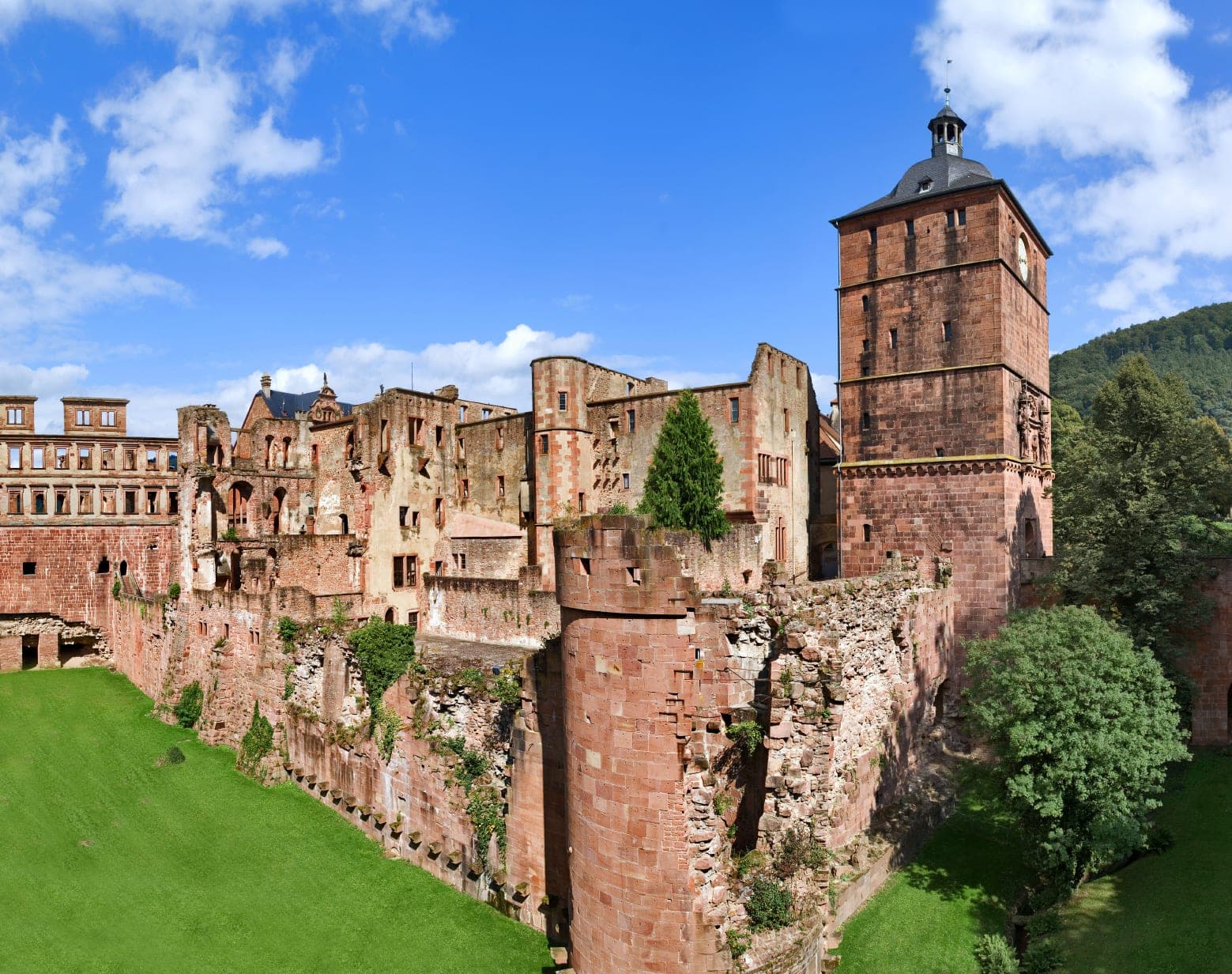
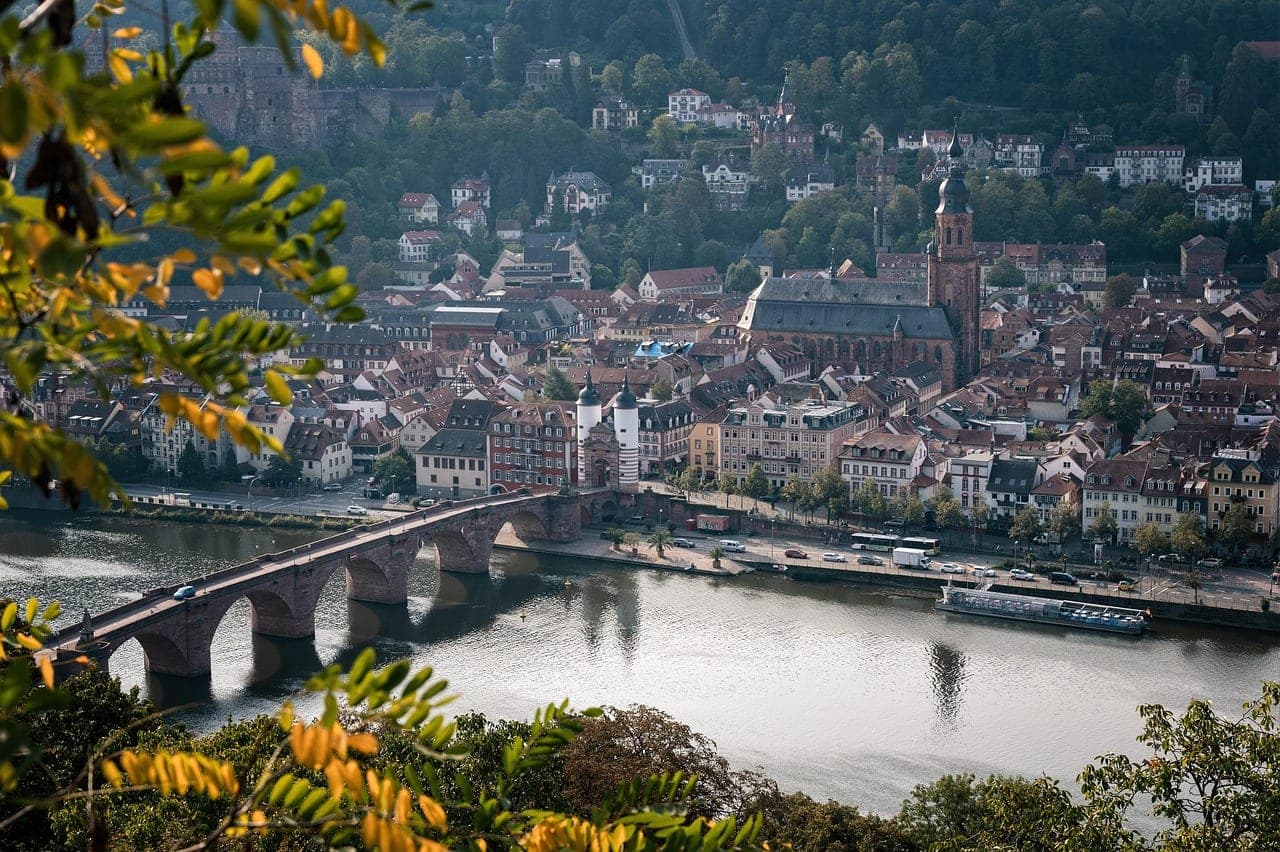
Heidelberg is a small city — roughly 160,000 residents — that punches far above its weight on the German itinerary. The Altstadt sits in a tight bend of the Neckar River, hemmed in by forested hills, with a half-ruined red-sandstone castle staring down from the Königstuhl. Heidelberg University, founded in 1386, is the oldest in Germany and still anchors the town's character: roughly one in five residents is a student. The city was largely spared in WWII, so what you walk through is genuinely centuries-old, not reconstructed.
For a school group, Heidelberg is an unusually easy first day in Germany. The historic core fits inside a 20-minute walk, the castle funicular handles the elevation gain, and the mix of Romantic-era castle ruin, working medieval university, and Philosophers' Walk panorama gives a teacher-led trip three different curricular angles on a single afternoon. We slot it into student group travel itineraries built around the Romantic Road, the Rhine Valley, or a Munich-Frankfurt loop.
Top things to see and do


When to go
- May - Jun — spring sweet spot
Daytime highs 18-25°C, long evenings, gardens around the castle in full bloom, university semester still in session so the Altstadt feels alive. The classic window for educational travel to Heidelberg.
- Jul - Aug — peak heat, peak crowds
Daytime highs 26-32°C and steady busloads of international visitors at the castle. Three Schlossbeleuchtung castle-illumination fireworks nights (June, July, September) are spectacular but pack the riverbanks. Fine for a determined high school group trip; start at the castle at opening (9 AM).
- Sep - Oct — golden shoulder
The best-kept secret on teacher-led tours of Germany. Highs 14-22°C, Neckar Valley turning russet, students back in town, harvest Federweisser (cloudy young wine) on every Hauptstrasse menu. Crowds drop sharply after the second week of September.
- Nov - Mar — quiet winter
Short daylight, cold drizzle, and almost no tour-bus traffic. The Christmas market (late November to 22 December) fills Marktplatz, Universitätsplatz, and Kornmarkt with glühwein stalls and a skating rink under the castle. A great interim-term or winter-break window for a small student group.
Food and culture

Maultaschen
Swabian filled-pasta pockets — pork, spinach, and breadcrumbs in a thin dough — served either swimming in broth or pan-fried with onions. Local origin myth says monks invented them to hide meat during Lent.

Spätzle
Hand-scraped egg noodles, usually served as Käsespätzle: layered with grated mountain cheese and topped with crispy fried onions. Comfort food on a cold Altstadt night.

Kurpfälzer Saumagen
Palatinate "stuffed pig's stomach" — a sausage-style loaf of pork, potato, and marjoram, sliced and pan-seared. Helmut Kohl's diplomatic dish; locally a point of pride.

Bretzel
The proper Bavarian-style soft pretzel — crisp, salted, served at every bakery and beer garden. Breakfast standard with butter; lunch partner for a Weisswurst.

Studentenkuss
"Student kiss" — a dark-chocolate-coated nougat wafer invented in Heidelberg in 1863 by confectioner Fridolin Knösel as a flirtatious gift students could send to women they couldn't approach in person. Knösel still sells them on Haspelgasse.
What to pack
- Documents
Passport valid 6+ months past travel date, two printed copies (one for the student, one for the Tour Director's file), insurance card, and the Passports group packet. No visa required for US citizens on a Schengen stay under 90 days.
- Clothing
Layers — Heidelberg's microclimate in the river bend cools off sharply at night even in summer. A waterproof shell handles the regular drizzle; a light long-sleeve covers shoulders for the Heiliggeistkirche.
- Footwear
Broken-in walking shoes with grip — the Hauptstrasse and the castle terraces are uneven cobble, and the Schlangenweg up to the Philosophers' Walk is a steep set of stone steps. No new shoes for the trip.
- Rain layer
Compact umbrella or a packable rain jacket. Heidelberg averages ~140 rainy days a year and weather flips quickly off the Odenwald hills.
- Tech
Germany uses Type C / F plugs (European two-prong) — bring a universal adapter. T-Mobile and Google Fi work out of the box; others should pick up a Vodafone or Telekom eSIM at FRA airport on arrival. Portable battery for full castle-and-walk days.
- Extras
A reusable water bottle (Heidelberg tap water is excellent), a small daypack for the funicular and castle visit, sunscreen May to September, and a slim notebook — students invariably want to copy down a few of the Karzer-wall inscriptions.
Is it safe?
Yes. Germany's US State Department rating is Level 2 ("exercise increased caution") — the same level as France, the UK, and most of Western Europe — and the elevated language reflects generic European terrorism risk, not anything specific to Heidelberg. Heidelberg itself is one of the safest mid-sized cities in the country: a long-standing US military presence, a large international student population, and a compact pedestrian Altstadt with steady foot traffic into the late evening. Violent crime against travelers is rare. The realistic risks are pickpocketing on the Hauptstrasse and around Heidelberg Hauptbahnhof, and slips on wet cobble after rain.
On a Passports teacher-led trip, the group is never on public transport alone, the Tour Director runs a pickpocket-awareness briefing on the first evening, and every hotel is pre-vetted for 24-hour reception and secure room storage. We operate a 24/7 emergency line out of Boston, keep parents on a daily-update channel, and have English-speaking medical contacts in every German city we visit. For most teachers running their first school group tours of Germany, Heidelberg's logistics feel easier than a domestic field trip.
Practical tips
- Take the Bergbahn, not the road
The historic Bergbahn funicular runs from Kornmarkt up to the castle, then continues to Königstuhl summit. The combo ticket saves time vs. the steep walking path and counts as part of the Heidelberg experience. Our Tour Director handles tickets for the group.
- The Altstadt is car-light, not car-free
Hauptstrasse is fully pedestrianized but cross-streets carry delivery and resident traffic. Cyclists ride the Hauptstrasse legally — students should walk to the right and look both ways at every crossing.
- Carry some cash
Germany is more cash-friendly than the rest of Western Europe. Many bakeries, the Knösel chocolate shop, and small Hauptstrasse vendors are cash-only or have a 10€ card minimum. ATMs (Geldautomat) at Sparkasse are reliable.
- Lunch is the main meal, dinner runs early
Mittagstisch (lunch menu) at most Altstadt restaurants is the best value of the day. Kitchens often close 14:00-17:30 and last dinner orders are around 21:00 — earlier than France or Spain. Plan group meals accordingly.
- English is widespread, but not universal
Almost everyone in the Altstadt working with travelers speaks English. Older shopkeepers off the main drag may not. A few phrases — Guten Tag, Danke, Entschuldigung — earn a lot of goodwill from a teacher-led group.