- RegionNorth Rhine-Westphalia, Germany
- LanguageGerman
- CurrencyEuro (EUR)
- Best seasonMay - Jun, Sep - Oct
- TimezoneCentral European Time (UTC+1)
A quick introduction
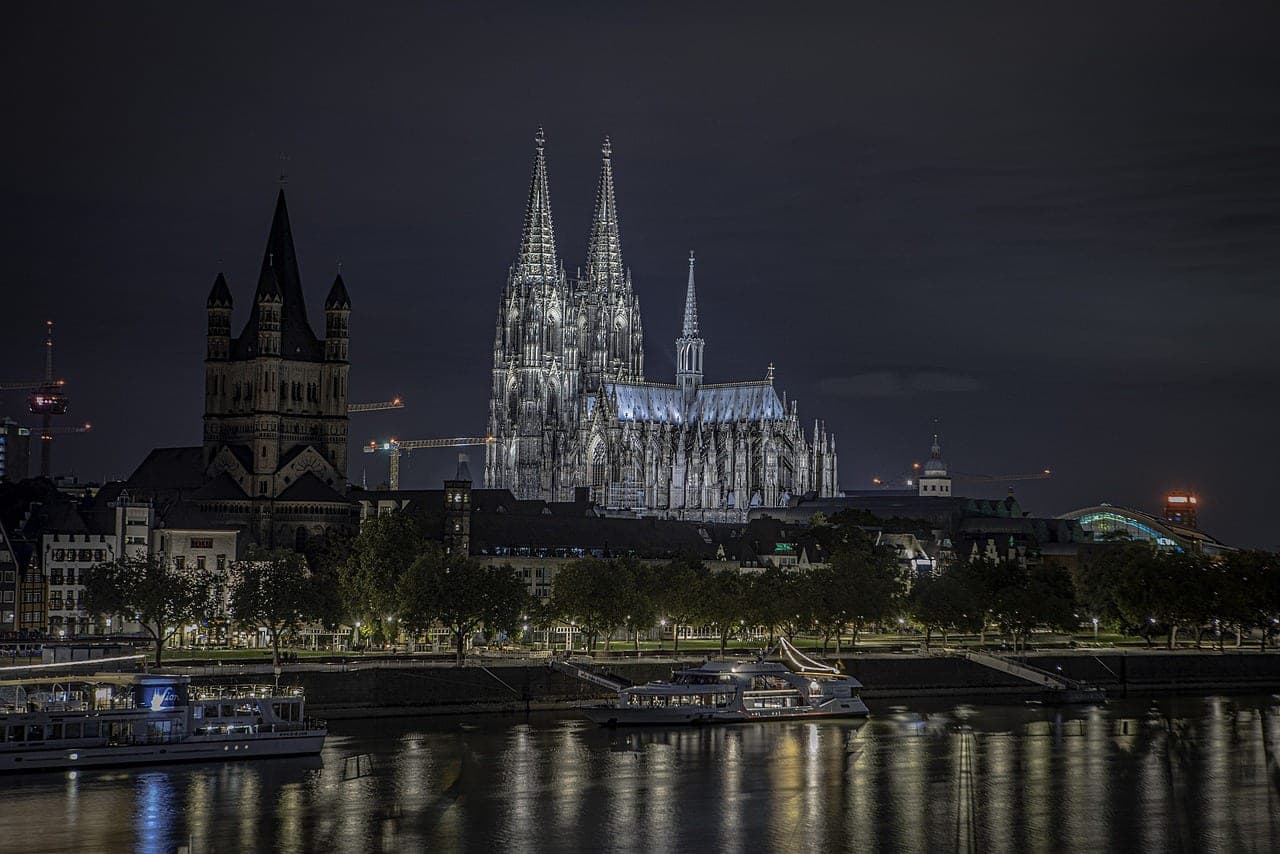
Cologne is the oldest major city in Germany. The Romans founded it in 50 CE as Colonia Claudia Ara Agrippinensium; the cathedral next to the train station is the largest Gothic church in Northern Europe and took 632 years to finish. Roughly 1.1 million people live inside the city limits, the Rhine cuts the center in half, and the historic core stretches about two kilometers end to end — meaning a school group can cover a Roman bath house, a Romanesque church, a Gothic cathedral, and a modern art museum on the same walking morning.
For a student group, Cologne is the most concentrated layered- history stop on our Germany catalog. The Dom, the Roman-Germanic Museum, the twelve medieval churches, the Ludwig Museum, and the Chocolate Museum are all inside a 20-minute walk of the Hauptbahnhof. That density makes Cologne an unusually efficient high school group trip — a teacher-led itinerary can line up AP European History, AP Art History, and a Latin-classroom field visit in the same afternoon. Add the Rhine cruise angle and the Karneval anthropology lesson and educational travel to Cologne punches well above its budget.
Top things to see and do


When to go
- May - Jun — late-spring sweet spot
The classic window for educational travel to Cologne. Daytime highs 17-24°C, long daylight past 9 PM, and the Rhine promenade cafés fully open. Museums are manageable without pre-booking and the beer gardens in the Belgian Quarter come alive after class hours.
- Jul - Aug — warm, busy, festival heavy
Daytime highs 22-28°C with occasional 30°C+ stretches. Kölner Lichter (the city's big fireworks-and-ship-parade night) lands in mid-July and packs the riverbanks. Still workable for a summer student group, but book the Reichstag-equivalent Dom tower slot ahead and start mornings at 9 AM.
- Sep - Oct — shoulder-season gold
A quiet favorite for teacher-led tours. Temperatures drop to 14-20°C, the light on the sandstone towers turns amber, and Erntedank (harvest festival) weekends deliver extra neighborhood markets. A late-September or early-October high school group trip threads the weather-and-crowds needle best.
- Nov - Mar — Christmas markets, then Karneval
Mid-November through December 23 is one of the top three German Christmas market cities — seven markets clustered around the Dom, Alter Markt, and Rudolfplatz. Late February into early March is Karneval ("the fifth season"), which is chaotic and genuinely spectacular, but plan around the parades rather than through them for a school group tour.
Food and culture

Himmel un Ääd
"Heaven and earth" — mashed potatoes with apple sauce and fried blood sausage. Working-class Rhineland comfort food, standard on every Brauhaus menu in the Altstadt.

Halve Hahn
Not a half chicken — a rye roll with a thick wedge of aged Gouda, mustard, pickles, and onions. Classic 11 AM Brauhaus snack and a reliable meat-free option for mixed groups.

Reibekuchen with apple sauce
Crispy potato pancakes from a corner window or a Christmas market stall; locals eat them plated with apple sauce or with dark Rübenkraut syrup. The street-food tell of a Rhineland winter.

Kölsch (the beverage lesson, age-appropriate)
Cologne's own beer style, served in 0.2L glasses from a Kölsch tray — the waiter refills automatically until you put a coaster on top. A cultural anthropology moment for the teachers; the students order apple spritzer.

Mutzenmandeln & Krapfen
Almond-flavored fried dough diamonds and jam-filled Berliners. Show up around Karneval but available year-round from Altstadt bakeries — the 3 PM energy fix on a long walking-tour day.
What to pack
- Documents
Passport valid 6+ months past travel date, two printed copies (one for the student, one for the Tour Director's file), insurance card, and the Passports group packet. No visa required for US citizens on a stay under 90 days in the Schengen area.
- Clothing
Layers — the Rhine valley flips between sun and drizzle several times a day in spring and autumn. Modest dress (shoulders and knees covered) is enforced inside the Dom and the other Romanesque churches. A packable rain shell beats an umbrella in Cologne's famously changeable weather.
- Footwear
Serious, broken-in walking shoes. The Altstadt is cobblestones end-to-end, the Dom tower climb is 533 steps on stone, and a student group will log 10,000-12,000 steps a day. Do not buy new shoes for the trip.
- Rain layer
Cologne averages rain on roughly half the days in spring and autumn — usually short showers rather than all-day weather. A compact packable rain jacket and a small travel umbrella between October and April keep a school group tour moving without a wardrobe meltdown.
- Tech
Germany uses Type C / F plugs (European two-prong) — bring a universal adapter. A portable battery earns its weight on full museum days. T-Mobile and Google Fi work on arrival; other carriers should pick up a Deutsche Telekom or Vodafone eSIM at CGN airport or the Hauptbahnhof.
- Extras
A small daypack for museum days (backpacks over a certain size have to be checked at the Ludwig and Roman-Germanic), a reusable water bottle, and a pocket notebook — Cologne rewards sketching inside the churches more than most cities on our catalog.
Is it safe?
Yes. Germany's US State Department rating is Level 2 ("exercise increased caution") — the same as France, Italy, and most of Western Europe — and the elevated level reflects generic European terrorism risk, not anything specific to Cologne. Violent crime against travelers is rare. The actual risk in Cologne is pickpocketing in a handful of predictable places: the Hauptbahnhof concourse, the Dom plaza during high-traffic hours, the #1 and #9 KVB trams, and the Karneval street-party zones in late winter.
On a Passports teacher-led trip, the group is never on public transport alone, the Tour Director runs a pickpocket-awareness briefing the first evening, and every hotel is pre-vetted for 24-hour reception and secure room storage. We operate a 24/7 emergency line out of Boston, keep parents on a daily-update channel, and have English-speaking medical contacts in every city we visit. For most teachers running their first student group travel to Germany, the logistics of Cologne feel easier than a domestic field trip.
Practical tips
- KVB transit and the Hauptbahnhof
The Hauptbahnhof sits directly next to the Dom, which makes day trips to Aachen, Bonn, or Brühl (Augustusburg Palace) a one-hour rail ride. A KVB group day ticket covers trams, U-Bahn, and buses for up to 5 people — efficient for small educational travel groups splitting off in chaperone pairs.
- Churches enforce dress codes
The Dom and the Romanesque churches require covered shoulders and knees. Scarves are sold near the entrances for groups that didn't plan for it; pack one in the daypack year-round.
- Sundays close most retail
German law shuts nearly all non-tourist stores on Sundays. Bakeries, restaurants, museums, and the Dom stay open; grocery runs have to happen Saturday afternoon. Build the itinerary accordingly — Sunday is a museum-and-walking day in Cologne, not a shopping day.
- Cash is still useful
Contactless is widespread but not universal — Brauhaus kitchens, the Christmas-market stalls, and smaller Altstadt cafés still prefer cash (EC-card or euros). Keep €20-40 in small bills on each student for any day with market stops.