- RegionBavaria (Franconia), Germany
- LanguageGerman
- CurrencyEuro (EUR)
- Best seasonMay - Jun, Sep - Oct, Late Nov - Dec
- TimezoneCentral European Time (UTC+1)
A quick introduction
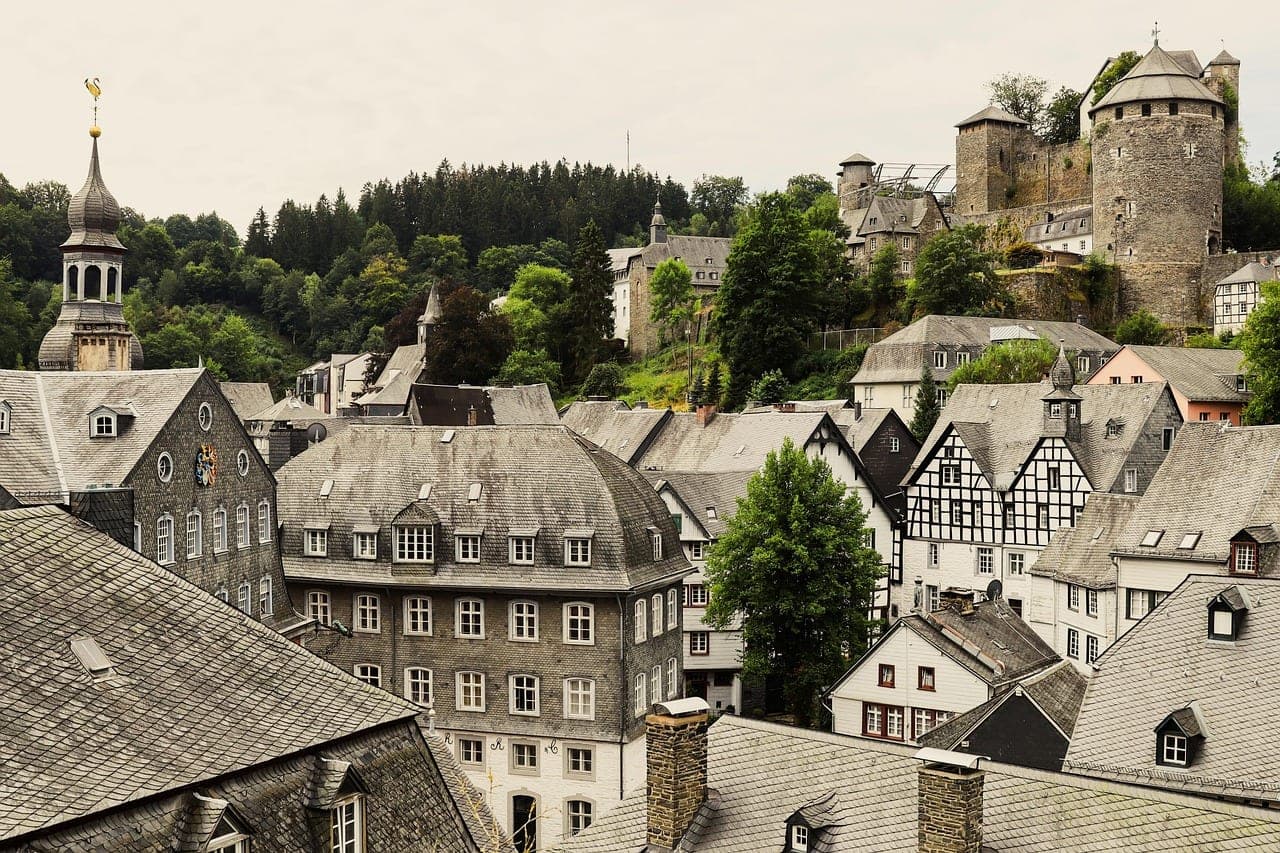
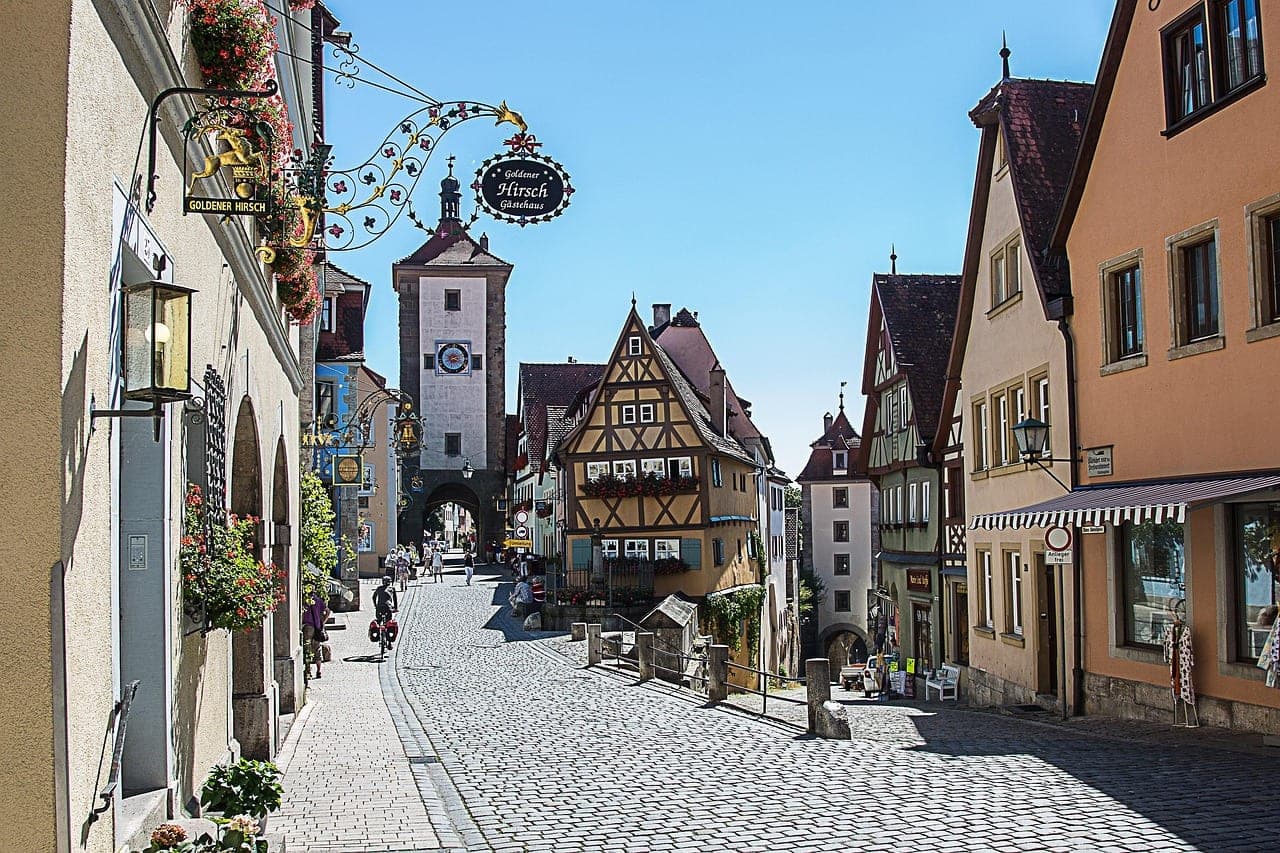
Rothenburg ob der Tauber is a small Franconian town of about 11,000 residents perched on a plateau above the Tauber River, 80 km west of Nuremberg. Its claim to fame is structural: it is the only town in Germany with a complete, walkable medieval wall — 2.5 kilometers of covered ramparts, 42 watchtowers, and six gates, all still standing. Inside the wall, the Altstadt is a near-perfectly preserved 15th- and 16th-century town: timber-framed houses leaning over narrow lanes, a Renaissance Rathaus on the main square, and the Gothic St. Jakobskirche with one of Tilman Riemenschneider's masterworks. A March 1945 air raid destroyed about 40 percent of the town; US Assistant Secretary of War John J. McCloy intervened to halt the planned follow-up shelling, and the town rebuilt the damaged sections to the original timber-framed plans.
For an educational tour, Rothenburg is the cleanest example of a medieval German walled town a student group can experience. Most visitors arrive on coach day-trips from Munich or as a stop on Romantic Road itineraries; the high school group trip move is to overnight inside the walls. After the day-trippers leave at 5 PM, the lanes empty out and the town reverts to something close to its historical self — the right context for the Night Watchman walking tour and a teacher-led wall walk at dusk.
Top things to see and do


When to go
- May - Jun — spring sweet spot
Daytime highs 16-23°C, gardens around the Burggarten in bloom, Reichsstadt-Festtage reenactment in early September. The classic educational travel window for the Romantic Road; a Pentecost weekend (Whitsun) lands the Meistertrunk historical festival in May or June.
- Jul - Aug — peak day-trip crowds
Daytime highs 22-28°C and very heavy daytime tour-bus traffic from 11 AM to 4 PM. The trick is to be inside the walls before 9 or after 6, when the day-trippers are gone. A determined summer student group trip can absolutely make it work with that cadence.
- Sep - Oct — golden Franconia
Highs 14-20°C, the Tauber Valley vineyards turning russet, and noticeably lighter visitor traffic after the second week of September. The Reichsstadt-Festtage (early September) reenacts the 1631 Meistertrunk legend with a citywide costume parade. Best photographs of the year.
- Late Nov - Dec — Reiterlesmarkt
Rothenburg's Reiterlesmarkt Christmas market (last Friday of November to 23 December) is small but uncompromising — under Marktplatz lights, with mulled wine and Schneeballen at every stall. Snowfall on half-timbered houses is the postcard. Cold (highs 0-5°C); pack serious layers.
Food and culture

Schneeballen
"Snowballs" — palm-sized balls of fried shortcrust pastry tied in ribbons, dusted with powdered sugar or rolled in chocolate or cinnamon. A 300-year-old Franconian specialty; sold from every bakery window on Herrngasse. Eat carefully — they shatter.

Franconian Bratwurst
Fatter and shorter than the Nuremberg version, served grilled in a crusty roll with sweet mustard or on a wooden plate with sauerkraut and a pretzel. Standard Mittagstisch lunch at any Wirtshaus on Marktplatz.

Maultaschen
Swabian-Franconian filled-pasta pockets — pork, spinach, and breadcrumbs in a thin dough — served either swimming in broth or pan-fried with onions. Comfort food on a cool autumn evening.

Lebkuchen
Soft almond-and-honey gingerbread, glazed or chocolate-coated, sold year-round but especially at the Reiterlesmarkt. A Nuremberg protected-origin product but every Rothenburg bakery stocks it.

Frankenwein in a Bocksbeutel
Franconian dry white wine — usually Silvaner or Müller-Thurgau — bottled in the squat round green Bocksbeutel that has been the regional shape since the 1700s. Local-vintner option at almost every Wirtshaus.
What to pack
- Documents
Passport valid 6+ months past travel date, two printed copies (one for the student, one for the Tour Director's file), insurance card, and the Passports group packet. No visa required for US citizens on a Schengen stay under 90 days.
- Clothing
Layers — Rothenburg's plateau elevation (425 m) means evenings cool off sharply even in summer. A waterproof shell for the regular drizzle; a long sleeve covering shoulders for St. Jakob's and the Franziskanerkirche.
- Footwear
Broken-in walking shoes with serious grip — every street inside the walls is uneven cobble or worn stone, and the wall walk has narrow stone steps and low headroom. Skip new shoes for the trip.
- Rain layer
Compact umbrella or packable rain jacket — Rothenburg averages ~140 rainy days a year. Hat and gloves for the Christmas-market window; weather flips quickly off the Frankenhöhe hills.
- Tech
Germany uses Type C / F plugs (European two-prong) — universal adapter required. T-Mobile and Google Fi work out of the box; others should pick up an eSIM at MUC or NUE airport on arrival. The Altstadt has thick stone walls — Wi-Fi inside hotels can be patchy.
- Extras
Reusable water bottle (tap water is excellent), small daypack for the wall walk, a flashlight or phone-torch app for the Night Watchman tour, and a slim notebook for sketching — students who draw well will fill pages on the Plönlein in a single sitting.
Is it safe?
Yes — Rothenburg is one of the safest destinations in Germany. Germany's US State Department rating is Level 2 ("exercise increased caution") — the same level as France and the UK — and the elevated language reflects generic European terrorism risk, not anything specific to Rothenburg. The town inside the walls is small enough that everyone is within a 10-minute walk of the hotel, locals know every visitor face within a day, and the foot traffic on the lanes keeps things benign. Violent crime against travelers is essentially nonexistent. The realistic risks are slips on wet cobble, low door headers (mind the timber), and minor pickpocketing in the daytime crush at Marktplatz and the Plönlein.
On a Passports teacher-led trip the group walks together for major sights, the Tour Director runs a wall-walk safety briefing on arrival, and every hotel inside the walls is pre-vetted for 24-hour reception and secure room storage. We operate a 24/7 emergency line out of Boston, keep parents on a daily-update channel, and have English-speaking medical contacts in the region. School group tours of a town this small typically feel easier on the ground than a domestic field trip.
Practical tips
- Stay overnight inside the walls
The whole point of Rothenburg is what happens after 5 PM, when the day-trippers leave and the lanes empty out. Hotels inside the walls (Burgtor, Reichsküchenmeister, Eisenhut) cost more than outside-the-wall options but earn it back on the dawn wall walk and the Night Watchman tour.
- Walk the wall at dawn or dusk
The 2.5 km wall circuit is open dawn to dusk, free, and effectively empty before 9 AM. Best photographs of the Altstadt are from the Klingenturm and the Roederturm — both in the first hour of light.
- Carry cash
Rothenburg is more cash-only than most German cities — small bakeries, the Schneeballen shops, and the Night Watchman all want euros. ATMs at Sparkasse and VR Bank on Schmiedgasse are reliable; avoid the standalone Euronet machines.
- Sundays still have life
Unlike larger German cities, restaurants and bakeries inside Rothenburg's walls open on Sunday because tourism drives the week. Supermarkets outside the walls do close. Plan a wall walk, a long lunch, and the Crime & Punishment Museum for a Sunday itinerary.
- A few Franconian phrases go a long way
Rothenburg is in Franconia, not "Bavaria proper" — locals are gentle but firm on the distinction. Servus and Grüß Gott are both fine for hello; Vergelt's Gott (literally "God repay you") is the local thank-you in older Wirtshäuser. A teacher-led group that picks up a couple of Franconian phrases earns real warmth.