Destination

Aachen, Germany

Aachen student group travel for teachers: Charlemagne's imperial capital, the UNESCO cathedral, and educational tours for teacher-led high school group trips.

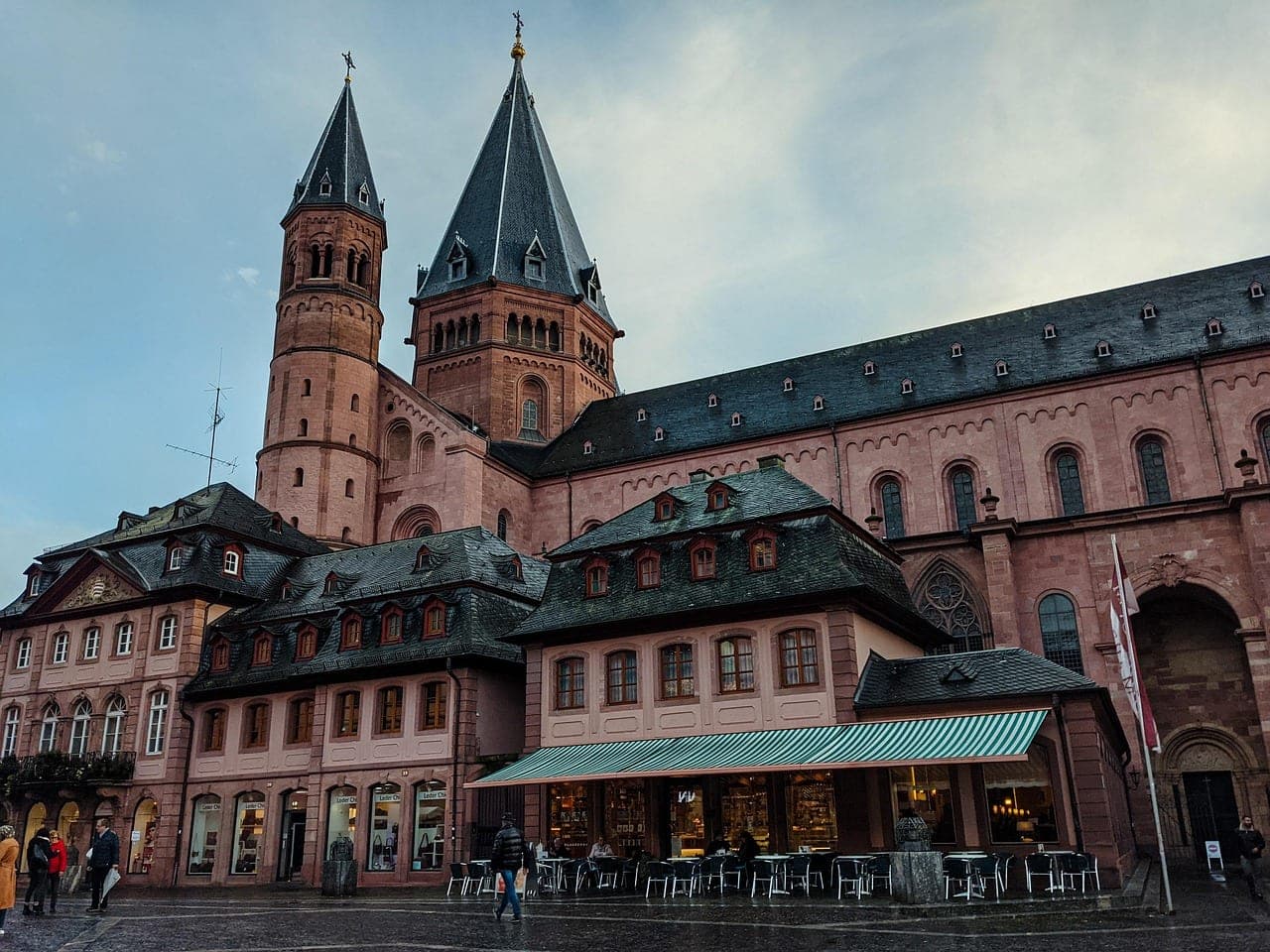
Aachen Cathedral's octagonal Carolingian dome rising above the old town
On this page
  • Where Aachen sits — Germany's western tri-border with Belgium and the Netherlands
  • Six sights anchored by the Palatine Chapel and the Cathedral Treasury
  • What to eat: Printen, Reibekuchen, and Rhenish sauerbraten
  • When to go, what to pack, and whether Aachen is safe for a student group
  • Practical logistics: Cologne rail link, Karlspreis week, and cathedral dress code
← All city guidesCountry guide: Germany
Plan a trip

A quick introduction

Aachen is Charlemagne's imperial capital, pushed up against Germany's western border where the country meets Belgium and the Netherlands at a single point on the Lousberg ridge. The old town holds about 250,000 residents today, but the historic core is a tight fifteen-minute walk from the cathedral to the Rathaus. The Palatine Chapel at the center of the cathedral dates to around 805 CE and was the first site in Germany listed on UNESCO's World Heritage register, back in 1978.

For a student group, Aachen is the cleanest possible half-day on Carolingian and Holy Roman history. Thirty-plus emperors were crowned in this one building across six centuries — the anchor story for an educational tour of medieval Europe. Teachers running a Rhine or Low Countries high school group trip usually slot Aachen in as a day stop from Cologne (45 minutes by ICE train) or as the last city before crossing into the Netherlands. It punches well above its size for teacher-led student group travel.

Day by day

Top things to see and do

Aachen Cathedral & Palatine Chapel

Aachen Cathedral & Palatine Chapel

The Carolingian octagon at the core is the oldest surviving part, built for Charlemagne around 805. Guided tours (English available) cover the imperial throne upstairs and the 14th-century Gothic choir hall where the crown jewels were kept. Ticketed entry to restricted areas.

Cathedral Treasury (Domschatzkammer)

Cathedral Treasury (Domschatzkammer)

One of the richest church treasuries in Northern Europe — the Cross of Lothair, Charlemagne's reliquary bust, and the marble sarcophagus tradition says once held his body. Thirty focused minutes pairs perfectly with the cathedral visit next door.

Aachen Rathaus

Aachen Rathaus

The Gothic town hall was built on the foundations of Charlemagne's palace in the 14th century. The upstairs Coronation Hall hosted the banquet for every Holy Roman Emperor crowned in Aachen — the painted frieze tells the story in sequence.

Elisenbrunnen thermal fountain

Elisenbrunnen thermal fountain

The neoclassical colonnade on the Friedrich-Wilhelm-Platz where sulfurous hot water still pours from Roman-era springs the legions named Aquae Granni. Students can (carefully) smell the water — unforgettable sensory moment, free to visit.

Couven Museum

Couven Museum

A small, tightly curated museum of 18th-century Aachen bourgeois interiors in a townhouse off the Hühnermarkt. Good counterweight to the cathedral's medieval weight; shows how the coronation city lived after the empire moved on.

Dreiländereck tri-border point

Dreiländereck tri-border point

Walk or ride the chairlift up to the Vaalserberg, where Germany, Belgium, and the Netherlands meet at a single stone marker. Europe's open borders made visible — a geography lesson students remember longer than the dates.

Weather by season

When to go

  • Apr - Jun — spring sweet spot

    Daytime highs 12-22°C, long daylight, fewer tour buses than summer. Karlspreis (the Charlemagne Prize) is awarded on Ascension Day in May — the old town is festive but busy that week. Otherwise the classic window for teacher-led student group travel to Aachen.

  • Jul - Aug — mild summer

    Rhineland summers are gentle by European standards; 18-26°C with the occasional thunderstorm. Cathedral interiors stay cool. International tour traffic peaks, but Aachen never hits Rome or Paris density. Book the cathedral guided-tour slot at least two weeks out.

  • Sep - Oct — quiet shoulder

    The under-the-radar window. Temperatures drop to 10-18°C, leaves turn on the Lousberg, and school groups effectively have the old town to themselves on weekdays. Ideal for a September or October high school group trip.

  • Nov - Mar — Christmas market city

    Aachen's Weihnachtsmarkt (late November through December 23) wraps around the cathedral and Rathaus — one of the better-regarded markets in the Rhineland. Cold and damp: expect 0-8°C and short daylight. Printen are fresh, hot Glühwein stands are everywhere (non-alcoholic Kinderpunsch for student groups).

What to order

Food and culture

Aachener Printen

Aachener Printen

Aachen's signature spiced hard cookie — brown-sugar, cinnamon, cloves, candied peel. A PGI-protected regional specialty; Nobis, Lambertz, and Klein are the classic bakeries on Krämerstraße.

Reibekuchen

Reibekuchen

Crisp grated-potato pancakes, served with apple sauce or dark Rübenkraut (sugar-beet syrup). Rhineland street food at its most comforting — every Christmas market stall has a stack.

Rheinischer Sauerbraten

Rheinischer Sauerbraten

Braised, vinegar-marinated beef with a raisin-and-Lebkuchen gravy — the Rhineland version leans sweeter than the Bavarian take. Served with red cabbage and Kartoffelklöße (potato dumplings).

Himmel und Ääd

Himmel und Ääd

"Heaven and earth" — mashed potato (earth), apple sauce (heaven), and fried blood sausage (Blutwurst) on top. Honest Rhenish cooking; a tell for a real local kitchen.

Kölsch beer culture

Kölsch beer culture

Cologne's signature pale beer travels west — Aachen bars pour it in tall 0.2 L Stangen glasses, refilled automatically until you put the coaster over the top. A classroom in beer-service etiquette for chaperones; soft drinks follow the same ritual for students.

Packing essentials

What to pack

  • Documents

    Passport valid six months past travel, two printed copies (one for the student, one for the Tour Director's file), insurance card, and the Passports pre-departure packet. No visa required for US citizens on a stay under 90 days in the Schengen area.

  • Clothing

    Layers year-round — Aachen weather shifts fast. Modest dress (shoulders and knees covered) is enforced at the cathedral during services and in the Palatine Chapel; a light scarf solves it on the fly. A rain shell stays in the daypack regardless of season.

  • Footwear

    Broken-in walking shoes — the old town is cobblestones end to end and a school group will log 8,000-10,000 steps a day even on a half-day visit. Do not buy new shoes for the trip.

  • Rain gear

    Aachen's Rhenish climate delivers light rain on roughly a third of all days. A compact umbrella or a packable rain jacket is the single most-used piece of gear students bring.

  • Tech

    Germany uses Type C / F plugs (European two-prong) — bring a universal adapter. Mobile coverage is excellent; T-Mobile and Google Fi roam out of the box, others should buy a Vodafone or Telekom eSIM on arrival. A portable battery earns its weight.

  • Extras

    A small daypack (larger bags must be checked at the Treasury and the Rathaus), a reusable water bottle, and a few euros in coin for public-toilet access and Printen bakeries that still prefer cash on small purchases.

The parent-meeting question

Is it safe?

Yes. Germany's US State Department rating is Level 2 ("exercise increased caution") — the same as France, Italy, the UK, and most of Western Europe — and that level reflects the generic European terrorism advisory rather than anything specific to Aachen. Aachen itself is a quiet, mid-sized university city; violent crime against travelers is genuinely rare, and police presence is visible around the cathedral and the main train station.

On a Passports teacher-led trip, the group is never on public transport alone, the Tour Director runs a first-evening awareness briefing covering the handful of pickpocket-prone spots (the main station, Karlsfest crowds, the Christmas market), and every hotel is pre-vetted for 24-hour reception and secure room storage. We operate a 24/7 emergency line out of Boston, keep parents on a daily-update channel, and have English-speaking medical contacts in the city. For most teachers running their first school group tour of Germany, the logistics feel easier than a domestic field trip.

🛡️

Personal safety

Violent crime is rare. The practical risk is opportunistic theft in crowded spots — Hauptbahnhof, the Weihnachtsmarkt, and the cathedral entry queue during Karlspreis week. Cross-body bags in front, phones off café tables, and a Day 1 briefing cover 90% of it. Hotels are vetted for 24-hour reception and in-room safes.

⚕️

Health & medical

Tap water is excellent everywhere in Germany. No special vaccines required beyond CDC routine. Uniklinik RWTH Aachen runs a 24-hour emergency room to international standards and has English-speaking staff; it's ten minutes from the old town by coach and accepts US travel insurance.

🚐

Roads & transport

The historic center is effectively pedestrian-only; our coach drops at designated stops outside the ring and the Tour Director walks the group in. German motorways are excellent and our drivers hold EU professional credentials. No students on scooters or student-driven vehicles at any point.

🌪️

Natural hazards

North Rhine-Westphalia sits outside Europe's seismic zones and has no hurricane or wildfire exposure. The 2021 Ahr Valley flood was the significant recent event in the broader region; Aachen itself was not affected. Summer thunderstorms are the usual weather surprise.

Practical tips

  • Cologne is 45 minutes by ICE

    Aachen Hauptbahnhof connects directly to Köln Hbf in under an hour on the high-speed line. Many Passports school group tours of the Rhine pair Aachen with Cologne as a single day of Carolingian and Gothic cathedral history.

  • Cathedral dress code

    Shoulders and knees covered when services are in progress (and as a courtesy otherwise). A light scarf in the daypack solves it instantly. Photography without flash is allowed in the nave; no photography in the Treasury.

  • Cards work almost everywhere

    Germany has caught up on contactless — tap-to-pay is standard at restaurants and shops. Keep €20-30 in cash per day for bakery purchases, public toilets (usually €0.50-1), and the occasional small-cash-only kiosk.

  • Printen are a classroom in themselves

    Pick a bakery, taste the spice mix, and you've just run a mini-lesson on the medieval spice trade that put Aachen on the map. Nobis and Lambertz both do factory and shop tours that fit into an educational travel itinerary.
Five facts

Good to know

👑

Charlemagne is buried here

Charlemagne was crowned Holy Roman Emperor in 800, died in 814, and was laid to rest inside the cathedral he built. His remains are still in the golden Karlsschrein reliquary above the choir.

🏰

Thirty emperors crowned at one altar

From Otto I in 936 to Ferdinand I in 1531, more than thirty Holy Roman Emperors and German kings were crowned in the Palatine Chapel. Six hundred years of coronations in the same room.

🏛️

First UNESCO site in Germany

Aachen Cathedral was added to the UNESCO World Heritage list in 1978, the inaugural German entry and one of the first twelve sites worldwide.

🏆

The Karlspreis

The Charlemagne Prize, awarded in the Rathaus every Ascension Day since 1950, honors work for European unity. Past recipients include Churchill, Havel, Pope John Paul II, and Angela Merkel.

♨️

Roman thermal springs

The Romans founded Aquae Granni here around 1 CE for the hot sulfur springs that still feed the Elisenbrunnen and the Carolus-Thermen spa. The water comes out of the ground at 74°C.

Classroom material

Lesson plans about Aachen

See all →
GermanyhistoryGrade 11-12

Medieval Europe (476-1450): Charlemagne: Emperor of the Romans 800 CE

Through the investigation of selected primary and secondary sources, students in this lesson will identify, understand and be able to explain the importance of Charlemagne and the Carolingian Renaissance, how the Frankish king was able to e…

View lesson
On the ground

More places in Germany

Country guide: Germany →
Brandenburg Gate at dusk in central Berlin, Germany

Berlin, Germany

Berlin student group travel for teachers: the Brandenburg Gate, Wall history, and 20th-century Europe on teacher-led high school group trips and school tours.

Gothic twin spires of Cologne Cathedral rising above the Rhine riverfront at dusk

Cologne, Germany

Cologne student group travel guide: the Gothic cathedral, Roman roots, and Rhine riverfront — educational tours for high school and middle school groups.

Heidelberg Castle ruins above the Old Bridge and Neckar River in Germany's oldest university town

Heidelberg, Germany

Heidelberg student group travel guide for teachers: castle ruins, the Old Bridge, and Germany's oldest university — educational tours for high school groups.

Marienplatz square with Munich's New Town Hall and Glockenspiel tower in the Bavarian capital

Munich, Germany

Munich student group travel guide for teachers: Marienplatz, the Residenz, Dachau, and Bavarian Alps day trips — educational tours for high school groups.

Nuremberg Imperial Castle above the half-timbered medieval old town and red-tiled roofs of Bavaria

Nuremberg, Germany

Nuremberg student group travel guide for teachers: medieval old town, the Imperial Castle, Documentation Center, and Nuremberg Trials sites for educational tours.

Rothenburg ob der Tauber's Plonlein corner with half-timbered houses framed by medieval town walls in Bavaria

Rothenburg ob der Tauber, Germany

Rothenburg ob der Tauber student group travel guide: walk a complete medieval town wall, half-timbered houses, and Romantic Road tours for high school students.

Bring your group to Aachen, Germany.

Every Passports trip is built around a teacher and a group — from first itinerary sketch to the last day on the ground. Tell us what you have in mind and we’ll take it from there.

Plan a trip