Description
Through the investigation of primary and secondary sources, students in this lesson will identify, understand and be able to explain the details behind each of the Punic wars and how the Roman Senate used those conflicts as a stepping-stone towards the creation of a empire that would dominate the Mediterranean in the centuries to come.
Objectives
- Students will identify, understand and be able to explain the details of the three Punic Wars between Rome and Carthage.
- Students will identify, understand and be able to explain how the Roman Senate used the last Punic war to send a message of fear to the rest of the world.
- Students will identify, understand and be able to explain how the Punic Wars were the first step in the drive to empire for Rome.
Essential questions
- Where was Carthage? Who were the Carthaginians?
- Why did the First Punic War start?
- Why did the Second Punic War start?
- Who was Hannibal Barca? What was his plan for the war? How was he eventually defeated?
- Why did the Third Punic War start?
- What were the results of this conflict?
- What message was the Roman Senate trying to send with the destruction of Carthage after the end of the war?
Key terms
- Aqueduct Carthage
- Cato the Elder
- Hannibal
- Iberian Peninsula
- Livy (Titus Livius Patavinus)
- Phoenicia
- Plutarch (Lucius Mestrius Plutarchus)
- Punic
- Roman Senate
- Scipio Africanus the elder
- Scipio Africanus the younger
- Sicily
Academic summary
Ceterum censeo Carthaginem esse delendam. (Carthage must be destroyed).
“The Life of Cato the Elder” in Plutarch’s Parallel Lives (approx. 75 CE)
Translated by William Thayer, University of Chicago
In 146 BCE, mighty Carthage, jewel of the Mediterranean coast, former master of North Africa and the Iberian Peninsula, and once one of the most powerful cities in the ancient world, was systematically and utterly destroyed by the Roman army. According to sources from the time, the Romans then took extraordinary steps to ensure that the Carthaginian civilization would never rise again. First, the entire population of men, women and children were forcibly sold into slavery. All records and cultural icons were destroyed. The city then was burned for 17 days, and if that wasn’t enough, the Romans brought in salt and sowed tons of it into the Carthaginian fields so that nothing would ever grow there. It remains barren today. The Roman Republic was now master of the Mediterranean, a position earned after three wars with their Punic neighbors (so-called by the Romans because Carthage had been founded centuries earlier by Phoenician colonists). The first Punic War was one between equals for control over the key island of Sicily. The Second Punic War was best known for Hannibal Barca’s attack of the Italian peninsula and his later defeat at Zama (outside of Carthage), a defeat that crippled Carthage and elevated Rome to superpower status. Finally, the Third Punic War was an unnecessary attack by Rome on Carthage, brought on by a hawkish Senate hungry for expansion of their territories and seeking to send a message to the rest of the world.
Through the investigation of primary and secondary sources, students in this lesson will identify, understand and be able to explain the details behind each of the Punic wars and how the Roman Senate used those conflicts as a stepping-stone towards the creation of an empire that would dominate the Mediterranean in the centuries to come.
Procedure
I. Anticipatory Set
- Writing / Question: Who were the Phoenicians? Why did they colonize the Mediterranean region? (5 min)
- Handouts – Copies of documents and readings from the websites listed. (5 min)
II. Body of Lesson
- Lecture / PPT – The Punic Wars (20 min)
- Video – Punic Wars (15 min for both videos)
- Independent Activity – Students read the articles and sources on the Punic Wars, taking notes as appropriate. (20 min)
- Suggestion: Have the students read some of these articles and sources for homework before class.
- Group Activity – Socratic Seminar: Discussion on the Punic Wars. How was Rome able to use the Punic Wars as a stepping-stone to its domination of the Mediterranean? (15 min)
III. Closure
- Assessment / DBQ – Essay: Explain in detail the Punic Wars and how Rome was able to use these conflicts as a stepping-stone towards the creation of an empire.
Extension
On tour: Maps of Ancient Rome / Via dei Fori Imperiali
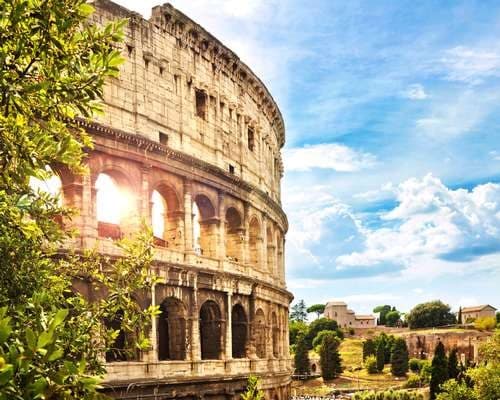
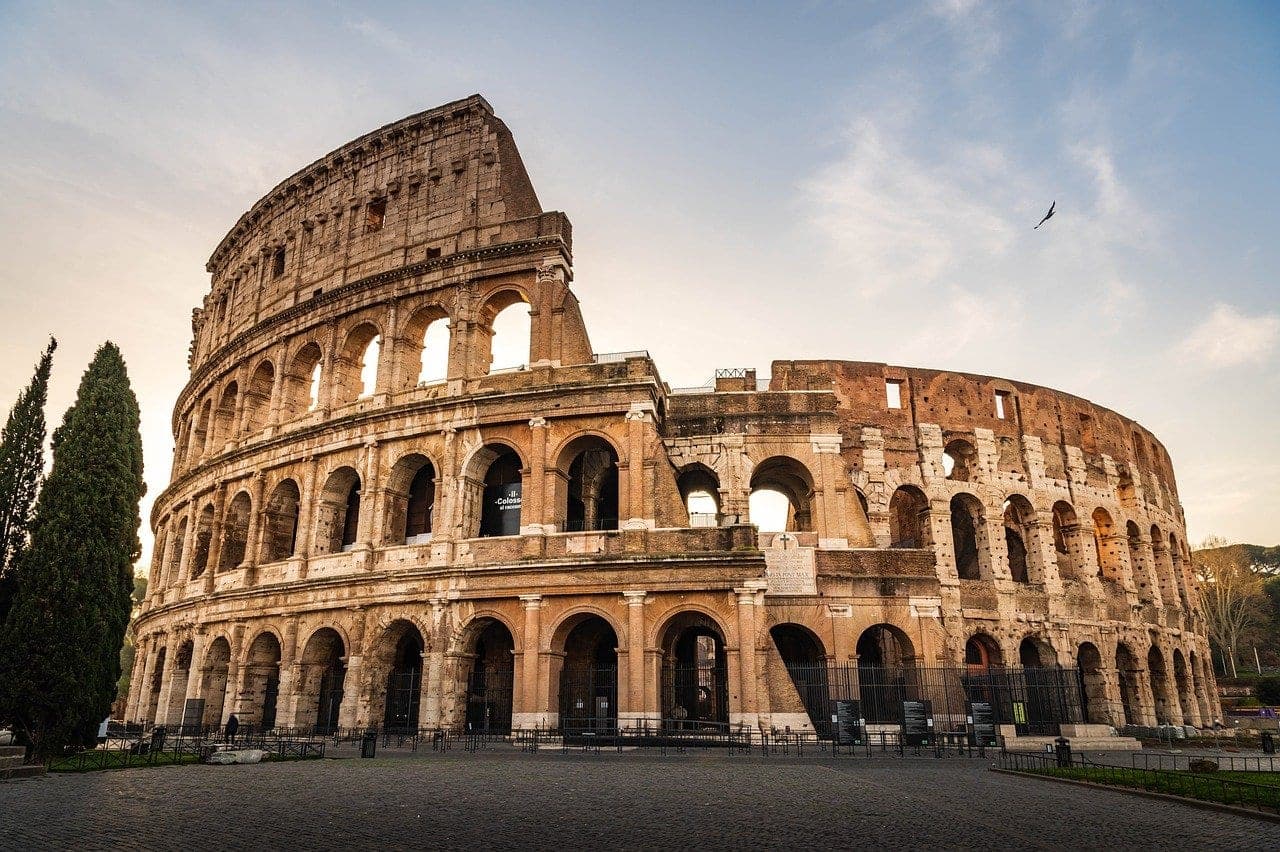
While on tour, you will visit the Forum and other ancient Roman sites. Between the Colosseum and the Vittorio Emanuele Monument is a street known as the Via dei Fori Imperiali. Coming from the Colosseum, students should look to their left. Attached to the exterior wall of the Basilica of Maxentius are 4 maps showing the growth of Rome. They are not from the Roman Republic, although the second map shows the extent of the Republic after the Punic Wars ended in 146 BCE. Students with a sharp eye will notice that there seems to be a fifth map missing. The maps date from the Fascist Era and were ordered to be placed there by Mussolini in the 1930s. After the war ended, the new Italian government ordered the last panel taken down, but left the remaining ones.
Tour sites
Places our tours visit that bring this lesson to life.
- Forum Romanum
- Curia Julia
- Carthage
Further reading
- en.wikipedia.org/wiki/Roman_Senate
“Roman Senate” – Wikipedia article - en.wikipedia.org/wiki/Cato_the_Elder
“Cato the Elder” – Wikipedia article. - en.wikipedia.org/wiki/Scipio_Africanus
“Scipio Africanus” – Wikipedia article - en.wikipedia.org/wiki/Hannibal
“Hannibal” – Wikipedia article - en.wikipedia.org/wiki/File:Carthage_villas-romaines_1950.jpg
The ruins of Carthage today (photograph) - www.passports.com/group_leaders/on_the_road/italy/country_profile
On the Road: Italy (country profile) – from Passports Educational Travel - www.passports.com/group_leaders/on_the_road/italy/rome
On the Road: Rome – from Passports Educational Travel - www.britishmuseum.org/pdf/Carthage_StudentsWorksheets.pdf
“The Wealth of Africa: Carthage – Students’ Worksheets.” From the British Museum (UK). Great resource for teaching the Punic Wars, especially for younger students. Highly recommended for all students and teachers. - www.history.com/topics/punic-wars
Punic Wars website from the History Channel - penelope.uchicago.edu/Thayer/E/Roman/Texts/Plutarch/Lives/Cato_Major*.html ;
“The Life of Cato the Elder” from Plutarch’s Parallel Lives at the University of Chicago website - www.the-romans.co.uk/punic.htm
The Punic Wars website - en.wikipedia.org/wiki/Parallel_Lives
Plutarch’s Parallel Lives – Wikipedia article - www.penfield.edu/webpages/jgiotto/onlinetextbook.cfm?subpage=1479065
“First Punic War” website by John Giotto, teacher at Bay Trail Middle School in Penfield, NY - www.penfield.edu/webpages/jgiotto/onlinetextbook.cfm?subpage=1479806
“Second Punic War” website by John Giotto, teacher at Bay Trail Middle School in Penfield, NY - www.penfield.edu/webpages/jgiotto/onlinetextbook.cfm?subpage=1482133
“Third Punic War” website by John Giotto, teacher at Bay Trail Middle School in Penfield, NY - loh.loswego.k12.or.us/noblem/ppt/wcv_punic_wars-hannibal.ppt ;
Punic Wars PowerPoint – great images and information - www.slideshare.net/rfern/ancient-rome-1456519
Ancient Rome PowerPoint - www.teachingchannel.org/videos/choosing-primary-source-documents?fd=1
Reading Like a Historian: Primary Source Documents (video) – great 2-minute video on how to incorporate primary sources into the Common Core and history classes. From Shilpa Duvoor of Summit Preparatory Charter High School in Redwood City, CA – highly recommended for teachers. - www.history.com/topics/punic-wars/videos#hamilcar-barca-and-the-punic-wars
Hamilcar Barca and the Punic Wars (video) – History Channel website - www.youtube.com/watch?v=unKuRvO12Sg
The Battle of Zama (video) - www.youtube.com/watch?v=trvNo79PsRI
The Siege of Carthage (video)
Credit
© Copyright 2013 Passports, Inc., All rights reserved.