Destination

Segovia, Spain

Segovia student group travel for teachers: the Roman aqueduct, the Alcázar, and a Castilian day trip from Madrid on teacher-led educational tours of Spain.

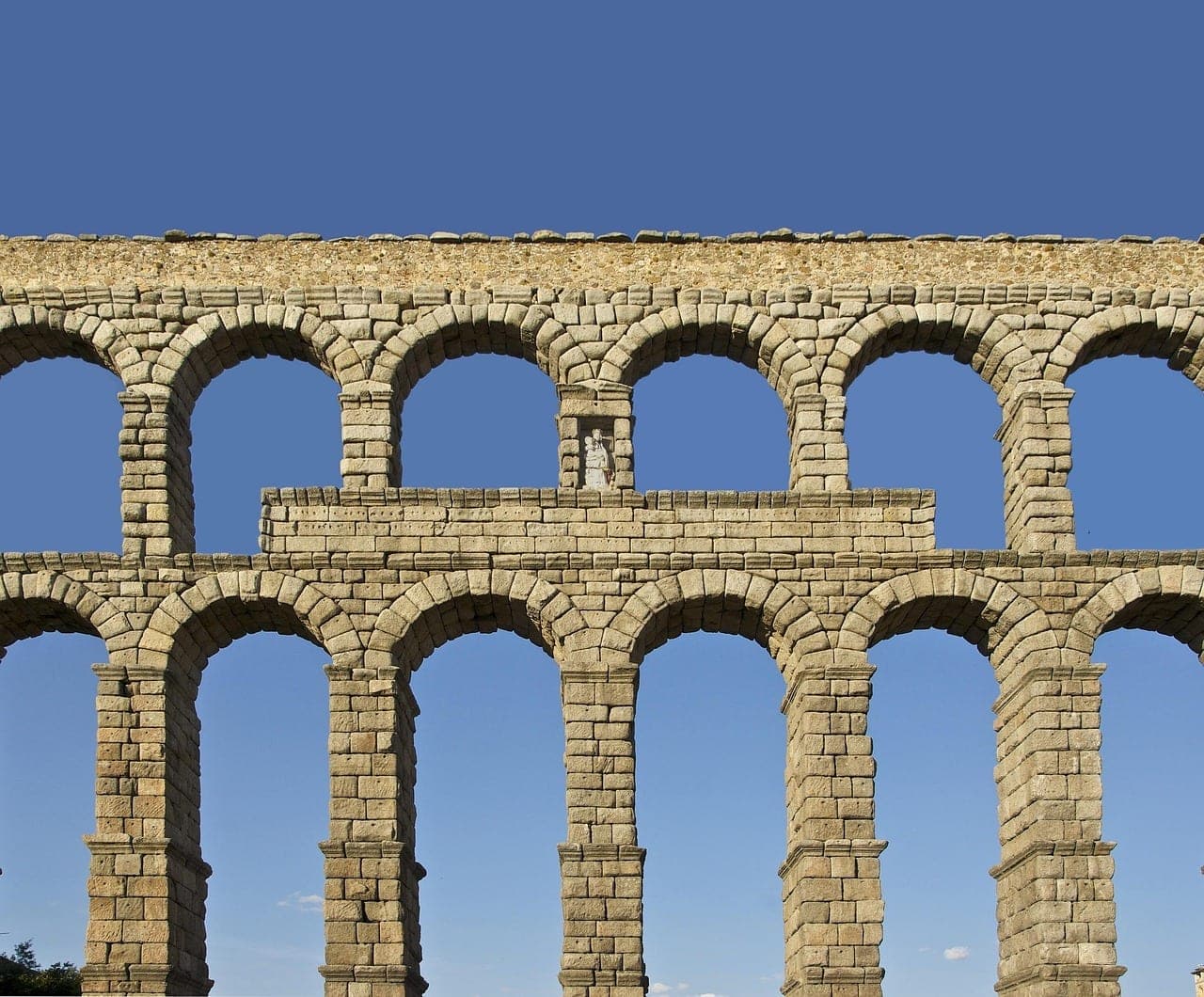
The Roman aqueduct of Segovia spanning the central plaza in Castile, Spain
On this page
  • Where Segovia sits below the Sierra de Guadarrama and why the whole old town is walkable
  • Six sights worth a stop — the aqueduct, Alcázar, cathedral, Jewish quarter, La Granja
  • What to eat: cochinillo asado, judiones de La Granja, ponche segoviano
  • When to go, what to pack, and whether Segovia is safe for students
  • Practical logistics for teachers: day-trip from Madrid, late dinners, sierra weather
← All city guidesCountry guide: Spain
Plan a trip

A quick introduction

Segovia sits on a long granite ridge between the Eresma and Clamores rivers at the foot of the Sierra de Guadarrama, about one hour by high-speed train (or 90 minutes by coach) northwest of Madrid. The city counts roughly 50,000 people and the entire old town fits inside a 15-minute walk. Three monuments define the skyline — the 1st-century Roman aqueduct that splits the city east-to-west, the late-Gothic cathedral on the high plateau, and the Alcázar fortress at the far western tip, perched above the river confluence. The historic center has been a UNESCO World Heritage Site since 1985.

For a student group, Segovia is the strongest single Roman- engineering visit on a Spain itinerary and the highest-yield day trip out of Madrid. The aqueduct alone is one of the great surviving works of Roman public engineering anywhere in Europe; pair it with the Alcázar (the fortress that supposedly inspired Walt Disney's Cinderella castle) and the cathedral, and a five-hour visit hits three centuries of Castilian history at a student-friendly walking pace. Teacher-led tours typically slot Segovia and Toledo as paired Madrid day trips on a high school group trip through central Spain.

Day by day

Top things to see and do

Roman aqueduct

Roman aqueduct

The 1st-century Roman aqueduct — 167 arches across 813 meters, 28 meters tall at the Plaza del Azoguejo, dry-fitted granite blocks with no mortar. Still standing 1,900 years later because the engineering was that good. The single most impressive sight on the Spanish meseta.

Alcázar of Segovia

Alcázar of Segovia

The fortress at the western tip of the ridge, with its slate- blue spires above the river confluence. Originally a Roman fort, expanded by the Moors, transformed by Alfonso VIII, and restored by Alfonso XII after an 1862 fire. The Hall of Kings and the throne-room ceiling are the interior payoff.

Segovia Cathedral

Segovia Cathedral

"The Lady of the Cathedrals" — the last great Gothic cathedral built in Spain, finished in 1577 long after the style had moved on elsewhere. The cloister and the museum hold the city's medieval treasury; the bell-tower climb gives the cleanest 360° over the old town.

Jewish quarter (Judería)

Jewish quarter (Judería)

The medieval Judería spreads south of the cathedral down toward the river — narrow lanes, the restored 14th-century Corpus Christi synagogue (now a church), and the Jewish cemetery on the hillside. A 45-minute walk that pairs cleanly with the Convivencia thread on any Spain itinerary.

La Granja de San Ildefonso

La Granja de San Ildefonso

The 18th-century royal summer palace with French-style formal gardens and 26 monumental fountains, 11 kilometers south of the city. Spain's answer to Versailles, and the coolest stop on a hot June afternoon. The fountains run on gravity from a Sierra de Guadarrama reservoir.

Plaza Mayor & Casa de los Picos

Plaza Mayor & Casa de los Picos

The cathedral-fronted main square and the diamond-pointed facade of the Casa de los Picos — a 15th-century mansion now a free public art gallery — bookend the old-town walk between the aqueduct and the Alcázar. The shortest and densest historic axis in Castile.

Weather by season

When to go

  • Apr - Jun — spring sweet spot

    The prime window for educational travel to Segovia. Daytime highs run 16-24°C, the Guadarrama still carries snow on the peaks behind the Alcázar, and the aqueduct light is at its best in the late-afternoon sun. Long daylight stretches past 9 PM.

  • Jul - Aug — warm days, cool nights

    Daytime highs 28-32°C with classic continental swings — the altitude (1,000 meters) drops temperatures 12-15°C overnight. Day-tripper crowds peak at the aqueduct between 11 AM and 2 PM; the Tour Director routes the group there at 9 or after 4 to keep the photo angles clean.

  • Sep - Oct — shoulder-season gold

    A teacher-led tour favorite. Temperatures drop to 18-25°C, the surrounding meseta turns ochre, and the day-tripper volume drops sharply after the second week of September. The late-afternoon sun catches the granite of the aqueduct in a way the summer light cannot.

  • Nov - Mar — cold, crisp, occasional snow

    Daytime highs 6-10°C with frequent frost; the Sierra de Guadarrama snow line drops to the city a handful of times a year. The aqueduct in snow is the photo of the trip; cathedral and Alcázar interiors are cold but uncrowded. Plan warm coats and gloves.

What to order

Food and culture

Cochinillo asado

Cochinillo asado

The Segovian signature — a 21-day-old suckling pig slow-roasted in a wood-fired oven until the skin is so crisp the waiter cuts it with a plate edge to prove it. The classic lunch at Mesón de Cándido in front of the aqueduct; heavy enough to share between two.

Judiones de La Granja

Judiones de La Granja

Giant white beans from La Granja village, slow-stewed with chorizo, morcilla, and pig's ear. The cold-weather lunch the meseta runs on; one bowl between two students is the right call.

Ponche segoviano

Ponche segoviano

The city's signature dessert — a layered marzipan-and-yolk cake with a torched sugar lattice on top, invented in Segovia in the 1920s. Sliced into small squares; one bite each.

Sopa castellana

Sopa castellana

Garlic, bread, paprika, and a poached egg in a clay bowl — the cold-weather Castilian starter the meseta has eaten for a thousand years. Forgiving for cautious eaters and universal across every restaurant in town.

Chorizo de Cantimpalos

Chorizo de Cantimpalos

The DOP-protected paprika-cured chorizo from the Cantimpalos village 15 kilometers north — sliced thin and served as a tapa or grilled as a starter. The strongest paprika note in Castilian charcuterie.

Packing essentials

What to pack

  • Documents

    Passport valid 6+ months past travel date, two printed copies (one for the student, one for the Tour Director's file), insurance card, and the Passports group packet. No visa required for US citizens on a stay under 90 days in the Schengen area; ETIAS authorization is phasing in, so check the status 60 days out.

  • Clothing

    Layers are mandatory — Segovia's 1,000-meter elevation creates large day-to-night temperature swings, and the wind off the Sierra de Guadarrama drops the felt temperature noticeably even in May. Modest dress (shoulders and knees covered) is enforced inside the cathedral and the Alcázar chapel; a light scarf in the daypack solves it.

  • Footwear

    Serious, broken-in walking shoes with real tread. The old-town granite cobbles and the climb between the aqueduct and the Alcázar — two kilometers at a steady gradient — reward broken-in soles. A student group will log 10,000-12,000 steps in Segovia alone.

  • Tech

    Spain uses Type C / F plugs (European two-prong) — bring a universal adapter. A portable battery earns its weight on day-trip days. T-Mobile and Google Fi work out of the box; others should buy a Movistar or Vodafone eSIM in Madrid before the day trip.

  • Extras

    A small daypack, a reusable water bottle (the public fuentes pour potable Sierra water), strong sunscreen and a hat (the granite plaza below the aqueduct has no shade), sunglasses, and a compact umbrella November through April. A warm hat earns its keep in winter.

The parent-meeting question

Is it safe?

Yes. Spain's US State Department rating is Level 2 ("exercise increased caution") — the same as France, the UK, Germany, and most of Western Europe — and the elevated level reflects generic European terrorism risk, not anything specific to Segovia. Segovia is one of the safer stops on our Spanish catalog; the city is small, the historic center is fully pedestrianized, and the day-tripper-heavy foot traffic is visible at all hours. Violent crime against travelers is very rare. The actual risk is garden-variety pickpocketing in the Plaza del Azoguejo at the foot of the aqueduct around midday.

On a Passports teacher-led trip, the group moves by private coach with a professional driver from Madrid, the Tour Director runs a pickpocket-awareness briefing on the first evening, and every hotel is pre-vetted for 24-hour reception and secure room storage. We operate a 24/7 emergency line out of Boston, keep parents on a daily-update channel, and have English-speaking medical contacts in every city we visit. For most teachers running their first school group tours to Spain, the Segovia day trip feels like the easiest stop on the itinerary because the Tour Director owns the cathedral and Alcázar entries, the coach drops, and any curveballs end to end.

🛡️

Personal safety

Pickpocketing in the aqueduct plaza is the only meaningful risk; violent crime against travelers is rare. Cross-body bags in front, phones off café tables, and a Day 1 briefing cover most of it. Hotels are vetted for 24-hour reception, in-room safes, and English-speaking front desks.

⚕️

Health & medical

Tap water is excellent — the city's supply comes off Sierra de Guadarrama snowmelt. No special vaccines required beyond CDC routine. Hospital General de Segovia runs a 24-hour emergency room to international standards on the eastern edge of the city and takes US travel insurance. Pharmacies sit on every block in the old town.

🚐

Roads & transport

Group movement is by private coach with a professional driver; no students on city buses alone, no scooters, no student-driven vehicles at any point. The historic center is pedestrian-only, so coach drops at the lower car park and the Tour Director walks the group up to the aqueduct. Madrid-to-Segovia transfer is a private coach end to end.

🌪️

Natural hazards

Castile sits in a low-seismic zone with no recent significant earthquakes. The dominant practical concerns are summer sun on the open plaza below the aqueduct and winter cold and occasional snow on the Madrid-Segovia coach route — the Tour Director keeps a daily eye on AEMET forecasts.

Practical tips

  • Lunch is late, dinner is later

    Restaurants serve lunch 2-4 PM and dinner rarely before 9 PM. Most day-trip groups eat the Segovian cochinillo as a 2 PM lunch and head back to Madrid before dinner; teachers planning a one-night stay should adjust the dinner block to the Spanish clock.

  • Cochinillo is a sit-down event

    The cochinillo asado lunch is a 90-minute sit-down with the whole pig coming to the table to be carved with a plate edge. It is the meal of the visit; do not pair it with a packed sightseeing afternoon. Half the group will want to nap by 4 PM.

  • Walk the aqueduct from both sides

    The Plaza del Azoguejo at the foot is the postcard angle, but the staircase up the south side gives an aerial view of the arches and shows how the channel still runs at the top. A 30-minute add-on that doubles the engineering lesson.

  • The Alcázar viewpoint is the photo

    The viewpoint behind the Alcázar — Mirador de la Pradera de San Marcos, a 10-minute downhill walk from the fortress gates — gives the postcard angle on the slate spires above the river confluence. Worth the descent and the climb back.

  • Contactless everywhere, small cash helps

    Tap-to-pay is near-universal at restaurants, the cathedral gift shop, and the Alcázar entry. A little cash is useful for the artisan stalls in the Plaza Mayor on weekends, the ponche segoviano bakeries, and tipping. ATMs from CaixaBank and Santander charge lower fees than the tourist-facing Euronet machines around the aqueduct.
Five facts

Good to know

🏛️

The aqueduct still has no mortar

The Romans dry-fitted 25,000 granite blocks across 813 meters with no mortar at all — the structure has stood under its own weight for nearly two millennia. A 1990s restoration only stabilized two corner arches.

🏰

Disney's Cinderella castle?

The Alcázar of Segovia is widely cited as one of Walt Disney's inspirations for the Cinderella castle. Disney never confirmed it, but the silhouette match is the most argued claim in tourist Castile.

👑

Isabella was crowned here

Isabella the Catholic — the queen who finished the Reconquista and funded Columbus — was proclaimed queen of Castile in the church of San Miguel in Segovia in December 1474. The plaque on the church wall marks the spot.

The cathedral was the last Gothic

Segovia Cathedral was started in 1525 and finished in 1577 — long after Renaissance had taken over the rest of Europe. It is generally counted as the last great Gothic cathedral built anywhere.

🚄

One hour from Madrid by AVE

The high-speed AVE train from Madrid-Chamartín to Segovia-Guiomar takes 27 minutes. A Madrid-based teacher-led tour can do Segovia in a day without hurrying — though Passports always sends the coach for door-to-door control.

Tours that go here

Tours that stop in Segovia

See all tours →
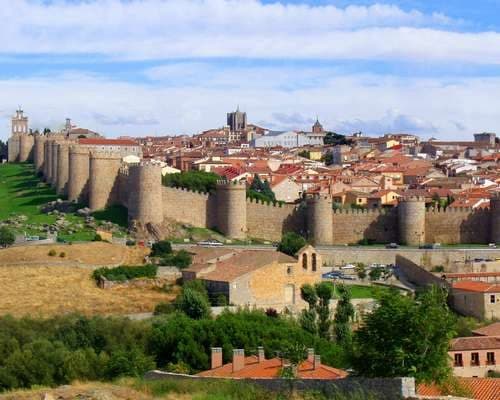
Avila
Spain

Cities of Castile

Madrid · Toledo · Salamanca · Segovia

Language-immersion
See itinerary
From the Tour Directors

Tour Director lectures about Segovia

See all →
Cities of Castile: Salamanca, El Escorial, Toledo and Segovia — Passports Tour Director lecture
Tom FergusonSpain

Cities of Castile: Salamanca, El Escorial, Toledo and Segovia

Central Spain is your destination - visiting Madrid, Toledo, Salamanca, and Segovia. Catch a glimpse of the iconic landmarks of the region.

Watch lecture
From our blog

Blog posts about Segovia

See all →
Madrid Educational Travel: Mastering Spanish Through Immersion
destinations

Madrid Educational Travel: Mastering Spanish Through Immersion

Madrid offers student travelers a full Spanish-language immersion experience across five days of royal palaces, flamenco, world-class museums, and a Segovia day trip

Read post
On the ground

More places in Spain

Country guide: Spain →
Gaudí's Sagrada Família spires rising above the rooftops of Barcelona, Spain

Barcelona, Spain

Barcelona student group travel for teachers: Gaudí, the Gothic Quarter, and Catalan culture on teacher-led high school group trips and educational tours.

The Gothic spires of Burgos Cathedral rising above the old town in Castile, Spain

Burgos, Spain

Burgos student group travel for teachers: the Gothic cathedral, the Camino de Santiago, and Castilian history on teacher-led educational tours of Spain.

Mediterranean coastline and whitewashed villages along Spain's Costa del Sol

Costa del Sol, Spain

Costa del Sol student group travel for teachers: Malaga, Marbella, Nerja, Ronda. Mediterranean beaches and Moorish history on an educational tour of Andalusia.

Atlantic lighthouse on the rocky coast near Cádiz, on the southern tip of Andalusia, Spain

Cádiz, Spain

Cádiz student group travel for teachers: the oldest city in Western Europe, the Atlantic seafront, and Andalusian history on teacher-led educational tours.

Wide Mediterranean beach and paseo marítimo at Fuengirola on Spain's Costa del Sol

Fuengirola, Spain

Fuengirola student group travel guide for teachers: Costa del Sol beaches, Sohail Castle, and Mijas — educational tours and teacher-led high school trips.

The Alhambra palace walls with the Sierra Nevada mountains rising behind Granada

Granada, Spain

Granada student group travel for teachers: the Alhambra, Albaicín, and Andalusian tapas on teacher-led high school group trips and educational tours.

Free · No commitment

Get a free, no-hassle quote.

Just your name and email. A Tour Advisor follows up with pricing and options for your group — no obligation, no deposit.

No commitment. A Tour Advisor follows up with pricing and options — we never share your info.

Bring your group to Segovia, Spain.

Every Passports trip is built around a teacher and a group — from first itinerary sketch to the last day on the ground. Tell us what you have in mind and we’ll take it from there.

Plan a trip