- RegionCounty Galway, Ireland
- LanguageEnglish and Irish (Gaeilge)
- CurrencyEuro (EUR)
- Best seasonMay - Sep
- TimezoneGreenwich Mean Time (UTC+0) / IST in summer
A quick introduction
Galway is Ireland's western cultural capital, a harbor city of about 85,000 people (roughly 260,000 in the wider county) where the River Corrib dumps out of Lough Corrib into Galway Bay. Founded as a Norman trading port in the 13th century and later a hub for Spanish merchants — the Spanish Arch on the quay is what's left of the old city walls — Galway today runs on the University of Galway (the former NUIG), a year-round festival calendar, and its position as the launch pad for the Wild Atlantic Way. The historic core is tiny, walkable end-to-end in 15 minutes, and the Irish-speaking Gaeltacht begins roughly 20 miles west in Connemara.
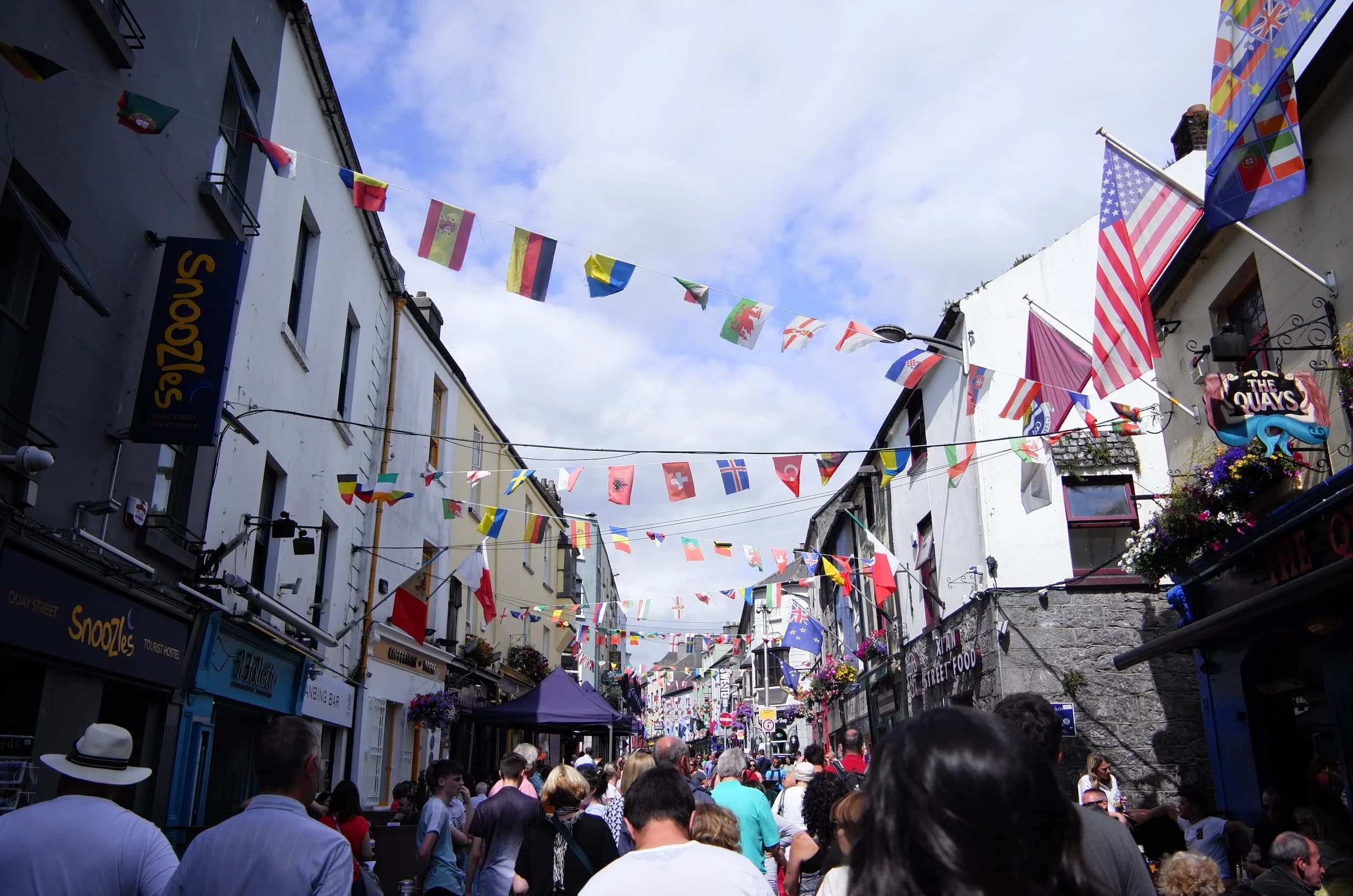
For a student group, Galway is the softest landing on the west coast. The Latin Quarter's pedestrianized lanes — Shop Street, Quay Street, High Street — keep a teacher-led high school group together without traffic, traditional-music sessions spill out of pub doors most evenings, and the day-trip radius is unreal: Cliffs of Moher in 90 minutes, Connemara's bogs and mountains to the west, Aran Islands ferries from Rossaveel. For educational travel focused on Irish language, maritime history, or rural Ireland, Galway is the right base; for a school group tour that has already done Dublin, it's the western bookend that makes the itinerary feel complete.
Top things to see and do


When to go
- May - Jun — long days, driest window
The sweet spot for Galway educational travel. Daytime highs 13-18°C, daylight until nearly 10 PM in June, and the Atlantic at its least sideways. The Aran ferries run every 90 minutes and the Cliffs of Moher stay open late. Book Aran ferry seats 2-3 weeks out — this is when school groups overlap.
- Jul - Aug — festival peak, warmest
Warmest window (15-20°C), longest evenings, and Galway's famous July festival run: the Arts Festival, the Film Fleadh, and the Galway Races in late July. High energy and high room rates; a teacher-led tour here needs lodging locked in 3+ months out. Rain is still a daily possibility — this is the west of Ireland.
- Sep - Oct — shoulder-season gold
The best-kept secret among teacher-led tours to Ireland. Galway International Oyster Festival runs the last weekend of September, temperatures drop to 11-15°C, and the Cliffs of Moher go almost quiet. A September or early-October high school group trip reads like a private Ireland if your school calendar allows it.
- Nov - Mar — grey, wet, and quiet
Sunset by 4:30 PM in December, persistent drizzle, and temperatures 5-10°C. Museum and pub culture carries the city through winter and hotel rates are at their lowest. Works for a focused literature or history track MLK-week trip; harder for the Aran Islands, which can cancel ferries for weather.
Food and culture

Galway Bay oysters
Native flat oysters from Galway Bay, ideally eaten at Moran's of the Weir or at the September Oyster Festival. Even students who think they hate oysters try one for the story.

Seafood chowder
The house lunch on every Galway pub menu: smoked haddock, mussels, salmon, and potatoes in a cream broth, served with brown soda bread. A bowl fuels a full afternoon on the Cliffs of Moher.

Atlantic salmon
Wild or farmed off the Connemara coast, usually served pan-seared with a dill butter or smoked on brown bread. The smoked version shows up at breakfast; the pan-seared is a group-dinner staple.

Brown soda bread
Dense, nutty, and baking-soda leavened — no yeast, no kneading. Every Galway pub bakes its own and every bowl of chowder comes with a chunk. The recipe hasn't meaningfully changed in 150 years.

Mussels in white wine
Killary Fjord mussels from Connemara, steamed open in white wine, garlic, and cream. A shared starter that turns skeptical students into believers in about ninety seconds.
What to pack
- Documents
Passport valid 6+ months past travel date, two printed copies (one for the student, one for the Tour Director's file), insurance card, and the Passports group packet. No visa required for US citizens visiting the Republic of Ireland for stays under 90 days. If the itinerary also includes Belfast, that's the UK — a separate (also visa-free) jurisdiction, so keep the passport on you, not in checked luggage.
- Clothing
Layers, always. Galway swings from sun to sideways Atlantic rain in the same afternoon. Pack a warm mid-layer (fleece or light sweater) even in July, plus a waterproof outer shell. No strict church dress codes, but shoulders-and-knees covered is still the polite default for Galway Cathedral and St. Nicholas' Collegiate.
- Footwear
Broken-in walking shoes with real tread — the Aran Islands are uneven limestone and often wet, the Cliffs of Moher path is gravel and grass, and the Latin Quarter is cobblestones. Do not buy new shoes for the trip. A second dry pair in the hotel room is a small luxury worth the backpack space.
- Rain gear
A proper hooded waterproof (not an umbrella — the Atlantic wind destroys umbrellas on the Cliffs and at Dún Aonghasa). Quick-dry pants beat denim on the Aran and Connemara days. A packable rain shell that lives in the daypack all week is the single most-used item on any Wild Atlantic Way itinerary.
- Tech
Ireland uses Type G plugs (three rectangular pins, same as the UK) — bring a universal adapter. T-Mobile and Google Fi include Ireland data at no extra cost; AT&T and Verizon users should buy a Three or Vodafone eSIM before departure. A portable battery earns its weight on the Aran and Cliffs day when the coach is out for 10+ hours.
- Extras
A small daypack, reusable water bottle (Galway tap water is soft and excellent), a notebook for the Aran visit (students want to write things down), and €20-30 in cash for market stalls and the occasional pub tip. Contactless cards work almost everywhere else.
Is it safe?
Yes. Ireland carries a US State Department rating of Level 1 ("exercise normal precautions") — the lowest rating the State Department gives, one step below the UK, France, and most of Western Europe. Violent crime against travelers is rare and Galway's overall crime rate sits well below that of most comparable US college towns. The realistic risk is weather: rain on the Cliffs of Moher, wind on the Aran Islands, and occasional sea-swell that cancels the ferry. Petty pickpocketing is a minor concern around Eyre Square on Saturday nights and nothing more.
On a Passports teacher-led trip to Galway, the group is on a private coach between venues, the Tour Director runs a briefing on Day 1, and every hotel is pre-vetted for 24-hour reception and secure room storage. We operate a 24/7 emergency line out of Boston, keep parents on a daily update channel, and maintain English-speaking (obviously) medical contacts in every city on the route. For most teachers running their first high school group trip to Ireland, the logistics feel notably easier than a domestic field trip — English signage, EU-standard emergency care, and a country that has been welcoming school group tours for two generations.
Practical tips
- Euros, not pounds
The Republic of Ireland uses EUR. If your itinerary also includes Belfast or Derry, those are GBP — don't let students leave the hotel on a cross-border day with the wrong currency. Contactless cards work everywhere on both sides of the border.
- Irish is real here
Galway borders the largest Gaeltacht (Irish-speaking region) in the country. Road signs west of the city are Irish-only, the Aran Islands operate in Irish day-to-day, and RTÉ Raidió na Gaeltachta comes in on the coach radio. A 5-minute Tour Director briefing on basic greetings — dia duit, slán, go raibh maith agat — lands well with a student group.
- Trad sessions aren't tourist shows
Traditional-music sessions at The Crane Bar, Tig Cóilí, and Monroe's Live are working sessions with local players — students sit, listen, and don't talk over the music. No cover charge, no set list. A teacher-led group dropping in for 45 minutes after dinner is one of the most-remembered hours of the trip.
- Plan for weather, not around it
The forecast in Galway is always "sunshine and showers." Ireland doesn't cancel school group tours for rain — locals don't, and neither do we. Build museum and cathedral slots into the wettest afternoon and reserve the Cliffs and Aran for the best-looking day in the week.
- Contactless everywhere
Tap-to-pay works on every bus, train, taxi, museum, and cafe. US contactless cards and phones work out of the box. Keep a small amount of cash for Saturday market stalls at the Galway Market outside St. Nicholas' Church and for the occasional pub tip.