Country guide

Japan

Japan student group travel for teachers: Tokyo, Kyoto, Hiroshima, and the culture-and-innovation curriculum behind our top teacher-led school group trips.

All countries
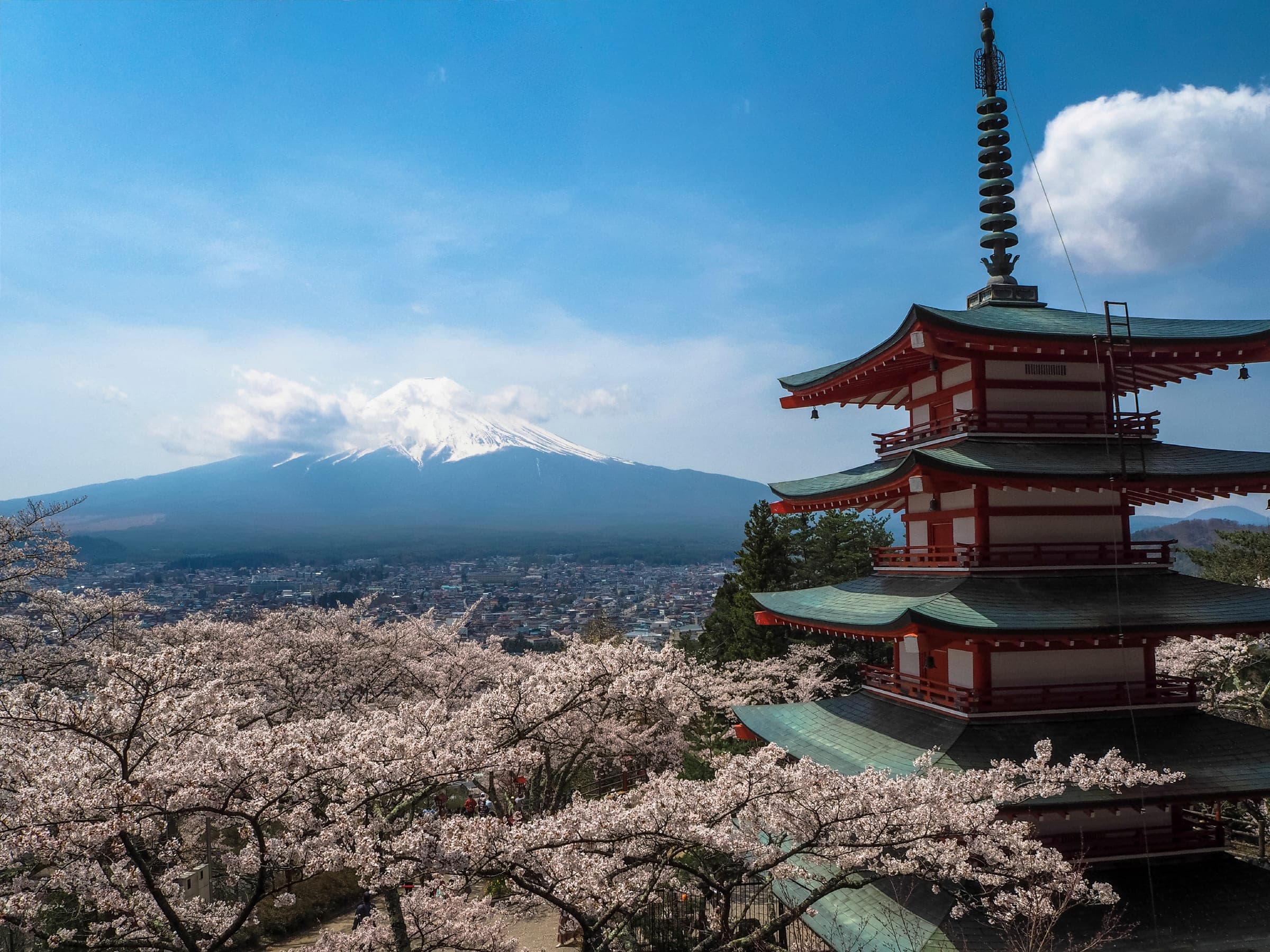
Mount Fuji rising beyond a pagoda and cherry blossoms in spring Japan
On this page
  • Where Japan sits and why it's a top-tier pick for a first East Asia student group trip
  • Six regions worth a day each — Tokyo, Kyoto, Osaka & Nara, Hiroshima & Miyajima, Hakone & Fuji, Nikko
  • What's on the menu: sushi, ramen, tempura, okonomiyaki, and the matcha-and-wagashi tea culture around them
  • Practical logistics for teachers: JR Pass, IC cards, temple etiquette, trains that leave on the second
  • Five facts that land after you've stood in Hiroshima's Peace Park and ridden the Shinkansen at 300 km/h

A quick introduction

Japan is an archipelago of roughly 6,800 islands covering about 377,975 km² — slightly smaller than California — with a population near 125 million and a capital, Tokyo, whose metro area of ~37 million is the largest on Earth. Four main islands (Honshu, Hokkaido, Kyushu, Shikoku) hold nearly everyone, and the country has 26 UNESCO World Heritage sites, the deepest curricular map in East Asia. For a student group, the density is the whole point: a week on the ground threads Edo-period temples, the Hiroshima Peace Park, a Shinkansen ride at 300 km/h, and a Mount Fuji day, without a single long travel day and with a curriculum that classroom work can't touch.

Japan is one of the most-requested Asia destinations in our educational travel catalog, and it's increasingly the first international trip a teacher leads when they want something beyond Europe. The infrastructure is elite — the Shinkansen runs to within a minute of schedule year after year, hotels are built for groups, English signage is everywhere at major stops, and the State Department has kept Japan at Level 1 ("exercise normal precautions") for years. The curricular fit is unusually broad for a single country: world history, WWII and peace studies, world religions (Shinto plus Buddhism), literature and visual arts, and earth science all pull their weight inside the same high school group trip.

Quick facts

Japan by the numbers

📐

377,975 km²

An archipelago roughly the size of California, stretched over 3,000 km from Hokkaido's snowfields to Okinawa's subtropics. Climate, food, and architecture shift every few hours on the train.

👥

~125 million

The world's 11th-largest population, concentrated on Honshu. Greater Tokyo alone is bigger than all of Canada — a useful scale reset for US students on day one.

🚅

3,000+ km of Shinkansen

The world's busiest and most punctual high-speed rail network. Average annual delay per train: under a minute. The Tokyo-Kyoto leg is the single most student-requested ride of the week.

🏯

26 UNESCO World Heritage sites

Twenty cultural, five natural, one mixed — more than any Asian country except China. A typical itinerary hits six or seven without trying.

Inside the trip

A week with a Passports group

A typical Passports high school group trip to Japan runs nine to twelve days and lines up cleanly with spring break (late March to mid-April for cherry blossoms) or the first two weeks of summer. Day one is Tokyo: arrival at Narita or Haneda, a private coach to the hotel, and an evening orientation walk through Asakusa ending at Sensō-ji. The Tour Director stays with the group for the full trip and runs the first-night briefing on etiquette, train rules, and the earthquake drill.

The middle of the week is the heart of the curriculum. Two or three days in Tokyo hit Meiji Shrine, Shibuya Crossing, Harajuku, and one STEM or arts anchor — teamLab Planets, the Miraikan science museum, or the Edo-Tokyo Museum. Then the group boards the Shinkansen to Kyoto for temples, the Fushimi Inari torii tunnel, and a tea-ceremony workshop, with a Nara day trip for Tōdai-ji and the deer park. The trip's emotional anchor is Hiroshima and Miyajima — the Peace Memorial Museum and a sunset ferry to the floating torii of Itsukushima. Students consistently rank Hiroshima as the day they'll remember twenty years out.

We've run student group travel to Japan long enough that every moving part has a backup: a Shinkansen delayed by a typhoon (rare but real), a student whose dietary restrictions nobody flagged until the first ryokan dinner, an earthquake alert that lights up every phone at once. Most of our Japan itineraries include a service-learning or cultural-exchange component — an English conversation session with a local high school, a calligraphy or ikebana workshop, a homestay night for longer programs — and the educational travel piece is real. What teachers tell us after the trip is that the logistics in Japan are easier than any domestic field trip they've ever run.

Region by region

Top things to see and do

Tokyo

Tokyo

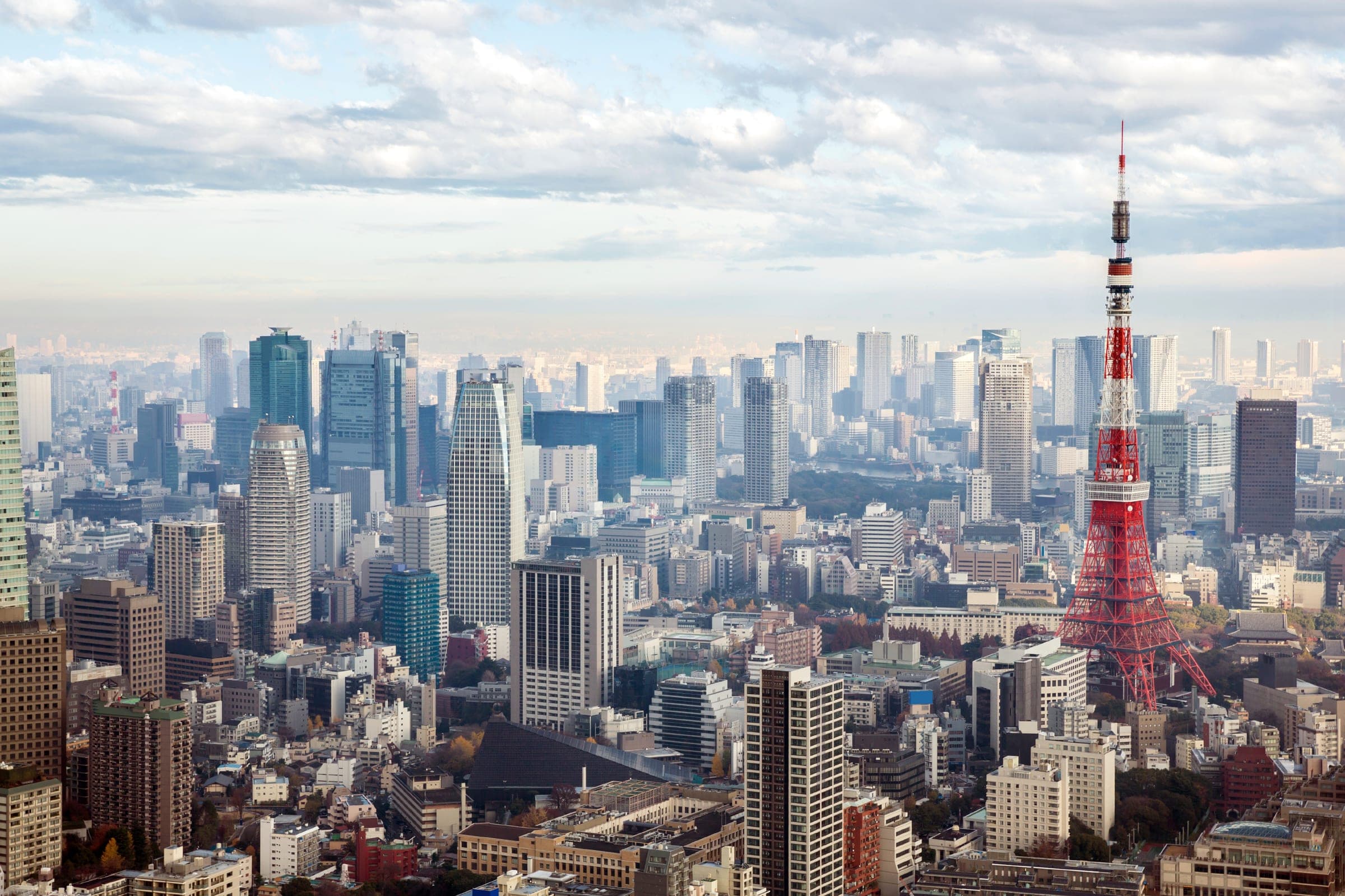
The capital and a 37-million-person classroom: Sensō-ji in Asakusa, Meiji Shrine in a forested 170-acre heart of the city, Shibuya Crossing for urban-geography shock, and Akihabara or teamLab for the STEM and pop-culture hit. Two to three nights minimum.

Kyoto

Kyoto

A thousand years of capital history packed into one city. 17 UNESCO sites inside the city limits — Kinkaku-ji, Kiyomizu-dera, Ryōan-ji's rock garden, the Fushimi Inari torii tunnel, and the Arashiyama bamboo grove. The religion-and-arts anchor of the trip.

Osaka & Nara

Osaka & Nara

Osaka's street-food culture (Dōtonbori at night) paired with Nara's 8th-century capital — Tōdai-ji and its 15-meter bronze Buddha, 1,200 free-roaming deer in the park, and Kasuga Taisha's 3,000 lanterns. An easy Kansai-region day or overnight.

Hiroshima & Miyajima

Hiroshima & Miyajima

The curricular and emotional anchor. Peace Memorial Park, the A-Bomb Dome (UNESCO), and the Peace Memorial Museum, followed by a short ferry to Miyajima's "floating" torii gate at Itsukushima Shrine. Set this day aside on the itinerary — it earns the space.

Hakone & Mount Fuji

Hakone & Mount Fuji

A day or overnight from Tokyo. Lake Ashi cruises with Fuji on the skyline, Ōwakudani's sulfur vents, the Hakone Open-Air Museum, and hot-spring ryokan dinners. Earth-science stop — the Ring of Fire in one afternoon.

Nikko

Nikko

Two hours north of Tokyo by train. UNESCO shrines and temples wrapped in cedar forest — the ornate Tōshō-gū mausoleum of Tokugawa Ieyasu, Shinkyō bridge, and Kegon Falls in the highlands. A quieter counterpoint to Tokyo's neon.

Weather by season

When to go

  • Mar - May — cherry blossoms, the spring-break sweet spot

    Cherry blossom (sakura) peak rolls north from late March in Kyushu through mid-April in Honshu. Highs 12-22°C, crisp mornings, the most photographed week of the Japanese year. This is the #1 window for spring-break school groups — book hotels and Shinkansen seats well in advance.

  • Jun - Aug — rainy season then hot summer festivals

    June is tsuyu (plum rain) — humid and wet, but the hydrangeas are spectacular. July and August are hot (30-35°C) and humid with typhoon risk building in August. Summer-break educational travel works if the itinerary has AC-friendly stops and an afternoon pace. Matsuri festival fireworks are a highlight.

  • Sep - Nov — autumn leaves, the other sweet spot

    Typhoons fade after mid-September, then six weeks of crisp, dry weather and koyo (autumn foliage) peaking mid-November in Kyoto and Nikko. Our favorite alternative to the crowded spring window — same temperatures, half the tourists, no sakura scrum.

  • Dec - Feb — cold, clear, and powder season

    Tokyo and Kyoto are cold-but-mild (2-10°C) with mostly clear skies; Hokkaido and the Japan Alps are buried in powder snow. Illuminations light up the big cities through mid-January. Tight for US school calendars, but a strong option for January interim terms or winter break programs.

What to order

Food and culture

Sushi

Sushi

Raw fish on vinegared rice, served nigiri-style at a counter or conveyor-belt (kaiten-zushi) at student-group prices. Tsukiji's outer market in Tokyo and Nishiki in Kyoto both run group-friendly tastings.

Ramen

Ramen

Wheat noodles in broth — shoyu, shio, miso, or the rich tonkotsu pork-bone style. Regional styles shift every 100 km on the Shinkansen. A weekly group favorite; slurping is polite.

Tempura

Tempura

Shrimp, white fish, and seasonal vegetables in a cold, light batter, flash-fried and served with grated daikon and a soy-dashi dipping sauce. The one dish where the oil is part of the teaching — watch it at the counter if the restaurant lets you.

Okonomiyaki

Okonomiyaki

A savory cabbage-and-batter pancake cooked on a griddle at the table, topped with pork belly, bonito flakes, mayo, and a sweet brown sauce. Osaka's hometown dish — the whole group can cook their own, which teachers love.

Matcha & wagashi

Matcha & wagashi

Ceremonial powdered green tea with traditional seasonal sweets. A formal tea-ceremony workshop in Kyoto is the single best one-hour cultural activity on the trip — quiet, hands-on, and the etiquette lessons carry into the rest of the week.

Curriculum tie-ins

Classroom connections

📜

World History

The arc from Heian-period Kyoto through samurai and the Tokugawa shogunate to the 1868 Meiji Restoration and modern Japan — all legible on the ground. Nijō Castle, the Edo-Tokyo Museum, and Nikko's Tōshō-gū make an AP World or World History field trip write itself.

🕊️

WWII & Peace Studies

The Hiroshima Peace Memorial Museum is the most powerful classroom-linked site our teachers use anywhere in the world. Pair with the A-Bomb Dome, paper cranes at the Children's Peace Monument, and a structured group debrief the evening after.

⛩️

World Religions

Shinto and Buddhism side-by-side in a way nowhere else in the world presents. A day in Kyoto visits both: Fushimi Inari's torii tunnels (Shinto) and Kiyomizu-dera (Buddhist) a short train ride apart. Works for AP World Religions or a comparative-religion elective.

🎨

Literature & Visual Arts

Murasaki Shikibu's Tale of Genji, Bashō's haiku tradition, ukiyo-e woodblock prints (Hokusai's Great Wave), and Studio Ghibli all trace back to stops on the itinerary. The Ghibli Museum in Mitaka is a standout add-on if tickets are secured early — they sell out months out.

🌋

Earth Science & Seismology

Japan sits at the intersection of four tectonic plates on the Ring of Fire. Hakone's active volcanic caldera, Mount Fuji itself, the JMA earthquake early-warning network, and the living memory of 2011 Tōhoku all connect an AP Environmental Science or Earth Science syllabus to the ground.

🤖

STEM & Innovation

The Miraikan (National Museum of Emerging Science & Innovation) in Odaiba, the Toyota Commemorative Museum in Nagoya, Honda's robotics exhibits, and Akihabara's maker culture all pair neatly with a computer-science or engineering field-trip frame. The Shinkansen itself is a lesson.

Packing essentials

What to pack

  • Documents

    Passport valid at least 6 months past travel date, two printed copies (one for the student, one for the Tour Director's file), insurance card, and the Passports group packet. No visa required for US citizens staying under 90 days.

  • Clothing

    Layers for every season — mornings and temple interiors run cool even in summer. Modest shoulders-and-knees for shrine and temple visits. Summer packers need breathable fabrics for humidity; spring and fall packers a light shell and a fleece for Hakone.

  • Footwear

    Slip-on shoes are non-negotiable — students will take them off multiple times a day at temples, ryokans, and some restaurants. Broken-in walking shoes for 15,000-step days, plus indoor socks without holes. Skip flip-flops.

  • Rain gear

    A packable rain jacket and a small umbrella — June's tsuyu season and early-autumn typhoons are real. Every konbini sells a 500-yen clear umbrella if the group gets caught out.

  • Tech

    Type A plugs work in Japan (100V not 110V — most US electronics are fine, but check hair dryers). A portable battery earns its weight on train-heavy days. Rent pocket Wi-Fi at the airport on arrival, or preload an eSIM — US carrier roaming rarely pencils out.

  • Extras

    A small hand towel (public bathrooms don't have paper towels), a plastic bag for trash (public trash cans are rare), a reusable water bottle (tap water is excellent nationwide), and a small gift if the itinerary includes a homestay or school exchange.

The parent-meeting question

Is it safe?

Yes. Japan is one of the safest countries on Earth, and the US State Department has kept it at Level 1 ("exercise normal precautions") — the lowest advisory level, the same rating as Switzerland or Norway. Violent crime is exceptionally rare; lost wallets routinely come back to their owners via the neighborhood kōban (police box). The real risk profile is natural — earthquakes, typhoons, and occasional volcanic activity — and the country has engineered itself around that reality: buildings are seismically rated, the JMA earthquake early-warning network gives 10-60 seconds of notice, and every Japanese child can do a quake drill from memory.

On a Passports teacher-led trip, the group never rides public transport solo, never splits up without a defined meetup time on the Tour Director's phone, and is never out of reach of a named Tour Director who stays with the group 24/7 for the full trip. We operate a 24/7 emergency line staffed out of our Boston HQ, run quake-drill orientations on the first night, and maintain pre-vetted English-speaking medical contacts in Tokyo, Kyoto, Hiroshima, and every other region we visit. For most teachers leading school group tours to Japan, the day-to-day logistics feel calmer than a US domestic field trip.

🛡️

Personal safety

Japan's violent-crime and theft rates are among the lowest in the developed world. The on-the-ground briefing is mostly about etiquette — no talking on trains, no eating while walking, phones on silent in public — rather than fending off pickpockets. Shibuya and Roppongi nightlife get a specific evening-curfew brief from the Tour Director.

⚕️

Health & medical

Tap water is safe nationwide. No required vaccines beyond CDC routine recommendations. Convenience-store food is remarkably safe; most dietary restrictions are workable with a little planning. International-standard hospitals in Tokyo (St. Luke's, Tokyo Medical University) and regional equivalents in every city we visit.

🚐

Roads & transport

Intercity legs run on Shinkansen and JR — the most punctual, well-maintained rail network on Earth. Within cities we use private coach with vetted, professional drivers, seatbelts on every seat. Rare internal flights (Hokkaido add-ons) are on JAL or ANA, both with spotless safety records.

🌪️

Natural hazards

Earthquakes are a fact of life — groups run a drop-cover-hold drill on day one, and every hotel has posted evacuation routes. Typhoon season is August through early October, mainly south and west; Shinkansen and itineraries adjust in real time. Active volcanoes (Sakurajima, occasionally Hakone and Aso) are monitored by JMA with same-day bulletins.

Practical tips

  • Buy a JR Pass before you fly

    The Japan Rail Pass must be purchased outside Japan and activated on arrival. 7-, 14-, and 21-day options cover most Shinkansen and JR local lines; it is almost always cheaper than point-to-point for a student-group itinerary. Every Passports teacher-led trip pre-buys the pass as part of the program cost.

  • Cash, IC cards, and Suica

    Japan is still a cash economy at small restaurants, temple entrances, and most vending machines. Tap-to-pay IC cards — Suica, Pasmo, Icoca — cover trains, buses, convenience stores, and most vending. Cards are increasingly accepted but not universal; have ¥10,000 in cash per student at any given time.

  • Etiquette: shoes, bowing, and quiet cars

    Shoes off at temples, ryokans, and most tatami rooms — slip-ons earn their price by day two. Bowing is the default greeting. Trains are nearly silent; phone calls are for the vestibule. Tipping is not a thing and actively confuses servers. No eating while walking except at festivals.

  • Trains leave on the second, not the minute

    The Shinkansen's average annual delay is measured in seconds, and a group missing a platform means a rebook and a coach chase. Our itineraries build in 10-minute platform buffers and pre-assigned car numbers for every transfer.

  • Pocket Wi-Fi or eSIM — pick one before you land

    US carrier roaming in Japan is slow and expensive. Pocket Wi-Fi rentals at Narita and Haneda are cheap and cover the whole group off one device; eSIMs are cheaper for individual students who want their own data. Hotel Wi-Fi is universal and fast.

Five facts

Good to know

⛩️

World's oldest continuous monarchy

The imperial line claims unbroken descent since 660 BC. The current Emperor is the 126th — a civics and world-history hook worth unpacking before the Meiji Shrine visit.

🏪

50,000+ konbini

7-Eleven, FamilyMart, and Lawson are bathrooms, ATMs, onigiri lunches, umbrellas, and SIM-card counters, all open 24/7. Your group will use one every single day.

🚄

Shinkansen on the second

JR East's average annual per-train delay is about 36 seconds — a number that includes earthquakes, typhoons, and snow. Students notice it by day two and don't stop talking about it.

🥤

4+ million vending machines

One for roughly every thirty people, selling hot coffee, cold tea, umbrellas, and occasionally eggs. A running headcount game for the bus ride between cities.

🌸

Four very distinct seasons

Sakura in spring, hanabi (fireworks) festivals in summer, koyo foliage in autumn, powder snow in winter — each with its own food, festivals, and photographable landscape. The calendar is a curriculum.

Tours that go here

Tours that visit Japan

See all tours →
Tokyo Tower, Japan
Japan

Highlights of Japan

Tokyo · Fukushima

See itinerary
Mt. Fuji, Japan
Japan

Japan's Cultural Odyssey: An Educational Expedition

Tokyo · Kyoto · Hiroshima

See itinerary
Tokyo Tower, Japan
Japan

Japan's Economic and Business Insights: A Student Exploration

Tokyo · Kyoto

See itinerary
Tokyo Tower, Japan
Japan

Japan's Innovation Journey: A STEM-focused Exploration

Tokyo

See itinerary
Tokyo Tower, Japan
Japan

Japan's Resilient Heart

Tokyo · Kesennuma · Fukushima

See itinerary
From our blog

Blog posts about Japan

See all →
Science in the Field: Best Educational Travel Destinations for Natural Wonders
destinations

Science in the Field: Best Educational Travel Destinations for Natural Wonders

Iceland, Costa Rica, and Japan offer unmatched field science experiences where students explore volcanoes, coral reefs, and rainforests to bring earth science and biology to life

Read post
Integrating Art History in Student Travel: A Guide to Learning Abroad
educational impact

Integrating Art History in Student Travel: A Guide to Learning Abroad

Integrating art history into student travel turns cities like Florence, Paris, and Amsterdam into living classrooms where students experience masterpieces firsthand and gain global perspective

Read post
Top Destinations for High School Educational Tours | Passports Educational Travel Blog
destinations

Top Destinations for High School Educational Tours | Passports Educational Travel Blog

This guide covers top destinations for high school educational tours, from London and Rome to Tokyo and Costa Rica, with activity ideas that connect travel to classroom learning

Read post
Where to Next?!
destinations

Where to Next?!

Ten top educational travel destinations for high school students are highlighted here, covering Europe, Asia, Australia, and Africa with cultural and historical highlights for each city

Read post
Golden Temple of Kyoto
travel inspiration

Blog Spotlight: Lillie Marshall

Lillie Marshall is a Boston public school teacher with a passion for teaching and traveling.

Read post
Arlington National Cemetery
travel inspiration

3 Must-See Sights in Washington, DC

In honor of Veterans Day, here is our choice of the top three must-see sights in Washington, DC -- the Korean, Vietnam and WWII War Memorials

Read post
On the ground

Places we go

Browse all destinations →
The vermilion floating torii gate of Itsukushima Shrine on Miyajima island near Hiroshima Japan

Hiroshima, Japan

Hiroshima student group travel for teachers: the Peace Memorial, Atomic Bomb Dome, and Miyajima on teacher-led educational tours for high school programs.

Snow-dusted view of Kiyomizu-dera temple on the Higashiyama hillside above Kyoto, Japan

Kyoto, Japan

Kyoto student group travel guide for teachers: temples, Fushimi Inari, Gion — an educational tour of Japan's traditional capital for high school groups.

The Tokyo skyline at dusk with Mount Fuji on the horizon, Japan

Tokyo, Japan

Tokyo student group travel guide for teachers: Shibuya, Senso-ji, Skytree, Akihabara — an educational tour of Japan's capital for high school groups.

Take your students to Japan.

Every Passports trip is built around a teacher and a group — from first itinerary sketch to the last day on the ground. Tell us what you have in mind and we’ll take it from there.

Plan a trip