- RegionKansai, Western Honshu
- LanguageJapanese
- CurrencyJapanese Yen (JPY)
- Best seasonMar - May, Oct - Nov
- TimezoneJapan Standard Time (UTC+9)
A quick introduction
Kyoto was Japan's imperial capital for more than a thousand years, from 794 to 1868. The city of about 1.5 million people sits in a mountain-rimmed basin in central Honshu and holds 17 UNESCO World Heritage Sites, more than 1,600 Buddhist temples, and 400 Shinto shrines. Spared from US firebombing in 1945 — the story goes that Secretary of War Henry Stimson personally crossed it off the target list — Kyoto is the closest a modern student can walk to pre-modern Japan.
For a student group, Kyoto is the cultural and aesthetic anchor of any Japan itinerary. The city teaches Buddhism, Shinto, the samurai-era political order, and the entire grammar of Japanese art and architecture inside a 30-minute taxi radius. Educational travel here is layered: a morning at Kinkaku-ji, an afternoon at Nijō Castle, an early-evening walk through Gion. Pair it with Hiroshima for a full Western-Honshu high school group trip; pair it with Tokyo for the traditional / contemporary split that teaches students more about modern Japan than any textbook.
Top things to see and do


When to go
- Mar - May — cherry blossoms then green
The headline season for educational travel to Kyoto. Sakura typically peaks the first week of April along the Philosopher's Path and the Kamogawa river; daytime highs run 12-23°C. Book the trip dates around your school's spring break and accept that you're competing for hotel rooms.
- Jun - Aug — rains then heat
Tsuyu (rainy season) runs mid-June through mid-July; August hits 33-36°C with cricket-loud humidity. The Gion Matsuri festival processions in mid-July are world-class but require planning the trip around them. Otherwise this is the hardest-conditions window.
- Sep - Nov — autumn maple peak
The other obvious sweet spot for teacher-led tours. Kōyō (red maple leaves) light up the Higashiyama temples in mid- to late-November. Daytime highs 14-23°C, golden afternoon light, domestic crowds heavy on weekends but workable midweek with early starts.
- Dec - Feb — quiet, occasionally white
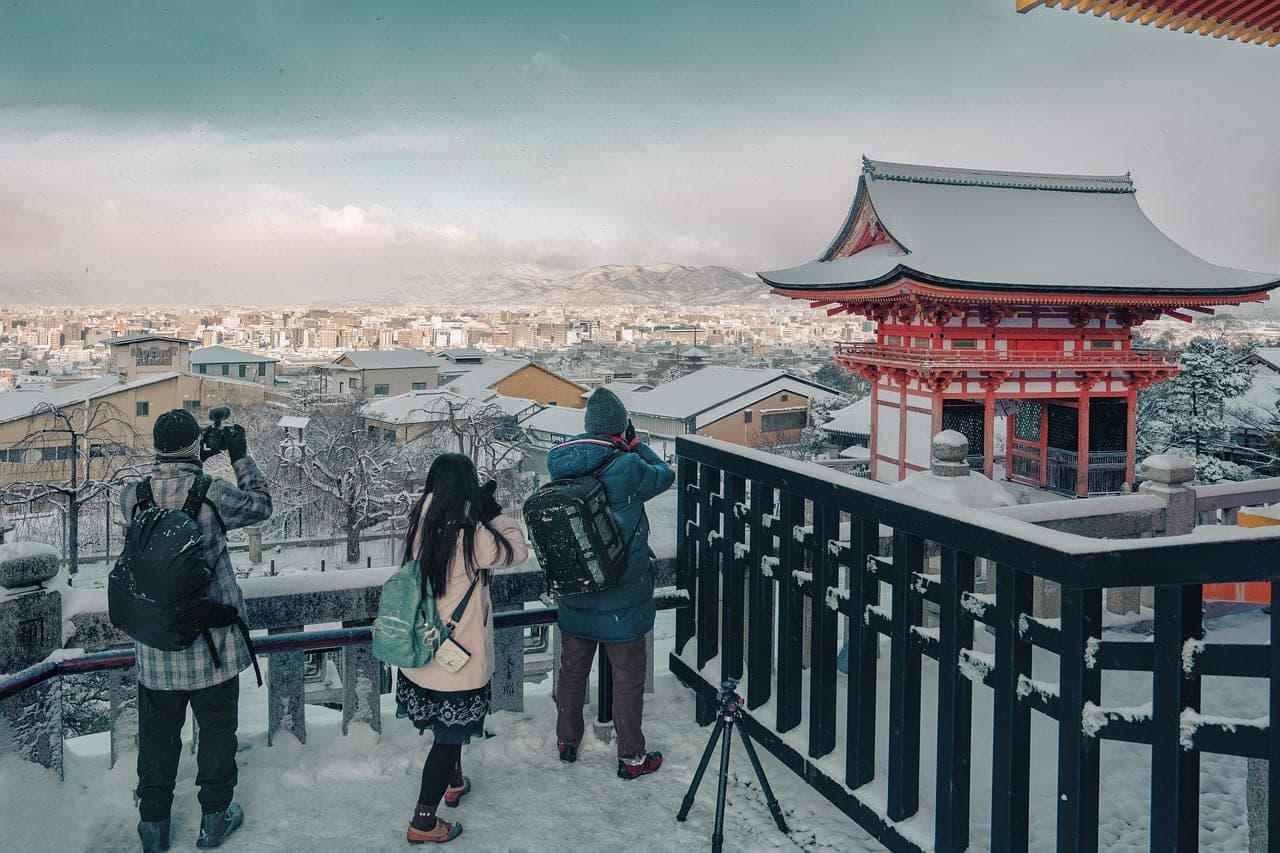
Daytime highs 6-10°C with cold mornings; light snow occasional, heavy snow rare. Kinkaku-ji dusted in snow is one of the iconic images of Japan. Temples are uncrowded; some side restaurants shorten hours. A solid interim-term window for focused groups.
Food and culture

Kaiseki
Kyoto's signature multi-course meal — seasonal, vegetarian-leaning, served in lacquer dishes one course at a time. A full kaiseki runs long; lunch sets at temple-adjacent restaurants are the group-friendly entry point.

Yudofu
Simmered tofu in a light kombu broth, the specialty of the Buddhist temple kitchens around Nanzen-ji. Lighter than it sounds; the dipping condiments do the work.

Matcha sweets
Uji, just south of Kyoto, has grown the world's reference matcha for 800 years. Matcha parfaits, matcha mochi, matcha soft serve — the city's tea-and-sweets sub-scene is its own itinerary.

Nishiki Market snacks
Five-block covered market in central Kyoto — tako tamago (octopus with quail egg), yuba (tofu skin), pickled everything. Group lunch as a graze, not a sit-down.

Wagashi
The traditional Japanese sweets served with tea — sculpted by hand to reflect the season (cherry petal in spring, maple leaf in autumn). A short workshop at a wagashi shop is one of the best classroom add-ons in the city.
What to pack
- Documents
Passport valid 6+ months past travel date, two printed copies (one for the student, one for the Tour Director's file), and the Passports group packet. No visa required for US citizens on a stay under 90 days. JR Pass voucher if the itinerary uses one — exchange on arrival at the airport JR desk.
- Clothing
Layers for spring and autumn — Kyoto's basin holds heat in the afternoon and cools fast at sunset. Modest dress for temples and shrines; tank tops and short shorts read wrong. A neutral jacket-and-pants combo for the kaiseki dinner pays off.
- Footwear
Slip-on walking shoes are non-negotiable — every temple and ryokan requires shoes off at the entrance. Broken-in pairs with no holes in the socks. Plan for 14,000-step temple days on the Higashiyama loop.
- Tech
Japan uses Type A plugs (US-compatible) at 100V. A pocket Wi-Fi or eSIM is essential — temples don't carry English signage and Google Translate camera mode earns its weight. Portable battery for full Higashiyama-loop days.
- Extras
A small daypack (large bags are awkward in temple buildings), reusable water bottle, a folded handkerchief (most public restrooms don't provide hand towels), sunscreen, and a compact umbrella year-round — Kyoto rains in every season.
Is it safe?
Yes, emphatically. Japan is rated Level 1 by the US State Department — the lowest advisory tier — and Kyoto is one of the safest large cities in the world. Violent crime against travelers is statistically near zero, pickpocketing is rare, and Kyoto's koban (police box) network sits at most major intersections. The genuine risks here are seismic and weather- related, plus a recent uptick in over-tourism friction in Gion that the city is actively managing.
On a Passports teacher-led trip, the group moves with a Tour Director who speaks the language, knows the bus and subway networks, and briefs the group on temple, shrine, and Gion etiquette before any visit. Hotels are pre-vetted, the coach driver carries professional medical certification, and we operate a 24/7 emergency line out of Boston with English-speaking medical contacts in every city we visit. For most teachers running their first student group travel to Japan, Kyoto is the city they remember from the trip.
Practical tips
- The bus is how Kyoto moves
Kyoto's subway covers the spine but the bus network reaches every temple. The Tour Director handles passes; students learn the front-on, back-off, exact-fare-or-IC-card rhythm fast.
- Shoes off — many times a day
Every temple, every ryokan, many restaurants. Wear pairs that slip on cleanly and bring socks without holes. Leave shoes facing the door when you take them off — it's the local convention.
- Gion photo rules are real
Private alleys in Gion are signed off-limits to photography and the city issues fines. The main streets — Hanamikoji, Shijō — are fine; the side lanes are not. The Tour Director walks the group through where the line is.
- Quiet in temples
Voices low, phones on silent, no eating. Most temples allow photography in the grounds but not in the inner sanctuaries. A short pre-visit briefing covers the consistent rules.
- Cash still matters
Contactless is growing but smaller temples, traditional restaurants, and Nishiki Market stalls often only take cash or IC cards. 7-Eleven ATMs accept foreign cards reliably. The Tour Director points the group to ATMs on Day 1.