- RegionLorraine (Grand Est), France
- LanguageFrench
- CurrencyEuro (EUR)
- Best seasonMay - Jun, Sep - Oct, late Nov - Dec
- TimezoneCentral European Time (UTC+1)
A quick introduction
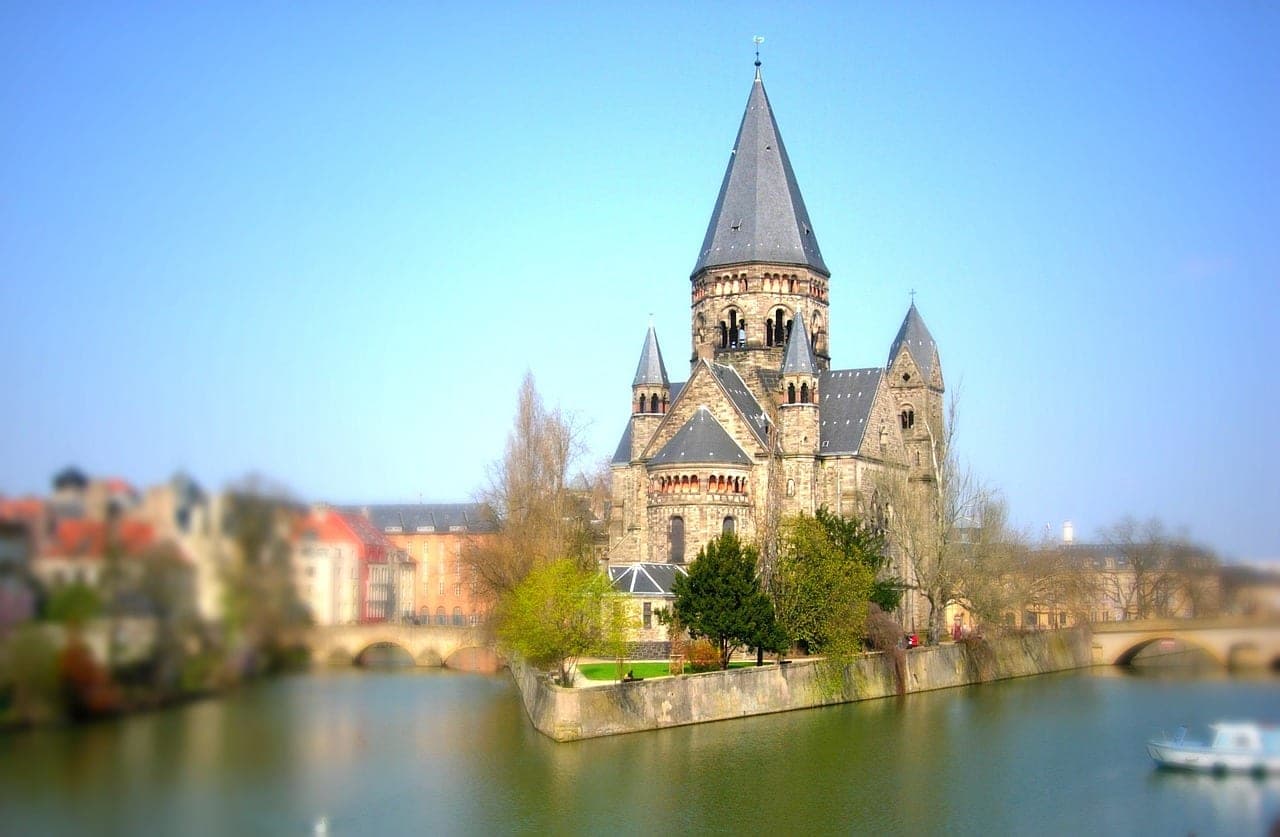
Metz is the capital of the historic Lorraine region — about 120,000 people sitting on the Moselle, an hour southwest of Luxembourg and an hour from the German border at Saarbrücken. The city has been Roman, French, German (1871-1918 and 1940-44), and French again, and the historic core mixes 13th-century Gothic, a grand 19th-century Wilhelmine Quartier Impérial built by the Germans, and Shigeru Ban's 2010 Centre Pompidou-Metz on the edge of it.
For a student group, Metz is the underrated French cathedral city. Saint-Étienne has more stained glass than any other Gothic cathedral in France (about 6,500 square meters), the historic center is fully walkable in a long morning, and the Centre Pompidou-Metz is the strongest contemporary art museum in eastern France. It pairs cleanly with Strasbourg (a TGV ride away) or Luxembourg City (35 minutes by regional train) on a teacher-led trip, and is one of the few French educational travel stops where a student group can cross a national border by lunch and be back for dinner.
Top things to see and do


When to go
- May - Jun — spring sweet spot
Daytime highs 17-25°C, the cathedral light at its most dramatic, and Lorraine in full leaf. The classic window for educational travel to Metz; the city is small enough that crowds never build the way they do in Strasbourg or Reims.
- Jul - Aug — peak heat, mirabelle ripening
Daytime highs 25-30°C and the Lorraine mirabelle plum harvest kicking off in mid-August. Workable for a summer student group trip — the city is quiet in August because half the locals leave — and the Mirabelle Festival (mid-August through early September) is a high-payoff window.
- Sep - Oct — shoulder-season gold
The best window for teacher-led tours to Lorraine. Mirabelle tarts in every patisserie window, light turning amber, temperatures at 14-20°C, and the city center comfortably empty.
- Late Nov - Dec — Christmas markets
Daytime highs 4-8°C and Metz running one of the larger Christmas-market circuits in France — five linked squares with the Saint-Nicolas figure (Lorraine's patron) at the center of the iconography. A high-payoff window for a Christmas-themed high school group trip; layer heavily.
Food and culture

Quiche lorraine
The original — eggs, cream, and lardons (smoked pork) in a shortcrust shell, no cheese in the proper version. Sold by the slice at every bakery in Metz; the test dish for whether the bakery is honest.

Pâté lorrain
Pork-and-veal forcemeat marinated in white wine and baked in an oblong shortcrust shell. Eaten warm or cold, sliced and served as a starter; standard at any Lorraine bistro.

Mirabelles & tarte aux mirabelles
The small golden plums that 80% of the world's commercial crop comes from Lorraine — eaten fresh in August and September, baked into open tarts year-round, and turned into a clear eau-de-vie for the over-21 chaperones.

Munster cheese
Strong-smelling, soft-rinded cow cheese from the Vosges mountains that mark the eastern edge of Lorraine. Eaten with cumin seeds and a slice of rye bread. Polarizing, memorable, and the cheese-course standard at a Lorraine restaurant.

Madeleines de Commercy
Shell-shaped butter cakes from Commercy, an hour west of Metz, and the Proust madeleine of literary fame. Sold by the bag at every patisserie, eaten with afternoon tea.
What to pack
- Documents
Passport valid 6+ months past travel date, two printed copies (one for the student, one for the Tour Director's file), insurance card, and the Passports group packet. No visa required for US citizens on a stay under 90 days in the Schengen area; the Luxembourg day trip stays inside Schengen.
- Clothing
Layers in every season — Lorraine sits between Atlantic and continental weather and flips daily. Modest dress (shoulders and knees covered) for the cathedral. A warm coat, hat, and gloves for a December Christmas-market trip; afternoons hover around 2-7°C.
- Footwear
Broken-in walking shoes with real soles. The historic center is set in pavé (rounded river cobbles) and a student group will log 9,000-11,000 steps a day even on a single-city itinerary. Do not buy new shoes for the trip.
- Rain layer
Lorraine averages rain 12-14 days a month outside summer. A packable rain shell or compact umbrella in the daypack from October through May.
- Tech
France uses Type C / E plugs (European two-prong) — bring a universal adapter that also covers German Type F (used in Luxembourg). A portable battery earns its weight on Pompidou days. T-Mobile and Google Fi work out of the box.
- Extras
A small daypack for museum days (Pompidou-Metz asks larger bags to be checked), a reusable water bottle, sunscreen May through September, and a fabric tote for the Saturday Marché Couvert.
Is it safe?
Yes. France's US State Department rating is Level 2 ("exercise increased caution") — the same band as Italy, the UK, and Germany — and the elevated level reflects generic European terrorism risk, not anything specific to Metz or Lorraine. Violent crime against travelers is genuinely rare, and Metz is one of the quieter mid-sized cities in France on the safety side. The realistic risk is opportunistic pickpocketing at Metz-Ville train station on TGV-arrival mornings and inside the Christmas-market crowds in December.
On a Passports teacher-led trip the group is never on public transport alone, the Tour Director runs a pickpocket-awareness briefing on the first evening, and every hotel is pre-vetted for 24-hour reception and secure room storage. We operate a 24/7 emergency line out of Boston, keep parents on a daily-update channel, and have English-speaking medical contacts in every city we visit. For most teachers running their first school group tours to France, Metz feels easier than a domestic field trip.
Practical tips
- Metz-Ville is one of the most beautiful train stations in France
The 1908 Wilhelmine basalt-and-Jaumont-stone station was built by Kaiser Wilhelm II as a statement piece. Worth a 10-minute walk-through on arrival or departure; a memorable photo stop for the group.
- The cathedral wants morning light
Saint-Étienne's stained glass is at its best between 10 and 1 on a sunny day — particularly the south-side Chagall windows. Plan the cathedral visit before lunch, not after.
- Luxembourg pairs as a half-day, not a full day
The TER from Metz-Ville to Luxembourg-Gare runs every 30 minutes and takes 35 minutes one way. Cathedral-casemates-Old-Quarter loop in three hours; back in Metz for a proper Lorraine dinner.
- French is the working language, German lives in the names
Service-industry English is widely available; signage and menus in tourist areas are bilingual. A bonjour on the way into a shop and a merci on the way out go a long way — a useful classroom moment for French students on a school group tour.
- Cards work, small cash helps at the markets
Contactless is near-universal. Carry a bit of cash for the Marché Couvert, the Christmas-market chalets, and the mirabelle-jam stalls in late summer.