- RegionIsère, Auvergne-Rhône-Alpes
- LanguageFrench
- CurrencyEuro (EUR)
- Best seasonMay - Jun, Sep - Oct
- TimezoneCentral European Time (UTC+1)
A quick introduction
Grenoble is the flattest big city in the French Alps, dropped inside a Y-shaped valley where the Isère meets the Drac and three mountain ranges — Chartreuse to the north, Vercors to the west, Belledonne to the east — rise straight off the streets. About 160,000 people live in the city and roughly 700,000 in the metro area; the elevation is a modest 214 meters, but look up from any intersection and you are looking at 2,000-meter limestone walls. Stendhal was born here in 1783, the 1968 Winter Olympics were hosted here, and today the city runs on a big university and a serious cluster of physics labs (CEA, the European Synchrotron).
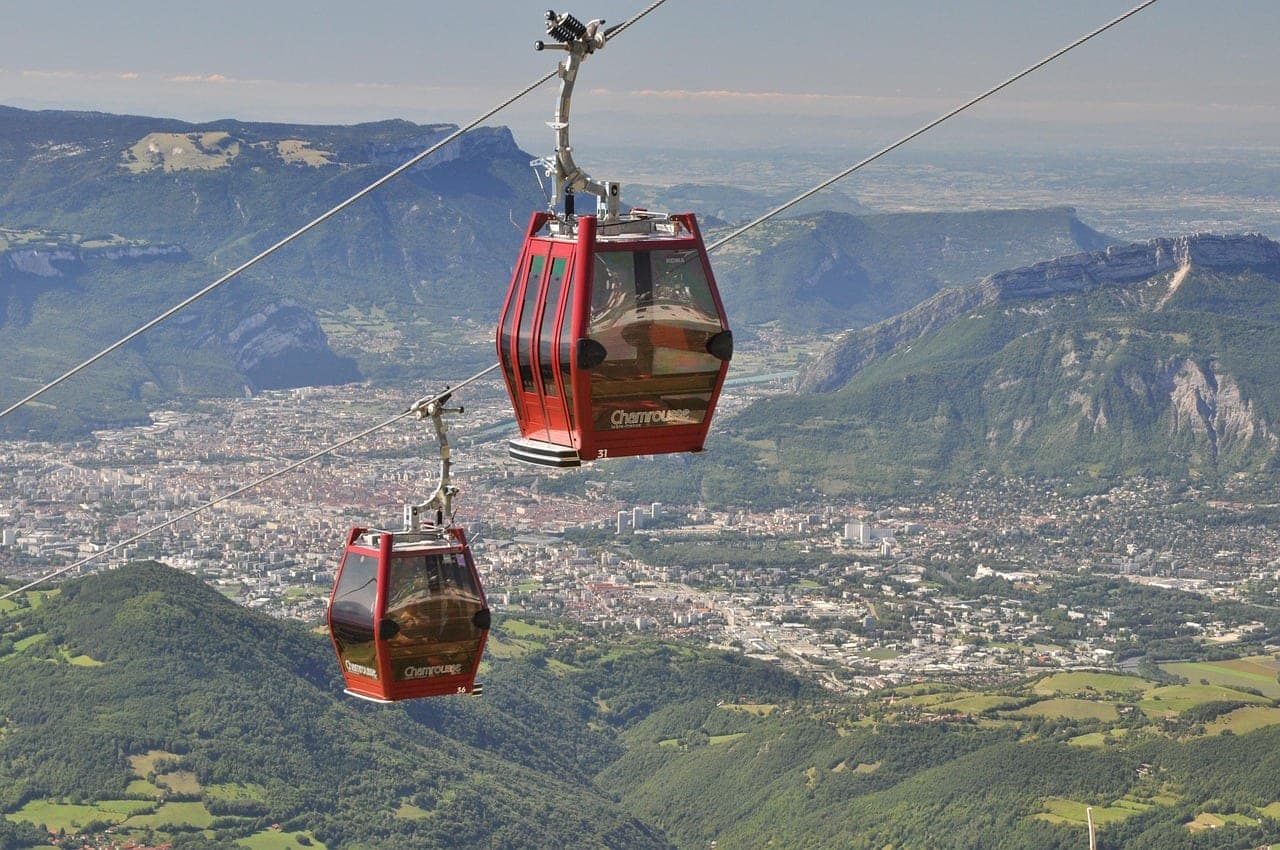
For a student group, Grenoble is the rare city where alpine geography, French Revolutionary history, and modern scientific research all land inside a 15-minute tram ride. It slots cleanly into a high school group trip to France or a broader Alps itinerary, and the compact center makes teacher-led tours of the museums and the Bastille téléphérique easy to choreograph. We also use Grenoble as a base for educational travel day trips to Annecy, Chamonix, and the Gorges de la Bourne.
Top things to see and do


When to go
- May - Jun — Alpine spring
The classic window for educational travel to Grenoble. Daytime highs 18-25°C, wildflowers on the Vercors plateau, snow still on the high peaks for the photo. Museums are quiet and the téléphérique runs without a line for most of the morning.
- Jul - Aug — hot valley, cool heights
The valley floor runs 28-33°C and can feel sticky; the fortress and the Chartreuse foothills stay 5-8°C cooler. Summer student groups work, but schedule museum and cable-car time before 11 AM and keep afternoons under tree cover or uphill.
- Sep - Oct — shoulder-season gold
The sleeper pick for teacher-led trips. Temperatures drop to 14-22°C, the larches in the Belledonne range turn, and walnut harvest kicks off across the Isère valley. Tourist volume is low and the light for Bastille photos is unbeatable.
- Nov - Mar — ski season
Short daylight, rain in town, snow on the resorts 30-60 minutes uphill. A January or February high school group trip works if the itinerary leans into Olympic heritage and a day on the slopes at Chamrousse or Les Deux Alpes; less ideal if the program is museum-and-walking.
Food and culture

Gratin dauphinois
Thinly sliced potatoes, cream, garlic, nutmeg, baked until the top goes bronze. Invented in this region in the 18th century and still the local comfort food.

Ravioles du Royans
Postage-stamp ravioli stuffed with comté, herbs, and fresh cheese, cooked in under two minutes. Protected by a regional IGP label.

Noix de Grenoble (walnuts)
The first nut to earn an AOC in France. Harvested every autumn in the Isère valley; turns up in salads, tarts, and the local aperitif wine.

Saint-Marcellin cheese
A small, soft cow's-milk cheese from the village 40 km southwest. Served runny on toast or warmed whole in a ramekin.

Chartreuse liqueur
Made by Carthusian monks 25 km north of the city from 130 alpine herbs, the recipe a genuine secret since 1737. Sampled by adults only on our trips; the monastery distillery is an easy afternoon visit.
What to pack
- Documents
Passport valid 6+ months past travel date, two printed copies (one for the student, one for the Tour Director's file), insurance card, and the Passports group packet. No visa required for US citizens on a stay under 90 days in the Schengen area.
- Clothing
Layers, always — the valley can run 20°C while the Bastille stands in cloud at 10°C. A light rain shell, a fleece or light down, and modest dress (shoulders and knees covered) for the churches and the Chartreuse monastery visit.
- Footwear
Broken-in walking shoes with grip — the old-town cobbles are slick after rain and the Bastille walk-down is a 300-meter descent on packed gravel. Ankle-support sneakers or light hikers beat fashion sneakers every time.
- Weather extras
A compact umbrella October through April, sunscreen May through September (Alpine sun at altitude is brutal), a reusable water bottle for the public fountains in the old town. Sunglasses year-round — the snow glare bounces off the peaks even from down in the valley.
- Tech
France uses Type C / E plugs (European two-prong) — bring a universal adapter. A portable battery earns its weight on museum days. T-Mobile and Google Fi work out of the box; others should buy an Orange or SFR eSIM before departure.
- Extras
A small daypack for museum days (large bags must be checked at the Musée de Grenoble), a refillable water bottle, motion-sickness tablets for the mountain-road day trips, and a notebook for the Stendhal and 1968 Olympics journaling prompts we include in the student packet.
Is it safe?
Yes. France's US State Department rating is Level 2 ("exercise increased caution") — the same as Italy, Germany, the UK, and most of Western Europe — and the elevated level reflects generic European terrorism risk, not anything specific to Grenoble. Violent crime against travelers is rare. The practical risk profile in Grenoble is closer to a mid-sized US college town than to a major European capital: pickpocketing at the main tram stops and at the Bastille cable-car queue, and occasional petty theft near the Gare SNCF late at night.
On a Passports teacher-led trip, the group is never on public transport alone, the Tour Director runs a pickpocket-awareness briefing on arrival, and every hotel is pre-vetted for 24-hour reception and secure room storage. We operate a 24/7 emergency line out of Boston, keep parents on a daily-update channel, and maintain English-speaking medical contacts in every city on the itinerary. For teachers running their first student group travel to France, the logistics feel steadier than a domestic field trip.
Practical tips
- Arrive by TGV, not by plane
Lyon-Saint-Exupéry is the closest real airport (90 minutes by coach). Most of our school group tours connect through Paris CDG and take the direct TGV down — 3 hours, one transfer, arrives in the city center. Grenoble-Isère airport is seasonal and mostly serves ski charters.
- Ride the téléphérique early
"Les bulles" run from 9:15 AM in summer and the first two departures are nearly empty. Book group tickets the afternoon before — the counter at the quai lets you lock a time slot and skip the walk-up line.
- Lunch is a full sit-down
French school and office rhythm still puts lunch at 12:30-14:00. Restaurants that open at noon fill by 12:45; outside those hours most kitchens close. Plan museum visits around the window rather than through it.
- Cards everywhere, small cash for markets
Contactless is near-universal. Keep €20-30 in small bills for the Place aux Herbes produce market, the walnut-oil stand, and the occasional Chartreuse monastery gift shop that still runs cash-only.
- A little French goes a long way
Grenoble is a university city and most under-30s speak strong English, but the older generation appreciates a bonjour on the way in and a merci, au revoir on the way out. Our student packet includes a one-page survival sheet.