- RegionAlsace, France
- LanguageFrench (Alsatian widely spoken)
- CurrencyEuro (EUR)
- Best seasonMay - Jun, Sep - Oct, late Nov - Dec
- TimezoneCentral European Time (UTC+1)
A quick introduction
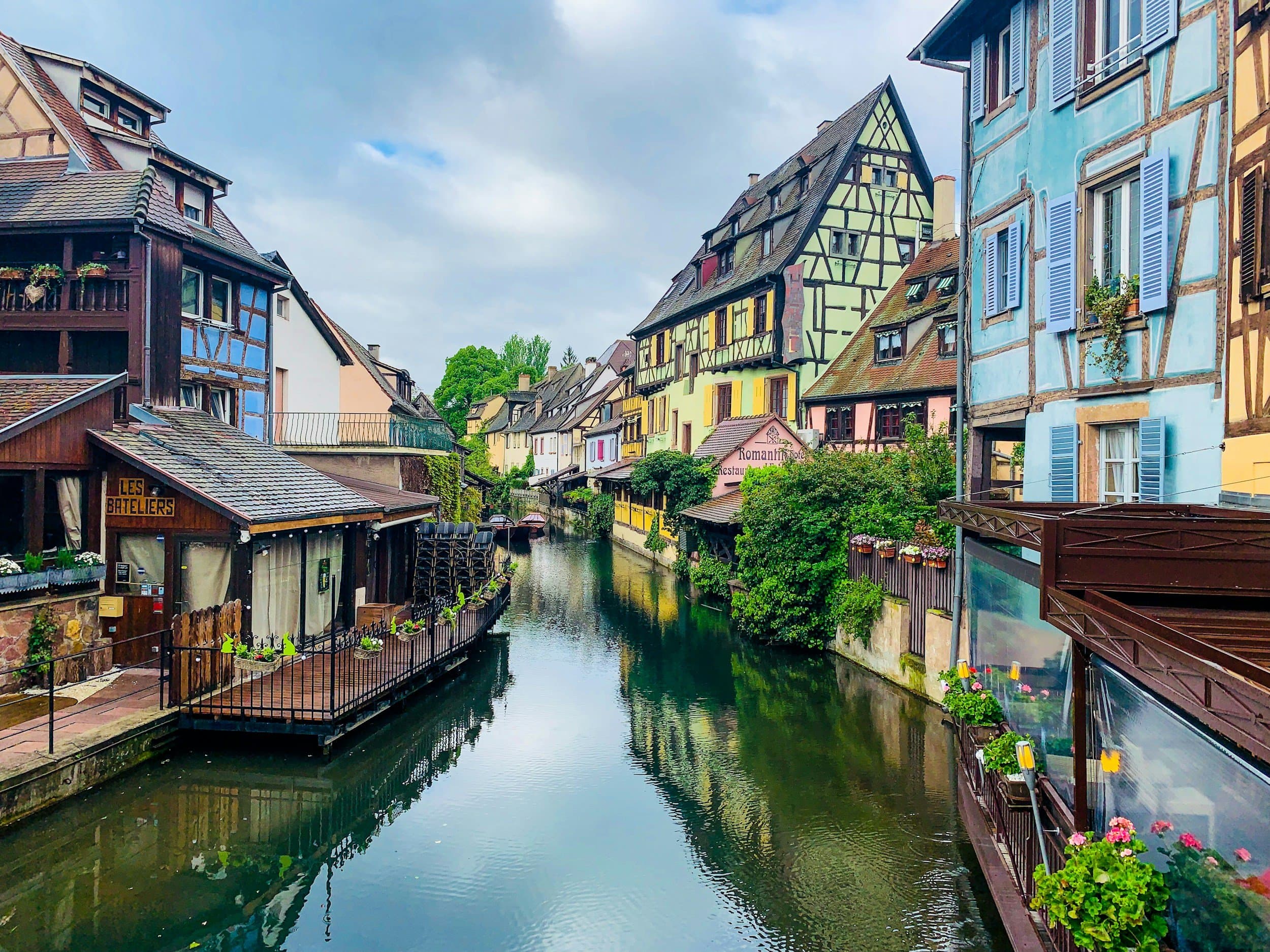
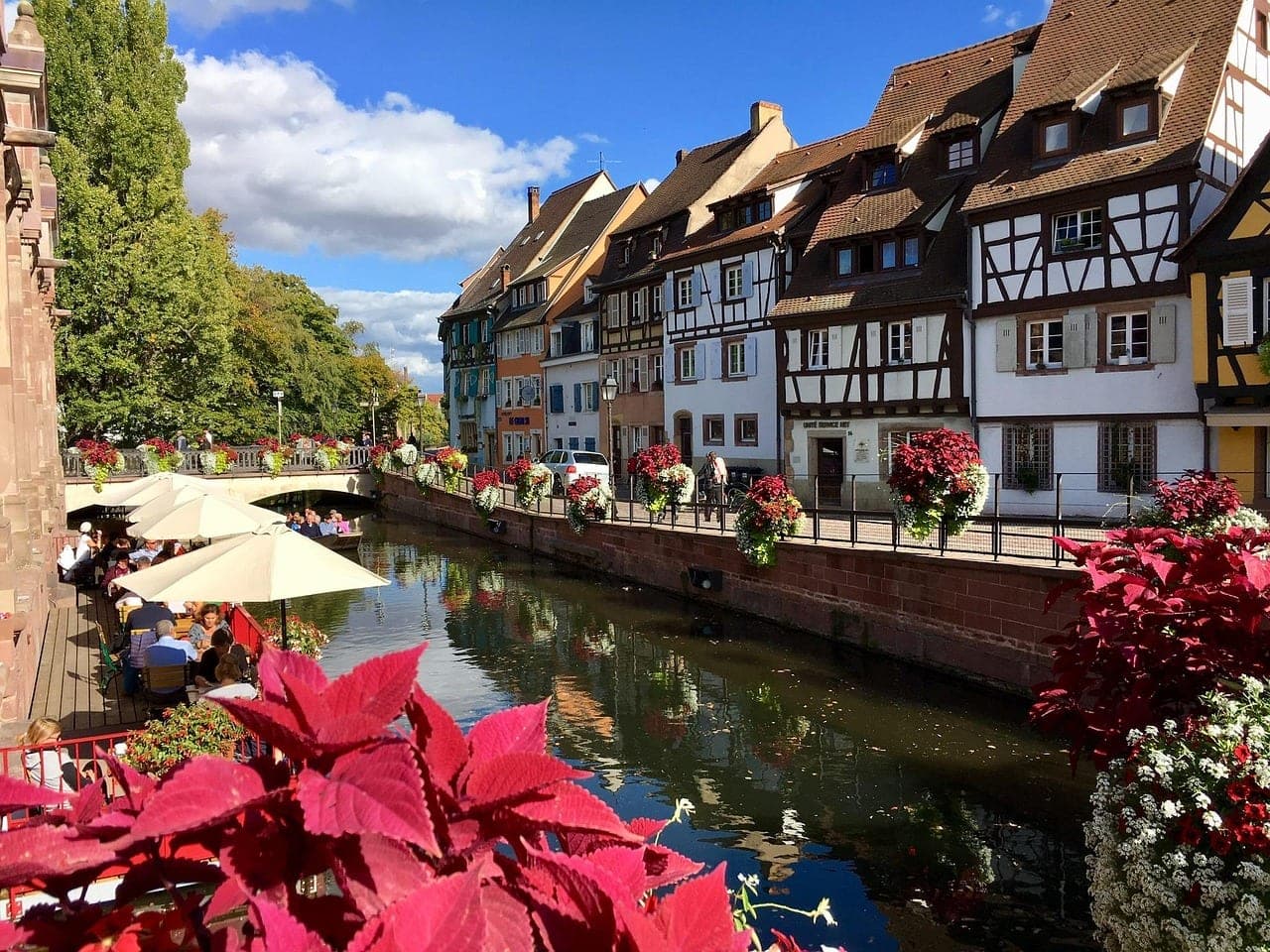
Colmar is the capital of the Alsatian Wine Route, a 70,000-person city in eastern France pressed up against the German border. The old town is a compact grid of 15th- and 16th-century half-timbered houses threaded by a canal system the locals call la Petite Venise. Colmar changed hands between France and Germany four times between 1871 and 1945, and every street corner — German street names cut into stone next to French ones, Alsatian menus, Lutheran and Catholic churches on the same square — tells that story out loud.
For a student group, Colmar is one of the most walkable stops on a France or Central-Europe itinerary. The entire historic center fits inside a 10-minute walk; there is no metro to learn and no coach to board between sights. Pair it with Strasbourg (30 minutes by regional train) or the Route des Vins villages (Riquewihr and Kaysersberg, 20 minutes by coach) and you get three completely different angles on Alsace in one short educational travel leg. It reads as a slower, quieter complement to Paris on a teacher-led trip — and the Unterlinden Museum alone is worth building a morning around.
Top things to see and do


When to go
- May - Jun — spring sweet spot
Daytime highs 17-24°C, window boxes of geraniums on every facade, and the wine villages greening up. The standard window for educational travel to Alsace; book museum entries a couple weeks ahead and you have the old town close to yourself before 11 AM.
- Jul - Aug — summer warmth, more visitors
Daytime highs 25-30°C and a steady flow of European road-trip traffic through the old town. Still workable for a summer student group trip — the town is too small to feel truly overwhelmed — but book boat tours and the Unterlinden for morning slots.
- Sep - Oct — harvest and shoulder-season gold
The best-kept secret for teacher-led tours to Alsace. The vendanges (grape harvest) runs through late September, light turns amber, and temperatures ease back to 14-22°C. School group tours that can travel in the first two weeks of October get Colmar at its prettiest with almost no lines.
- Late Nov - Dec — Christmas markets
Colmar runs one of the five most famous Christmas markets in France across six old-town squares from late November through December 29. It doubles the population on weekends but stays manageable midweek, and it is a high-payoff window for a Christmas-themed high school group trip. Layer heavily; afternoons hover around 2-7°C.
Food and culture

Tarte flambée (flammekueche)
The Alsatian cousin of pizza — a thin cracker-like dough topped with crème fraîche, onions, and lardons, baked fast in a very hot oven. Cut into strips, eaten with hands. Standard student group lunch.

Choucroute garnie
Sauerkraut slow-braised in Alsace riesling and piled with sausages, smoked pork, and boiled potatoes. The emblematic Alsatian brasserie plate; ask for a half-portion if the group is light eaters.

Baeckeoffe
A marinated three-meat-and-potato casserole sealed with a bread-dough rim and baked for hours in a terracotta pot. Sunday-dinner food; a handful of Colmar restaurants still do it properly.

Kugelhopf
The crown-shaped yeast cake studded with raisins and almonds. Breakfast food on Sundays, sold at every bakery in town, and the tin it's baked in is a classic Alsace souvenir.

Bretzel & a half-glass of riesling
Alsatian pretzels are sold from every corner bakery. Pair with a small tasting of the regional riesling for the over-18s (or a grape juice from the same vines for the rest of the group) at a winstub on Rue des Marchands.
What to pack
- Documents
Passport valid 6+ months past travel date, two printed copies (one for the student, one for the Tour Director's file), insurance card, and the Passports group packet. No visa required for US citizens on a stay under 90 days in the Schengen area.
- Clothing
Layers — even in summer the canal district cools off in the evening. Modest dress (shoulders and knees covered) for Saint-Martin and the other churches. A light rain shell for spring and autumn; a proper coat, hat, and gloves if you're on a December Christmas-market trip.
- Footwear
Broken-in walking shoes with real soles. Colmar's old-town streets are set in pavé — rounded river cobbles — and a student group will cover 8,000-10,000 steps a day even on a single-city itinerary. Do not buy new shoes for the trip.
- Rain layer
Alsace catches weather coming off the Vosges; April, May, and November all see sudden short showers. A compact umbrella or packable rain shell lives in the daypack from October through May.
- Tech
France uses Type C / E plugs (European two-prong) — bring a universal adapter. A portable battery earns its weight on museum days. T-Mobile and Google Fi work out of the box; others should pick up an Orange or SFR eSIM on arrival.
- Extras
A small daypack for museum days (Unterlinden asks large bags to be checked), a reusable water bottle, sunscreen spring through early autumn, and a fabric tote for the Marché Couvert if the group has a free hour near the covered market.
Is it safe?
Yes. France's US State Department rating is Level 2 ("exercise increased caution") — the same band as Italy, the UK, and Germany — and the elevated level reflects generic European terrorism risk, not anything specific to Colmar or Alsace. Violent crime against travelers is genuinely rare in a town this size, and Colmar's old town is one of the quietest urban centers on our France catalog. The realistic risk profile is opportunistic pickpocketing around the Christmas market stalls in December, the Colmar train station at rush hour, and the TGV platforms at Strasbourg on a day-trip.
On a Passports teacher-led trip the group is never on public transport alone, the Tour Director runs a pickpocket-awareness briefing on the first evening, and every hotel is pre-vetted for 24-hour reception and secure room storage. We operate a 24/7 emergency line out of Boston, keep parents on a daily-update channel, and have English-speaking medical contacts in every city we visit. For teachers running their first school group tours to France, Colmar often feels easier than a domestic field trip once the first morning is underway.
Practical tips
- The old town is pedestrian-only
Colmar runs a ZTL-style limited-traffic zone over the historic core — coaches drop at Place Rapp or Place Scheurer-Kestner and the group walks in. Expect rounded cobblestone underfoot for most of the day.
- Strasbourg is a 30-minute train ride
Regional TER trains from Colmar to Strasbourg run twice an hour and cover the 70 km in about 30 minutes. A half-day in Strasbourg (the cathedral, Petite France, the European Parliament exterior) pairs cleanly with a Colmar base on an educational tour.
- French is the working language, Alsatian lives on
Menus and signage are French; older residents and small-town shopkeepers still speak Alsatian (an Alemannic German dialect) at home. A bonjour on the way in and a merci on the way out go a long way — a useful classroom moment for French students on a school group tour.
- Cards work, small cash helps at markets
Contactless is near-universal. Carry a bit of cash for the Marché Couvert, the smaller winstubs, and the Christmas market chalets, where a €5 or €10 note moves the line faster.