- RegionNormandy, France
- LanguageFrench
- CurrencyEuro (EUR)
- Best seasonMay - Jun, Sep - early Oct
- TimezoneCentral European Time (UTC+1)
A quick introduction
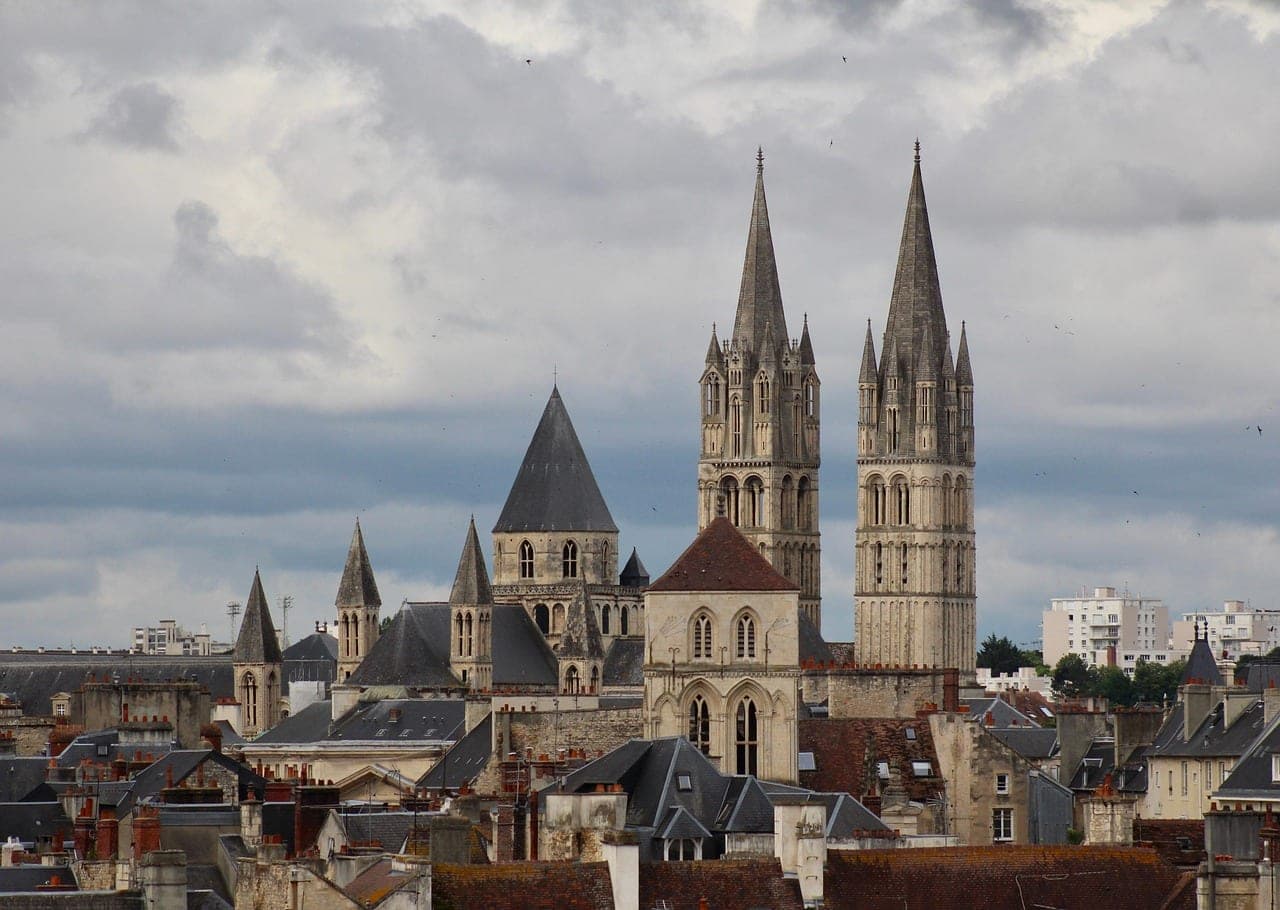
Caen is the historic capital of Lower Normandy, a city of about 110,000 sitting 15 km inland from the English Channel on the River Orne. William the Conqueror made it his seat in the 11th century, built two great abbeys here for himself and his queen Matilda, and used Caen stone to build half the cathedrals of southern England. Roughly 70% of the medieval city was destroyed in the summer of 1944 — the Battle for Caen ran from D-Day on June 6 through late July — and the postwar reconstruction is the second story every visitor reads on the streets.
For a student group, Caen is the natural base for D-Day and World War II educational travel. The Mémorial de Caen is the most teacher-ready peace museum in France; the British, Canadian, and American landing beaches are all within a 45-minute coach ride; and Bayeux (with its 11th-century tapestry and the British war cemetery) is 30 minutes west. A two-night Caen stop on a teacher-led trip can cover Norman conquest, D-Day, and postwar European reconciliation in three half-days — a high-density classroom-travel itinerary that pairs cleanly with a Paris leg.
Top things to see and do


When to go
- May - Jun — spring sweet spot
Daytime highs 14-20°C, long daylight, and the Normandy hedgerows in full green. Early June is the busiest week of the year because of D-Day commemorations on the beaches; if your school calendar allows it, the last week of May or the first week of July is quieter and just as workable for educational travel.
- Jul - Aug — peak coast traffic
Daytime highs 19-24°C, warmer than most of France's reputation for Normandy suggests, with steady European holiday traffic on the D-Day coast road. Still works for a summer student group trip — book the Mémorial entry and the Bayeux Tapestry slot a couple of weeks ahead and start the museum days at opening.
- Sep - early Oct — shoulder-season gold
The best window for teacher-led tours to Normandy. Temperatures ease back to 14-19°C, the coast clears out after the French rentrée, and the light over the beaches turns silver. School group tours in the first three weeks of September get the Mémorial almost to themselves.
- Nov - Mar — quiet, gray, viable
Daytime highs 6-10°C, short daylight, and steady drizzle off the Channel. Some coastal museums shorten their hours in February. The Mémorial stays open year-round and runs almost without lines from November through early March — a good MLK-week or interim-term student tours option for a history-focused trip.
Food and culture

Tripes à la mode de Caen
The dish Caen put on the French national menu — beef tripe slow- cooked for hours with onions, leeks, calvados, and cider in a sealed clay pot. A classic brasserie order; ask for a small portion if the group is cautious.

Normandy oysters
The Channel coast 20 km north of Caen produces some of the best oysters in France. Sold by the half-dozen at the Saturday market on Place Saint-Sauveur and at every brasserie in town. Eat with a squeeze of lemon and a slice of rye bread.

Camembert de Normandie
Real Camembert (the AOP version) is made from raw milk in a handful of villages 60 km south of Caen. The supermarket version is fine; a hand-ladled wheel from a fromagerie on Rue Froide is a different food entirely.

Cidre & calvados
Normandy is apple country, not wine country. A traditional meal gets cidre brut (dry cider) with the main and a small trou normand — apple brandy mid-meal — to reset the palate. Cider for the group; calvados for the over-21 chaperones only.

Teurgoule
Slow-baked Normandy rice pudding with cinnamon, baked for five hours in a covered pot until the top forms a dark caramelized crust. Sold by the spoonful at the market and on most old-school dessert menus.
What to pack
- Documents
Passport valid 6+ months past travel date, two printed copies (one for the student, one for the Tour Director's file), insurance card, and the Passports group packet. No visa required for US citizens on a stay under 90 days in the Schengen area.
- Clothing
Layers in every season — Normandy weather flips fast off the Channel. Long pants and closed shoes are appropriate for the D-Day beaches and cemeteries; a light scarf or shoulder cover for the abbeys and the cathedral interiors. Pack a warm fleece even in July for early-morning beach mornings.
- Footwear
Broken-in walking shoes with real soles. The D-Day beaches are sand and pebble, the abbey courtyards are old stone, and a student group on a Caen-and-coast itinerary will log 9,000-11,000 steps a day. Do not buy new shoes for the trip.
- Rain layer
Normandy averages rain 12-15 days a month outside high summer, and beach-day winds make umbrellas useless. A packable rain shell with a hood lives in the daypack from September through May.
- Tech
France uses Type C / E plugs (European two-prong) — bring a universal adapter. A portable battery earns its weight on Mémorial-to-beaches days when the group is off-coach for hours. T-Mobile and Google Fi work out of the box; others should pick up an Orange or SFR eSIM on arrival in Paris.
- Extras
A small daypack for museum days (the Mémorial asks larger bags to be checked), a reusable water bottle, sunscreen for May through September, and a fabric tote for the Saturday market on Place Saint-Sauveur if the group has a free hour.
Is it safe?
Yes. France's US State Department rating is Level 2 ("exercise increased caution") — the same band as Italy, the UK, and Germany — and the elevated level reflects generic European terrorism risk, not anything specific to Caen or Normandy. Violent crime against travelers is genuinely rare in a city this size, and the regional crime profile in Lower Normandy runs well below the French national average. The realistic risk is opportunistic pickpocketing at the Caen train station, the Mémorial entry queue on commemoration weekends, and the Saturday market on Place Saint-Sauveur.
On a Passports teacher-led trip the group is never on public transport alone, the Tour Director runs a pickpocket-awareness briefing on the first evening, and every hotel is pre-vetted for 24-hour reception and secure room storage. We operate a 24/7 emergency line out of Boston, keep parents on a daily-update channel, and have English-speaking medical contacts in every city we visit. For most teachers running their first school group tours to France, Caen feels easier than a domestic field trip once the first morning is underway.
Practical tips
- The Mémorial wants a half-day, not 90 minutes
Plan three to four hours including the cinema. Cutting it short shortchanges the second half of the museum (postwar Europe and the Cold War), which is where the curricular payoff lives for a teacher-led trip.
- Beach loop is a coach day, not a train day
The D-Day coast is not realistically reachable from Caen by regional bus on a tight schedule. Our Tour Director runs the Sword-Juno-Gold loop on private coach in a single morning, with a stop at Arromanches for the Mulberry harbor remnants.
- French first, English available at the museum
Caen runs in French; the Mémorial, the Bayeux Tapestry, and most D-Day sites have full English audio guides and signage. A bonjour on the way into a shop and a merci on the way out go a long way — a useful classroom moment for French students on a school group tour.
- Cards work, small cash helps at the market
Contactless is near-universal in shops, restaurants, and museums. Carry a small amount of cash for the Saturday Place Saint-Sauveur market, the crêperies on Rue du Vaugueux, and tips at the cemetery if a local guide walks the group.
- Cemeteries are quiet sites, not photo stops
Bayeux British, Ranville Commonwealth, the American cemetery above Omaha — these are working memorial grounds with families visiting graves on most days. The Tour Director briefs the group on appropriate behavior before disembarking; the Passports protocol is plain dress, no music, no horseplay, hats off.