Country guide

Greece

Greece student group travel for teachers: Athens, Delphi, and the ancient history, philosophy, and mythology curriculum behind our top teacher-led school trips.

All countries
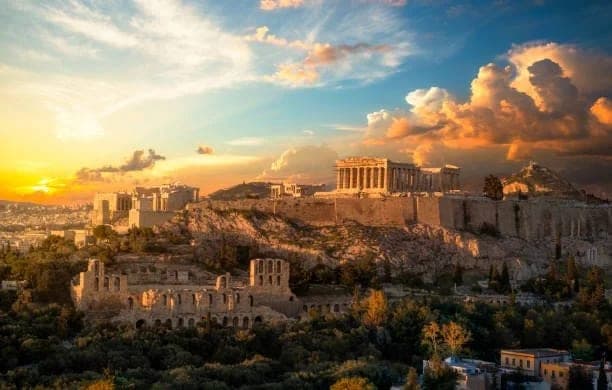
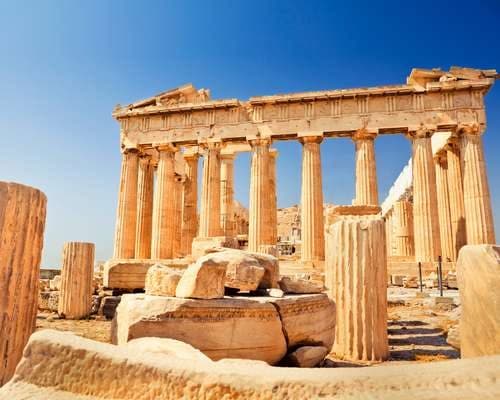
Parthenon and Acropolis of Athens glowing above the city at sunset in Greece
On this page
  • Where Greece sits — the birthplace of Western democracy, philosophy, and theater
  • Six regions worth a stop — Athens & Attica, Delphi, the Peloponnese, Meteora, the Cycladic islands, Crete
  • What to eat: souvlaki, Greek salad with feta, moussaka, spanakopita, baklava
  • Practical logistics for teachers: summer heat, monastery dress codes, the Greek alphabet, ferry strikes
  • Why Greece anchors the ancient-history, classics, and mythology curriculum on a high school group trip

A quick introduction

Greece is roughly 131,957 km² — about the size of Alabama — with a population of around 10.4 million and a capital, Athens, that has been continuously inhabited for more than 3,400 years. It's a country built on water as much as stone: roughly 6,000 islands and islets scattered across the Aegean and Ionian seas, of which about 227 are inhabited. This is the birthplace of Western democracy, philosophy, theater, and the Olympic Games, and the archaeological density on the ground matches the weight of the idea.

For a high school group trip, Greece's curricular fit is almost unreasonably wide. A single itinerary covers AP World and European History, Latin and Classics, Philosophy, Mythology, Drama, Political Science, and Art History — all anchored to places students can walk through. It's one of the highest-density educational travel destinations in Southern Europe: the Acropolis, the Oracle at Delphi, the stadium at Olympia, and the palace at Knossos all sit within a week's student group travel from Athens. Infrastructure is built for groups, English is widely spoken in hotels and at major sites, and the shoulder-season weather (April to June, September to October) is exactly when most US school calendars open up.

Quick facts

Greece by the numbers

📐

131,957 km²

About the size of Alabama, but stretched across a peninsula, a mainland, and thousands of islands. Most Passports itineraries stay on the mainland (Athens, Delphi, the Peloponnese) and add one island day via ferry or flight.

👥

~10.4 million

Population of the whole country, with a third of it in Greater Athens. The rest is spread thin across the mainland mountains and the islands — which is why Delphi still feels like a village and Meteora still feels like an outpost.

🏝️

~6,000 islands

Scattered across the Aegean and Ionian, of which about 227 are inhabited. Santorini, Mykonos, Crete, Rhodes, and Aegina are the ones a school group will recognize; the other 222 are a lifetime of return trips.

🏛️

19 UNESCO sites

From the Acropolis and Delphi to Meteora's rock-top monasteries and the Minoan palace at Knossos. Our ten-day educational travel itineraries walk a group past four or five of them without backtracking.

Inside the trip

A week with a Passports group

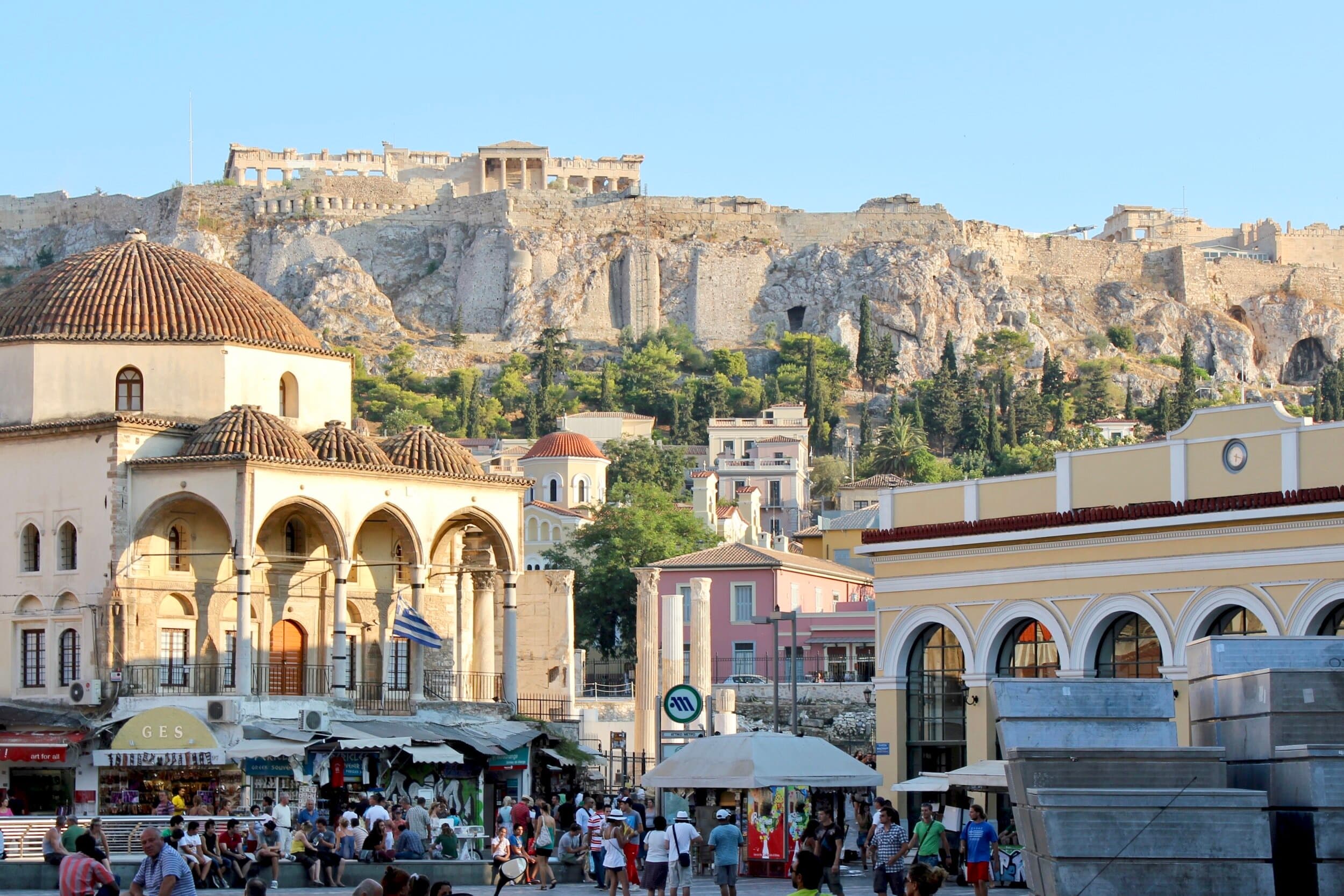
A typical Passports high school group trip to Greece runs eight to ten days and lines up cleanly for April, June, or October — the three windows most school calendars open up. Day one is Athens: arrival at Eleftherios Venizelos, a private-coach transfer into the city, a light walking orientation through Plaka and Monastiraki under the Acropolis to shake off jet lag, and dinner in a family taverna with the Tour Director who stays with the group for the full week.

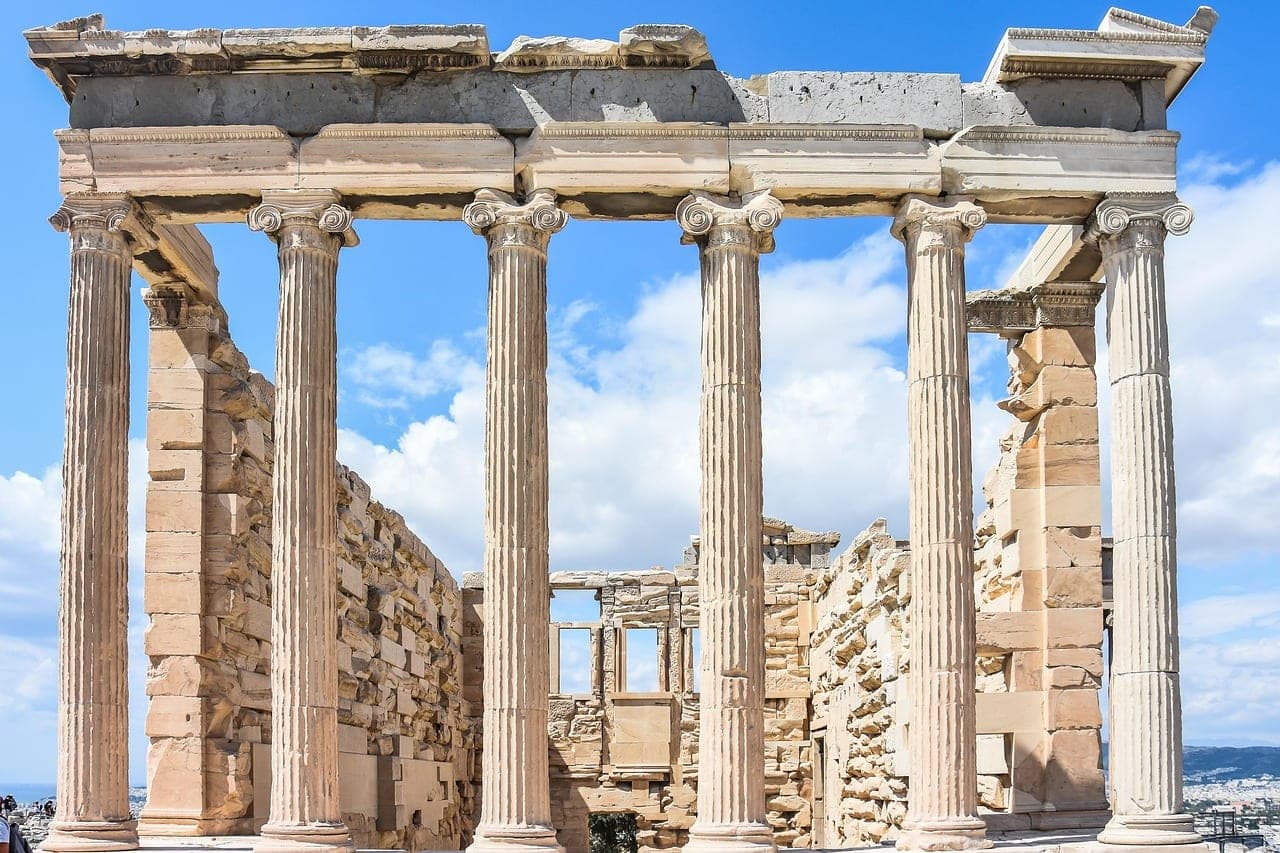
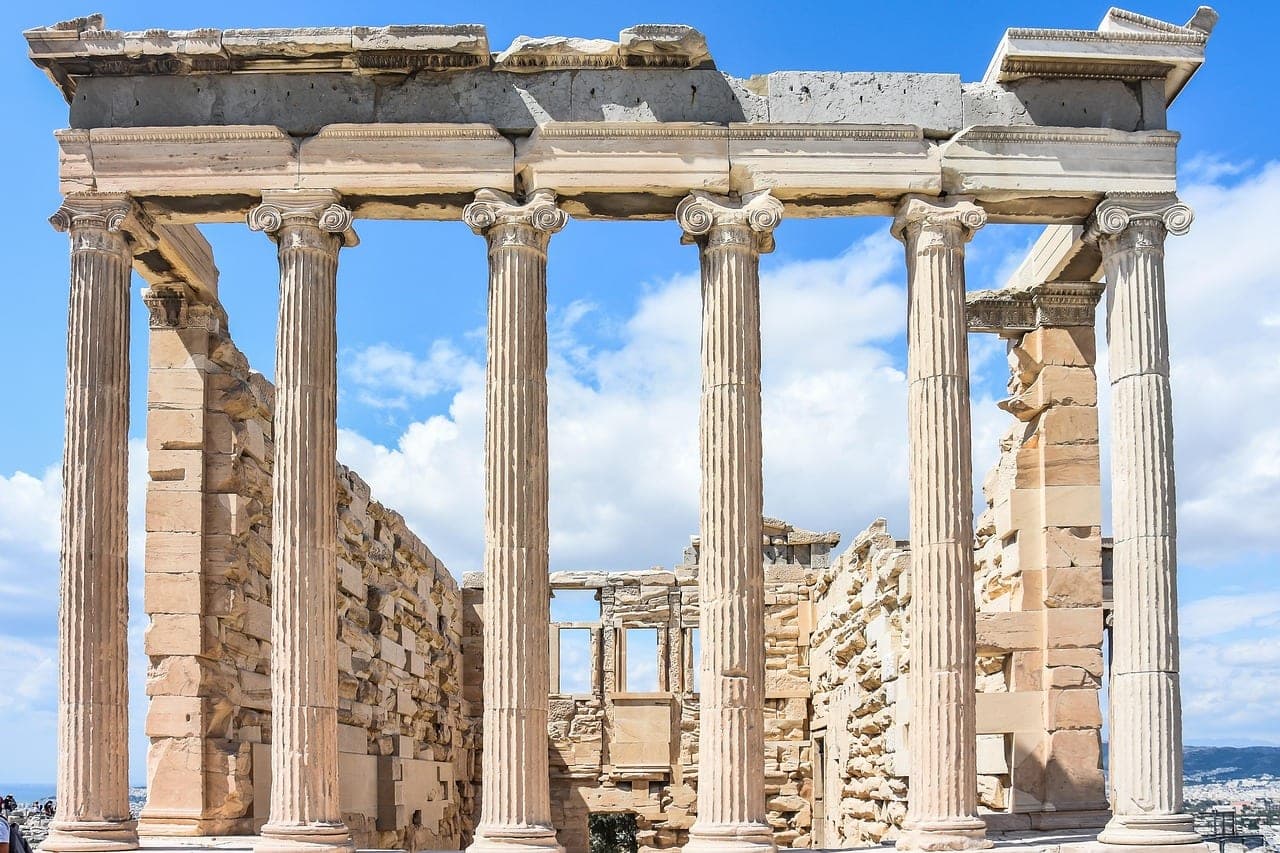
Days two and three are the classical heart of the trip. The Acropolis at opening (the Parthenon, Erechtheion, and Propylaea before the cruise-ship crowds arrive), the new Acropolis Museum in the afternoon, then the Ancient Agora and the Temple of Olympian Zeus. Day three goes to Cape Sounion for the Temple of Poseidon at sunset — students consistently rank the cliff-top sun-drop as the trip's best surprise. From Athens, the coach heads to Delphi (the Oracle, Castalian Spring, and the archaeological museum's charioteer bronze), and longer itineraries add the Peloponnese — Mycenae, Epidaurus' perfect-acoustics theater, and Nafplio's harbor — or Meteora's rock-top monasteries on the way north. Most programs close with a ferry or short flight to an island (Aegina or Hydra on a day excursion, Santorini or Crete as a full two-day extension).

We've run student group travel to Greece for long enough that the predictable problems have predictable answers: a ferry strike shifts an island day (we pivot to a mainland alternative and rebook), a museum closes for an unexpected holiday (we keep a list of high-value backups), a student loses a passport (we have the embassy on speed dial). Every itinerary uses a private coach with a professional, vetted driver; most include at least one service-learning or artisan-workshop component — a traditional pottery session in Nafplio, a coastal beach-cleanup on an island day — and debrief journaling time is built into the longer programs. The teacher-led educational travel piece is real; the part teachers remember is that the logistics simply work.

Region by region

Top things to see and do

Athens & Attica

Athens & Attica

The Acropolis and Parthenon, the new Acropolis Museum, the Ancient Agora, Hadrian's Arch, and the sunset Temple of Poseidon at Cape Sounion. Three full days anchor most itineraries here before the group heads north or to the Peloponnese.

Delphi & central Greece

Delphi & central Greece

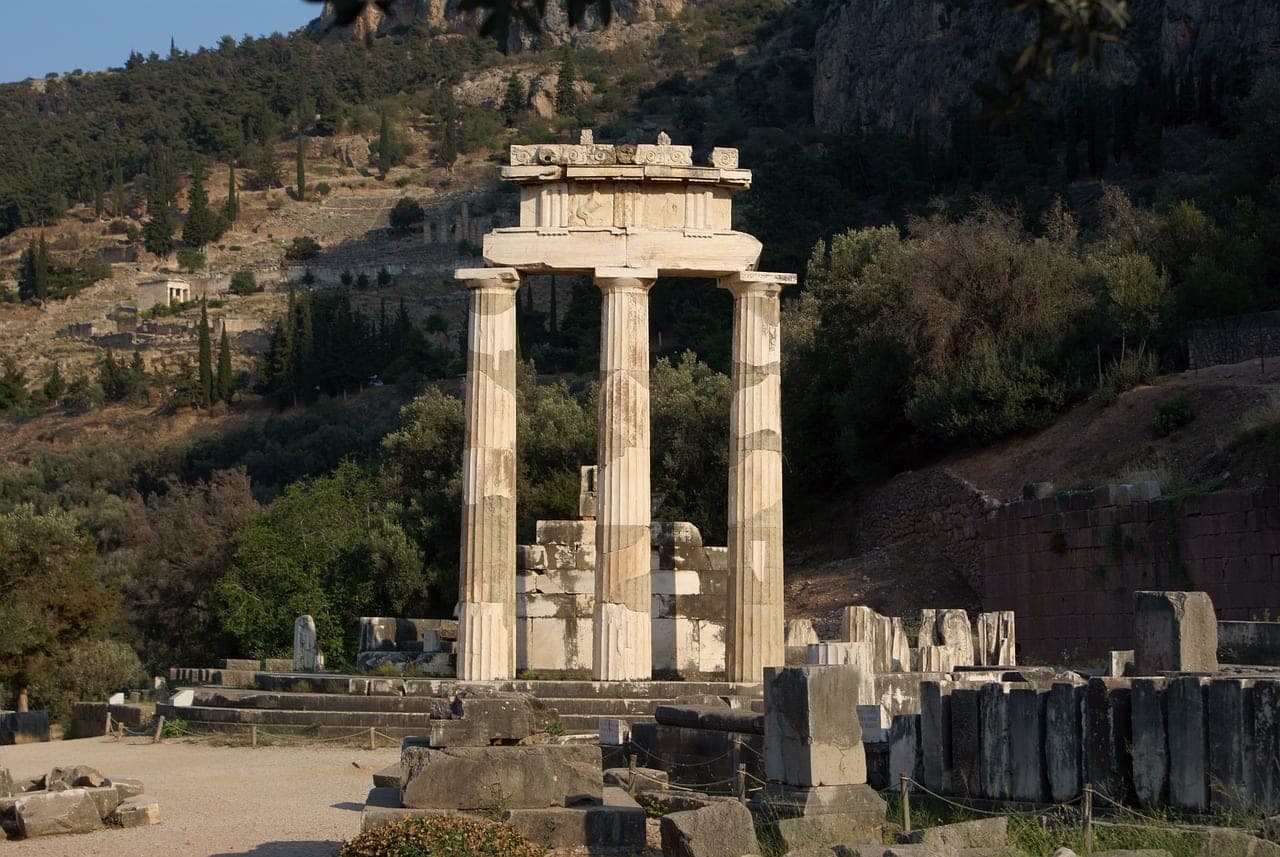
The navel of the ancient world. The Oracle's temple of Apollo, the stadium above the sanctuary, the Castalian Spring, and a museum that holds the Charioteer of Delphi — one of the few surviving Classical-era bronzes. A three-hour coach ride from Athens.

The Peloponnese

The Peloponnese

Olympia (birthplace of the Games), Mycenae's Lion Gate, Epidaurus' 4th-century BCE theater with its still-working acoustics, the Venetian harbor town of Nafplio, and Sparta. A two- or three-day loop south of Athens.

Meteora

Meteora

Six Byzantine monasteries perched on 400-meter sandstone pillars in central Greece. A UNESCO site, an otherworldly photo stop, and a genuine active monastic community — modest dress is enforced at every entrance.

The Cycladic islands

The Cycladic islands

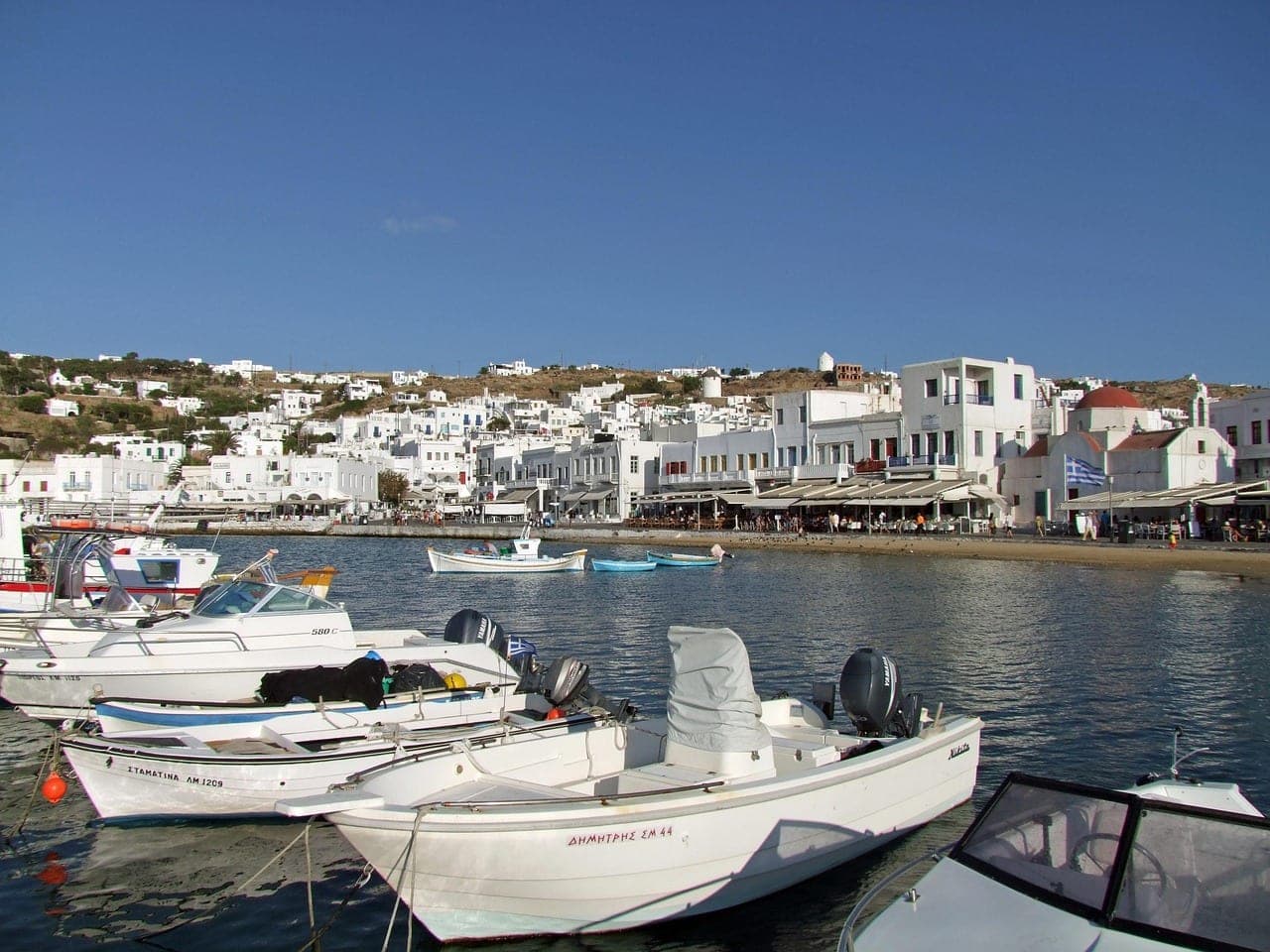
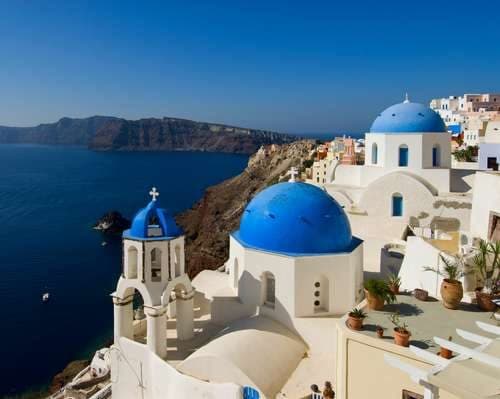
Santorini's caldera, Mykonos' windmills, the quieter whitewashed lanes of Naxos and Paros. The archetypal Greek island look. Most student groups do one or two as a short extension after the classical mainland itinerary.

Crete & Knossos

Crete & Knossos

The Minoan palace at Knossos (the Labyrinth of Greek myth), the Heraklion Archaeological Museum, Venetian Chania, and mountains that still host shepherd villages. A full two-day island program in its own right.

Weather by season

When to go

  • Jul - Aug — peak heat, skip for groups

    Daytime highs 35-40°C in Athens, little shade at the archaeological sites, and cruise-ship crowds at the Acropolis from 9 AM onward. Too hot for sustained sightseeing with a high school student group. We don't run standard Greece itineraries in this window.

  • Apr - Jun — spring sweet spot

    The classic window for Greece. Daytime highs 18-28°C, wildflowers across the Peloponnese, and Greek Orthodox Easter in late April or early May (a fascinating cultural moment to travel through). The default for spring-break school group tours and the window most of our high school group trips run.

  • Sep - Oct — autumn's other sweet spot

    Temperatures drop back to 22-28°C, the Aegean is still warm enough for an island swim day, and museum and site lines fall sharply after the second week of September. The other classic window for educational travel to Greece — if your school calendar allows a fall trip, this is the one.

  • Nov - Mar — quiet off-season

    Athens stays walkable in winter (daytime highs 12-15°C, occasional rain), some mountain and island sites move to shorter hours, and a handful of smaller island tavernas close. Not our main student group travel window, but works for determined January interim-term trips — expect the Acropolis nearly to yourself.

What to order

Food and culture

Souvlaki & gyro

Souvlaki & gyro

Grilled pork or chicken on a skewer (souvlaki) or carved off a vertical spit (gyro), wrapped in pita with tomato, onion, fries, and tzatziki. The default street lunch and a student-group favorite from day one.

Horiatiki — Greek salad

Horiatiki — Greek salad

The real horiatiki is tomatoes, cucumber, red onion, green pepper, Kalamata olives, and a thick slab of feta on top, dressed only in olive oil and oregano — no lettuce. A lesson in the gap between "Greek salad" at home and the actual thing.

Moussaka & pastitsio

Moussaka & pastitsio

Baked casseroles. Moussaka layers eggplant, spiced lamb or beef, and béchamel; pastitsio does the same with long pasta tubes under the béchamel. Both are the definition of taverna comfort food and travel well for a full coach-day lunch.

Spanakopita & tzatziki

Spanakopita & tzatziki

The small-plate core. Spanakopita (spinach and feta in phyllo), tiropita (cheese pie), tzatziki (yogurt, cucumber, garlic, dill) with warm pita. Order three or four for the table and share — the standard start to any Greek group dinner.

Baklava & loukoumades

Baklava & loukoumades

The sweet finish. Baklava is phyllo, honey, and pistachios or walnuts; loukoumades are honey-and-cinnamon doughnut holes served warm. Served with a tiny cup of Greek coffee thick enough to stand a spoon in.

Curriculum tie-ins

Classroom connections

📜

AP World & European History

Classical Athens, Alexander's empire, Byzantium at Meteora, and the Ottoman and Venetian layers in Nafplio and Crete — all physically accessible on a single itinerary. The single best AP European History field trip for the Ancient-through-Medieval foundation of the course.

🏛️

Philosophy & Classics

Stand in the Ancient Agora where Socrates was tried and argued, climb to the Areopagus where Paul preached, and walk the Pnyx — the hill where the Athenian assembly voted. One of the highest-impact educational tours Greece offers for IB Philosophy and AP Seminar classes.

🗣️

AP Latin & Greek

Classical Greek students read inscriptions in situ at the Acropolis, Delphi, and Olympia; Latin students trace the Roman reuse at the Library of Hadrian and the Odeon of Herodes Atticus. A bilingual Tour Director helps with signage and transliteration day to day.

🎭

Drama & Theater

The theaters of Dionysus (Athens) and Epidaurus are on the itinerary — the same stones where Aeschylus, Sophocles, and Euripides premiered. Epidaurus' acoustics still carry a whispered line to the back row, which is the kind of demonstration no classroom can reproduce.

🗳️

Political Science & Democracy

Athens codified the word demokratia around 508 BCE, and the physical spaces where it happened — the Pnyx, the Agora, the Bouleuterion — are all walkable in a morning. A live case study for AP US Government and comparative politics units.

📚

Mythology, Literature & Art History

Delphi's Oracle, the Labyrinth at Knossos, Homer's Mycenae, the Classical orders on the Parthenon, Phidias' sculptural program, and the 5,000-year Cycladic figurines in the National Archaeological Museum. Mythology, world literature, and AP Art History all draw on the same stops.

Packing essentials

What to pack

  • Documents

    Passport valid 6+ months past travel date, two printed copies (one for the student, one for the Tour Director's file), insurance card, and the Passports group packet. No visa required for US citizens on a stay under 90 days in the Schengen area.

  • Clothing

    Lightweight layers for spring and autumn — a T-shirt during the day, a light sweater for evenings, a rain jacket for occasional showers. Bring a scarf or long-sleeve cover: Meteora's monasteries require covered shoulders and knees for all visitors, and skirts are provided at the door if you forget.

  • Footwear

    The most important item on the packing list. Broken-in trail runners or ankle-support sneakers — the marble at the Acropolis and Delphi is famously slippery and steep, and a student group will log 10,000+ steps a day on uneven stone. Do not buy new shoes for this trip.

  • Sun gear

    Critical. A wide-brim hat, wraparound sunglasses, and high-SPF sunscreen — there is almost no shade at any major archaeological site. Even in the April and September shoulder windows the Mediterranean sun at noon on pale marble is brutal.

  • Tech

    Greece uses Type C / F plugs (European two-prong) at 230V — bring a universal adapter, not just a UK-style one. A portable battery is worth its weight on full-site days. T-Mobile and Google Fi work out of the box; other carriers should pick up a Cosmote or Vodafone eSIM on arrival at the airport.

  • Extras

    A refillable water bottle (Athens tap is safe and most sites have refill fountains), a small daypack for museum days, some €1 and €2 coins for restroom access at a handful of sites and ferries, and motion-sickness tablets if the itinerary includes a ferry island day or the coastal road to Meteora.

The parent-meeting question

Is it safe?

Yes. Greece's US State Department rating is Level 2 ("exercise increased caution") — the same as France, Italy, Germany, and most of Western and Southern Europe — and the elevated level reflects the possibility of political demonstrations and occasional labor strikes that are common across the EU, not a crime problem specific to Greece. Violent crime against travelers is rare. The real risk profile is pickpocketing on the Athens metro (especially the blue line between the airport and Monastiraki), in the Monastiraki flea-market area, and in the dense crowds at the foot of the Acropolis.

On a Passports teacher-led trip, the group is never on public transport alone, the Tour Director runs a pickpocket-awareness briefing on the first evening, and every hotel is pre-vetted for 24-hour reception and secure room storage. We operate a 24/7 emergency line staffed out of our Boston HQ, keep parents on a daily-update channel, and have English-speaking medical contacts in every city we visit. For most teachers leading school group tours to Greece, the logistics feel easier than a domestic field trip.

🛡️

Personal safety

Pickpocketing is the only real risk; violent crime against travelers is rare. Cross-body bags worn in front, phones off café tables, and a Day 1 briefing handle 90% of it. Hotels are vetted for 24-hour reception, in-room safes, and English-speaking front desks.

⚕️

Health & medical

Athens tap water is safe to drink; on some islands bottled is the local norm — the Tour Director will flag it on arrival. No special vaccines required beyond CDC routine. Hygeia, Metropolitan, and Evangelismos (Athens) run 24-hour emergency rooms to international standards; every regional stop has a pre-vetted English-speaking clinic on the contact list.

🚐

Roads & transport

Group transport is always by private coach with a professional, vetted driver — never public bus. Seatbelts on every seat. The occasional island hop uses Blue Star or SeaJets ferries (modern, well-regulated) or a short domestic flight on Aegean or Sky Express; no students on rented scooters at any point.

🌪️

Natural hazards

Greece sits on a seismic belt — small earthquakes are common, damaging ones rare. Summer wildfires in the Peloponnese and Evia are a real concern but stay well clear of our standard high school group trip routes (Athens, Delphi, Meteora, major islands). Occasional ferry or air strikes are announced days in advance; the Tour Director monitors and rebooks transfers as needed.

Practical tips

  • Euros + cards, but keep cash for islands and tavernas

    Contactless cards work in Athens, at major sites, and at any hotel. Small family tavernas, island mini-markets, and some monastery entry fees are still cash-only — keep €50 on hand per student per day and pull from a bank ATM rather than a currency kiosk at the airport.

  • The Greek alphabet is worth 30 minutes of prep

    Learning to sound out the 24 letters before the trip unlocks most street and metro signs (ΠΛΑΤΕΙΑ = plateia = square; ΜΕΤΡΟ is obvious once you see the letters). A pre-departure classroom moment that pays off from Day 1, and a fun in-coach activity on the drive from Athens to Delphi.

  • Greeks eat dinner late

    A proper Athenian dinner starts around 9 PM and runs past 11. Most Passports group dinners are booked earlier (7 to 7:30 PM) so the group has a normal wind-down evening — but expect tavernas to still be filling up as the group is finishing. Lunch is similarly shifted to 2 or 3 PM.

  • Dress codes at monasteries are real

    Meteora and the Mount Athos area enforce covered shoulders and knees for all visitors, and long skirts at the door for women wearing pants or shorts. Most monasteries provide wraps at the entrance, but the group moves faster if students arrive pre-dressed — a light scarf in the day-pack is the fix.

  • Passports operates, start to finish

    Every Passports teacher-led trip to Greece uses a private coach and a named bilingual Tour Director who stays with the group for the full week. We pre-book timed entry at the Acropolis, Delphi, and Olympia, maintain a 24/7 emergency line, and put parents on a daily-update channel. The teacher leads the curriculum; we handle everything else.
Five facts

Good to know

🗳️

The first democracy

Around 508 BCE, Cleisthenes' reforms in Athens gave male citizens the right to vote directly on laws — the system the Greeks called demokratia. Your group will stand on the Pnyx hill where those votes happened.

🏅

The modern Olympics started in Athens

The first modern Olympic Games were held in Athens in 1896, in the Panathenaic Stadium — a marble rebuild of the 4th-century BCE original. You can walk the track; the stadium still hosts the Olympic flame handover ceremony every four years.

🏺

More archaeology per capita than anywhere

Greece has more archaeological museums per person than any other country on earth, and over 100 sites open to the public. Nearly every town of any size has its own site, usually free or under €5 to enter.

🎉

Name days beat birthdays

Most Greeks celebrate their name day — the feast day of the saint they're named after — more than their actual birthday. If your group includes a Maria, a Nikos, or a Georgios, their name day is probably on your itinerary.

📚

One of the oldest living languages

Greek has been spoken continuously for over 3,400 years — the longest documented history of any Indo-European language. A student reading Homer today is reading roughly the same alphabet (with a few additions) that was already ancient in Plato's time.

Tours that go here

Tours that visit Greece

See all tours →
Santorini
Greece

Aegean Adventure

Athens · Aboard ship

Adult-recommendedSmall-groupLarge-group
See itinerary
Parthenon on the Akropolis in Athens
Italy · Greece

Classical Discovery

Rome · Athens

Small-group
See itinerary
The Colosseum, Rome
Italy · Greece

Classical Exploration

Rome · Sorrento · Athens

Large-group
See itinerary
Parthenon on the Akropolis in Athens
Greece

Grecian Odyssey

Athens

Language-immersion
See itinerary
Classroom material

Lesson plans about Greece

See all →
GreeceEnglishGrade 11-12

Ancient Greece: Homer: The Iliad

Through the investigation of selected primary and secondary sources, including readings from the Iliad, students in this lesson will identify, understand and be able to explain the story of the Trojan War as told in Homer's epic poem the Il…

View lesson
GreeceEnglishGrade 11-12

Ancient Greece: Homer: The Odyssey

Through the investigation of selected primary and secondary sources, including readings from the Odyssey, students in this lesson will identify, understand and be able to explain the story of Odysseus and his trip home from Troy as told in …

View lesson
GreecehistoryGrade 11-12

Ancient Greece: Minoan Civilization on Crete

Through the investigation of selected primary and secondary sources, students in this lesson will identify, understand and be able to explain theories behind the Minoan civilization found on Crete and the legends linked to the Palace of Kno…

View lesson
TurkeyhistoryGrade 11-12

Byzantine Istanbul (330-1453 CE): Constantinople

Through the investigation of selected primary and secondary sources, students in this lesson will identify, understand and be able to explain why Constantine the Great chose to relocate the Roman capital to Byzantium, how the city preserved…

View lesson
TurkeyhistoryGrade 11-12

Byzantine Istanbul (330-1453): Fall of Constantinople 1453

Through the investigation of selected primary and secondary sources, students in this lesson will identify, understand and be able to compare and contrast in detail how different Christian and Muslim accounts saw the Fall of Constantinople …

View lesson
TurkeyhistoryGrade 11-12

Byzantine Istanbul (330-1453): Great Schism of 1054: Orthodox Christianity

Through the investigation of selected sources, students in this lesson will identify, understand and be able to explain in detail the Great Schism of 1054 that split the Christian Church into Eastern Orthodoxy and Roman Catholicism, what di…

View lesson
From our blog

Blog posts about Greece

See all →
Unlocking the History Behind European World Heritage Sites: A Teacher’s Guide
educational impact

Unlocking the History Behind European World Heritage Sites: A Teacher’s Guide

Six European UNESCO World Heritage Sites offer rich classroom tie-ins across history, architecture, and culture. This guide gives teachers activity ideas for each landmark

Read post
Exploring Ancient Civilizations Through Student Travel: Top Historical Sites for Teachers
educational impact

Exploring Ancient Civilizations Through Student Travel: Top Historical Sites for Teachers

Student travel to ancient sites like Athens, Rome, and Pompeii transforms history lessons into hands-on experiences, with curriculum connections and pre- and post-trip activity ideas for teachers

Read post
Historical Landmarks with Fascinating Stories
destinations

Historical Landmarks with Fascinating Stories

Five iconic European landmarks—Rome's Colosseum, Paris's Eiffel Tower, Berlin Wall, Stonehenge, and Athens's Acropolis—and the history-shaping stories behind each one

Read post
Exploring Europe's Ancient Ruins and Archaeological Sites
destinations

Exploring Europe's Ancient Ruins and Archaeological Sites

Europe's top ancient ruins span Roman colosseums to prehistoric Stonehenge. This guide covers 10 must-see archaeological sites across Italy, Greece, England, Spain, and Turkey

Read post
Exploring Europe’s Historical Treasures: A Guide for History Enthusiasts and Educators
destinations

Exploring Europe’s Historical Treasures: A Guide for History Enthusiasts and Educators

Europe's most historically rich cities offer student groups vivid, hands-on learning across ancient, medieval, and Renaissance eras. This guide covers Rome, Athens, Prague, Edinburgh, Florence, and Paris

Read post
Athens Educational Tour: Bridging Ancient Greek History with Modern Culture
destinations

Athens Educational Tour: Bridging Ancient Greek History with Modern Culture

Athens blends ancient history and modern culture into a rich educational tour experience, from the Acropolis and Ancient Agora to Greek cuisine and contemporary art

Read post
On the ground

Places we go

Browse all destinations →
Acropolis and the Parthenon rising above the rooftops of Athens, Greece

Athens, Greece

Athens student group travel for teachers: the Acropolis, the Agora, and Classical Greece brought to life on teacher-led high school group trips and tours.

Ancient ruins of the sanctuary of Delphi on the slopes of Mount Parnassus

Delphi, Greece

Delphi student group travel guide for teachers: Apollo's oracle, Parnassus ruins, and the museum — educational travel and teacher-led tours of ancient Greece.

Whitewashed Cycladic houses of Mykonos Chora descending to the harbor, Greece

Mykonos, Greece

Mykonos student group travel for teachers: Cycladic windmills, Little Venice sunsets, Delos archaeology, and educational tours that fit teacher-led trips.

Take your students to Greece.

Every Passports trip is built around a teacher and a group — from first itinerary sketch to the last day on the ground. Tell us what you have in mind and we’ll take it from there.

Plan a trip