- RegionCyclades, Greece
- LanguageGreek
- CurrencyEuro (EUR)
- Best seasonMay - Jun, Sep - Oct
- TimezoneEastern European Time (UTC+2)
A quick introduction
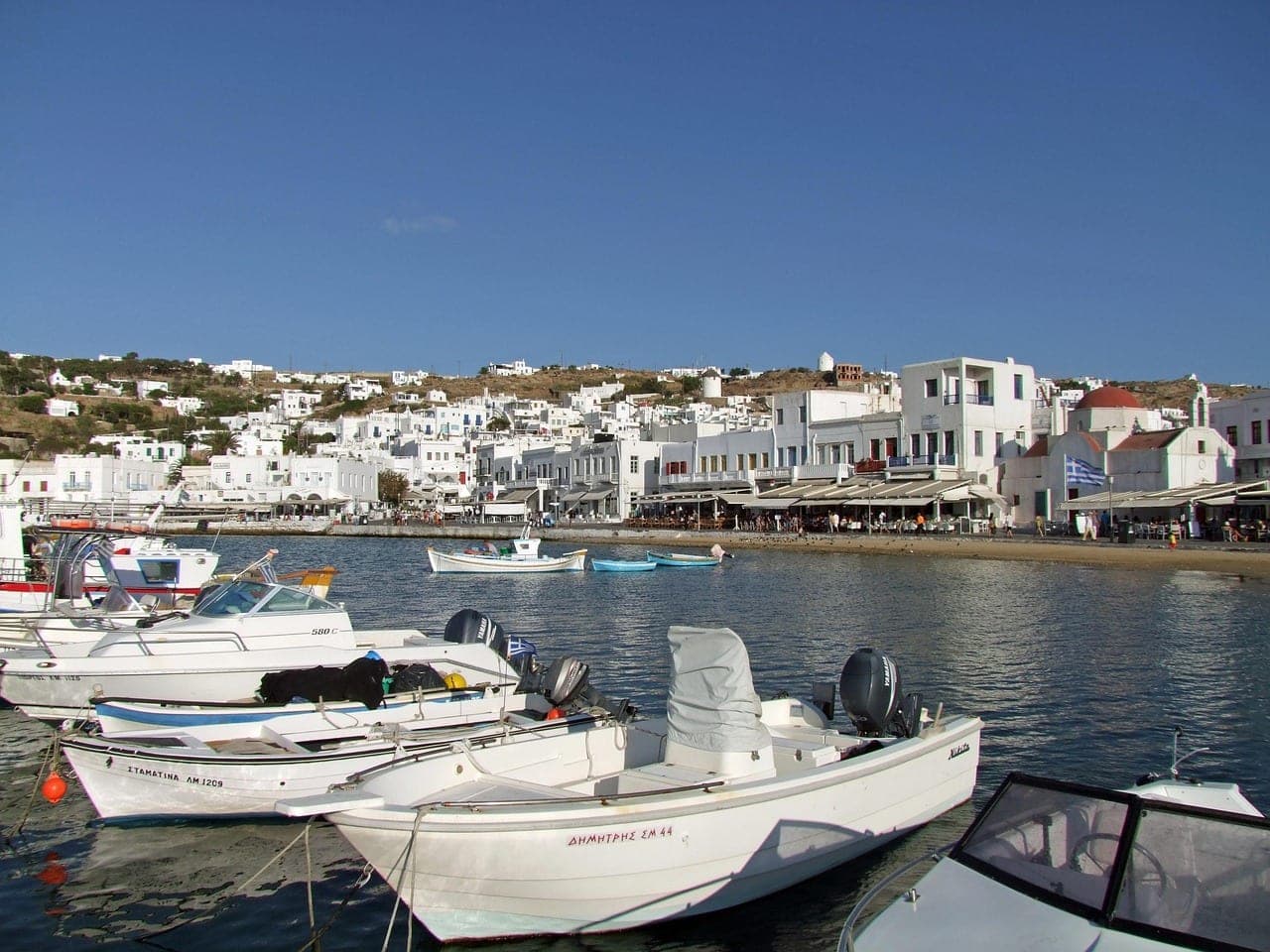
Mykonos is a small granite island in the middle of the Cyclades — about 33 square miles, year-round population around 10,000 — set roughly four hours by ferry southeast of Athens. The capital, called Chora or Mykonos Town, is a deliberate maze of whitewashed cube houses, blue shutters, and bougainvillea, laid out in the Middle Ages to confuse pirates. The five surviving windmills of Kato Mili stand on a low ridge above the harbor; the chapels (the island has more than 400 of them, one for almost every family) dot the hillsides in the same white-and-blue palette.
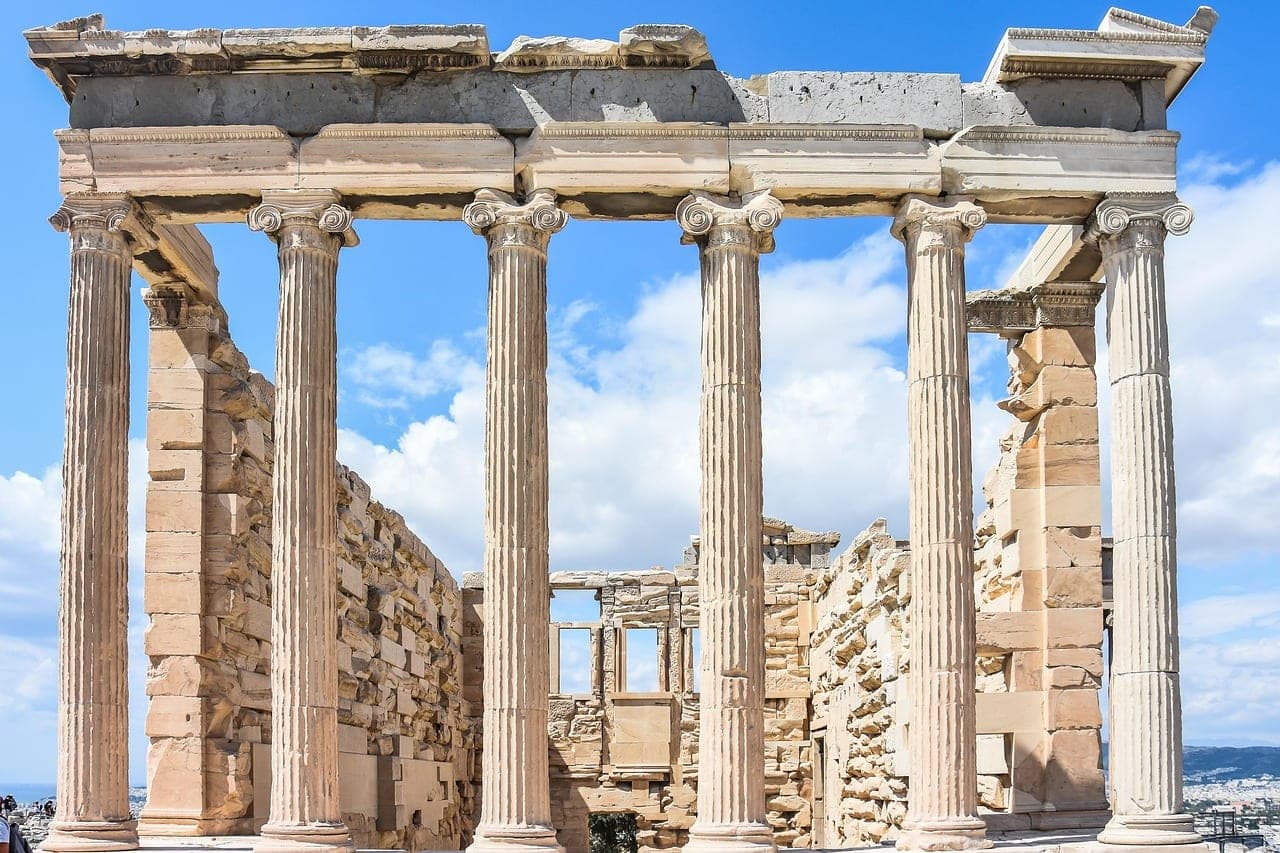
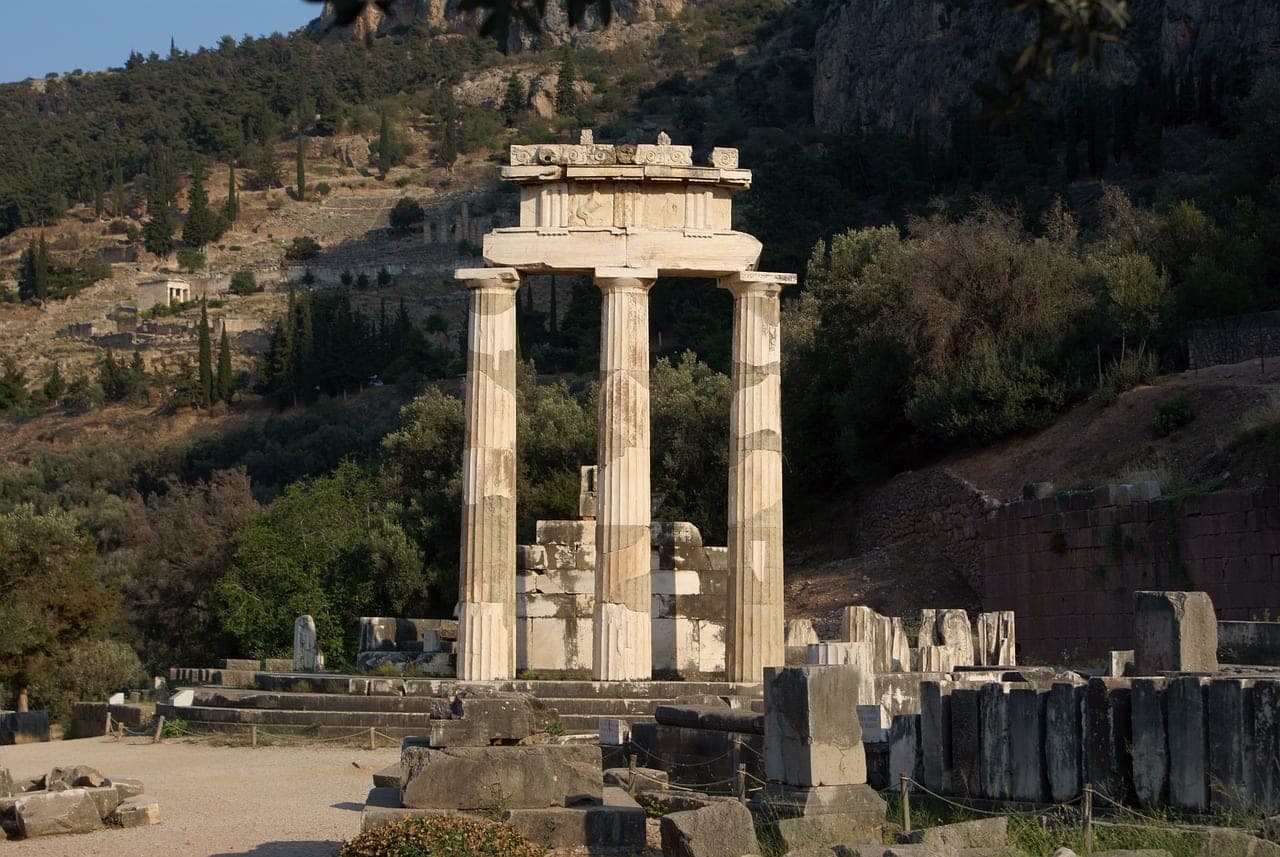
For a student group, Mykonos is the Cycladic case study. A high school group trip pairs the island with Athens and Delphi to round out a Greece itinerary that moves from Classical city to oracle to island civilization, and the short ferry across to Delos turns one morning into the most concentrated archaeological visit in the Aegean. Our teacher-led tours use Chora as a walking classroom for vernacular architecture and Aegean trade history, then keep the late afternoon free for a supervised harbor walk before dinner. Educational travel to Mykonos works because the island is small enough to learn end to end and the artifacts you came for — a windmill, a 15th-century church, a Hellenistic mosaic on Delos — are minutes apart.
Top things to see and do


When to go
- May - Jun — spring sweet spot
The best window for educational travel to Mykonos. Daytime highs climb from 22°C in May to 28°C by mid-June, the sea is warm enough to wade, the meltemi wind is still gentle, and Delos ferries run a full schedule with empty seats. A May or June high school group trip lands here at the optimum — open tavernas, soft light, no August crowds.
- Jul - Aug — peak heat, peak crowds
Daytime highs 28-32°C, the meltemi howling out of the north for days at a stretch, cruise-ship volume at maximum, and Chora streets shoulder-to-shoulder by evening. Summer student groups still run successfully but the day shifts: Delos at first ferry, museums at midday, a long indoor lunch, harbor walk after 6 PM. Ferry crossings occasionally cancel on the windiest days.
- Sep - Oct — shoulder-season gold
A favorite among teacher-led tours. Temperatures drop to 22-26°C, the sea stays warm into October, the meltemi eases, and the day-trippers thin out after the second week of September. The light turns honey on the white walls. A September or October student group trip is the move if your school calendar allows it — and the Delos crossing is at its calmest.
- Nov - Mar — quiet island winter
Daytime highs 12-16°C, frequent storms, half the tavernas closed for the season, and the Delos ferry on a reduced winter schedule that cancels often. Chora is genuinely empty and atmospheric, but Mykonos in winter is a tougher logistical fit for a school group tour — Athens is the smarter base if your trip lands between November and March.
Food and culture

Gyros & souvlaki
Grilled pork or chicken shaved off the spit, wrapped in pita with tomato, onion, tzatziki, and fries inside. The standard Mykonos lunch for a group on the move — €4-6 a wrap from a harbor stand, and the most reliable way to feed 25 students in 20 minutes.

Kopanisti
The signature Mykonos cheese — a sharp, peppery soft cheese aged in clay pots, spread on bread or rusks with a drizzle of olive oil. PDO-protected and only made on a handful of Cycladic islands. A good first taste of a regional dairy tradition that doesn't travel.

Louza
Air-cured pork loin, rubbed with savory and pepper, sliced paper-thin and served as a meze. Another Cycladic specialty made to last through the long winter — typically eaten with a piece of bread, a few olives, and an ouzo on the side.

Spanakopita
Flaky phyllo pastry stuffed with spinach, feta, and dill. Sold by the slice at every Chora bakery for breakfast or a snack — the most reliable vegetarian option when a student group is trying to find one between the windmills and the next museum.

Loukoumades
Small fried dough balls, drenched in honey syrup, dusted with cinnamon and crushed walnuts. The classic Cycladic dessert and a crowd-pleaser when the whole group walks back from Little Venice after dinner. Best from a stand that fries them to order.
What to pack
- Documents
Passport valid 6+ months past travel date, two printed copies (one for the student, one for the Tour Director's file), insurance card, and the Passports group packet. No visa required for US citizens on a stay under 90 days in the Schengen area.
- Clothing
Layers. Sea breeze drops the temperature 5-7°C at sunset even in summer, and a meltemi day can need a windbreaker on the harbor. Modest dress (shoulders and knees covered) for Paraportiani and the Tourliani monastery — a light scarf doubles as a shoulder cover. A swimsuit and quick-dry layer if the itinerary includes a beach stop.
- Footwear
Serious, broken-in walking shoes with grip. Chora is uneven flagstone polished slick by centuries of feet, and the Delos site is loose gravel and marble fragments end-to-end. Do not buy new shoes for the trip and leave the fashion sneakers at home — a student group logs 10,000-13,000 steps a day on Mykonos.
- Tech
Greece uses Type C / F plugs (European two-prong) — bring a universal adapter. A portable battery earns its keep on a Delos day; there is no power on the island. T-Mobile and Google Fi work out of the box; others should pick up a Cosmote or Vodafone GR eSIM on arrival in Athens before the ferry over.
- Extras
Hat, sunglasses, SPF 30+ sunscreen — Delos has zero shade and the reflected sun off the white walls of Chora is genuinely intense. A refillable water bottle (Mykonos tap water is desalinated and best treated as non-potable; bottled water is the norm), a small daypack for the Delos morning, and motion-sickness tablets for the ferry on a windy day.
Is it safe?
Yes. Greece's US State Department rating is Level 1 ("exercise normal precautions") — the lowest advisory tier, the same as Japan and Switzerland — and Mykonos is a small island where the year-round population knows the seasonal staff and the police presence in Chora is visible after dark. Violent crime against travelers is genuinely rare. The actual risks are practical, not dramatic: pickpocketing in the cruise-day crush around the Old Port, slips on polished flagstones in Chora's lanes, sun and dehydration on Delos, and the occasional ferry cancellation when the meltemi tops 8 on the Beaufort scale.
On a Passports teacher-led trip, the group is never on the harbor alone, the Tour Director runs a Day 1 orientation walk through Chora's maze, and the Delos crossing is on a chartered or pre-booked ferry with a known schedule. Hotels are pre-vetted for 24-hour reception and secure room storage, the Tour Director keeps a copy of every student's passport in the hotel safe, and we operate a 24/7 emergency line out of Boston for parents and chaperones. For most teachers running their first school group tours to Greece, Mykonos lands easier than people expect — small island, short distances, English everywhere in the tourism economy.
Practical tips
- Plan the Delos crossing for the morning
The site closes mid-afternoon and the return ferry windows are fixed; the morning sailing also catches the calmest sea. Our Tour Director books the ferry and a licensed Delos guide as a single package with the group count locked, which keeps the line at the Old Port jetty short.
- Chora is a maze on purpose
The lanes were laid out to disorient pirates and they still disorient day-trippers. Pick a fixed harbor-front meeting point at the start of every free hour, set a hard return time, and use the windmills as a visual landmark — they are visible from almost anywhere on the west side of Chora.
- The meltemi runs the schedule in summer
The dry north wind blows for two to seven days at a stretch between June and September. It cools the island but it can cancel ferries — including the Delos crossing — and rattle a coach window. Keep the itinerary loose enough to flip the Delos morning and the Chora day if the Tour Director sees a wind warning.
- Eat on the harbor side, not the marina side
The tavernas around the Old Port and the back lanes off Matogianni are run by year-round islanders and serve real Cycladic food at Greek prices. The marina side at the new port serves the cruise crowd at cruise prices. Our Tour Director has a short list of family-run tavernas the group rotates through.
- Cards everywhere, small cash for tavernas
Contactless works at every hotel, ferry counter, and museum, but a few smaller Chora tavernas and the Delos café are cash-only. Tipping is modest — rounding up or 5-10% at a sit-down meal is standard. Euro ATMs are clustered around the harbor; the Tour Director will point out the bank-branded machines that do not charge a transaction fee.