- RegionCentral Greece
- LanguageGreek
- CurrencyEuro (EUR)
- Best seasonApr - Jun, Sep - Oct
- TimezoneEastern European Time (UTC+2)
A quick introduction
Delphi is the place the ancient Greeks called the navel of the world — the omphalos — and they meant it literally. The sanctuary clings to the southern slope of Mount Parnassus at about 600 m elevation, two and a half hours northwest of Athens by coach, above a silver river of olive trees running down to the Gulf of Corinth. The modern village has maybe 1,500 residents; the ruins next door were the most important religious site in the Greek world for almost a thousand years, where kings, generals, and city-states came to ask the oracle what to do next.
For a student group, Delphi is the single clearest window into how the ancient Greeks actually lived their religion. Unlike Athens, where the monuments sit inside a modern capital, Delphi is a self-contained open-air classroom — sanctuary, treasuries, theater, stadium, and a world-class archaeological museum, all inside a 45-minute walk. It's one of the most-booked stops on our Greece high school group trips, and it pairs naturally with an overnight in Arachova for teacher-led tours that want a mountain-village counterweight to the Athens urban pace.
Top things to see and do


When to go
- Apr - Jun — spring sweet spot
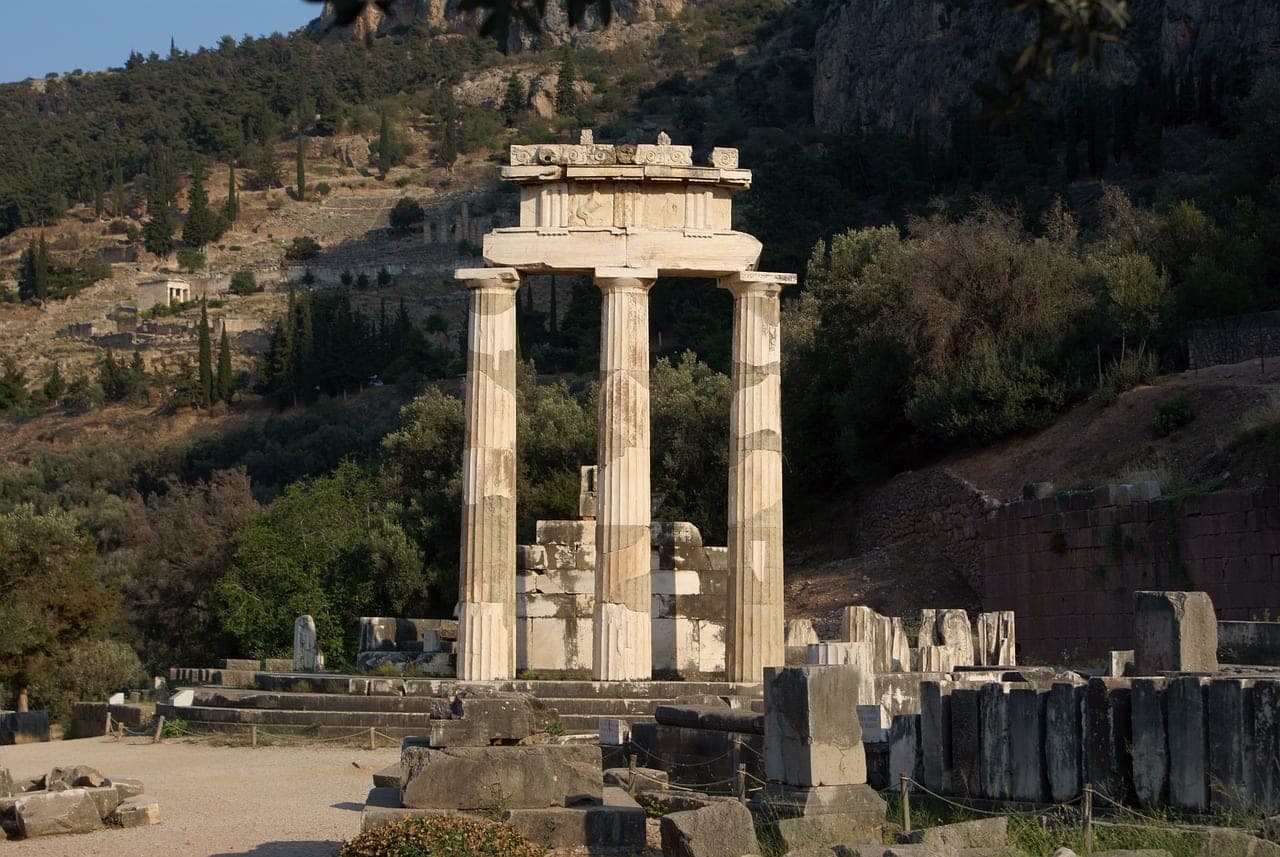
The best window for educational travel to Delphi. Daytime highs climb from 16°C in April to 28°C by mid-June, wildflowers cover the sanctuary slopes, and the Parnassus snowline is still visible from the theater. Morning light on the Tholos is the photo of the trip. Coach traffic is steady but not heavy.
- Jul - Aug — peak heat, peak crowds
Daytime highs 30-34°C on the unshaded archaeological terraces, every tour coach from Athens arriving between 10 and 12, and no cover on the upper stadium. Summer student groups still run successfully, but the day shifts to a 7 AM site entry and afternoon recovery up in cooler Arachova.
- Sep - Oct — shoulder-season gold
A favorite among teacher-led tours. Temperatures drop to 20-26°C, the light turns amber on the limestone, olive harvest begins in the valley below, and the day-trip buses thin out after the first week of September. A September or October high school group trip is the move if your school calendar allows it.
- Nov - Mar — quiet mountain winter
Daytime highs 6-12°C, rain or snow on the upper sanctuary, and the ski crowd filling Arachova on weekends. The ruins stay open and almost empty — a small group can have the Temple of Apollo to themselves. Great for interim-term classroom travel; harder for photo-heavy itineraries and the Corycian Cave hike.
Food and culture

Moussaka
Layered eggplant, seasoned lamb, and béchamel, baked in a casserole until the top caramelizes. The Arachova tavernas do a mountain version with a thicker crust; the good ones are cooked in the morning and served warm, not screaming hot.

Souvlaki
Grilled pork or chicken on a stick, wrapped in pita with tomato, onion, tzatziki, and fries inside. The classic quick lunch when a student group is moving from the museum back to the coach.

Formaela cheese
The specialty cheese of Arachova — firm, slightly smoky, protected designation of origin — grilled or fried until the edges crisp. Served with a squeeze of lemon and nothing else. Every mountain taverna within ten miles of Delphi has it on the menu.

Spanakopita
Flaky phyllo pastry stuffed with spinach, feta, and dill. Sold by the slice at bakeries for breakfast or a snack — the most reliable vegetarian option when a student group is trying to find one between the site and the coach.

Baklava
Paper-thin phyllo, chopped walnuts or pistachios, honey syrup, sliced into diamonds. Served with a small cup of Greek coffee after lunch. The Arachova version uses local honey and is worth a side-by-side against the Athens shops.
What to pack
- Documents
Passport valid 6+ months past travel date, two printed copies (one for the student, one for the Tour Director's file), insurance card, and the Passports group packet. No visa required for US citizens on a stay under 90 days in the Schengen area.
- Clothing
Layers. Delphi is at 600 m and Arachova at 950 m, so the temperature can drop 5-8°C at sunset even in summer, and a spring morning on the stadium can need a fleece. Modest dress (shoulders and knees) is expected if the itinerary includes the monastery of Hosios Loukas on the way in.
- Footwear
Serious, broken-in walking shoes with ankle support and grippy soles. The Sacred Way is slick marble polished by 2,500 years of pilgrims; the stadium climb and the Corycian Cave path are loose limestone. Do not buy new shoes for the trip.
- Tech
Greece uses Type C / F plugs (European two-prong) — bring a universal adapter. A portable battery earns its keep on a full site day. T-Mobile and Google Fi work out of the box; others should pick up a Cosmote or Vodafone eSIM on arrival in Athens, since mountain coverage above Delphi can be thin.
- Extras
A refillable water bottle (the site has a couple of fountains, but carry your own), sunscreen and a hat — the upper sanctuary has no shade — a small daypack for the museum, and a compact umbrella or rain shell from November through March. A paper site map beats phone signal on the upper terraces.
Is it safe?
Yes. Greece's US State Department rating is Level 1 ("exercise normal precautions") — the lowest travel advisory level there is, shared with Canada and Japan — and Delphi itself is a small mountain village where the sanctuary and the village are both policed and well-maintained. Violent crime against travelers is genuinely rare. The real risks at Delphi are ankle injuries on uneven marble, summer heat exhaustion on the upper terraces, and the occasional rockfall warning after heavy rain, which the site staff flag with clear closures.
On a Passports teacher-led trip, a licensed Greek site guide walks the group through the sanctuary and the museum, the Tour Director controls the pace on the climbs, and the private coach parks at the designated lot so no student ever crosses the Delphi–Arachova road alone. We run a 24/7 emergency line out of Boston, keep parents on a daily-update channel, and pre-identify the nearest English-speaking medical contact in Amfissa for every school group tour that comes through. For most teachers running their first educational tour to Greece, Delphi feels considerably easier than a big-city day in Athens.
Practical tips
- Enter at opening, save the museum for last
The site opens at 8 AM in summer, 8:30 in winter. The first two hours on the Sacred Way before the Athens coaches arrive are the difference between a contemplative visit and a crowded one. The air-conditioned museum is the right thing to do at 11 AM when the sun hits the stadium.
- Coach access and the designated lot
Private coaches park in the designated lot below the site; the Tour Director walks the group up. Drop-off points are signed and fixed — a Passports driver will never improvise a stop on the Delphi–Arachova road.
- Plan for elevation and sun exposure
600 m at the sanctuary, 950 m at Arachova. Nothing dangerous, but the sun is stronger than it feels and the upper stadium has zero shade. Sunscreen, hats, water — a standard part of the briefing on Passports Greece student tours.
- Combine with Hosios Loukas if the day allows
The 11th-century monastery sits 30 minutes off the Athens–Delphi route and makes a genuinely great 45-minute stop — UNESCO-listed Byzantine mosaics, none of the Delphi crowd. Teachers running a pure-classical itinerary can skip; history teachers almost never do.
- Cash is handy, cards are fine
Contactless works at every hotel and most Arachova tavernas, but a few village tavernas and the museum coffee bar are cash-only. Small-bill euros also help with a tip at the end of a guided site walk.