- RegionBrittany (Bretagne), France
- LanguageFrench (Breton historically)
- CurrencyEuro (EUR)
- Best seasonMay - Jun, Sep - Oct
- TimezoneCentral European Time (UTC+1)
A quick introduction
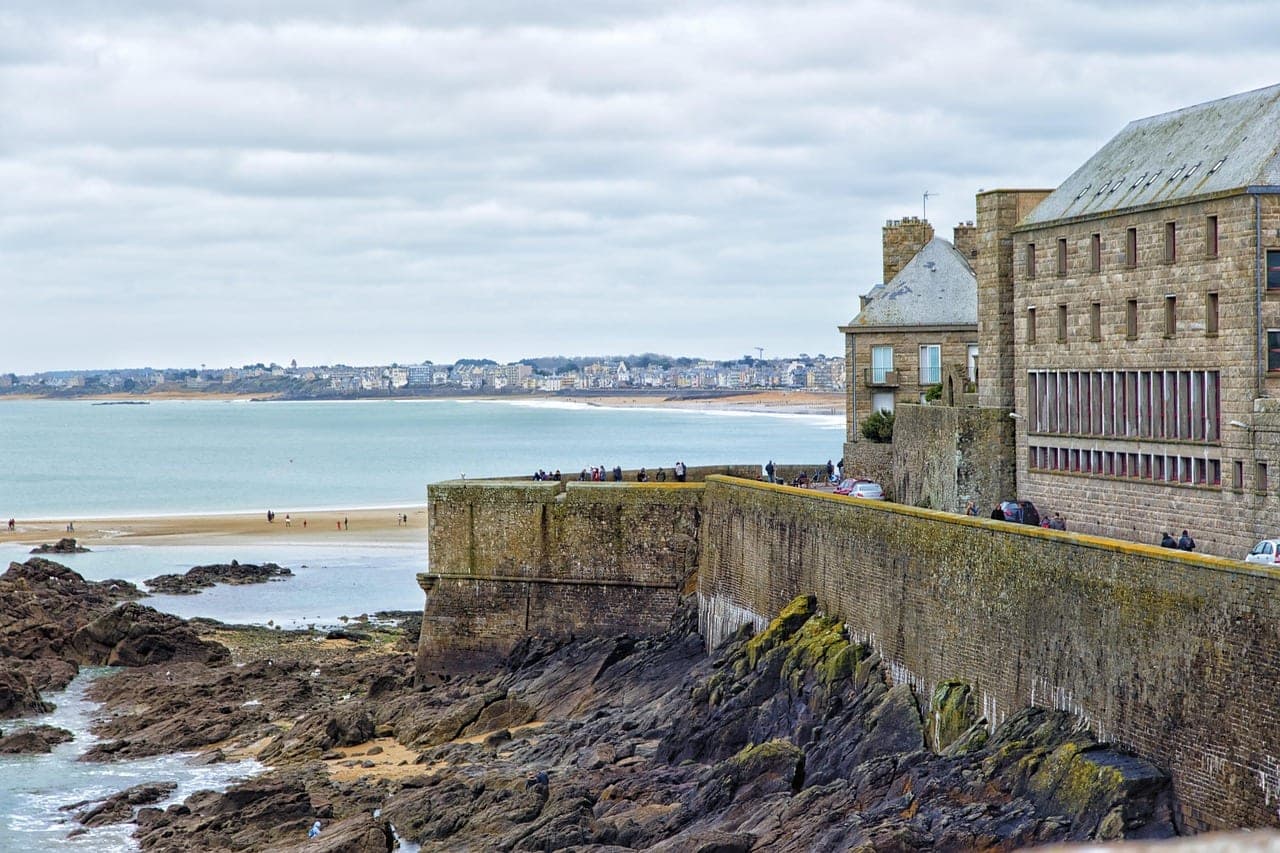
Saint-Malo is a 45,000-person granite-walled port on the northern Brittany coast, sitting at the mouth of the Rance estuary across from Dinard. The Intra-Muros — the original walled city on its rocky outcrop — was built up between the 12th and 17th centuries by the malouins, the most successful corsairs (state-licensed pirates) in French history. Eighty percent of the Intra-Muros was destroyed by Allied bombing in August 1944; the postwar reconstruction rebuilt the city stone for stone in the original 17th-century style.
For a student group, Saint-Malo is the cleanest single Brittany stop. The Intra-Muros walks in a slow morning, the rampart loop is a 90-minute lesson in coastal fortification, and the second- largest tidal range in Europe (up to 13 meters between high and low water) is a daily geography demonstration on the beach below. Pair Saint-Malo with the Mont-Saint-Michel (50 minutes east by coach) on a teacher-led trip for the highest-payoff half-day in northwestern France.
Top things to see and do


When to go
- May - Jun — spring sweet spot
Daytime highs 14-19°C, the Channel light at its sharpest, and the spring equinox tides giving the strongest tidal swings. The classic window for educational travel to Brittany; coach traffic builds through June but the Intra-Muros stays manageable midweek.
- Jul - Aug — peak heat, peak crowds
Daytime highs 19-23°C — Brittany never gets truly hot — and the Intra-Muros full of European holiday traffic by 11 AM. Workable for a summer student group trip — Passports books the Mont-Saint-Michel timed entry when the group count locks.
- Sep - early Oct — shoulder-season gold
The best window for teacher-led tours to Saint-Malo. The autumn equinox tides hit grandes marées levels, light turns silver, temperatures back to 15-19°C, and the day-trip crowds drop sharply after the French rentrée.
- Nov - Mar — quiet, gray, viable
Daytime highs 7-10°C, frequent rain off the Channel, and the Intra-Muros almost empty on weekdays. Some Cancale oyster stalls close November-March. The Saint-Malo storms (high tide + winter low pressure) are a memorable spectacle from the ramparts. A workable interim-term student tours destination.
Food and culture

Galette saucisse / galette complète
The Breton buckwheat galette — savory, served with ham, egg, and Emmental (the complète) or wrapped around a pork sausage. The standard Brittany lunch and the test dish for whether a crêperie is honest.

Kouign-amann
The defining Breton pastry — a butter-and-sugar laminated dough baked until the sugar caramelizes into a brittle crust. Sold by the slice at every bakery in the Intra-Muros; the souvenir buy.

Huîtres de Cancale
The flat Belon and the cupped creuses from the Cancale beds 20 km east. Sold a dozen at a time at quay-side stalls with a slice of lemon and a shot of muscadet. The cleanest seafood demonstration in Brittany.

Far breton
The traditional Breton custard tart with prunes — denser than a French flan, eaten cold or just-warm. Standard end-of-meal at every Brittany bistro.

Cidre brut
Brittany is apple country, not wine country. The traditional galette lunch comes with a bolée (pottery bowl) of dry cider; the over-21 chaperones drink it, the rest of the group gets cidre doux without alcohol.
What to pack
- Documents
Passport valid 6+ months past travel date, two printed copies (one for the student, one for the Tour Director's file), insurance card, and the Passports group packet. No visa required for US citizens on a stay under 90 days in the Schengen area.
- Clothing
Layers in every season — Brittany weather flips fast off the Channel and the Intra-Muros catches the wind even on warm days. A warm fleece even in July for the rampart walk and the early-morning beach. Modest dress for the cathedral.
- Footwear
Broken-in walking shoes with grippy soles. The ramparts and the Fort National causeway are wet stone at low tide and slippery; the Intra-Muros lanes are cobbled. A student group will log 10,000-12,000 steps a day. Do not buy new shoes for the trip.
- Rain layer
Brittany averages rain 14-16 days a month outside summer and the wind makes umbrellas useless. A packable rain shell with a hood lives in the daypack year-round.
- Tech
France uses Type C / E plugs (European two-prong) — bring a universal adapter. A portable battery earns its weight on Mont-Saint-Michel days when the group is off-coach for hours. T-Mobile and Google Fi work out of the box.
- Extras
A small daypack for tidal walks, a reusable water bottle, sunscreen May through September (the wind hides the sun damage), and a fabric tote for the Tuesday and Friday market on Place du Marché aux Légumes.
Is it safe?
Yes. France's US State Department rating is Level 2 ("exercise increased caution") — the same band as Italy, the UK, and Germany — and the elevated level reflects generic European terrorism risk, not anything specific to Saint-Malo or Brittany. Brittany is one of the safest regions in France; violent crime against travelers is essentially non-existent in a town this size. The realistic risk is opportunistic pickpocketing in the Intra-Muros on summer weekends and the actual physical risk of getting caught by an incoming tide on one of the offshore-island walks.
On a Passports teacher-led trip the group is never on public transport alone, the Tour Director runs a pickpocket-awareness briefing on the first evening, and the Tour Director also runs every tidal walk against the day's tide table. Hotels are pre-vetted for 24-hour reception and secure room storage. We operate a 24/7 emergency line out of Boston, keep parents on a daily-update channel, and have English-speaking medical contacts in every city we visit. For most teachers running their first school group tours to France, Saint-Malo feels easier than a domestic field trip.
Practical tips
- The tide tables run the day
Saint-Malo's tides swing up to 13 meters. The Tour Director reads the day's horaire des marées every morning and builds the rampart-and-island walks around it. Fort National and Grand Bé are reachable for two hours on either side of low tide — outside that window they are islands.
- Mont-Saint-Michel is a half-day, not a full day
Fifty minutes by coach. The on-the-Mount visit runs three hours including the abbey climb; back in Saint-Malo for dinner. A full-day Mont-Saint-Michel-only trip overshoots what the site actually rewards.
- Crêperies are the standard lunch
The Intra-Muros has more crêperies than restaurants. A galette complète + a bolée de cidre + a sweet crêpe au caramel beurre salé is the standard Brittany lunch and runs €15 per student.
- French is the working language, Breton survives in the names
Service-industry English is widely available; the Breton language survives in place names and small-town menus. A bonjour on the way into a shop and a merci on the way out go a long way — a useful classroom moment for French students on a school group tour.
- Cards work, small cash helps at the oyster stalls
Contactless is near-universal at restaurants and hotels. Carry €30-40 for the Cancale oyster stalls, the Tuesday and Friday market, and the Intra-Muros bakeries.