- RegionCastile and León, Spain
- LanguageSpanish
- CurrencyEuro (EUR)
- Best seasonApr - Jun, Sep - Oct
- TimezoneCentral European Time (UTC+1)
A quick introduction
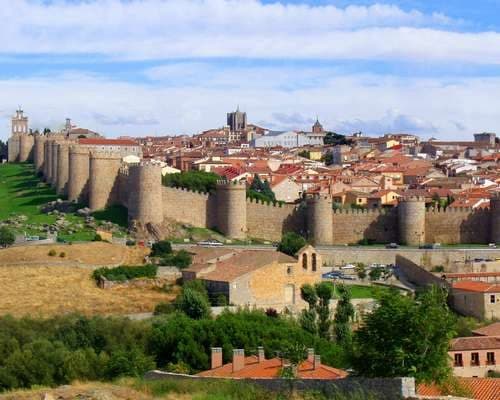
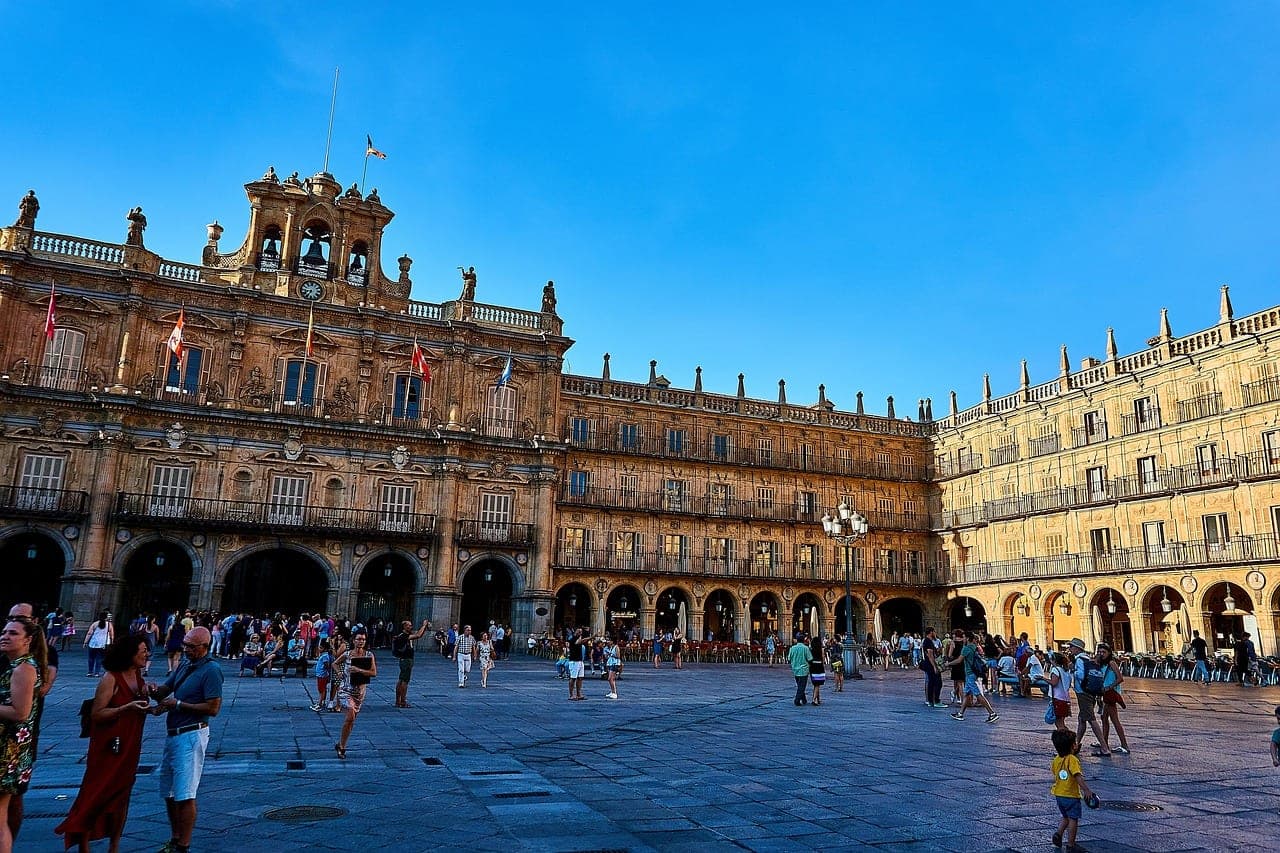
Salamanca sits on the north bank of the Tormes river on the western Castilian meseta at about 800 meters of elevation. Around 145,000 people live in the city, and roughly a fifth of them are students at the University of Salamanca — Spain's oldest, founded in 1218, the same age cohort as Oxford and Bologna. The whole historic center is built from a single quarry of Villamayor sandstone, which oxidizes warm honey-gold and turns the city into one continuous monument from any angle. The center is a UNESCO World Heritage Site.
For a student group, Salamanca is the most concentrated Renaissance-Spain visit on a Spain itinerary and the strongest single language-immersion stop on our catalog. The university's plateresque facade, the two cathedrals, the Plaza Mayor, and the Casa de las Conchas all sit inside one walkable old town. Teacher-led tours pair Salamanca with Madrid and Toledo for an AP Spanish or AP European History high school group trip; the University of Salamanca's Cursos Internacionales runs short Spanish-language workshops that slot cleanly into a week-long educational travel block.
Top things to see and do


When to go
- Apr - Jun — spring sweet spot
The prime window for educational travel to Salamanca. Daytime highs run 18-25°C, the Tormes river meadows green up, and the university is in full term — the city feels its youngest. Long daylight stretches past 9 PM and the Plaza Mayor stays lit and busy until midnight.
- Jul - Aug — warm days, cool nights, half-empty city
Daytime highs 30-34°C with classic continental swings — the altitude drops temperatures 12-15°C overnight. The university empties out and many family restaurants close for two or three weeks. Tourist volume is moderate; coach transfers benefit from the light traffic.
- Sep - Oct — shoulder-season gold
A teacher-led tour favorite. Temperatures drop to 18-25°C, the university restarts in late September and the city refills overnight, and the late-afternoon sun on the sandstone is at its most photogenic. The strongest single window for a Spanish-language student group trip.
- Nov - Mar — cold, crisp, lively
Daytime highs 7-12°C with frequent frost and occasional snow. The university stays in session through the winter, so the tapas bars stay full and the late-night Plaza Mayor stays busy even in January. Short daylight (sunset around 6 PM in December) compresses photo windows; warm coats and gloves are non-negotiable.
Food and culture

Hornazo salmantino
The Salamantine signature — a savory pastry stuffed with cured pork, chorizo, and hard-boiled egg, traditionally eaten outdoors on Easter Monday (Lunes de Aguas). Sold in slices year-round at every old-town bakery.

Jamón de Guijuelo
The acorn-fed Iberian ham from Guijuelo, 50 kilometers south of the city — one of Spain's two great ham regions. Order a ración sliced thin to share; the texture and the marbling are the lesson.

Chanfaina
A Salamantine offal-and-rice stew — chicken giblets, lamb sweetbreads, paprika, and bay. Old-school Castilian cuisine; a strong split-portion order for an adventurous group.

Farinato
A bread-and-pork-fat white sausage from the Salamanca countryside, sliced and pan-fried, often served with a fried egg on top. The breakfast that fuels the meseta in winter.

Tostón asado
Roast suckling pig — Castilian Sunday lunch, slow-cooked in a wood-fired oven until the skin shatters under a fork. Heavy enough to share between two; the sound of the carving is part of the show.
What to pack
- Documents
Passport valid 6+ months past travel date, two printed copies (one for the student, one for the Tour Director's file), insurance card, and the Passports group packet. No visa required for US citizens on a stay under 90 days in the Schengen area; ETIAS authorization is phasing in, so check the status 60 days out.
- Clothing
Layers are mandatory — Salamanca's 800-meter elevation creates large day-to-night temperature swings, and evenings drop noticeably even in May. Modest dress (shoulders and knees covered) is enforced inside both cathedrals and the university chapel; a light scarf in the daypack solves it on the fly.
- Footwear
Serious, broken-in walking shoes with real tread. The old-town sandstone is smooth and slick after the lightest rain, and a student group will log 10,000-12,000 steps between the university, the cathedrals, and the river. Do not buy new shoes for the trip.
- Tech
Spain uses Type C / F plugs (European two-prong) — bring a universal adapter. A portable battery earns its weight on cathedral-and-university days. T-Mobile and Google Fi work out of the box; others should buy a Movistar or Vodafone eSIM before departure or at Madrid-Barajas on arrival.
- Extras
A small daypack, a reusable water bottle (the fuentes in the old town pour potable water), strong sunglasses (the Villamayor sandstone reflects the Castilian sun and fatigues eyes faster than students expect), sunscreen May through September, and a compact umbrella November through April.
Is it safe?
Yes. Spain's US State Department rating is Level 2 ("exercise increased caution") — the same as France, the UK, Germany, and most of Western Europe — and the elevated level reflects generic European terrorism risk, not anything specific to Salamanca. Salamanca is one of the safer cities on our Spanish catalog; the heavy student population keeps the center busy and visible well past midnight, and the compact walkable old town makes the group easy to keep together. Violent crime against travelers is very rare. The actual risk is garden-variety pickpocketing in the Plaza Mayor at festival weekends and around the cathedral entry queue on Sunday mornings.
On a Passports teacher-led trip, the group moves by private coach with a professional Castilian driver, the Tour Director runs a pickpocket-awareness briefing on the first evening, and every hotel is pre-vetted for 24-hour reception and secure room storage. We operate a 24/7 emergency line out of Boston, keep parents on a daily-update channel, and have English-speaking medical contacts in every city we visit. For most teachers running their first school group tours to Spain, the Salamanca logistics feel easier than a domestic field trip because the Tour Director owns the cathedral and university entries, the coach drops, and any curveballs end to end.
Practical tips
- Lunch is late, dinner is later
Restaurants serve lunch 2-4 PM and dinner rarely before 9 PM, and Salamanca's student population pushes the dinner hour even later — many tapas bars don't fill until 10:30. Plan group meals on the Spanish clock; a merienda (afternoon snack) at 6 PM bridges the gap.
- Tapas crawl, do not sit-down dinner
The streets around the Plaza Mayor — Calle Compañía, Rúa Mayor — run on a moving tapas circuit. Order a drink, get a small plate, walk on after twenty minutes. Three stops is a meal; five is dinner.
- Find the frog before the group goes home
The hidden frog on the university's plateresque facade is tradition for students hunting good luck on exams. Make a group game of it — first to spot it wins. The Tour Director knows where it is and steps back to let the group find it.
- The Spanish here is the cleanest in Spain
Salamanca is the historical home of Castilian Spanish and the city the Real Academia Española uses as its reference accent. AP Spanish students notice it the moment they hit the first café. The University of Salamanca Cursos Internacionales slots short workshops into a school group week if the itinerary allows.
- Contactless everywhere, small cash helps
Tap-to-pay is near-universal at restaurants, the cathedral gift shop, and the university bookstore. A little cash is useful for the small bakeries selling hornazo, the Plaza Mayor street performers, and tipping. ATMs from CaixaBank, Santander, and BBVA charge lower fees than the tourist-facing Euronet machines.