- RegionGard (Occitanie), France
- LanguageFrench
- CurrencyEuro (EUR)
- Best seasonApr - Jun, Sep - Oct
- TimezoneCentral European Time (UTC+1)
A quick introduction
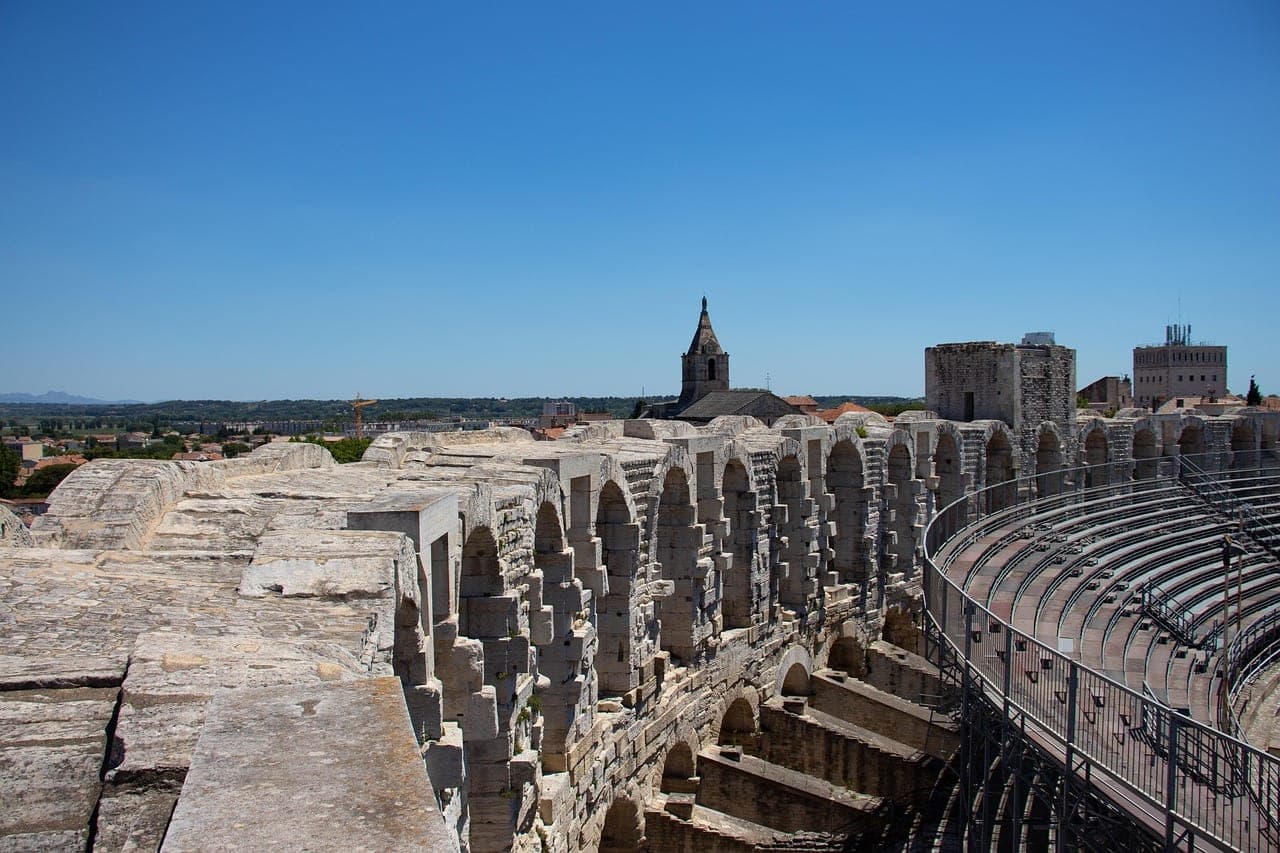
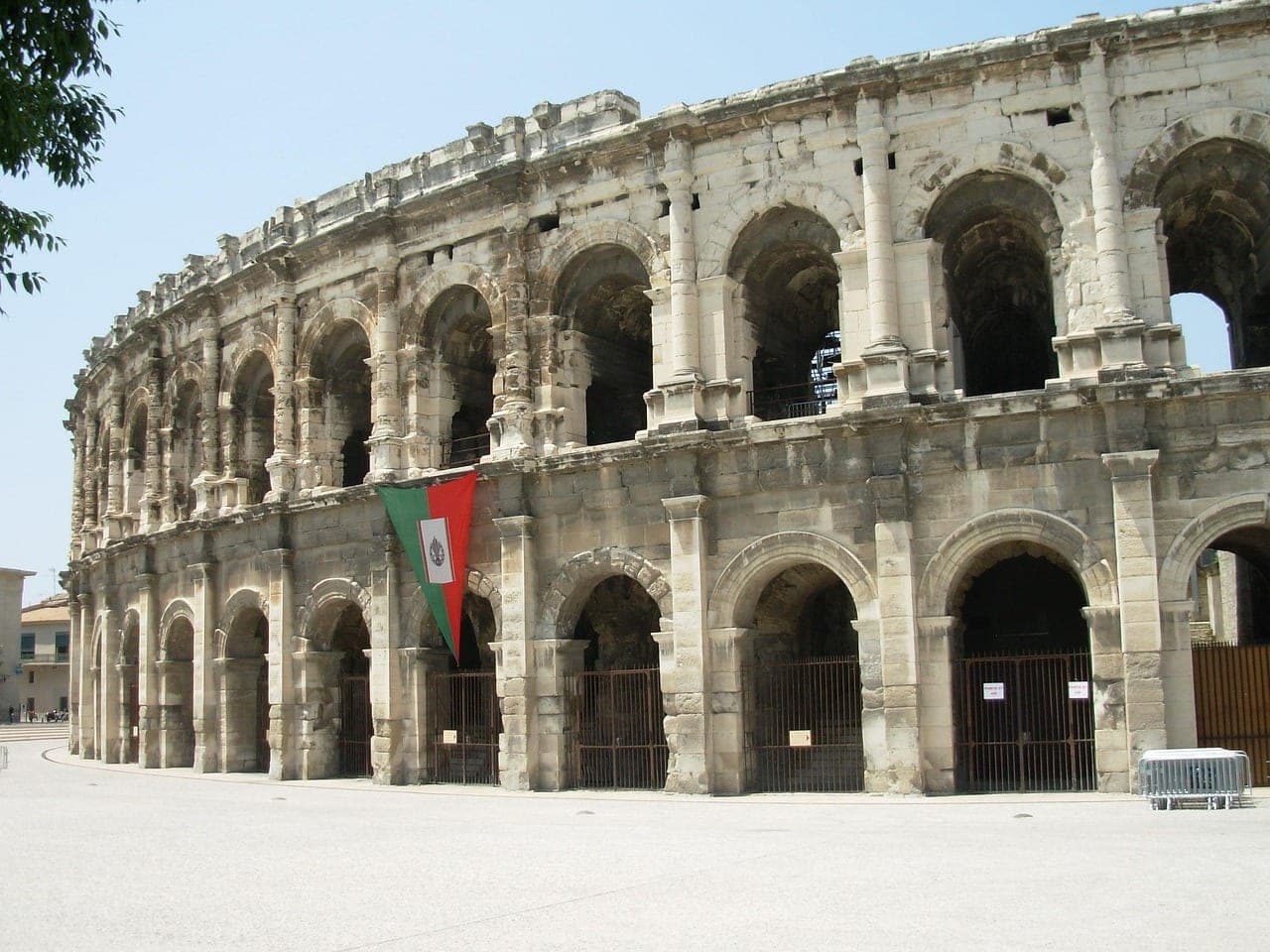
Nîmes is a 150,000-person city in the Gard département, halfway between Avignon and Montpellier, founded by the Romans around 25 BC as Nemausus. It is the best-preserved Roman city in France: the Arènes (a 24,000-seat amphitheater), the Maison Carrée (the most intact Roman temple anywhere in the empire), and the Pont du Gard aqueduct 25 km north all sit in the same half-day on a Passports itinerary. The city's modern claim to fame is denim — de Nîmes — first woven here in the 17th century from the local serge fabric.
For a student group, Nîmes is the highest-density Roman lesson in France. The 8th-grade-Latin curriculum lives here in plain stone, the Musée de la Romanité opened in 2018 next to the amphitheater is the most ambitious Roman museum built in Europe in a generation, and the city pairs cleanly with Avignon (30 minutes by TER), Arles (30 minutes), and the Pont du Gard on a teacher-led tour of the Roman Provence.
Top things to see and do


When to go
- Apr - Jun — spring sweet spot
Daytime highs 18-27°C, the garrigue hillsides green and flowering, and long daylight. The classic window for educational travel to Nîmes. The Feria de Pentecôte (six days around Pentecost in late May or early June) is the city's biggest event; it doubles the population and books out hotels months in advance.
- Jul - Aug — peak heat, peak crowds
Daytime highs 30-36°C and the limestone of the arena radiating heat by 11 AM. Workable for a determined summer student group trip — do the arena before 10 AM and the museum in the afternoon — but the shoulder seasons read better (Passports books the timed slots when the group count locks).
- Sep - Oct — shoulder-season gold
The best window for teacher-led tours to Nîmes. Temperatures back to 18-26°C, vendanges in the Côtes du Rhône vineyards to the north, and the city center quiet after the September Feria des Vendanges. School group tours that travel mid-September get the best version of the city.
- Nov - Mar — quiet, mild winter
Daytime highs 11-15°C, occasional rain, very few visitors. The Pont du Gard is still open year-round and is genuinely striking on a cold clear morning. A workable interim-term or MLK-week student tours destination if the weather cooperates.
Food and culture

Brandade de morue
The Nîmes specialty — salt cod whipped with olive oil, milk, and crushed garlic into a smooth paste, baked golden in a gratin dish. Served with toast for spreading. Sold by the tub at every charcuterie in town.

Gardiane de taureau
Camargue bull meat slow-stewed in red wine with olives and orange peel, served over the local short-grain rice. The defining dish of the Petite Camargue and the menu marker for a serious Nîmes restaurant.

Tapenade
Black-olive paste with capers and anchovy, eaten on toast as an apéritif. The Provençal standard; sold by the jar at every market.

Picholines & olive oil
The local green table olive — picked young, lightly cured. Served as an apéritif or alongside the bread basket; the olive groves around Nîmes have been working since Roman times.

Fougasse
The Provençal flatbread — leaf-shaped, slashed open, brushed with olive oil, sometimes baked with olives or gratons (pork cracklings). Sold by the slice at every bakery; the standard group lunch carry-out.
What to pack
- Documents
Passport valid 6+ months past travel date, two printed copies (one for the student, one for the Tour Director's file), insurance card, and the Passports group packet. No visa required for US citizens on a stay under 90 days in the Schengen area.
- Clothing
Lightweight layers — Nîmes runs hotter than coastal Provence because it sits inland in a stone basin. Modest dress (shoulders and knees covered) for the cathedral. A light scarf doubles as a shoulder cover and a sun-shade for arena afternoons.
- Footwear
Broken-in walking shoes with real soles. The Pont du Gard is uneven gravel, the arena steps are worn smooth, and a student group will log 9,000-11,000 steps a day. Do not buy new shoes for the trip.
- Sun protection
Provence sun is unforgiving from May through September. The arena and the Pont du Gard have almost no shade. High-SPF sunscreen, a brimmed hat, and UV sunglasses for every student.
- Tech
France uses Type C / E plugs (European two-prong) — bring a universal adapter. A portable battery earns its weight on Pont du Gard days when the group is off-coach for hours. T-Mobile and Google Fi work out of the box.
- Extras
A small daypack for museum days, a reusable water bottle (the Roman fountain in the Jardins de la Fontaine pours drinkable water), and a fabric tote for the Wednesday and Saturday market on Boulevard Jean-Jaurès.
Is it safe?
Yes. France's US State Department rating is Level 2 ("exercise increased caution") — the same band as Italy, the UK, and Germany — and the elevated level reflects generic European terrorism risk, not anything specific to Nîmes. The city is the working capital of an agricultural département; violent crime against travelers is rare and the Roman-monument core is visibly monitored. The realistic risk is opportunistic pickpocketing at Nîmes-Pont-du-Gard TGV station and inside the Wednesday market crowds, plus elevated street activity during the Pentecost Feria.
On a Passports teacher-led trip the group is never on public transport alone, the Tour Director runs a pickpocket-awareness briefing on the first evening, and every hotel is pre-vetted for 24-hour reception and secure room storage. We operate a 24/7 emergency line out of Boston, keep parents on a daily-update channel, and have English-speaking medical contacts in every city we visit. For most teachers running their first school group tours to France, Nîmes feels easier than a domestic field trip.
Practical tips
- Feria week is the one to plan around
The Feria de Pentecôte — six days around Pentecost in late May or early June — doubles the city's population. Hotels book out ten months ahead and the arena is closed to visitors for corridas every afternoon. Our Tour Director will steer the booking around it unless the group specifically wants the festival experience.
- Pont du Gard is a half-day, not 90 minutes
Plan three hours minimum: the museum, the walk across the bridge, the loop down the Gardon riverbank, and a stop at the site shop. Two hours is short; one hour is a missed opportunity.
- The arena wants morning light
The Arènes face roughly south-east. Visit in the first 90 minutes after opening for the best light and the lowest heat — the limestone radiates by mid-afternoon in summer.
- French is the working language
Service-industry English is widely available; arena and museum signage is bilingual. A bonjour on the way into a shop and a merci on the way out go a long way — a useful classroom moment for French students on a school group tour.
- Cards work, small cash helps at the markets
Contactless is near-universal. Carry a bit of cash for the Wednesday and Saturday Boulevard Jean-Jaurès market, the olive-and-tapenade stalls, and the Pont du Gard picnic vendors.