Destination

London, England

London student group travel for teachers: Westminster, the Tower, the British Museum and the West End on teacher-led high school group educational tours.

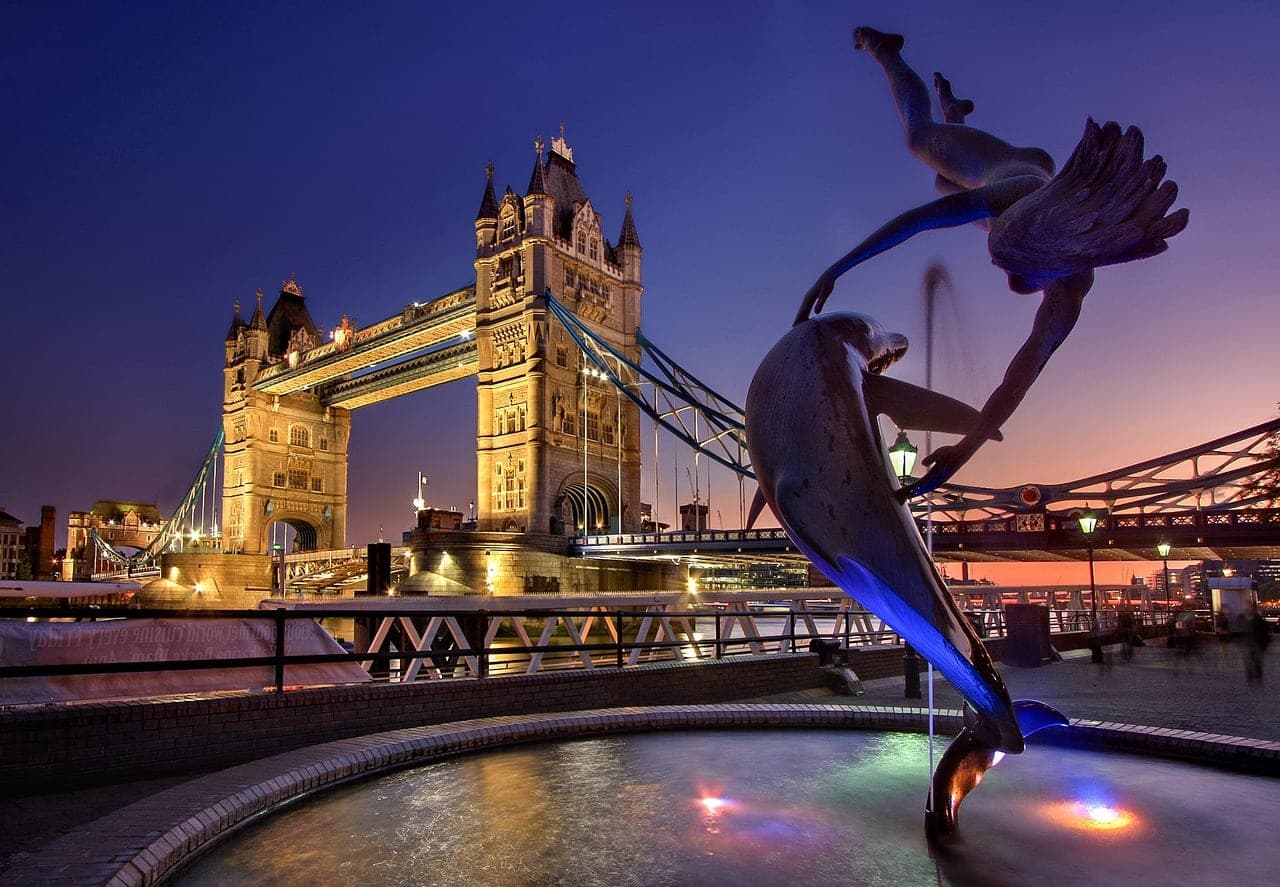
Tower Bridge over the River Thames at sunset in London, England
On this page
  • Where London sits on the Thames and how the Tube knits the historic city to the West End
  • Six sights to anchor a school group week — Westminster, the Tower, the British Museum, St Paul's
  • What to eat: a proper Sunday roast, fish and chips, and a curry house in Brick Lane
  • When to go, what to pack, and whether London is safe for students
  • Practical logistics for teachers: Oyster cards, congestion charge, and coach drop points
← All city guidesCountry guide: England
Plan a trip

A quick introduction

London is a city of nearly 9 million people built along a 25-mile bend of the River Thames, with two thousand years of layered history inside the Circle Line. The Romans founded Londinium here in 43 AD; the City of London — the original square mile — still operates under a separate medieval charter from the rest of the metropolis. Greater London now sprawls across 32 boroughs, but the core a school group walks (Westminster, the South Bank, the City, Bloomsbury) sits inside a four-mile rectangle a Tube ride wide.

For a student group, London is the deepest humanities visit on our British Isles catalog and a natural anchor for any first-time educational travel program. The British Museum, the National Gallery, the Tate Modern, and the V&A are all free; Parliament, Westminster Abbey, the Tower, and the Globe Theatre stack a full high school history curriculum into a single walkable week. London pairs cleanly with Paris by Eurostar or with Bath, Stratford, and York for a teacher-led high school group trip that covers the whole island.

Day by day

Top things to see and do

Westminster Abbey & Parliament

Westminster Abbey & Parliament

The coronation church for every English monarch since 1066, plus the Houses of Parliament and Big Ben across the road. The standard ticket is fine for a 90-minute group visit; Passports can add a Verger-led tour of the chapter house and the Coronation Chair.

The Tower of London

The Tower of London

A working fortress, palace, and prison continuously occupied since 1078. The Crown Jewels, the Yeoman Warder tour, and the ravens pay back the entry price; allow three hours and arrive at opening to beat the cruise-ship surge.

The British Museum

The British Museum

Free entry, eight million objects, and the only place on earth a high school group can stand in front of the Rosetta Stone, the Parthenon Marbles, and an Easter Island moai inside an hour. The Great Court is the meet-and-regroup point.

St Paul's Cathedral

St Paul's Cathedral

Wren's domed cathedral (1710) survived the Blitz and still dominates the City skyline. The Whispering Gallery acoustics experiment is a physics-class moment; the 528-step climb to the Golden Gallery is the panoramic payoff.

South Bank: Tate Modern, Globe, Eye

South Bank: Tate Modern, Globe, Eye

Walk the river from Westminster Bridge past the London Eye to the Globe Theatre and the Tate Modern. A free, photo-rich half-day that lines up Shakespeare, modern art, and the skyline in a single stretch of pavement.

A West End matinee

A West End matinee

A Wednesday or Saturday matinee at one of 40 West End houses is the cultural set-piece of any London student tour. Hamilton, Six, Les Misérables, and the RSC transfers are the group-friendly defaults; the Tour Director books a block well ahead.

Weather by season

When to go

  • May - Jun — spring sweet spot

    The classic window for educational tours to London. Daytime highs 15-22°C, daylight pushing 9:30 PM by mid-June, and Hyde Park, Kensington Gardens, and Regent's Park all in bloom. Crowds build through June but museums and theatres are still manageable until UK schools break in late July.

  • Jul - Aug — peak crowds, soft weather

    Daytime highs 19-25°C, frequent passing showers, and queues at the Tower and Westminster Abbey out the door by 10 AM. Still works for summer high school student travel — start the museum day at opening (Passports books the timed slots when the group count locks).

  • Sep - Oct — shoulder-season gold

    Our favorite window for teacher-led trips. Temperatures drop to 12-18°C, parks turn gold, and tourist volume drops sharply after the first week of September. A September school group trip threads the weather-and-crowd needle better than any other month.

  • Nov - Mar — quiet, festive winter

    Short daylight (sunset around 4:00 PM in December), reliable drizzle, and the Christmas lights on Oxford Street, Regent Street, and Carnaby Street through January. Museums are near-empty after the holidays — but bring serious rain gear and a warm layer.

What to order

Food and culture

Sunday roast

Sunday roast

Roast beef (or lamb, or chicken) with Yorkshire pudding, roast potatoes, gravy, and seasonal veg, served at gastropubs across the city from noon Sunday. Long lunch, no rushing — a worthwhile cultural inclusion if a Sunday lands in the itinerary.

Fish and chips

Fish and chips

Battered cod or haddock with chunky chips, mushy peas, and a wedge of lemon. The Golden Hind in Marylebone and Poppies in Soho are the group-friendly classics; takeaway from a chippy wrapped in paper is the budget version.

A proper full English breakfast

A proper full English breakfast

Eggs, back bacon, sausage, baked beans, grilled tomato, mushrooms, black pudding, and toast. Most hotels include a version at breakfast service; saves the lunch budget on a long museum day.

Brick Lane curry

Brick Lane curry

The British curry house tradition runs through Whitechapel and Brick Lane in the East End. A balti or a chicken tikka masala shared family-style is the late-evening classic; the naan bread alone is worth the trip.

Afternoon tea

Afternoon tea

A three-tier stand of finger sandwiches, scones with clotted cream and jam, and small cakes, served with a pot of tea. The Wolseley, Fortnum's, and the Orangery at Kensington Palace are the group-friendly options; book weeks ahead.

Packing essentials

What to pack

  • Documents

    Passport valid for the duration of travel (the UK doesn't require the 6-month buffer the Schengen area does, but we recommend it anyway), two printed copies (student + Tour Director's file), insurance card, and the Passports group packet. The UK's ETA (Electronic Travel Authorization) is required for US citizens as of early 2025 — we handle that paperwork at the group level.

  • Clothing

    Layers, layers, layers. London's weather can swing 8°C in a day, and a sunny morning routinely flips to afternoon drizzle without warning. Smart-casual works for theatre evenings; jeans and a clean shirt clear most West End dress codes.

  • Rain gear

    A packable waterproof jacket with a hood beats an umbrella — Tube wind and crowded sidewalks make 30 umbrellas a real hazard. Add a waterproof daypack cover or a dry bag for camera gear and tablets.

  • Footwear

    Serious, broken-in walking shoes. A London student group will log 15,000+ steps a day between the Tube, the museums, and the South Bank walks. Do not buy new shoes for the trip; trainers with grip are fine on most surfaces.

  • Tech

    The UK uses Type G plugs (three-prong, fused) — bring a universal adapter, and note that it's a different shape from continental Europe if the trip continues onward. T-Mobile and Google Fi work out of the box; other US carriers should add an international plan or buy a UK eSIM at LHR.

  • Extras

    A small daypack for museum days (large bags get checked at the British Museum and the Tower), a reusable water bottle (London tap water is excellent), and a contactless card or tap-to-pay phone for the Tube — a paper Travelcard is no longer necessary.

The parent-meeting question

Is it safe?

Yes — London is one of the safest large cities in the world for an organized student group. The UK's US State Department rating is Level 2 ("exercise increased caution"), reflecting the generic European terrorism risk profile rather than anything London- specific, and violent crime against travelers is rare. The actual risk on the ground is petty theft — phone snatching from café tables in Soho, pickpocketing on Oxford Street and the Tube, bag dipping at the British Museum cloakroom queue.

On a Passports teacher-led trip, the group is never on the Tube alone, the Tour Director runs a situational-awareness briefing on the first evening, and every hotel is pre-vetted for 24-hour reception and secure in-room storage. We operate a 24/7 emergency line out of Boston, keep parents on a daily-update channel, and have English-speaking medical contacts in every neighborhood we work. For most teachers running their first school group tour abroad, London logistics feel easier than a domestic field trip — everyone speaks English and the Tube map is the same one their students learned in geography.

🛡️

Personal safety

Phone snatching from open hands on Oxford Street and the Embankment is the headline risk. Cross-body bags worn in front, phones stowed when not in use, and a Day 1 awareness briefing cover most of it. Hotels are vetted for 24-hour reception and English-speaking front desks.

⚕️

Health & medical

Tap water is excellent across the UK. No special vaccines required beyond CDC routine. St Thomas' (across from Parliament) and University College Hospital both run 24-hour A&E to NHS standards, and US travel insurance is universally accepted. Boots and Superdrug stock American-equivalent OTC medication.

🚐

Roads & transport

Private coach for inter-city legs and Tube for in-city moves with the Tour Director leading. Traffic drives on the left, which matters most when students step off a curb — the "look right first" rule is repeated every morning. Heathrow, Gatwick, and Stansted transfers are by private coach.

🌪️

Natural hazards

London sits in a non-seismic zone and well above the Thames flood line behind the Thames Barrier. The most common seasonal concern is cold-and-wet, which is a packing problem, not a safety one. Summer heat occasionally tops 30°C; on those days we shift museum slots to the cooler hours.

Practical tips

  • The Tube is the fastest way around

    Eleven Underground lines plus the Elizabeth Line cover most of what a school group will visit. Contactless tap-to-pay (phone or card) is now the default — no need to buy paper Travelcards or even Oysters. The Tour Director leads each group move and confirms the carriage at the platform.

  • Walk between Westminster and the South Bank

    The river path from Westminster Bridge past the London Eye to Tate Modern and Borough Market is a flat, photo-rich 30-minute walk. Faster than the Tube during rush hour and the most scenic free thing the city offers.

  • Contactless is universal, cash is rare

    Tap-to-pay covers the Tube, buses, museums, cafés, and market stalls. Students do not need pounds in cash for a standard London itinerary; £20 for emergencies is plenty. Currency exchange at the airport is a rip-off — skip it and use the hotel ATM if needed.

  • The West End is part of the curriculum

    A matinee at the National Theatre or a West End musical is a legitimate humanities inclusion for a high school group trip — performance studies, social history, and adaptation theory live inside a 90-minute interval. Passports books the block and arranges seating ahead of time.

  • Pubs are family-friendly until early evening

    Most pubs welcome under-18s with an accompanying adult until around 8 PM, and gastropubs serve full meals at lunch and dinner. A Sunday roast at a proper London pub is a worthwhile cultural set-piece for a school group tour.
Five facts

Good to know

🏛️

The City of London is its own thing

The square-mile City of London inside Greater London has its own Lord Mayor, its own police force, and its own medieval charter dating back to William the Conqueror — separate from the modern London everyone else lives in.

🚇

The Tube is older than electricity

The Metropolitan Line opened in 1863 with steam locomotives pulling carriages through brick tunnels. Electrification didn't arrive until 1890 — a fun aside on the Day 1 Tube briefing.

🔔

Big Ben is the bell, not the clock

The 13.7-tonne bell inside the Elizabeth Tower at the north end of Parliament is named Big Ben; the tower and the clock face are something else. Pedantic, but the docent will love a student who knows.

🎨

Most major museums are free

The British Museum, National Gallery, Tate Modern, Tate Britain, V&A, Natural History Museum, and Science Museum all have free general admission — a rare global gift to school group travel budgets. Special exhibitions are ticketed separately.

🔎

Sherlock Holmes never lived here

221B Baker Street didn't exist when Conan Doyle wrote the stories — Baker Street numbering only reached 221 in the 1930s. The address is now a museum, fully committed to the fiction, and worth a 20-minute stop for English-lit groups.

Tours that go here

Tours that stop in London

See all tours →
Big Ben and the Houses of Parliament
United Kingdom/England

Discover London

London

Small-group
See itinerary
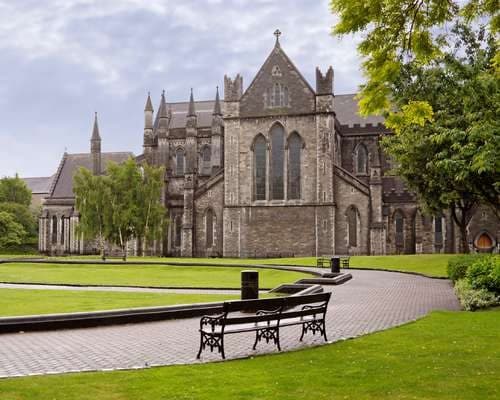
St. Patrick Cathedral in Dublin, Ireland
Ireland · United Kingdom/England

Ireland and Britain

Dublin · Killarney · London

Adult-recommended
See itinerary
Paris
United Kingdom/England · France

Le Beau Voyage

London · Caen · St. Malo · Loire Valley · Paris

Large-group
See itinerary
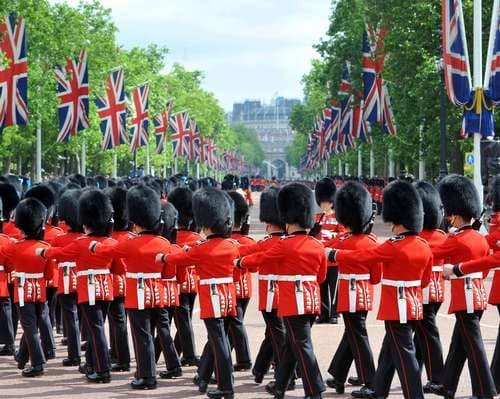
Trooping the Colour
United Kingdom/England · United Kingdom/Scotland

London and Edinburgh

London · Edinburgh

Small-group
See itinerary
Trooping the Colour
United Kingdom/England · France

London and Paris

London · Paris

Small-group
See itinerary
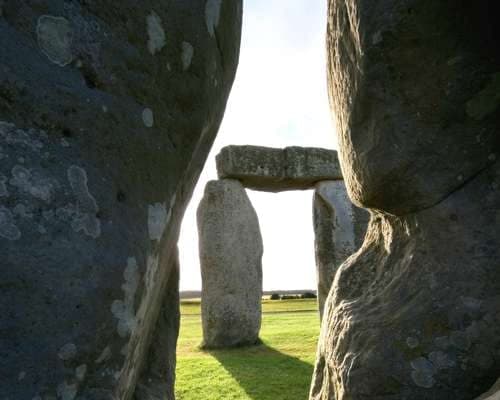
Stonehenge
United Kingdom/England

London and the Countryside

London · Brighton · Bath · Stratford-upon-Avon

See itinerary
Classroom material

Lesson plans about London

See all →
EnglandHistoryGrade 11-12

Age of Enlightenment: England: John Locke

Students in this lesson will identify, understand and be able to explain the basics of Locke's ideas on society and government by reading and analyzing excerpts from his two major philosophical works, An Essay Concerning Human Understanding…

View lesson
EnglandHistoryGrade 11-12

Great London Fire of 1666

Students in this lesson will identify, understand and be able to explain the Great London Fire of 1666, how it started, what it destroyed and how the government responded, and finally how Christopher Wren and others responded by remaking Lo…

View lesson
EnglandHistoryGrade 11-12

Great War (1914-1918): England: Armistice Day 1918

Students in this lesson will identify, understand and be able to explain the basic facts behind what happened in London and in Flanders in the last days of the Great War, the British public's reaction to the war, and the story behind Rememb…

View lesson
EnglandHistoryGrade 11-12

Great War (1914-1918): England: Causes of the War

By an in-depth analysis of primary and secondary sources, students in this lesson will identify, understand and be able to explain England's role in driving the continent towards war in 1914 (including Parliament's foreign policy decisions …

View lesson
EnglandEnglish / Language ArtsGrade 11-12

Great War (1914-1918): England: Wilfred Owen

By an in-depth analysis of primary and secondary sources, students in this lesson will identify, understand and be able to explain how Wilfred Owen's poetry is shaped by an intense focus on extraordinary human experiences, and how it tries …

View lesson
EnglandHistoryGrade 11-12

Medieval England (410-1485): Magna Carta of 1215

Through an in-depth analysis of primary and secondary sources, students in this lesson will identify, understand and be able to explain the basic ideas contained in the Magna Carta of 1215, why King John was forced to sign it, why the docum…

View lesson
From the Tour Directors

Tour Director lectures about London

See all →
A Walk in London: From Piccadilly Circus to Trafalgar Square — Passports Tour Director lecture
Georgina NewsonUK

A Walk in London: From Piccadilly Circus to Trafalgar Square

Follow your tour director on a walking tour highlighting Leicester Square, Piccadilly Circus and Trafalgar Square.

Watch lecture
The Tower of London and its Mysteries, Prisoners and Executions — Passports Tour Director lecture
Georgina NewsonUKHistory

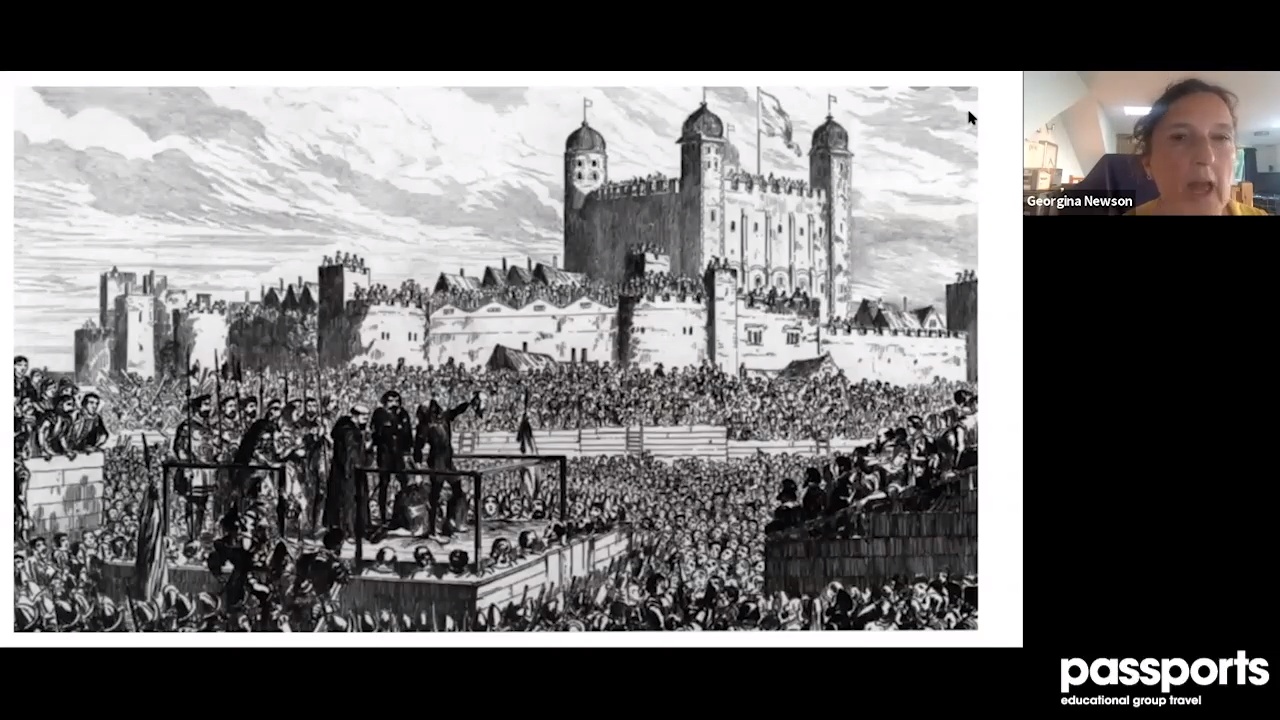
The Tower of London and its Mysteries, Prisoners and Executions

The Tower of London was built nearly 1000 years ago and, during its time, it has served many purposes. However, it is best known as a prison and place of torture and execution. We will hear about some of its most famous prisoners, including royalty and German spies, as well as details on a few of the 400 executions that took place there. And, of course, what visit to the Tower is complete without the mystery of the two princes?

Watch lecture
From our blog

Blog posts about London

See all →
The Tour Director’s Secret Handbook: Insider Tips Teachers Swear By
for group leaders

The Tour Director’s Secret Handbook: Insider Tips Teachers Swear By

Tour Directors share their best insider tips for teachers leading student groups abroad, from the two-minute departure rule to handling unexpected hiccups on the road

Read post
Hidden Educational Gems in Europe’s Most Visited Cities
destinations

Hidden Educational Gems in Europe’s Most Visited Cities

Hidden educational gems in Paris, Rome, London, and Barcelona give student travelers deeper, crowd-free experiences tied to history, science, art, and culture

Read post
Engaging Students with Hands-On Travel Activities: Fun Ideas for Educational Tours
educational impact

Engaging Students with Hands-On Travel Activities: Fun Ideas for Educational Tours

Hands-on travel activities like graffiti workshops, geo-treasure hunts, and historical reenactments help students engage deeply with destinations and retain what they learn

Read post
Europe’s Most Beautiful Libraries and Bookstores
destinations

Europe’s Most Beautiful Libraries and Bookstores

Europe's most stunning libraries and bookstores span Dublin's Long Room to Paris's Shakespeare and Company — each a landmark of architecture, history, and literary culture

Read post
The Best Educational Museums in Europe for Students -- Passports
destinations

The Best Educational Museums in Europe for Students -- Passports

Five of Europe's best educational museums for student tours span art, history, and science — from the British Museum in London to the Vatican Museums in Vatican City

Read post
Top 10 Literary Destinations in Europe
destinations

Top 10 Literary Destinations in Europe

Europe's top literary destinations span ten cities, from Shakespeare's Stratford-upon-Avon to Joyce's Zurich, each offering author museums, landmarks, and cultural history

Read post
On the ground

More places in England

Country guide: England →
Palladian Pulteney Bridge and its horseshoe weir on the River Avon at Bath, Somerset

Bath, England

Bath student group travel for teachers: Roman baths, Georgian crescents, and Jane Austen's England on teacher-led high school group trips and school group tours.

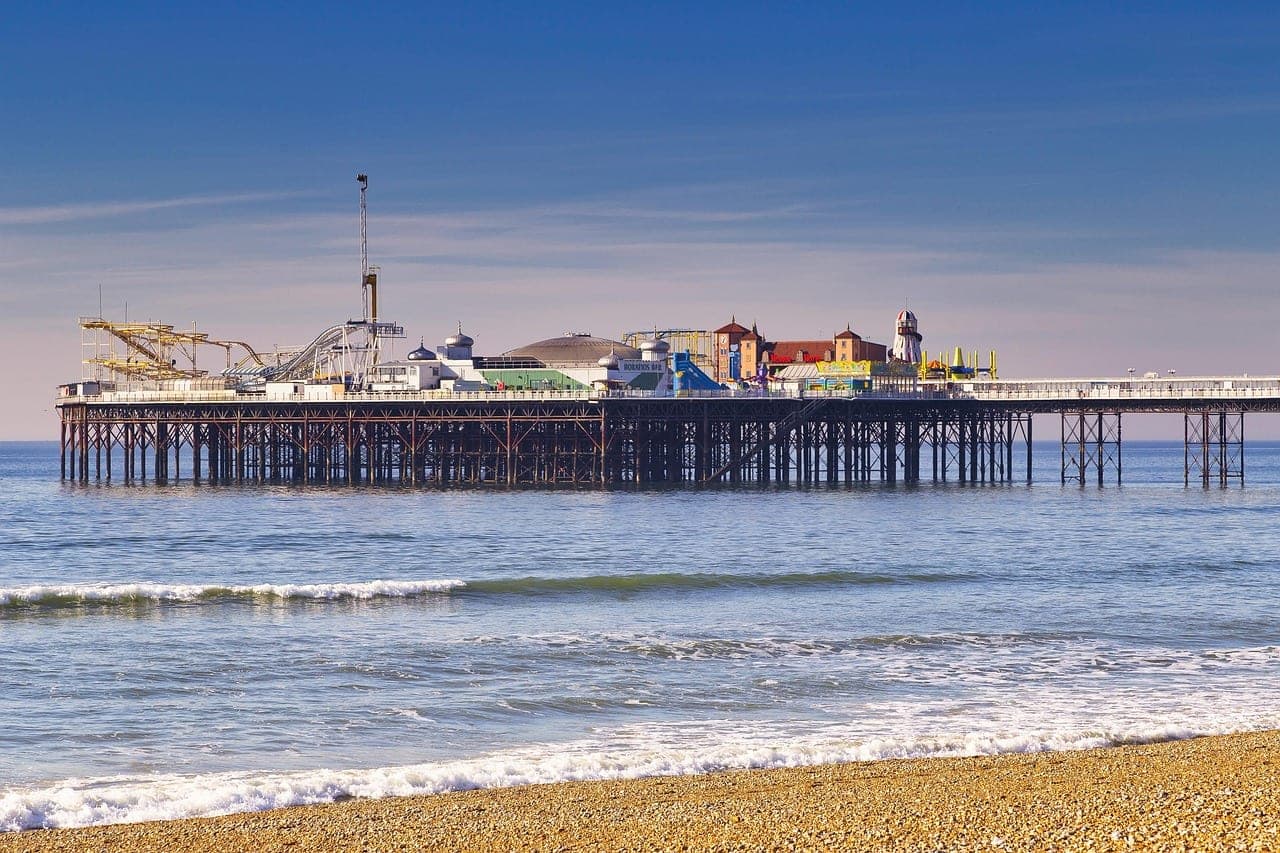
Brighton Palace Pier and pebble beach along the Brighton seafront in England

Brighton, England

Brighton student group travel for teachers: Royal Pavilion, seafront pier, and Regency England on teacher-led high school group trips and educational tours.

Tudor-era timber-framed house on a quiet cobbled street in Stratford-upon-Avon, England

Stratford-upon-Avon, England

Stratford-upon-Avon student group travel: Shakespeare's birthplace, the RSC, and Anne Hathaway's Cottage on teacher-led high school educational tours.

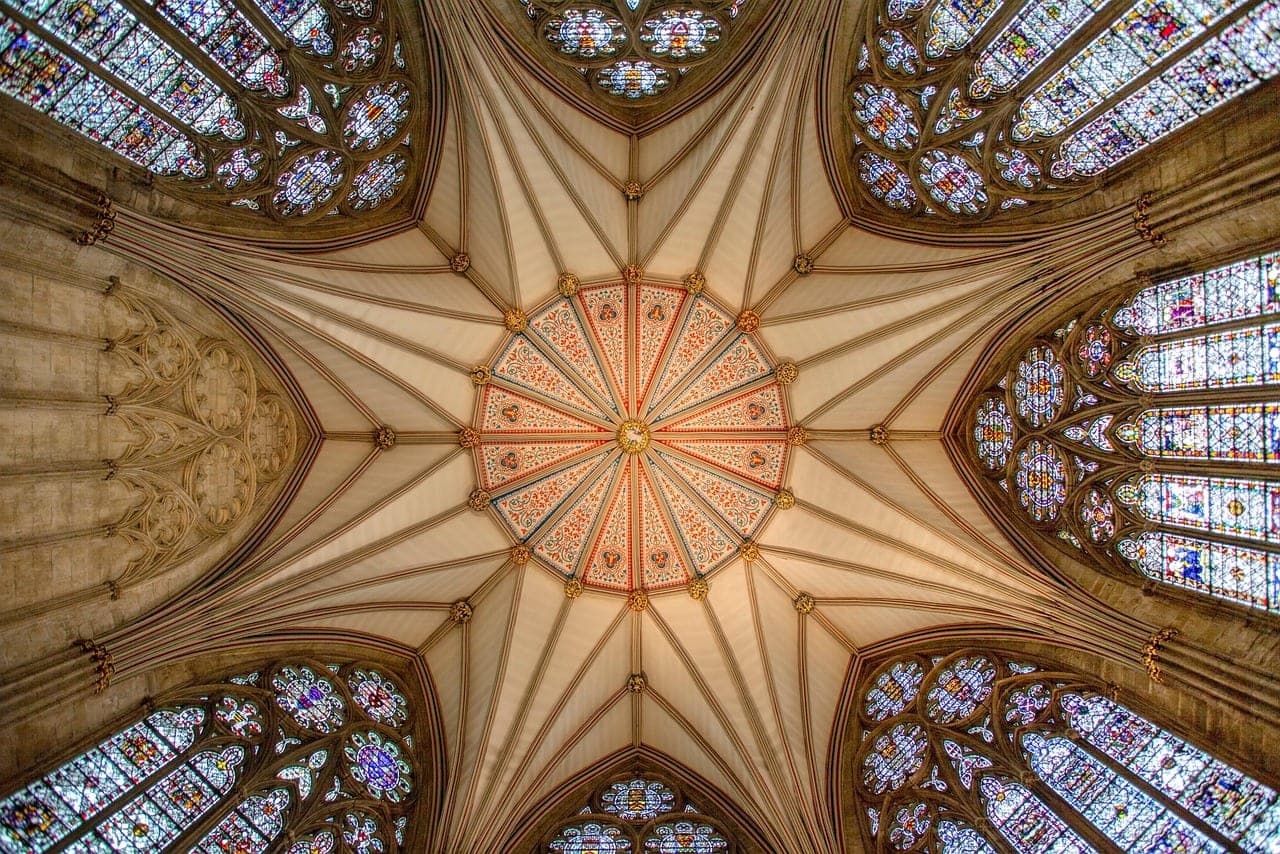
Gothic west front of York Minster cathedral towering over the medieval city of York, England

York, England

York student group travel for teachers: York Minster, the city walls, the Shambles and Viking Jorvik on teacher-led high school educational tours of England.

Bring your group to London, England.

Every Passports trip is built around a teacher and a group — from first itinerary sketch to the last day on the ground. Tell us what you have in mind and we’ll take it from there.

Plan a trip