Country guide

England

England student group travel for teachers: London, Stonehenge, Oxford, and the literature-and-history curriculum behind our top teacher-led school trips.

All countries
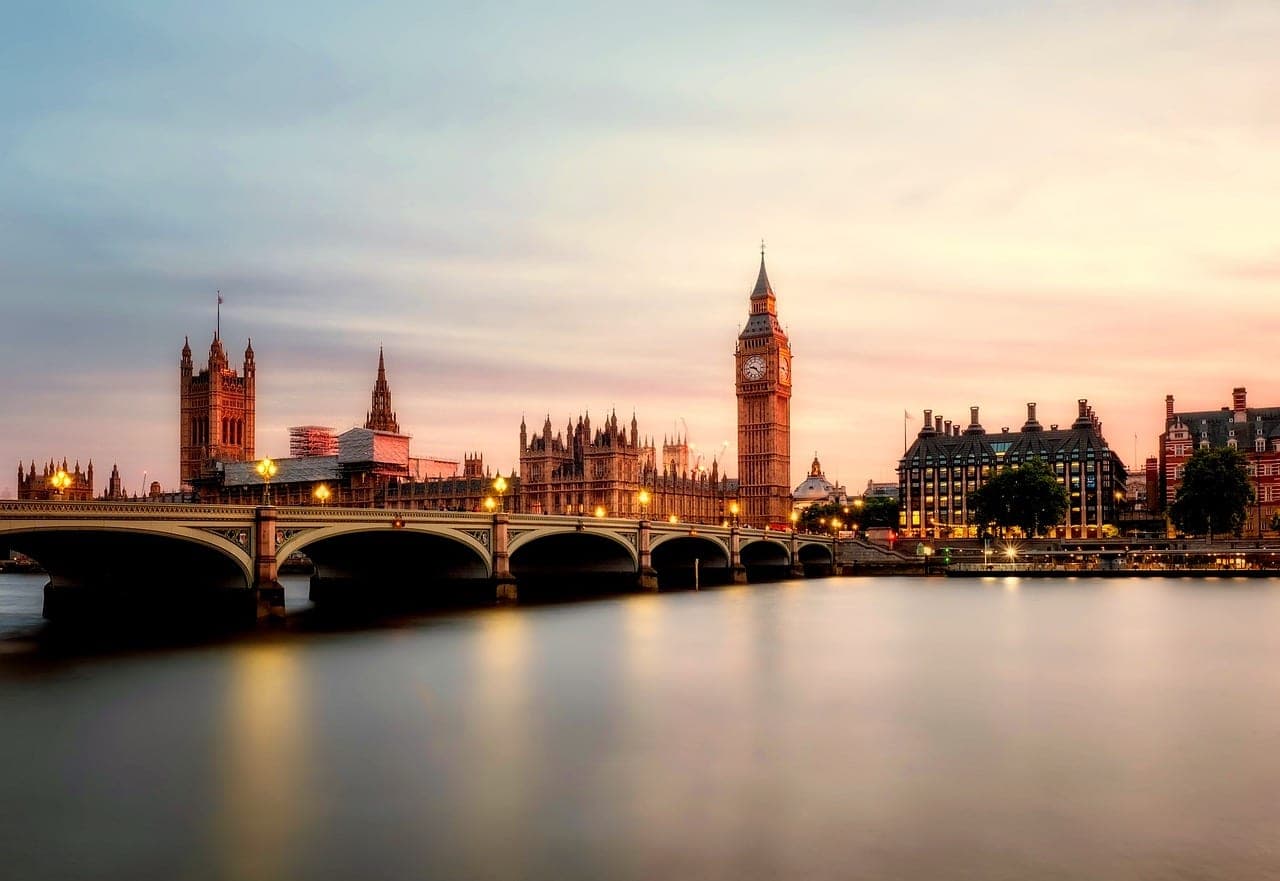
Big Ben and the Houses of Parliament lit at dusk above the River Thames in London
On this page
  • Where England sits in the British Isles and why it's the most-booked first international trip for US high school groups
  • Six regions worth a day each — London, Oxford & the Cotswolds, Stonehenge & Bath, Shakespeare country, York & the North, the Lake District
  • What's on the menu: fish and chips, a proper Sunday roast, afternoon tea, the full English, and the curry house that quietly became the national dinner
  • Practical logistics for teachers: UK ETA paperwork, left-side roads, contactless tap-and-go, and the weather that's never as bad as the reputation
  • Five facts that land after a week of castles, cathedrals, and Shakespeare read aloud in the town he wrote it

A quick introduction

England is 130,279 km² — a little smaller than New York State — with a population of roughly 56.5 million and a capital that's been continuously settled since Roman engineers laid out Londinium in AD 43. For a student group, the payoff is density: a single week on a private coach covers Westminster and the Tower of London, Oxford's medieval colleges, Stonehenge on Salisbury Plain, Shakespeare's birthplace, and a Georgian spa city — all in one shared language and one reliable set of roads.

England is our most-booked English-speaking destination and, for a lot of teachers, the first international educational travel program they've ever led. That's not an accident. Everyone at the hotel desk speaks English, the signage is clear, the rail and coach network is world-class, and the curriculum fit is unusually wide — literature, world history, government, art, theater, and the Industrial Revolution all sit inside a single week. If you're weighing an England student group trip against a first trip to the continent, the logistical runway here is measurably shorter.

Quick facts

England by the numbers

📐

130,279 km²

A little smaller than New York State. An entire nation is accessible in a single week of private-coach travel — the longest transfer on a standard itinerary sits under three hours.

👥

~56.5 million

Population of England alone; the UK totals roughly 68 million. Density means trains and coaches run everywhere, often. School groups are rarely waiting for a connection.

🏛️

20 UNESCO sites

Stonehenge, Bath, the Tower of London, Hadrian's Wall, Blenheim Palace, Westminster, Durham Cathedral — a one-week itinerary regularly hits four or five.

📅

1066

The Norman Conquest — the hinge date Western history pivots on and the one date every returning student can cite. Hastings, the Bayeux Tapestry's original story, and William's White Tower are still on the ground.

Inside the trip

A week with a Passports group

A typical Passports high school group trip to England runs seven to nine days and lines up cleanly against April spring break, the June window after AP exams, or late July. Day one is London: arrival at Heathrow or Gatwick, a welcome walk past Westminster and over Lambeth Bridge, a Tube orientation so students get the map in their heads, and dinner with the Tour Director who stays with the group for the full week. Day two goes deeper — British Museum in the morning, the Tower of London after lunch, a Globe Theatre tour or a West End show in the evening.

The middle of the week moves outside the M25. The group boards a private coach to Oxford for a college walking tour, on to Stratford-upon-Avon for Shakespeare's birthplace and an RSC evening performance, across the Cotswolds for a honey-stone-village lunch stop, and down to Salisbury for Stonehenge at opening with Bath the same afternoon. Optional add-ons depending on the group's shape include Windsor Castle on the way out, York Minster and the Jorvik Viking Centre for a Roman-to-medieval North England pivot, or the Lake District for an English Literature group that wants to stand where Wordsworth stood.

We've run student group travel to England for decades and every moving part has a backup plan. Heathrow delays, a rail strike, a traffic snarl on the A303 when Stonehenge is the next stop, a student who forgot their ETA paperwork: there's a runbook. Most itineraries include at least one service-learning option (partner schools in London and Oxford) or a day of structured free time students consistently rank as the trip's best surprise. The educational travel piece is real — in-depth history briefings, a literature reading list, daily debrief journaling — but the part teachers remember is that the logistics simply work.

Region by region

Top things to see and do

London & the South East

London & the South East

The capital and the launchpad for nearly every itinerary. Parliament, the Tower, Westminster Abbey, the British Museum, the Globe, plus an easy train down to Windsor Castle or Greenwich Observatory for a half-day add-on.

Oxford & the Cotswolds

Oxford & the Cotswolds

Medieval colleges, the Bodleian Library, and Christ Church Great Hall (which half your students will call Hogwarts). An hour's drive west lands in the Cotswolds — honey-coloured stone villages, sheep fields, and an afternoon nobody wants to leave.

Stonehenge, Salisbury & Bath

Stonehenge, Salisbury & Bath

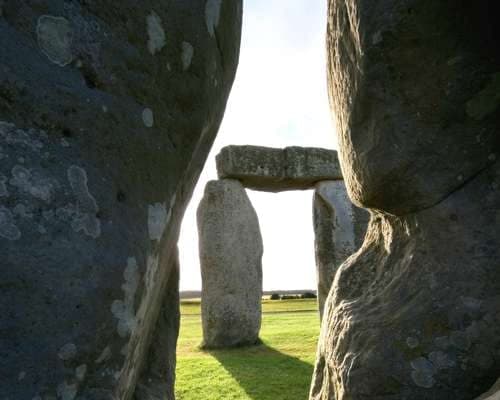
Prehistory, the Magna Carta at Salisbury Cathedral, and Roman-plus- Georgian Bath an hour further west. Three eras in a single day and three distinct curriculum hooks.

Stratford-upon-Avon & Shakespeare country

Stratford-upon-Avon & Shakespeare country

Shakespeare's birthplace, his schoolroom, his grave at Holy Trinity, Anne Hathaway's cottage, and an RSC evening performance. For an English literature group this is the whole reason to be here.

York & the North

York & the North

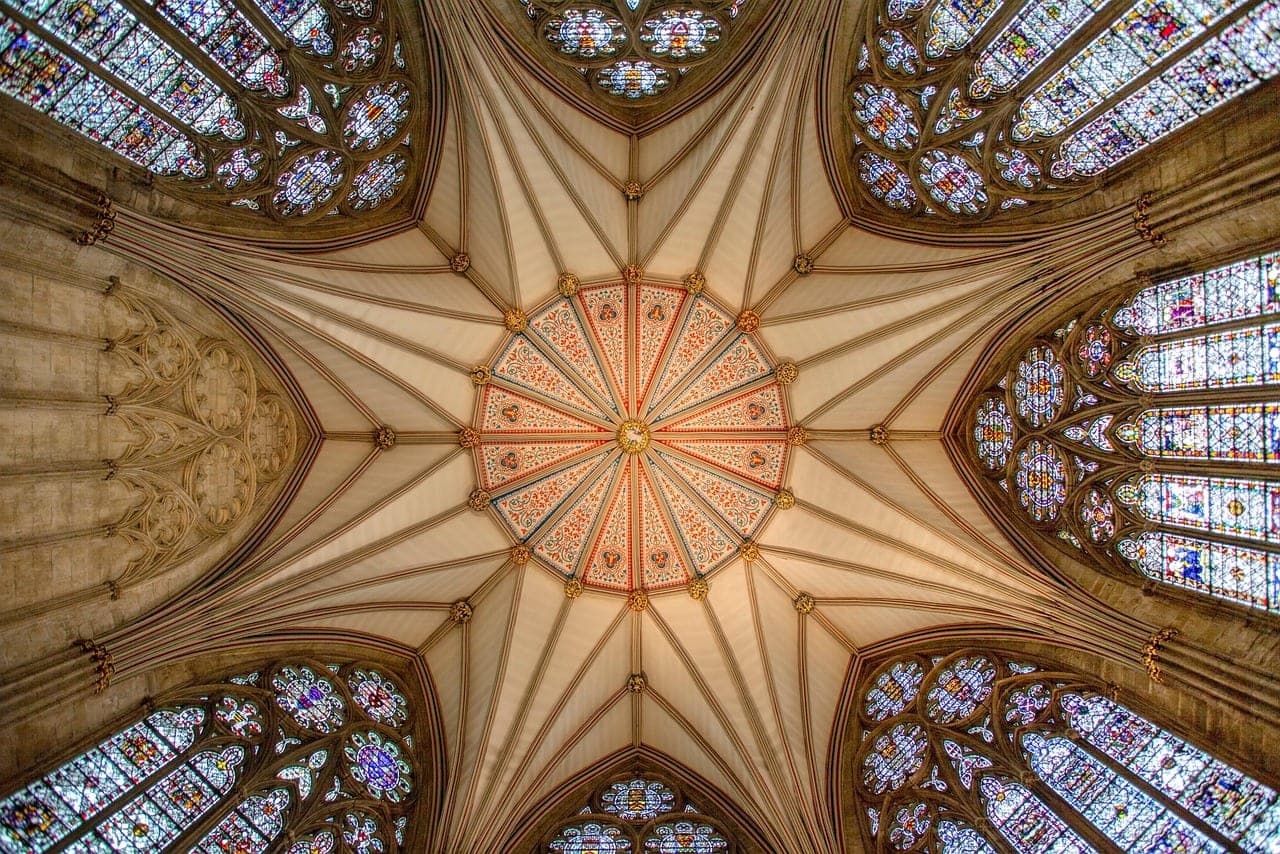
Roman city walls you can still walk, a Viking excavation you step into at Jorvik, a Gothic minster that's still a working cathedral, and a food scene that's quietly become one of the best in the country.

The Lake District & Cumbria

The Lake District & Cumbria

Glacial lakes, drystone walls, Wordsworth's cottage at Grasmere, Beatrix Potter's Hill Top, and the fells where the Romantic poets wrote. A natural extension for literature groups and a favorite on longer itineraries.

Weather by season

When to go

  • Mar - May — spring, quiet, shoulder pricing

    Daytime highs 10–16°C, daffodils in the parks, and Oxford and Cambridge are in Trinity term so the colleges feel lived-in. Hotels and flights price well below summer peak — a strong fit for high school groups traveling over spring break.

  • Jun - Aug — summer, long daylight, peak

    16 hours of sunlight at the solstice and genuinely warm afternoons, 20–25°C most days. Summer music festivals, open-air Shakespeare at the Globe, and cricket on every village green. This is our biggest educational travel window and the most competitive on pricing.

  • Sep - Nov — autumn, back-to-term, great value

    Students are back at Oxford and Cambridge, the light softens, and crowds thin out after Labor Day. 10–18°C with the occasional warm afternoon. Strong shoulder-season pricing and our favorite window for shorter teacher-led trips.

  • Dec - Feb — winter, short days, Christmas markets

    Six hours of daylight around the solstice, frequent rain, and temperatures 2–8°C. Less common for US school calendars but works for January interim terms; the Christmas-market weeks in late November and December are beautiful if the calendar allows.

What to order

Food and culture

Fish and chips

Fish and chips

Battered white fish, thick-cut chips, mushy peas, malt vinegar, served in paper from a seaside chippy or a pub. The default Friday lunch for a generation and still the cheapest real meal in England.

Sunday roast

Sunday roast

The national ritual. Roast beef or lamb, roast potatoes, two vegetables, a Yorkshire pudding the size of your hand, and a gravy boat. Book a pub Sunday lunch at the end of the first full week — the group will talk about it.

Full English breakfast

Full English breakfast

Eggs, bacon, sausage, baked beans, grilled tomato, mushrooms, black pudding (optional), toast, and a pot of tea. Hotels include it. A single full English powers a student group through a three-hour museum morning with no mid-morning complaints.

Afternoon tea

Afternoon tea

Finger sandwiches, scones with clotted cream and jam, a three-tier stand of small cakes, and a pot of loose-leaf tea. Pre-book for the group; a proper afternoon tea is the sleeper favorite of every school trip we've run to England.

Chicken tikka masala

Chicken tikka masala

The unofficial national dish. England's South Asian diaspora quietly rewrote the dinner menu, and a good curry house is often the best meal of the week — spicing to your group's preference, naan the size of a dinner plate, and a price-per-plate the trip budget appreciates.

Curriculum tie-ins

Classroom connections

📚

AP English Literature

Stratford-upon-Avon, the Globe Theatre, Dickens' London, the Romantics at Grasmere — the syllabus on the ground. Most itineraries include an RSC performance and a Globe tour, and English teachers tell us the trip does more for student engagement than a semester of classroom reading.

🏛️

AP European & World History

Roman Britain at Bath and Hadrian's Wall, the Tower of London for the Tudors, Westminster Abbey for 1,000 years of continuous monarchy, and Churchill War Rooms for WWII. Every hinge of the Western syllabus has a site your group can walk into.

🗳️

AP Government & Comparative Politics

The Palace of Westminster, the UK Supreme Court across Parliament Square, Runnymede for the Magna Carta, and a public-gallery session in the House of Commons when the calendar aligns. The comparative-government syllabus writes itself.

🎨

AP Art History

The British Museum, the National Gallery, Tate Britain, Tate Modern, and the V&A — five world-class collections in one city, each free to enter. A two-day London block covers the medieval-through-contemporary arc.

🎭

Theater & Performing Arts

The Globe for a Shakespeare matinee, the RSC at Stratford for an evening performance, and a West End show to close the week. For a drama or speech-and-debate program this is the single best educational tour we run in English.

⚙️

Science & the Industrial Revolution

The Science Museum in London, Greenwich Observatory for the Prime Meridian, Oxford's natural-history collections, and Ironbridge Gorge in Shropshire if the itinerary extends north. AP Physics and engineering groups can build a credible field-study day at every stop.

Packing essentials

What to pack

  • Documents

    Passport valid 6+ months past travel date, two printed copies, and a printed UK Electronic Travel Authorization (ETA) — required for US citizens since 2025. We file the group's ETAs on a single schedule as part of pre-departure; students just need to arrive with the confirmation printed or saved on their phone.

  • Clothing

    Layers over bulk. A light waterproof jacket, a fleece or wool sweater, two pairs of trousers, and shirts that stack. The forecast swings 10°C in an afternoon and "a sunny morning and a rainy evening in the same day" is the default, not the exception.

  • Footwear

    Broken-in walking shoes. The cobblestones in York, the City of London, Oxford, Bath, and every cathedral square punish new footwear hard. One comfortable evening shoe for theater nights. Skip brand-new white sneakers.

  • Rain gear

    A lightweight, packable waterproof jacket — not an umbrella (the wind makes them useless). A small pack cover for day bags on the rainy-day museum-hopping circuit.

  • Tech

    Type G three-prong plug adapter (the UK standard — US plugs do not fit). A portable battery for long museum days. T-Mobile and Google Fi work on roaming; other carriers should pick up a UK eSIM before departure for data at local-rate pricing.

  • Extras

    A reusable water bottle (tap water is excellent everywhere), a student ID card for museum discounts even where "free" is the standard, a small notebook for literature-group journaling, and a light pair of gloves for cool-weather mornings.

The parent-meeting question

Is it safe?

Yes. The US State Department currently rates the UK at Level 2 — "exercise increased caution" — driven almost entirely by the general terrorism advisory that applies across Western Europe, not by violent-crime data on the ground. In practice, England's everyday risk profile is closer to a large US city than a State Department Level 2: petty theft on the London Underground at rush hour is the main thing to plan around, and the countermeasures are the same as for any school group — phones off café tables, cross-body bags in front, and a group briefing on arrival.

On a Passports teacher-led trip, the group is never on public transport without the Tour Director, never splits up without a named meetup time, and never out of reach of a staff member who stays with the group 24/7 for the full week. We operate a 24/7 emergency line out of our Boston HQ, keep parents on a daily-update channel, and have pre-vetted contacts for NHS care at every overnight stop. For most teachers leading school group tours to England, the operation feels closer to a long field trip than a foreign-country program.

🛡️

Personal safety

Violent crime is low. Pickpocketing is the main issue and clusters at Oxford Street, Piccadilly Circus, Covent Garden, and the Underground at rush hour — the same three neighborhoods every European capital has. The Tour Director briefs the group on arrival and routes the day away from the worst hotspots.

⚕️

Health & medical

Tap water is potable everywhere. No vaccinations are required. The NHS provides emergency care to visitors and we carry supplemental insurance for non-emergency needs. Private clinics in every city we overnight in are vetted and mapped in our operations binder.

🚐

Roads & transport

Group transport is always a private coach with a professional, licensed driver — never a public bus or rental van. Seatbelts on every seat. Internal flights are rare and only used on extended itineraries. A reminder the first morning that traffic comes from the right, not the left, before every street crossing.

🌪️

Natural hazards & advisories

England has no meaningful seismic, volcanic, or hurricane exposure. Occasional winter storms and river flooding in low-lying areas (Somerset Levels, parts of Yorkshire) are rare on a standard school-group itinerary. We monitor advisories for Northern Ireland separately; the State Department Level 2 applies countrywide.

Practical tips

  • The weather is milder than the reputation

    English weather is the topic everybody warns you about and it's almost never as bad as you've been told. Highs 8–25°C depending on season, rain frequent but rarely torrential, and a good waterproof plus layers handle everything. Passports teacher-led trips build rainy-day museum options into every day, so a wet morning never kills the plan.

  • Contactless cards are universal

    Tap-and-go is the way everybody pays, from the Underground (scan your card directly at the turnstile) to the corner café. No cash required for most of the week. A zero-foreign-transaction-fee card or a Visa/Mastercard-branded debit works without stress.

  • Tipping is modest

    10–12.5% at sit-down restaurants is the norm, but check the bill — it's often included already as a "service charge." No tip on short taxi fares, no tip on counter service. Pubs don't expect tips; "get one for yourself" (~£1) is a nice gesture if the service was great.

  • Rail and coach beat flying inside England

    Every stop on a typical itinerary is reachable by rail or road. Leave Heathrow on a private coach, see the country through a window, and land in central London after lunch when the group's internal clock agrees. No internal flights on a standard England student group trip.

  • They drive on the left — look right

    The one genuine safety habit to brief on day one. Every kerb in central London has LOOK RIGHT painted in the asphalt for exactly this reason. Tour Directors count heads at every crossing for the first day until the reflex flips.
Five facts

Good to know

🇬🇧

England is not the UK

The United Kingdom is England, Scotland, Wales, and Northern Ireland; "Great Britain" is only the first three. An easy five-minute briefing on day one saves a lot of confused questions later in the week.

🫖

Afternoon tea is real, and earnest

Not a tourist invention. A proper afternoon tea — loose-leaf, clotted cream, scones warm — is still how middle England marks a Sunday afternoon. Book one for the group; students always remember it.

👑

The royal family is a public institution

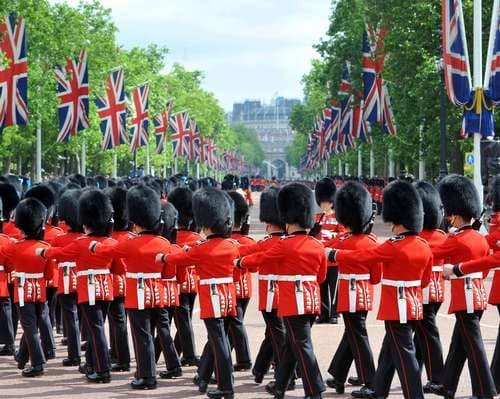
Buckingham Palace's summer opening, the Changing of the Guard most mornings at 11, Windsor Castle as a working royal residence a half-day west of London. Taken seriously, and also a tourism engine worth several billion pounds a year.

📖

Shakespeare still pays the rent

More than 400 years after his death, the RSC still programs him in Stratford, the Globe still stages him in London, and a big chunk of the national-curriculum English reading list is his. A week in England is a week in his afterlife.

🏏

Cricket is the summer background music

Like baseball in August — on in every pub, half-watched, deeply nerdy, woven into the language ("it's not cricket," "sticky wicket"). If the itinerary lands in June–August, a village cricket match is the quietest, most English afternoon your group will have.

Classroom material

Lesson plans about England

See all →
EnglandHistoryGrade 11-12

Age of Enlightenment: England: John Locke

Students in this lesson will identify, understand and be able to explain the basics of Locke's ideas on society and government by reading and analyzing excerpts from his two major philosophical works, An Essay Concerning Human Understanding…

View lesson
EnglandHistoryGrade 11-12

Ancient Britain: Stonehenge

Through an in-depth analysis of various primary and secondary sources, students in this lesson will identify, understand and be able to explain the different theories of how and when Stonehenge was built, what the site's purpose may have be…

View lesson
EnglandHistoryGrade 11-12

Anglo-Saxon Britain (410-1066): An Overview

Through an in-depth analysis of various primary and secondary sources students in this lesson will identify, understand and be able to explain the Anglo-Saxon period in English history, including why the "invaders" or "settlers" (depending …

View lesson
EnglandGrade 11-12

Anglo-Saxon Britain (410-1066): Bede's Ecclesiastical History of England

Through an in-depth analysis of various primary and secondary sources, including excerpts from Bede's "Historia ecclesiastica gentis Anglorum" ("Ecclesiastical History of the English People"), students in this lesson will identify, understa…

View lesson
EnglandEnglish / Language ArtsGrade 11-12

Anglo-Saxon Britain (410-1066): Heroic Literature: A Study of Beowulf

Through an in-depth analysis of various primary and secondary sources, including excerpts from a modern English translation of the Anglo-Saxon heroic epic Beowulf, students in this lesson will identify, understand and be able to explain the…

View lesson
EnglandhistoryGrade 11-12

British Imperialism - Rudyard Kipling: the White Man's Burden

Through an analysis of primary and secondary sources, including a reading of Rudyard Kipling's famous poem The White Man's Burden (1899), students in this lesson will identify, understand and be able to explain why the poem was written, wha…

View lesson
On the ground

Places we go

Browse all destinations →
Palladian Pulteney Bridge and its horseshoe weir on the River Avon at Bath, Somerset

Bath, England

Bath student group travel for teachers: Roman baths, Georgian crescents, and Jane Austen's England on teacher-led high school group trips and school group tours.

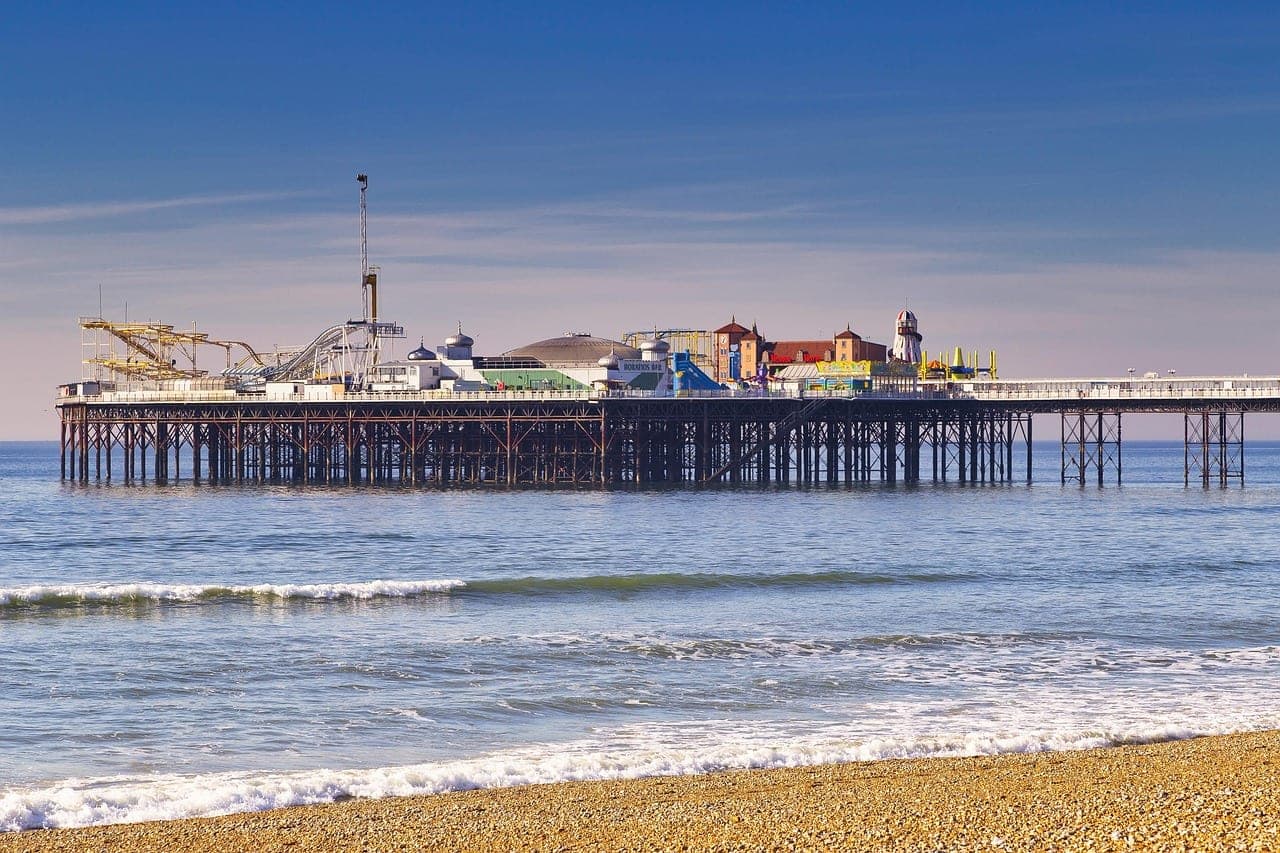
Brighton Palace Pier and pebble beach along the Brighton seafront in England

Brighton, England

Brighton student group travel for teachers: Royal Pavilion, seafront pier, and Regency England on teacher-led high school group trips and educational tours.

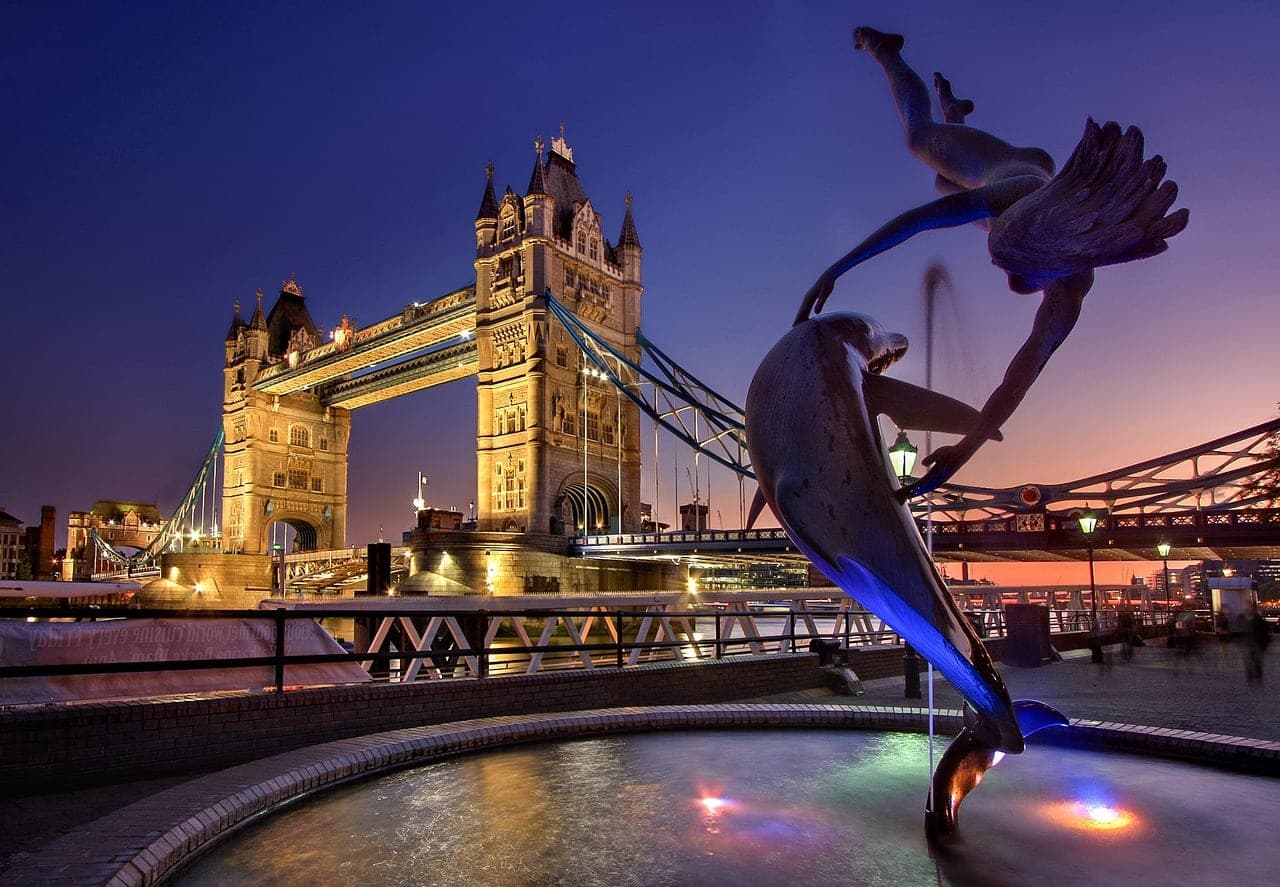
Tower Bridge over the River Thames at sunset in London, England

London, England

London student group travel for teachers: Westminster, the Tower, the British Museum and the West End on teacher-led high school group educational tours.

Tudor-era timber-framed house on a quiet cobbled street in Stratford-upon-Avon, England

Stratford-upon-Avon, England

Stratford-upon-Avon student group travel: Shakespeare's birthplace, the RSC, and Anne Hathaway's Cottage on teacher-led high school educational tours.

Gothic west front of York Minster cathedral towering over the medieval city of York, England

York, England

York student group travel for teachers: York Minster, the city walls, the Shambles and Viking Jorvik on teacher-led high school educational tours of England.

Take your students to England.

Every Passports trip is built around a teacher and a group — from first itinerary sketch to the last day on the ground. Tell us what you have in mind and we’ll take it from there.

Plan a trip