- RegionEast Sussex, England
- LanguageEnglish
- CurrencyPound sterling (GBP)
- Best seasonMay - Sep
- TimezoneGreenwich Mean Time (UTC+0)
A quick introduction
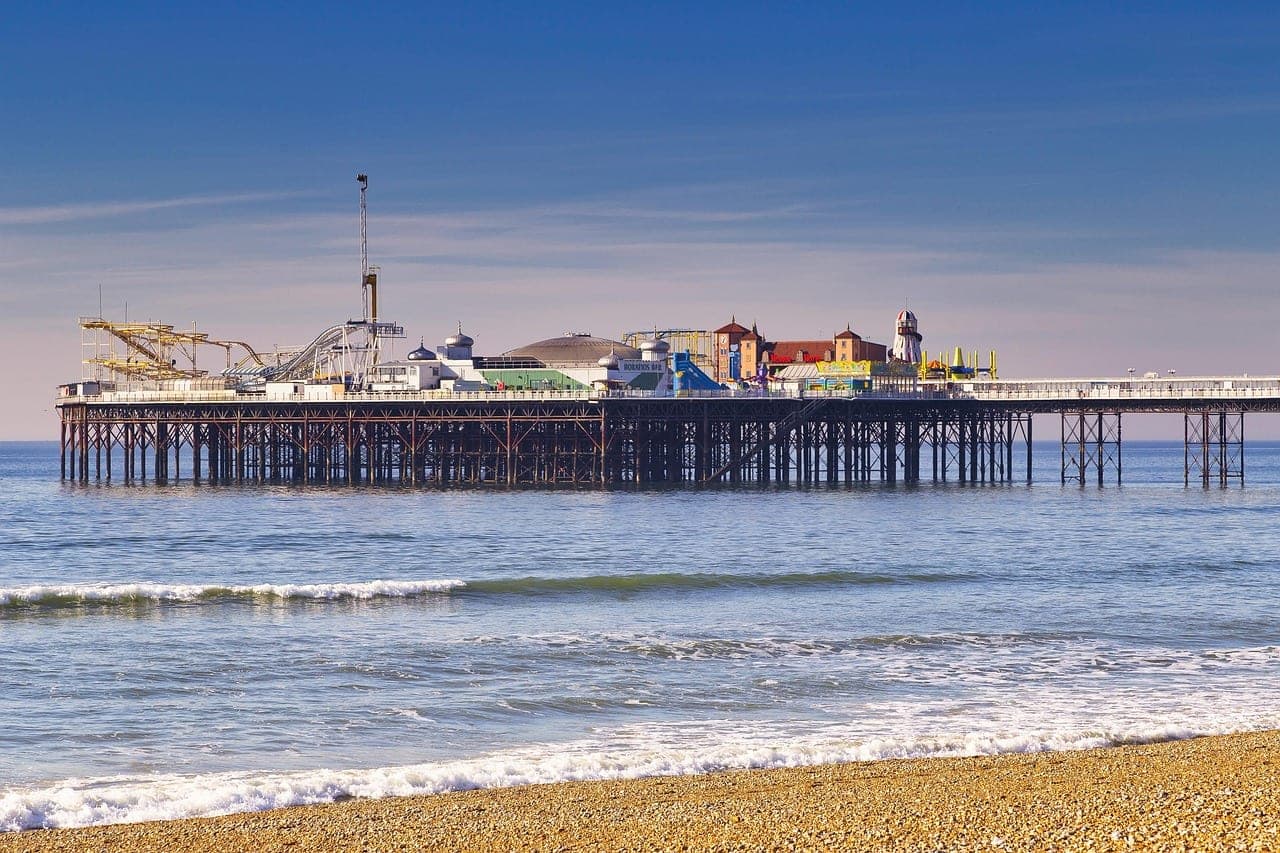
Brighton is a Regency seaside city on the English Channel, about 50 miles south of London and 55 minutes by direct train from Victoria Station. The city proper holds around 277,000 people, doubles with neighboring Hove, and spreads from a long pebble beach up the steep chalk hills of the South Downs. Its signature silhouette — the Indian-domed Royal Pavilion, the Victorian Palace Pier, the cast-iron bandstand, the rainbow of painted beach huts — was built between George IV's 1815 makeover and the railway boom of the 1840s.
For a student group, Brighton is the most efficient non-London add-on in England: you can pair it with a Greenwich or Canterbury morning and still be on the seafront by dinner. It also does what London can't — hand a high school group a compact, visibly Regency town where every curricular stop (architecture, Romantic-era history, marine geology on the chalk cliffs) sits inside a half-mile square. Teacher-led tours use Brighton as the day the itinerary exhales: a walking lesson in the morning, the Pavilion after lunch, the pier at dusk, and a cream tea before the coach back to London.
Top things to see and do


When to go
- May - Jun — the shoulder sweet spot
Daytime highs 15-21°C, long daylight (sunset near 9:30 PM in June), seafront open but not yet packed. The strongest window for educational travel to Brighton: Pavilion lines are short, the cliffs are in full bloom, and school-group pricing still holds at most seafront hotels.
- Jul - Aug — peak British summer
Highs 19-24°C, the beach shoulder-to-shoulder on sunny weekends, and Brighton Pride (first weekend of August) shutting central streets for a full day. Still workable for a high school group trip, but expect Palace Pier crowds by noon and book the Pavilion and Seven Sisters coach slots 4+ weeks out.
- Sep - Oct — quiet golden autumn
The crowds drop after the second week of September, the light turns photographic, and the South Downs shift to amber. Highs 12-18°C, cool sea breeze, and the pier almost empty on weekdays. A strong move for September / October teacher-led tours running a London-plus-coast itinerary.
- Nov - Apr — wet, windy, uncrowded
Highs 7-12°C, short daylight (sunset 4:15 PM in December), and real Channel weather — horizontal rain, gusts off the water. The Royal Pavilion and museums are warm and empty, which makes for an excellent rainy-day anchor. Pack waterproofs and plan indoor primary / outdoor secondary for every stop.
Food and culture

Fish and chips on the seafront
The Brighton rite of passage. Cod or haddock, chips, mushy peas, eaten out of paper on the pebbles. Go to a chippy with a queue of locals, not the first window you see on the pier.

Sussex cream tea
Scones, clotted cream, strawberry jam, a pot of tea. Brighton does the full Regency version in the Pavilion tearoom and a dozen Lanes cafés. Jam-first or cream-first is a debate the group will have on its own.

Sussex pond pudding
A steamed suet pudding with a whole lemon and butter-sugar sauce in the middle. Historic Sussex comfort food, still on a few pub menus in the Lanes. Splits nicely between two students.

Full English breakfast
The standard morning anchor for a school group on a Brighton itinerary: eggs, bacon, sausage, baked beans, grilled tomato, black pudding (optional), toast. Most seafront hotels include it in the group rate.

Sticky toffee pudding
Date-based steamed sponge under a toffee sauce, usually with vanilla ice cream. A reliable crowd-pleaser on pub menus across the Lanes and the final course of most teacher-led group dinners.
What to pack
- Documents
Passport valid 6+ months past travel date, two printed copies (one for the student, one for the Tour Director's file), insurance card, and the Passports group packet. US citizens do not need a visa for stays under 6 months, but after November 2025 an Electronic Travel Authorisation (ETA) is required — book online 72 hours before departure.
- Clothing
Layers, always. Brighton's weather can flip from 20°C sun to wind and horizontal rain inside an afternoon. A packable waterproof shell is non-negotiable between October and April; a warm mid-layer stays useful year-round. Laundry cadence of 7-10 days matches most London-Brighton combined itineraries.
- Footwear
Serious, broken-in walking shoes with good ankle support — the seafront is shingle (smooth cobble-sized pebbles), not sand, and the Lanes are uneven flagstone. A student group will log 10,000+ steps a day between the Pavilion, the pier, and the North Laine. Flip-flops on the pebble beach end in a sprained ankle.
- Rain gear
A compact waterproof jacket and a small travel umbrella earn their weight on any Brighton trip, even in June. A dry bag or zip-seal pouch for phone and camera is smart on the pier — Channel spray is unpredictable.
- Tech
The UK uses Type G plugs (three rectangular prongs) — no US adapter will fit without one. A portable battery helps on full walking days. T-Mobile and Google Fi work on arrival; other carriers should buy an EE or Vodafone eSIM before landing at LHR or LGW.
- Extras
A small daypack (Pavilion security limits bag size), a reusable water bottle, SPF for surprise sunny days, and a light scarf. The Pavilion and Brighton Museum both require coats and large bags to be checked at the door.
Is it safe?
Yes. The UK is rated US State Department Level 2 ("exercise increased caution"), the same as France, Italy, and most of Western Europe, and the elevated level reflects generic European terrorism risk, not anything specific to Brighton. Brighton's crime profile is a standard English seaside city: violent crime against travelers is rare, and the actual risks are petty theft on the Palace Pier and in busy Lanes cafés, plus the normal late-night care any student group takes in a city with a dense bar district around West Street.
On a Passports teacher-led trip, the group stays together on private coaches between London and Brighton, the Tour Director briefs the group on pier and seafront awareness before Day 1 free time, and every hotel is pre-vetted for 24-hour reception and secure room storage. We run a 24/7 emergency line out of Boston, keep parents on a daily-update channel, and have English-speaking medical contacts — genuinely trivial in the UK — in every city on the route. For most teachers running their first school group tour to England, the logistics feel easier than a domestic field trip.
Practical tips
- The train from London beats the coach
Southern and Thameslink run direct services from London Victoria, Blackfriars, and St Pancras, 55-75 minutes depending on line and stops. For a London-Brighton day trip, a group rail booking is usually cheaper and always faster than a coach through the M23 southbound.
- Contactless everywhere
The UK is near-cashless. Tap-to-pay works on every bus, at every café, and for the Palace Pier arcades. A small amount of pound coins is still useful for charity buskers and the occasional seafront vendor. Tipping 10-12.5% in sit-down restaurants is standard; round up for cabs.
- The Pavilion is a Regency lesson, not a palace
Frame it for students before you go: it is George IV's seaside party house, not a functioning royal residence. The chinoiserie banqueting hall, the music room's 30-foot domed ceiling, and the kitchen ranges are all curriculum gold for AP Euro or British Empire units. Audio guide included; allow 90 minutes.
- Use the seafront for free time, not the pier
Set your free-time boundary at Hove Lawns (west) and the Marina Village (east) with a meet-back point at the Palace Pier roundabout. Students will gravitate to the North Laine for food and shopping. Passports group dinners are scheduled in the Lanes, walkable from every central hotel.