- RegionCentral Croatia
- LanguageCroatian
- CurrencyEuro (EUR)
- Best seasonMay - Jun, Sep - early Oct, Dec (Advent)
- TimezoneCentral European Time (UTC+1)
A quick introduction
Zagreb is Croatia's capital and largest city — about 770,000 people on a Pannonian-edge plain at the foot of the Medvednica mountain. The historic core is two medieval hill towns (Gradec and Kaptol) that stitched together to become the modern upper town, surrounded by a 19th-century Austro-Hungarian "Lower Town" laid out in a green horseshoe of parks, museums, and Secession-era apartment blocks. The result is a clean, walkable Mitteleuropean capital that reads as Vienna's quieter, friendlier cousin.
For a student group, Zagreb is the soft-landing first stop on a Croatia high school group trip. The walkable historic core, the English-fluent café and museum culture, and a tram network that actually works mean students settle in before the more demanding Adriatic stops down south. The curricular fit is broad: AP European History (Habsburg, Yugoslav, EU-era Croatia all in one square mile), AP Art History (Meštrović sculpture, the Mimara, the Museum of Contemporary Art), and modern civics — Croatia joined the EU in 2013 and the eurozone in 2023, both decisions made inside walking distance of the upper town.
Top things to see and do


When to go
- May - Jun — café-terrace season
The classic spring window for educational travel to Zagreb. Daytime highs 18-25°C, long daylight, café terraces packed onto Tkalčićeva and the Flower Square. Schools that build a Croatia high school group trip around late spring land Zagreb at its friendliest.
- Jul - Aug — hot, half-empty
Daytime highs 28-32°C, the locals leaving for the coast in August, and several restaurants closing for vacation. The city is genuinely quiet — pleasant for a museum-heavy group, less pleasant if you wanted Tkalčićeva at full buzz. Air-conditioned coach segments matter on transfer days.
- Sep - Oct — autumn light
The shoulder-season window experienced teachers favor. Daytime highs 16-23°C, locals back from the coast, café culture firing again. A late-September school group trip lands the city at its most photogenic and the fewest cruise-day school groups colliding at the cathedral.
- Dec - Mar — Advent and snow
Cold (daytime 0-6°C, overnight below freezing), occasional snow cover, and the famous Zagreb Advent market filling every square from late November through early January. Advent is genuinely worth a December student tour; January and February are quiet and museum-friendly.
Food and culture

Štrukli
The Zagorje-region signature — sheets of dough wrapped around fresh cheese, baked or boiled in cream. Order it at La Štruk just off the upper-town stairs; that's the local benchmark.

Sarma
Pickled cabbage leaves stuffed with minced pork and rice, slow-simmered. Winter classic across the Balkans and a cold-month lunch staple in Zagreb's traditional restaurants.

Čevapi
Small finger-shaped grilled minced-meat sausages, served with somun flatbread, raw onion, and ajvar red-pepper relish. The standard Balkan grill plate and a reliable student-group crowd-pleaser.

Krvavice & sausage from the grill
The Dolac market grills run open-air — black pudding, bratwurst-style sausages, and slow-roasted pork from the carving station. Cheap, filling, photogenic, and the closest thing to street food the upper town has.

Burek
Flaky phyllo pastry stuffed with cheese, meat, or spinach. The default Zagreb breakfast on the move — there's a window-counter bakery on every block of the lower town. Pair with a yogurt drink (kefir or jogurt).
What to pack
- Documents
Passport valid 6+ months past travel date, two printed copies (one for the student, one for the Tour Director's file), insurance card, and the Passports group packet. No visa required for US citizens on a stay under 90 days in the Schengen area.
- Clothing
Layers for genuinely four-season weather — Zagreb is continental, not coastal. A light fleece for spring and autumn evenings, a proper warm coat for any December Advent visit, and a light scarf for cathedral entry whenever it reopens to visitors.
- Footwear
Broken-in walking shoes — the upper town is cobblestone and the Lower Town museum belt logs serious daily steps. The funicular saves the steepest climb but most of the day is on foot. Avoid brand-new shoes; ankle-support sneakers beat fashion sneakers.
- Tech
Croatia uses Type C / F plugs (European two-prong) — bring a universal adapter. A portable battery is useful on full walking days. T-Mobile and Google Fi work out of the box; other carriers should pick up an A1 or HT eSIM at ZAG airport on arrival.
- Sun & weather
Compact umbrella year-round (Zagreb gets afternoon showers in every season), sunglasses, sunscreen for spring and summer days, and a winter hat / gloves for Advent visits. Daytime light in December is short — sunset around 4:15 PM.
- Extras
Reusable water bottle (tap is excellent), small daypack for museum days, basic Croatian phrases (dobar dan, hvala), a euro-coin reserve for tram tickets (cards work but a backup coin is faster), and a transit-app screenshot of the museum-belt tram routes.
Is it safe?
Yes. Croatia is rated Level 1 by the US State Department ("exercise normal precautions") — the same as Japan, Norway, or Switzerland — and Zagreb is one of the safest mid-size capitals in Europe. Violent crime against travelers is essentially absent. The realistic risk profile in Zagreb is petty pickpocketing on the busy tram routes (the #6 between Glavni kolodvor and Britanski trg, the #14 out to Mihaljevac), at the Christmas Advent market crowds, and at the main bus and train stations. Standard cross-body bag rules handle nearly all of it.
On a Passports teacher-led trip, the group is never on public transport without the Tour Director, the briefing on night one covers tram pickpocketing and the Advent crowd protocol when the trip falls in December, and every hotel is pre-vetted for 24-hour reception and secure room storage. We operate a 24/7 emergency line out of Boston, keep parents on a daily-update channel, and have English-speaking medical contacts at KBC Zagreb. For most teachers leading their first school group tours to Croatia, Zagreb feels easier to run than a domestic field trip.
Practical tips
- Time the noon cannon
The Lotrščak cannon fires at noon sharp every day — a 300-year-old tradition that still freezes café conversations across the upper town. Plan a morning that puts the group on Strossmayer Promenade at 11:55. Free, reliable, and the easiest pre-lunch group photo every Passports student group trip schedules.
- The tram is the backbone
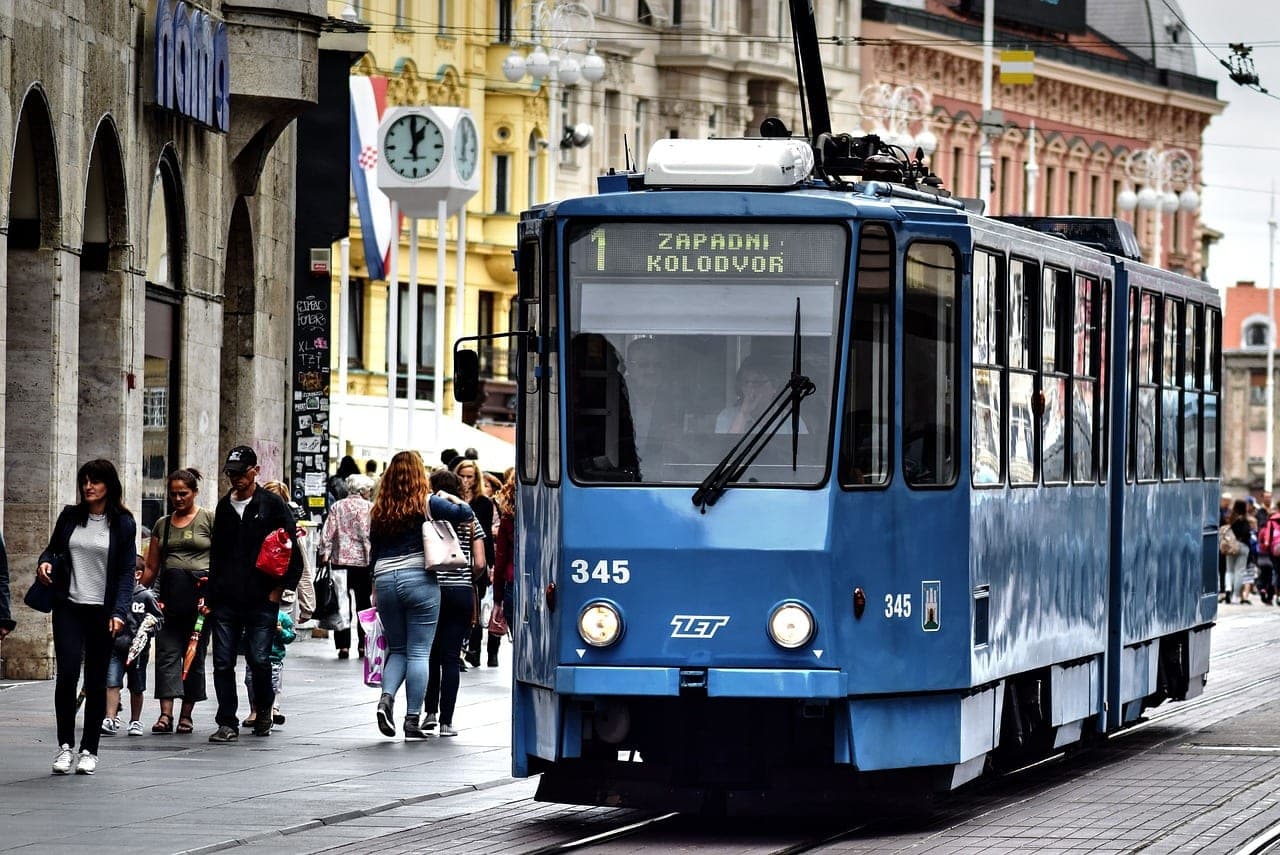
Zagreb's tram network covers the entire flat lower town and the museum belt. A single ZET ticket bought at a kiosk or via contactless covers the trip — the Tour Director handles bulk tickets and walks the group through the validation routine on day one.
- Sundays close more than you'd expect
Most museums shut on Mondays (not Sundays), but smaller shops, Dolac stalls, and family-run kavanas dial back hours on Sundays. Plan a Sunday around the museum belt and the upper town; Mondays around walking and the parks.
- Coffee is the local pace
Zagrebčani sit with a single coffee for an hour. The morning kava on Tkalčićeva is a civic ritual, not a transaction. Build buffer into the day, ask for the check (račun, molim), and lean into the rhythm.
- A few Croatian phrases earn smiles
English is widely spoken in central Zagreb; thinner once you cross the Sava south or head to working-class neighborhoods. Dobar dan (hello), hvala (thank you), molim (please / you're welcome), and oprostite (excuse me) cover the polite minimum.