- RegionLika, Central Croatia
- LanguageCroatian
- CurrencyEuro (EUR)
- Best seasonMay - Jun, Sep - early Oct
- TimezoneCentral European Time (UTC+1)
A quick introduction
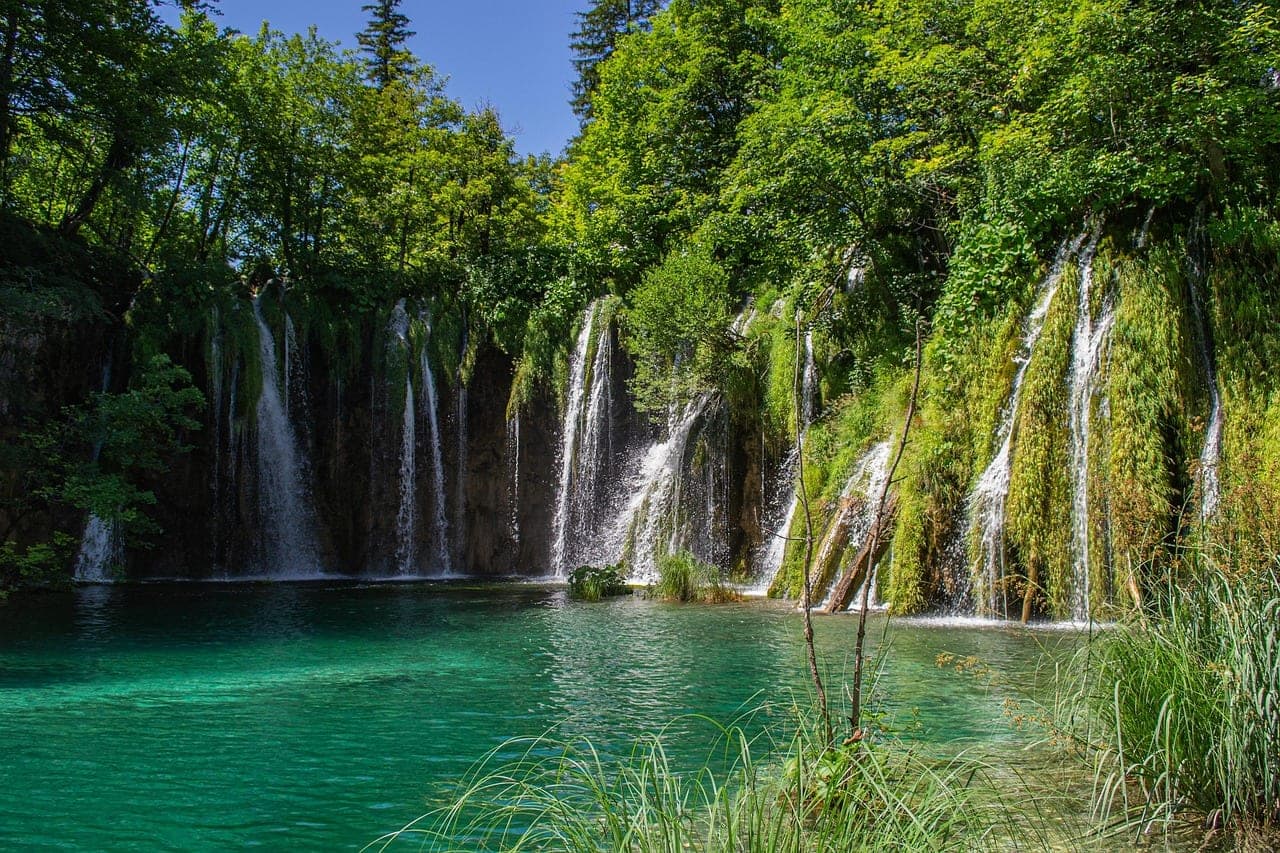
Plitvička jezera — Plitvice Lakes — is Croatia's oldest and largest national park, a 295 km² protected area in the wooded Lika highlands about halfway between Zagreb and Zadar. Sixteen turquoise lakes step down a karst valley over roughly eight kilometers, connected by waterfalls that the limestone is still actively building. The park has been a UNESCO World Heritage site since 1979, and the travertine-deposition process that creates the barriers between the lakes is one of the few of its kind in the world that you can actually watch happen.
For an educational tours group, Plitvice is the best single environmental science stop in southern Europe. A morning on the boardwalks covers karst hydrology, freshwater ecology, conservation policy, and a live UNESCO management case study — the kind of field-science day a school group can't replicate at home. Most teacher-led trips through Croatia route through Plitvice as a full-day stop on the Zagreb-to-Split transfer; the park sits about two hours south of the capital and three hours north of Split, with a clean coach drop at Entrance 1 or Entrance 2 depending on the chosen loop.
Top things to see and do


When to go
- May - Jun — full water, light crowds
The single best window for educational travel to Plitvice. Snowmelt is still feeding the falls at peak volume, daytime highs run 14-22°C, and the late-spring crowd is a fraction of August's. A May or early-June high school group trip lands the park at its most photogenic.
- Jul - Aug — peak crowds, lower water
Daytime highs 24-28°C in the canyons, boardwalks shoulder-to-shoulder between 10 AM and 2 PM, and water flow noticeably lower as summer progresses. Workable for a determined summer student group if the Tour Director has the group inside the gate at opening (7 AM in season) and out before the cruise-day crowd arrives.
- Sep - Oct — autumn color
The shoulder-season window experienced teachers favor. Beech and maple turn gold and red across the park, daytime highs settle to 14-20°C, and the boardwalks empty out after the second week of September. A late-September school group trip lands the park at its absolute prettiest.
- Nov - Apr — frozen falls, partial closures
The Lika highlands are genuinely cold (overnight lows below freezing November through March), some boardwalks close for ice, and the boat service runs a winter schedule. Frozen falls are striking but the loop options shrink. Most Passports Croatia itineraries skip Plitvice in this window.
Food and culture

Janjetina s ražnja (spit-roasted lamb)
Lika is sheep country and the roadside lamb spits are the regional signature. Sliced to order, served with bread and pickled cabbage. The lunch the group will still talk about months later.

Štrukli
Sheets of dough wrapped around fresh cheese, baked or boiled in cream. The Zagorje classic spills south into Lika and shows up on every traditional menu near the park.

Fresh trout (pastrva)
Cold-water trout farmed in the streams below the park, grilled whole and dressed simply with lemon and olive oil. The sustainable pick on a Plitvice menu and an easy sell to an environmental science group.

Lički krumpir (Lika potatoes)
Potatoes from the volcanic-soil fields around the park, slow-roasted with bacon and onion. The starch half of nearly every regional lunch plate.

Mountain cheese & honey
Lika sheep-milk cheese (lički sir) with local forest-flower honey and a piece of homemade rye bread. The classic regional starter and the easiest snack to pack onto the boardwalks.
What to pack
- Documents
Passport valid 6+ months past travel date, two printed copies (one for the student, one for the Tour Director's file), insurance card, and the Passports group packet. No visa required for US citizens on a stay under 90 days in the Schengen area.
- Clothing
Layers — even a hot August morning starts at 12°C in the canyon shade. A light fleece or long-sleeve shirt for the boardwalks, a packable shell for spray near the falls, and a sun shirt for the Upper Lakes loop above the trees.
- Footwear
Closed-toe trail runners or light hiking shoes with grip — the wooden boardwalks get slick from spray and the gravel trails between sections are uneven. No sandals on the boardwalks; the park rangers will turn a group around at the gate.
- Rain & spray gear
A lightweight, packable rain shell (poncho is fine in a pinch). Dry-bag or zip-locs for phones and cameras at Veliki Slap and the Lower Lakes overlook — spray reaches further than it looks.
- Tech
Croatia uses Type C / F plugs (European two-prong) — bring a universal adapter. Cell coverage inside the park is patchy in the canyon sections; download an offline map of the loops before the group enters the gate.
- Extras
Reusable water bottle (refills at the entrance buildings — there are no kiosks inside the park), sunscreen, bug spray for the summer beech forest, motion-sickness tablets for the curvy coach approach from Zagreb, and a small daypack for layers and lunch.
Is it safe?
Yes. Croatia is rated Level 1 by the US State Department ("exercise normal precautions") — the same as Japan, Norway, or Switzerland — and Plitvice National Park is one of the most tightly managed visitor sites in the country. Violent crime is essentially absent. The realistic risk profile is the boardwalks themselves: wet planks above flowing water, no guardrails on most sections, and a surprising number of phone-drop incidents at the photo viewpoints. A briefing on the bus before the gate handles 90% of it.
On a Passports teacher-led trip, the group enters the park together, walks the loops with a UNESCO-trained local guide, and the Tour Director runs a count at every transit point — the boat dock, the train stop, the rejoin between Upper and Lower loops. We operate a 24/7 emergency line out of Boston, keep parents on a daily-update channel, and the park's ranger station has a nurse on duty during peak season for any twisted ankle or heat-related issue. For teachers leading school group tours, Plitvice routinely runs smoother than a domestic field trip.
Practical tips
- Be at the gate at opening
Plitvice opens at 7 AM in summer; cruise-day groups from the coast pile in around 10 AM. Hitting the gate at opening turns the Upper Lakes from a shoulder-to-shoulder shuffle into a quiet walking morning. Every Passports student group trip schedules Plitvice as a 7-AM-gate day.
- Pick a loop and commit
The park sells four loop programs (A through K). For a school group with limited time, the K-loop combination is the standard pick — Upper Lakes, boat across Kozjak, Lower Lakes, train back to the entrance — and the Tour Director has it pre-mapped to the group's stamina and arrival window.
- No swimming, no off-boardwalk steps
The lakes are a strict no-swim, no-touch zone — the travertine barriers between them are alive and any human disturbance damages them measurably. The rangers enforce hard. Brief the group on the bus before they see the first turquoise pool.
- Eat at the gate, not inside
There are no food kiosks on the boardwalks — only at the entrance buildings and on Lake Kozjak's far shore. Pack a mid-loop snack and plan a real lunch back at one of the konobas on the road outside Entrance 2.
- The good photo angles are at the overlooks
The signature shot — turquoise lakes terraced toward Veliki Slap — is from the ST3 viewpoint above the Lower Lakes. The boardwalks themselves are scenic but cramped for photography; queue patiently for the dedicated viewpoint platforms.