- RegionSouthern Europe (Adriatic)
- LanguageCroatian
- CurrencyEuro (EUR)
- Best seasonMay - Jun, Sep - early Oct
- TimezoneCentral European Time (UTC+1)
A quick introduction
Croatia is a crescent-shaped country of roughly 56,600 km² — a hair smaller than West Virginia — wrapping the eastern Adriatic from the Istrian peninsula down to the walled city of Dubrovnik. About 3.85 million people live here, the capital is Zagreb, and the coast is fringed by 1,244 islands, islets, and reefs. Ten UNESCO World Heritage sites sit inside that footprint, including a Roman emperor's retirement palace that is still a working downtown.
For a school group, Croatia is one of the highest curricular-density destinations in our southern-Europe catalog. A single week of educational travel threads Roman ruins, medieval city walls, a karst waterfall national park, and a working Adriatic fishing village — with day-trips short enough to keep students fresh between stops. The fit is unusually broad: AP Environmental Science, AP European History, AP Art History, world geography, and intermediate Croatian or Italian language groups all find anchor sites within a few hours of one another. For teachers weighing a Croatia high school group trip against the more obvious Italy or Greece alternatives, the payoff is fewer crowds at the headline sights and a friendlier pricing window through May, June, and September.
Croatia by the numbers
A week with a Passports group
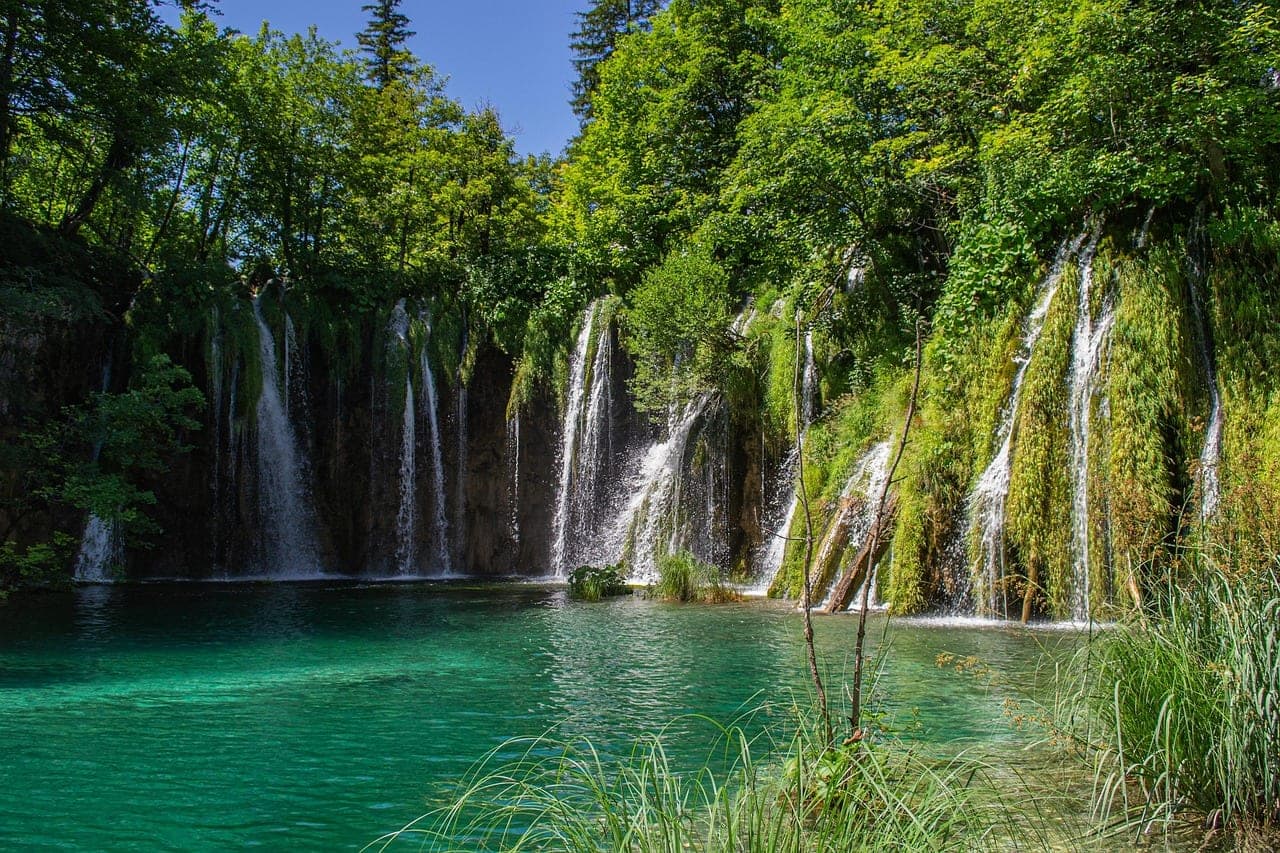
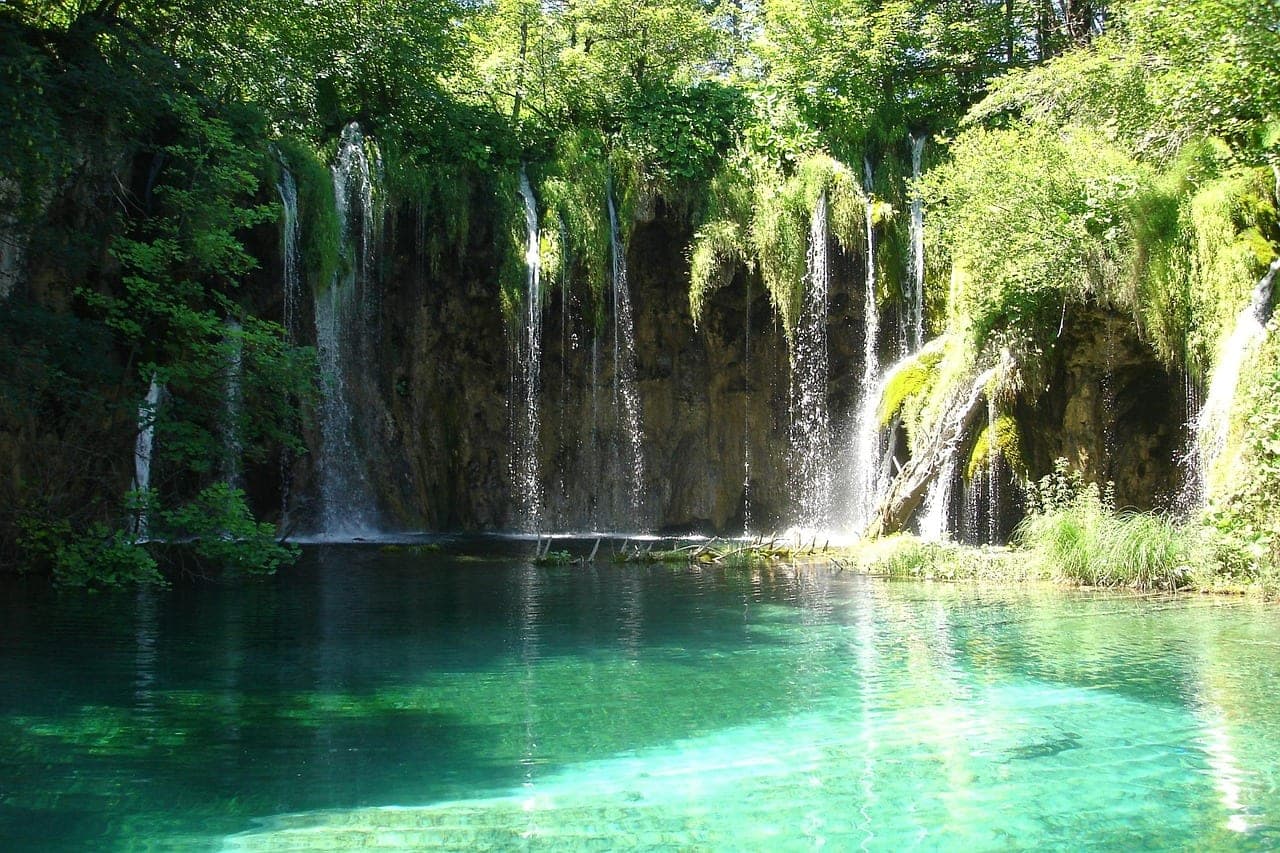
A typical Passports student group trip to Croatia runs eight to ten days and lands cleanly into the April, June, or late-July windows most school calendars open up. Day one is Zagreb: arrival into ZAG, a slow walking orientation around Ban Jelačić Square and the upper town, dinner with the Tour Director who stays with the group for the full week. Day two the group boards a private coach south for Plitvice Lakes — the karst-waterfall national park that anchors the environmental science half of the curriculum — with a UNESCO-trained park guide running the morning loop.
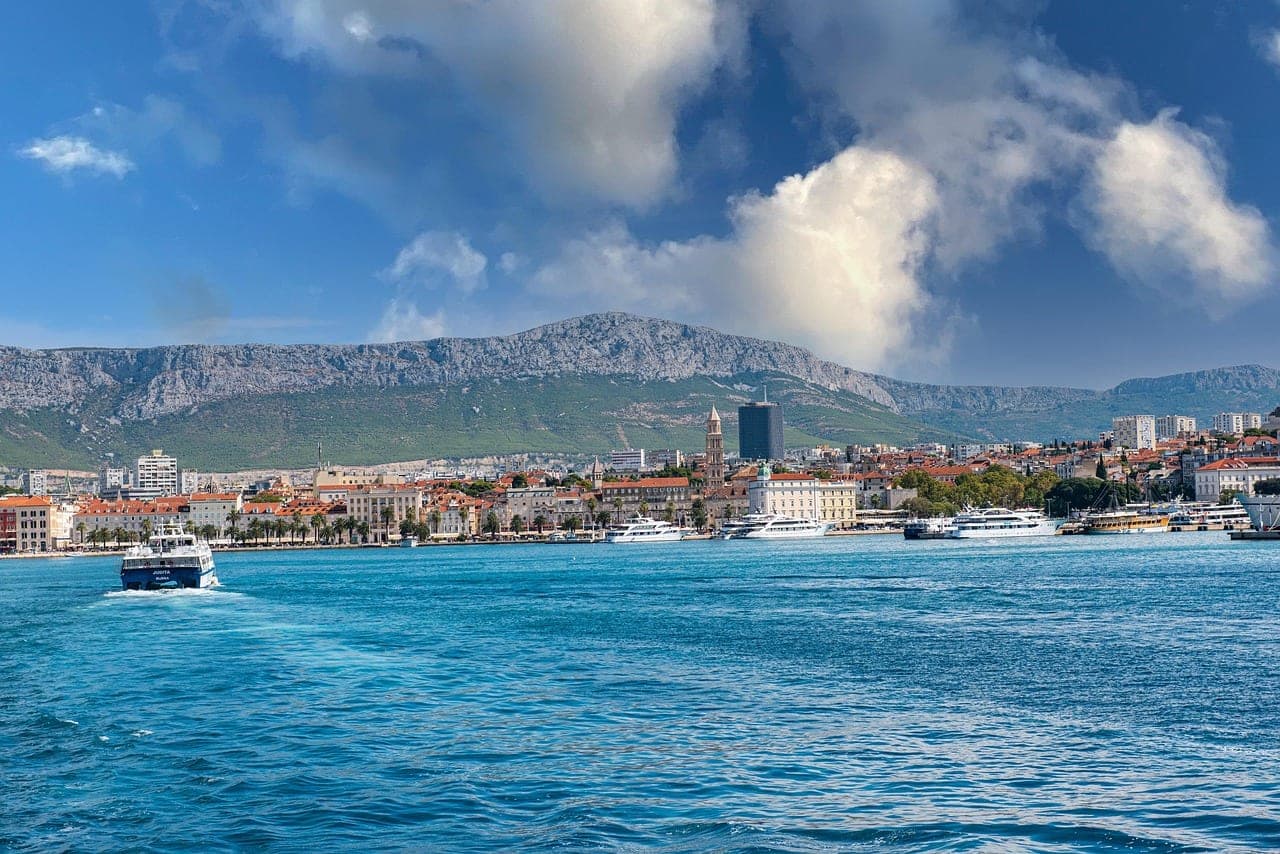
The middle of the week is Dalmatia. A coach transfer drops the group at Split, where the entire historic core sits inside the walls of Diocletian's Palace and a local guide walks students through 1,700 years of continuous occupation in a single afternoon. From there it's an easy day-trip to Trogir, an optional ferry to Hvar or Brač, and the long drive south to Dubrovnik for the city walls, the cable car up Mount Srđ, and the free afternoon students consistently rank as the trip's best surprise.
We've run educational tours in Croatia long enough that every moving part has a backup plan: bura-wind ferry cancellation between the islands, a midsummer heat advisory in Dubrovnik, a student who forgot their EU-required passport stamp window. Most itineraries include a service-learning component — beach-cleanup mornings on Brač or a marine-conservation briefing in Split — and the teacher-led trips we run here include a homestay night on the longer programs. The educational travel piece is real, but the part teachers remember is that the logistics, ferries included, simply work.
Top things to see and do


When to go
- May - Jun — coast opens, prices low
The classic spring window for educational travel to Croatia. Daytime highs 20-26°C on the coast, sea warm enough for a quick swim by mid-June, and the Plitvice boardwalks at full water. Crowds are still light through the second week of June, which is the sweet spot for a school group trip on the Dalmatian coast.
- Jul - Aug — peak heat, peak crowds
Daytime highs 30-34°C in Dubrovnik and Split, ferries packed, and cruise-ship day-trippers flooding the old towns by 10 AM. Still workable for a determined summer high school group trip if you start the walls walk at opening and book the headline sights weeks in advance — but September is a better fit if your calendar flexes.
- Sep - early Oct — shoulder-season gold
The best-kept secret among teacher-led tours to Croatia. Sea temperatures still 22-24°C, daytime air drops to 22-27°C, and the cruise crowd thins dramatically after the first week of September. A late-September high school group trip lands the Dalmatian coast at its absolute best.
- Nov - Mar — quiet, cold, coastal towns dial back
Coastal Croatia hibernates. Many Hvar and Korčula restaurants close for the winter, ferry frequency drops, and Dubrovnik's old town is genuinely empty. Zagreb's Christmas markets are a draw for interim-term groups, and Plitvice in snow is striking, but we don't typically run summer-style coastal itineraries in this window.
Food and culture

Peka
Lamb or octopus slow-cooked under a domed iron lid buried in embers. Order a day ahead at any traditional konoba — it's a three-hour cook, not a menu item.

Crni rižot (black risotto)
Cuttlefish or squid ink risotto, jet black, served along the whole Dalmatian coast. The dish that turns half the group into converts and the other half into a great group photo.

Fresh Adriatic seafood
Whole grilled fish, dressed simply with olive oil, garlic, and lemon. Sea bass, sea bream, and the smaller local gavun are menu staples in every coastal town.

Istrian truffles
The Motovun forest in inland Istria is one of the great white truffle grounds of Europe. Hand-shaved over fuži pasta in autumn, or folded into scrambled eggs at breakfast.

Burek
Flaky phyllo pastry stuffed with cheese, meat, or spinach. The default Balkan breakfast, ubiquitous from Zagreb bus stations to Split bakeries, and the cheapest reliable hot meal on the trip.
Classroom connections
What to pack
- Documents
Passport valid 6+ months past travel date, two printed copies (one for the student, one for the Tour Director's file), insurance card, and the Passports group packet. No visa required for US citizens on a stay under 90 days in the Schengen area — Croatia joined Schengen in January 2023.
- Clothing
Layers for variable spring and autumn weather; a light fleece for Plitvice mornings and Zagreb evenings even in summer. Modest dress (shoulders and knees covered) is enforced inside the Split and Zagreb cathedrals — a light scarf solves it on the fly. Swimsuit for any coastal or island day.
- Footwear
Broken-in walking shoes for cobbled old towns and the Dubrovnik walls (Old Town stones polished to a sheen, surprisingly slick in light rain). Closed-toe water shoes for Plitvice boardwalks and pebble beaches. Sandals or flip-flops for hotels and ferry decks.
- Tech
Croatia uses Type C / F plugs (European two-prong) — bring a universal adapter. A portable battery earns its weight on full walking days in Split or Dubrovnik. T-Mobile and Google Fi work out of the box; other carriers should pick up an A1 or HT eSIM on arrival or at ZAG / SPU airport.
- Sun & weather
Reef-safe sunscreen and a wide-brim hat — Adriatic summer sun is brutal off the water. A light packable rain shell for Plitvice and shoulder-season coastal showers. Sunglasses are non-negotiable on the ferry decks.
- Extras
Reusable water bottle (tap is excellent and free in every stop), motion-sickness tablets for the windy coastal road south of Split, a small daypack for museum and palace days, and a basic Croatian phrasebook — dobar dan and hvala go a long way.
Is it safe?
Yes. Croatia is one of the safest countries in Europe and the US State Department rates it Level 1 ("exercise normal precautions"), the same rating as Japan, Norway, or Switzerland. Violent crime against travelers is genuinely rare. The realistic risk profile is pickpocketing in a few predictable spots — the Dubrovnik old-town walls queue, the Pile Gate area at sunset, the Split waterfront around Diocletian's Palace, and the Zagreb tram network — and summer heat exhaustion on the long Dubrovnik walls walk if the group starts the loop after 11 AM.
On a Passports teacher-led trip, the group is never on public transport without the Tour Director, the briefing on night one covers pickpocket awareness and the coastal sun protocol, and every hotel is pre-vetted for 24-hour reception and secure room storage. We operate a 24/7 emergency line out of Boston, keep parents on a daily-update channel, and have English-speaking medical contacts in Zagreb, Split, and Dubrovnik. For most teachers leading their first school group tours to Croatia, the logistics — ferries, border crossings, and all — feel easier than a domestic field trip.
Practical tips
- Croatia is on the euro now
Croatia adopted the euro in January 2023, replacing the kuna. Cards are accepted nearly everywhere; small euro notes are useful at island ferry kiosks, bakery burek windows, and small konobas. ATMs are plentiful in Zagreb, Split, and Dubrovnik. Skip airport currency desks — every Passports teacher-led trip has the Tour Director walking the group to a city-center ATM on day one.
- Walk the Dubrovnik walls before 9 AM
The full walls loop is about two kilometers with almost no shade and turns punishing after 11 AM in summer. Cruise-ship groups pile in around 10. Hit the entrance at opening and the loop reads as a thoughtful 90-minute walk instead of a heat march.
- Adriatic ferries run on weather
Jadrolinija routes between the islands are reliable May through September, but the bura wind can cancel a sailing on short notice in spring or autumn. The Tour Director monitors the forecast and has a road-and-coach backup plan for every island day on the itinerary.
- Café culture is the local pace
Croatians sit with a single coffee for an hour. Don't try to eat-and-run; meals at a konoba are a 90-minute affair and the check arrives only when you ask for it (račun, molim). Build buffer into the day and lean into the rhythm.
- A few Croatian phrases go a long way
English is widely spoken in Zagreb, Split, and Dubrovnik; thinner in inland Istria and the small islands. Dobar dan (hello), hvala (thank you), molim (please / you're welcome), and oprostite (excuse me) cover the polite minimum and almost always earn a smile from a shop owner.