- RegionSarajevo Canton, Bosnia and Herzegovina
- LanguageBosnian
- CurrencyConvertible Mark (BAM)
- Best seasonMay - Jun, Sep - Oct
- TimezoneCentral European Time (UTC+1)
A quick introduction
Sarajevo is the European capital that doesn't quite fit the mental map. Founded by the Ottomans in 1461, expanded by the Habsburgs after 1878, capital of a Yugoslav republic from 1945, besieged from 1992 to 1996, and rebuilt around the same fault line ever since — the city wears each of those layers on the same block. Population roughly 275,000 in the city proper, 500,000 in the metro area, sitting in a narrow east-west river valley at 500 m elevation, ringed by 1,600 m peaks that put the 1984 Winter Olympics here for the same reasons they made the 1992-95 siege so cleanly geometric.
For a high school group, Sarajevo is the most intellectually dense European city per square kilometer on our educational travel catalog. The walk from the Ottoman Baščaršija bazaar across the "meeting of cultures" line into Habsburg Ferhadija takes ninety seconds and crosses three centuries. The four major Abrahamic faiths have functioning houses of worship inside a five-minute walk of each other. WWI began here. The 1990s siege ended here. For teacher-led tours that want substance — comparative religion, 20th-century history, post-conflict reconciliation, urban geography — Sarajevo carries more weight per stop than almost any other city we send school groups to.
Top things to see and do


When to go
- May - Jun — late-spring sweet spot
The classic window for educational travel to Sarajevo. Daytime highs 18-25°C, evenings cool sharply (bring a layer), the Sarajevo Film Festival hasn't kicked off yet, and the bazaar is busy enough to feel alive without being shoulder-to-shoulder.
- Jul - Aug — summer at altitude
Sarajevo's 500 m elevation keeps the city tolerable when Hercegovina to the south is in the high thirties — daytime highs here run 28-32°C and the evenings are pleasant. The Sarajevo Film Festival in mid-August is the city's biggest week; book accommodation early if a high school group trip lands in that window.
- Sep - Oct — shoulder-season gold
A favorite window for our longer teacher-led tours. Temperatures drop to 15-22°C, the surrounding hills turn, ćevapi tastes better in the cool air, and the Vijećnica city hall photographs best in October light. Cross the line into November and the first snow on the ring of mountains can land any day.
- Nov - Mar — Olympic-grade winter
Real winter — daytime highs near freezing, snow on Bjelašnica and Jahorina, plenty on the ski lifts. Sarajevo's old-town cafés shift fully indoors and the city feels older. Workable for an interim-term group with a winter-sports angle, harder for the standard culture-and-history itinerary.
Food and culture

Ćevapi
Five or ten small grilled minced-beef sausages in a puffy somun flatbread with raw onion and kajmak clotted cream. The local civic religion — Petica Ferhatović and Željo are the usual debate. Cheap, filling, the lunchtime answer.

Burek
Spiral-coiled phyllo pie filled with ground beef. The Sarajevo rule: only the meat one is burek. The cheese, spinach, and potato versions are sirnica, zeljanica, and krompiruša respectively. Sold by the kilogram from a buregdžinica.

Sogan-dolma
Whole onions slow-cooked stuffed with minced beef and rice in a paprika broth. The tell of a serious old-town restaurant — most don't bother because it takes three hours. Try it at Kibe or Park Prinčeva.

Bosanska kafa
Bosnian coffee, brewed in a copper džezva, served on a brass tray with a sugar cube and rahat lokum. The coffee-house ritual is a half-hour minimum — the social glue of the city and the easiest way for a student group to slow down.

Baklava & tufahija
Walnut baklava and tufahija — a cooked apple stuffed with walnuts, sugar, and clotted cream. The Sarajevo dessert one-two. Sehzade in the bazaar handles both at the right level.
What to pack
- Documents
Passport valid 6+ months past travel date, two printed copies (one for the student, one for the Tour Director's file), insurance card, and the Passports group packet. No visa required for US citizens staying under 90 days. Bosnia is not in the Schengen area — keep that in mind for itineraries that cross from Croatia or Italy.
- Clothing
Layers — Sarajevo evenings drop sharply year-round because of the altitude. Modest dress (shoulders and knees covered) is required at the Gazi Husrev-beg mosque and at the Catholic cathedral. A light scarf that can double as a head cover handles the mosque visit cleanly.
- Footwear
Broken-in walking shoes with grip — the old town is steep uneven cobblestone, the Yellow Fortress climb is a 20-minute uphill on the same surface, and the Trebević bobsled track is a slick concrete walk. Do not buy new shoes for the trip.
- Rain & sun
A packable rain jacket — Sarajevo's mountain weather flips fast, and afternoon thunderstorms are normal in late spring and summer. Sunscreen and a brimmed hat for the unshaded Tunnel of Hope and Vrelo Bosne stops.
- Tech
Bosnia uses Type C / F plugs (European two-prong) — bring a universal adapter. T-Mobile and Google Fi work out of the box; others should pick up a BH Telecom or m:tel eSIM on arrival at SJJ. A portable battery is worth its weight on the long walking days.
- Extras
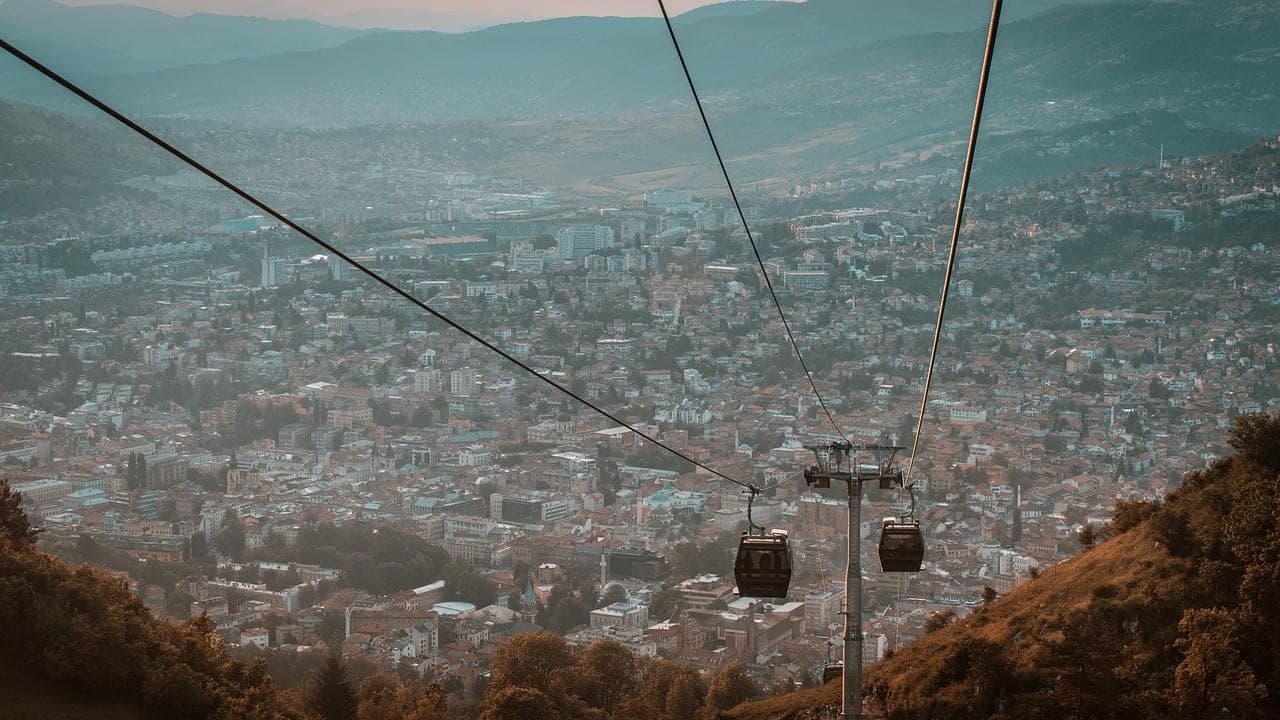
A reusable water bottle (Sarajevo tap water from the Mošćanica springs is genuinely excellent), a small daypack with a zip closure for the bazaar crowds, and motion-sickness tablets for the Trebević cable car if any student is sensitive.
Is it safe?
Yes. The US State Department rates Bosnia and Herzegovina at Level 2 ("exercise increased caution") — the same rating as France, the UK, Germany, and most of Western Europe. The elevated level reflects unexploded landmines in clearly marked rural areas left from the 1992-95 war (none of them anywhere a school group would walk in Sarajevo or its day-trip radius), not any threat in the city itself. Sarajevo is one of the lowest- crime European capitals, and the on-the-ground feel is closer to Ljubljana or Zagreb than to anything the news cycle suggests.
On a Passports teacher-led trip, the group is never on public transport alone, the Tour Director runs a pickpocket-awareness briefing on the first evening, and every hotel is pre-vetted for 24-hour reception and secure room storage. We operate a 24/7 emergency line out of Boston, keep parents on a daily-update channel, and have English-speaking medical contacts in the city. For most teachers leading their first student group travel to Sarajevo, the logistics feel easier than a US urban field trip.
Practical tips
- The Convertible Mark, plus euros at the edges
The KM (Convertible Mark, BAM) is official and pegged 1.95583 to the euro — euros are accepted at most hotels, bigger restaurants, and tourist sites at roughly that rate. Cards are fine in the city; bring small KM cash for ćevapi counters, the bazaar copper-smiths, and tram tickets. Every Passports educational tour briefing covers the currency split on the first night.
- Bosnian coffee runs on a different clock
The džezva takes thirty unhurried minutes to drink properly. Sitting with a teacher and a student over a coffee in Baščaršija is half the cultural curriculum — don't book the next activity tight against it.
- The four-faiths walk is the must-do
Inside a five-minute radius: the Gazi Husrev-beg mosque, the Old Orthodox Church, the Catholic Cathedral, and the Sephardic synagogue (now the Jewish Museum). The classroom- travel reason most groups come — walk it once on Day 1, then again at sunset for context.
- Hvala goes a long way
Bosnian, Croatian, and Serbian are mutually intelligible — locals don't sweat the label. Hvala (thank you), molim (please), and dobar dan (good day) cover most pleasantries. English is widely spoken in the bazaar and at any tourist-facing site.
- Eat where the queue is local
Ćevapi joints in Sarajevo measure their reputation in the lunchtime line. Petica Ferhatović and Željo both have lines past the door by noon — that's the signal, not the warning, and the Tour Director has the regulars on speed-dial.