- RegionSoutheast Europe / Balkans
- LanguageBosnian, Croatian, Serbian
- CurrencyConvertible Mark (BAM)
- Best seasonMay - Jun, Sep - Oct
- TimezoneCentral European Time (UTC+1)
A quick introduction
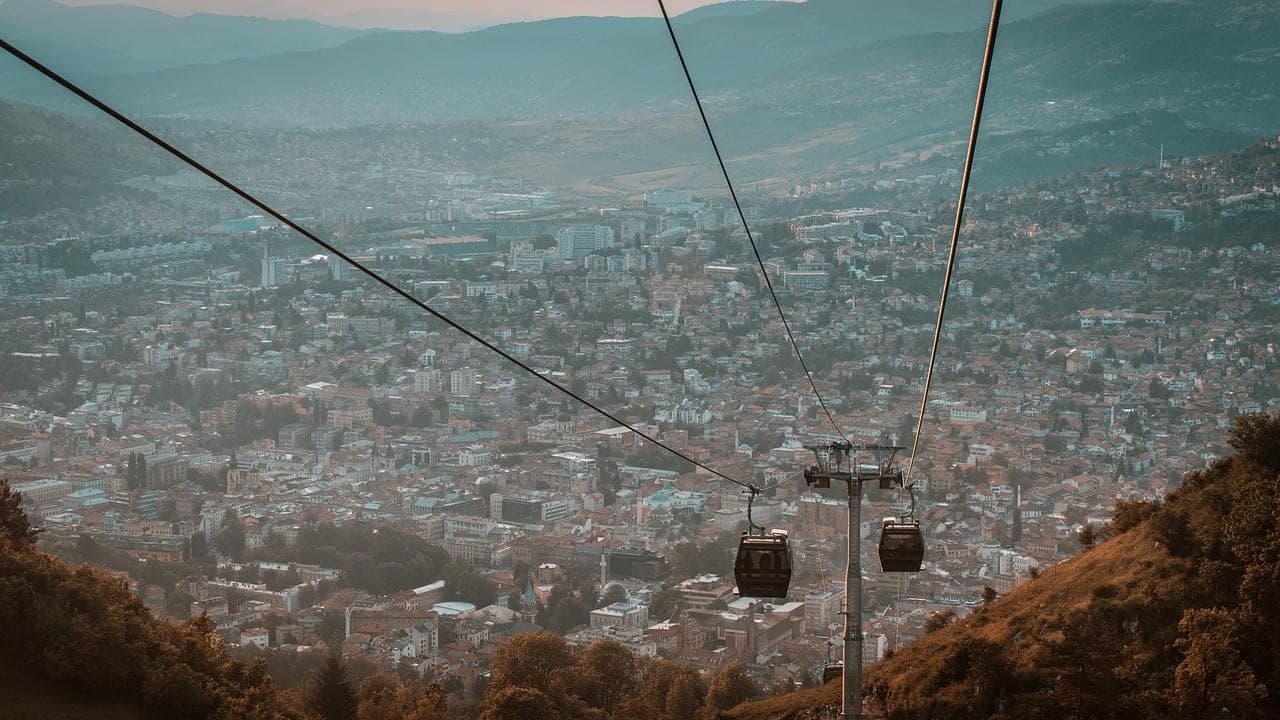
Bosnia and Herzegovina is small — 51,200 km², roughly the size of West Virginia — with a population of about 3.2 million and a capital, Sarajevo, that sits in a narrow river valley ringed by 1,600 m peaks. The country is two entities (the Federation of Bosnia and Herzegovina and Republika Srpska) under one tripartite presidency, and the layered identity is the whole point: Ottoman minarets, Austro-Hungarian shop fronts, Catholic shrines, and Yugoslav-era apartment blocks all sit inside a 200-metre walk of each other in the Sarajevo old town.
Bosnia is one of the most quietly powerful destinations in our educational travel catalog, and for a lot of teachers it's the trip that recalibrates how their students think about Europe. The curricular fit cuts across world history (WWI, WWII, the Yugoslav wars), comparative religion (four faiths in functioning daily coexistence), and global studies (post-conflict recovery in real time). For high school group travel that wants substance over spectacle, Bosnia and Herzegovina delivers — and the country's student-friendly prices stretch a school budget further than almost anywhere else on our European catalog.
Bosnia and Herzegovina by the numbers
A week with a Passports group
A typical Passports high school group trip to Bosnia and Herzegovina runs seven to nine days and lines up well for spring break, June, or early July. Day one is Sarajevo: arrival at SJJ, an orientation walk through Baščaršija (the Ottoman bazaar), and dinner with the Tour Director who stays with the group for the full week. Day two is the history day — the Latin Bridge where Franz Ferdinand was shot in 1914, the Tunnel of Hope museum from the 1992-95 siege, and the Yellow Fortress at sunset for the long view down into the valley.
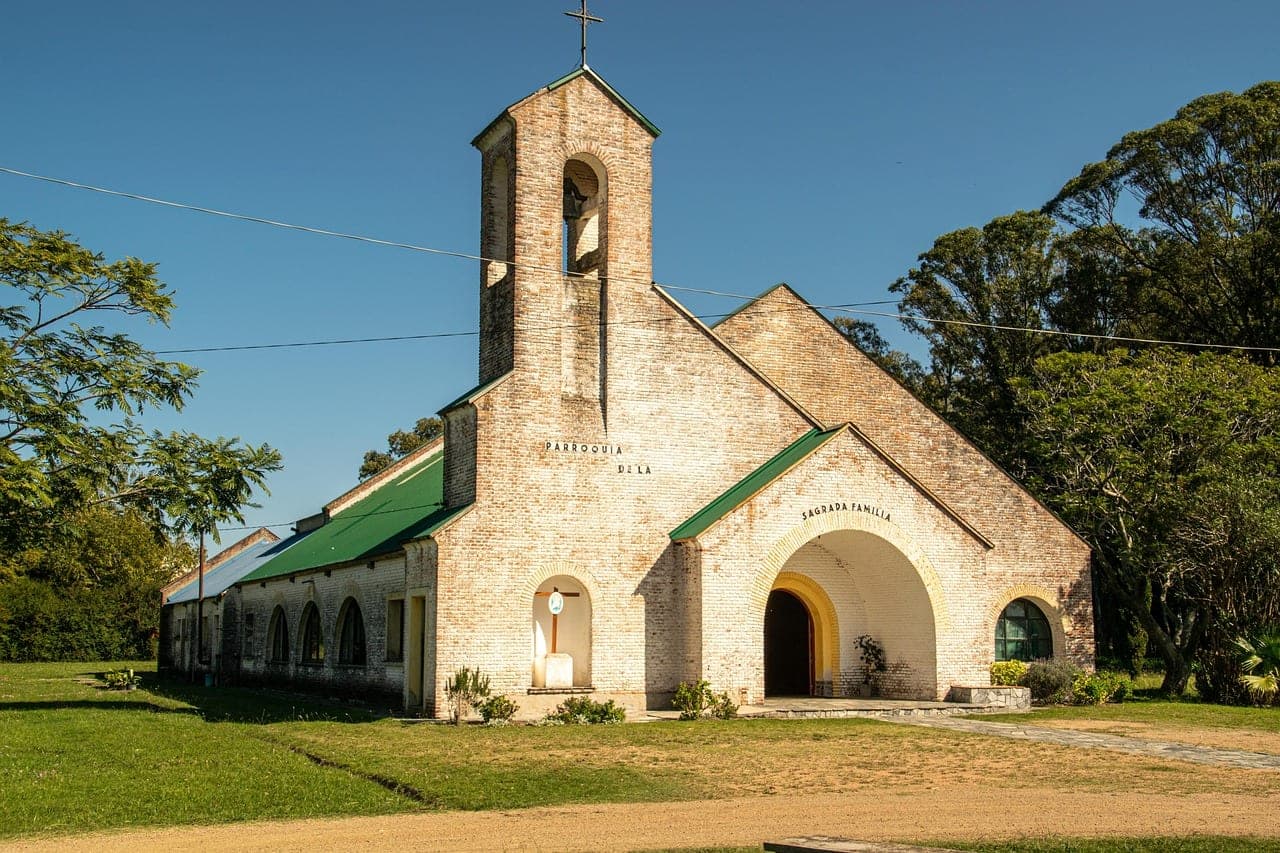
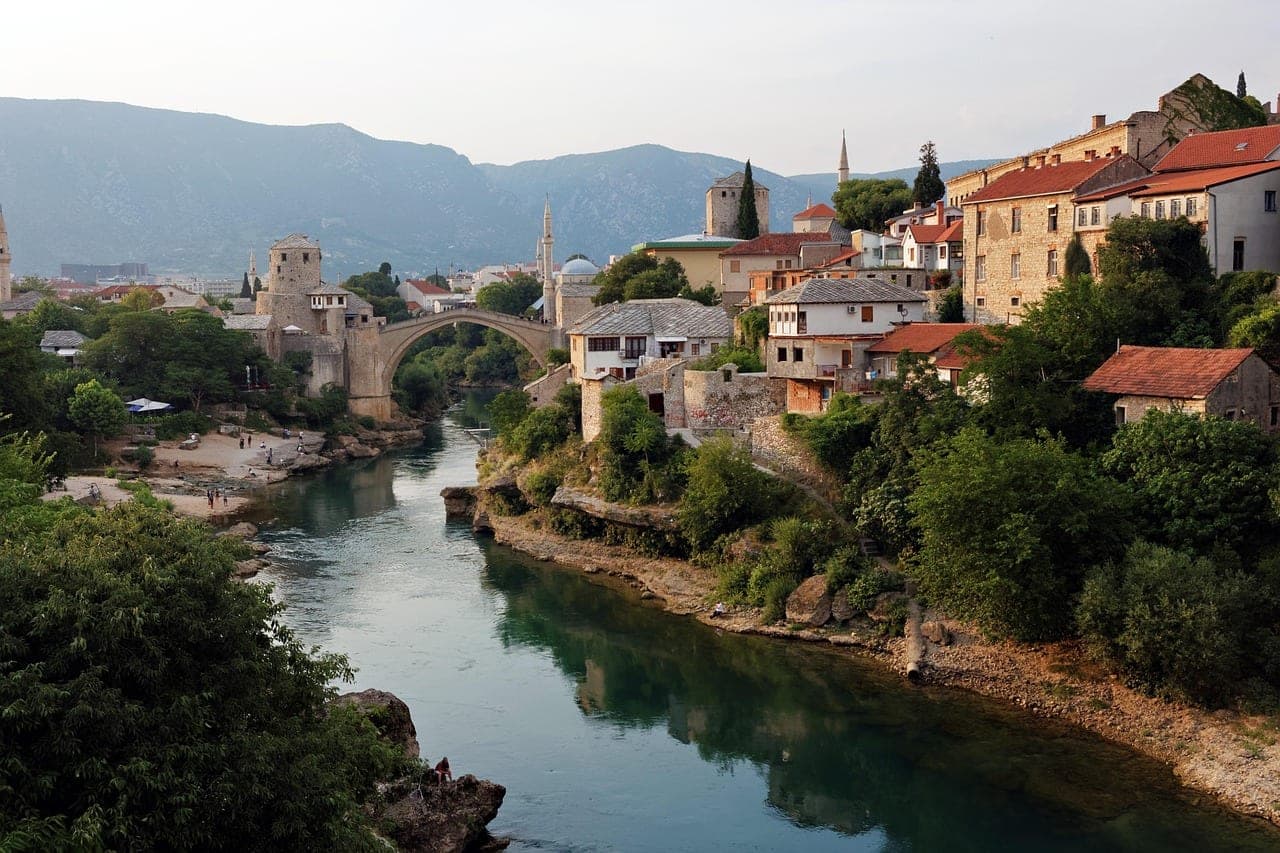
The middle of the week heads south by private coach into Hercegovina. Mostar is the photogenic stop — the rebuilt Stari Most spanning the Neretva, the diving tradition the bridge is famous for, and the bullet-pocked buildings that haven't been touched since the war as a deliberate teaching choice. Medjugorje sits forty minutes south for groups with a religious-studies or campus ministry component; the Marian apparition site has been a working pilgrimage destination since 1981 and the parish handles school groups daily. A side day to Blagaj and the Buna spring (a Sufi dervish lodge built into a 200 m cliff face) is the trip's most consistent surprise.
We've run student group travel into Bosnia for enough years that the moving parts have backups — the two-currency situation (Convertible Mark in the Federation, sometimes Croatian kuna accepted in the Hercegovina region), the occasional mountain-pass closure in shoulder season, the dietary patchwork between halal Sarajevo and Catholic Hercegovina. Most itineraries include a service-learning afternoon with a partner NGO in Sarajevo, debrief journaling time at the hotel, and an optional homestay night for longer programs. The educational travel piece is genuine, but what teachers consistently flag is that students come home talking about Bosnia for months.
Top things to see and do


When to go
- May - Jun — late-spring sweet spot
The classic window for educational travel to Bosnia. Sarajevo highs 18-25°C, Mostar warmer at 25-30°C, hillsides green, river water still cold but running clear. Crowds at Mostar are manageable until the second half of June.
- Jul - Aug — peak heat in Hercegovina
Mostar and Medjugorje regularly hit 35-38°C in midsummer; the Stari Most is shoulder-to-shoulder by 11 AM. Sarajevo stays cooler at 28-32°C thanks to its altitude. Workable for summer student groups if the schedule starts early and saves shaded Sarajevo afternoons for the warmest days.
- Sep - Oct — shoulder-season gold
A favorite window for our longer teacher-led tours. Temperatures drop to 18-24°C, Sarajevo's plane trees turn, vineyards in Hercegovina kick off harvest, and museum and pilgrimage sites thin out sharply after the first week of September.
- Nov - Apr — cold, sometimes snowed in
Sarajevo sits at 500 m and gets real winter — snow on the surrounding peaks from December into March, daytime highs near freezing. Mountain passes between Sarajevo and Mostar can close briefly during storms. Workable for a focused city-stay group but tight for the standard multi-stop itinerary.
Food and culture

Ćevapi
Small grilled minced-beef sausages served in a puffy somun flatbread with raw onion and kajmak (clotted cream). The national dish; the Sarajevo version comes in fives or tens.

Burek
Spiral-coiled phyllo pie filled with ground beef (the actual burek), spinach (zeljanica), cheese (sirnica), or potato (krompiruša). Sold by the kilogram from a buregdžinica. Cheap, filling, available all day.

Sogan-dolma
Whole onions slow-cooked stuffed with minced beef and rice in a paprika broth. The tell of a serious Sarajevo kitchen — most restaurants don't bother because it takes three hours.

Bosanska kafa
Bosnian coffee — finely ground, brewed in a copper džezva, served with a sugar cube and a piece of rahat lokum. The coffee-house ritual is a half-hour minimum; rushing is rude.

Baklava
Layered phyllo with walnuts soaked in honey-rose syrup. The Sarajevo version leans heavy on walnut and light on syrup compared to the Turkish original.
Classroom connections
What to pack
- Documents
Passport valid 6+ months past travel date, two printed copies (one for the student, one for the Tour Director's file), insurance card, and the Passports group packet. No visa required for US citizens staying under 90 days. Bosnia is not in the Schengen area — keep that in mind for itineraries that combine it with EU stops.
- Clothing
Layers — Sarajevo evenings drop sharply year-round, Mostar can be 15°C warmer in the same afternoon. Modest dress (shoulders and knees covered) is required at mosques and at Medjugorje's St. James Parish. A light scarf that can double as a head cover handles most religious-site visits cleanly.
- Footwear
Broken-in walking shoes — Sarajevo's old town and Mostar's Kujundžiluk are both steep uneven cobblestone, and the climb up Cross Mountain in Medjugorje is a real two-hour scramble over bare limestone. Do not buy new shoes for the trip.
- Rain & sun
A packable rain jacket for Sarajevo's mountain showers, a brimmed hat and reef-safe sunscreen for the unshaded Hercegovina sun. The Stari Most piazza has zero shade by midday.
- Tech
Bosnia uses Type C / F plugs (European two-prong) — bring a universal adapter. T-Mobile and Google Fi work out of the box; other carriers should pick up an eSIM (BH Telecom or m:tel) on arrival. A portable battery is worth its weight on the long walking days.
- Extras
A reusable water bottle (Sarajevo tap water from the Mošćanica springs is genuinely excellent), motion-sickness tablets for the M17 mountain road south to Mostar, and a small daypack with a zip closure for crowded market areas.
Is it safe?
Yes. The US State Department rates Bosnia and Herzegovina at Level 2 ("exercise increased caution") — the same rating as France, the UK, Germany, and most of Western Europe — and the elevated level reflects unexploded landmines in clearly marked rural areas left from the 1992-95 war, not any threat to a properly-led group on standard tourist routes. Violent crime against travelers is genuinely rare; petty theft in Sarajevo's Baščaršija and at Mostar's Stari Most is the routine risk profile.
On a Passports teacher-led trip, the group is never on public transport, never on a hiking route off the marked trail system, and never out of reach of a named Tour Director who stays with the group 24/7 for the full week. We operate a 24/7 emergency line staffed out of our Boston HQ, keep parents on a daily-update channel, and have pre-vetted English-speaking medical contacts in Sarajevo and Mostar. For most teachers leading school group tours to Bosnia and Herzegovina, the on-the-ground feel is closer to Croatia or Slovenia than to anything the news cycle suggests.
Practical tips
- Two currencies, mostly one country
The Convertible Mark (BAM) is the official currency and pegged 1.95583 to the euro. Euros are accepted at most hotels and tourist sites; Croatian kuna and the euro both work in some Hercegovina shops near the border. Cards are fine in cities; bring small BAM cash for buregdžinica counters and craft stalls. Every Passports educational tour briefing covers the currency split on the first night.
- Coffee is a ritual, not a caffeine delivery
Bosnian coffee in a džezva takes thirty unhurried minutes. Sitting with a teacher and a student over a coffee in Baščaršija is half the cultural curriculum — don't book the next activity tight against it.
- Three names for one language
Bosnian, Croatian, and Serbian are mutually intelligible varieties — locals will understand each other regardless of label. Latin script in the Federation, both Latin and Cyrillic in Republika Srpska. Hvala (thank you) and molim (please) go a long way.
- Mosque etiquette is straightforward
Remove shoes at the threshold, women cover hair with a scarf, shoulders and knees covered for everyone. Most mosques welcome respectful visitors outside prayer times; the Gazi Husrev-beg hands out wraps at the entrance. The same shoulders-and-knees rule applies at Medjugorje's St. James Parish.
- Sarajevo time runs slow, that's the point
Service in cafés is leisurely by design; rushing a konobar (waiter) reads as rude. Build buffer into the day, lean into the pace, and you'll spend the trip doing what every teacher-led tour to Bosnia ends up doing — talking with locals.