- RegionBritish Isles
- LanguageEnglish (with Scots & Scottish Gaelic)
- CurrencyPound sterling (GBP)
- Best seasonMay – Sep (long days, mildest weather)
- TimezoneGreenwich Mean Time (UTC+0 / BST UTC+1)
A quick introduction
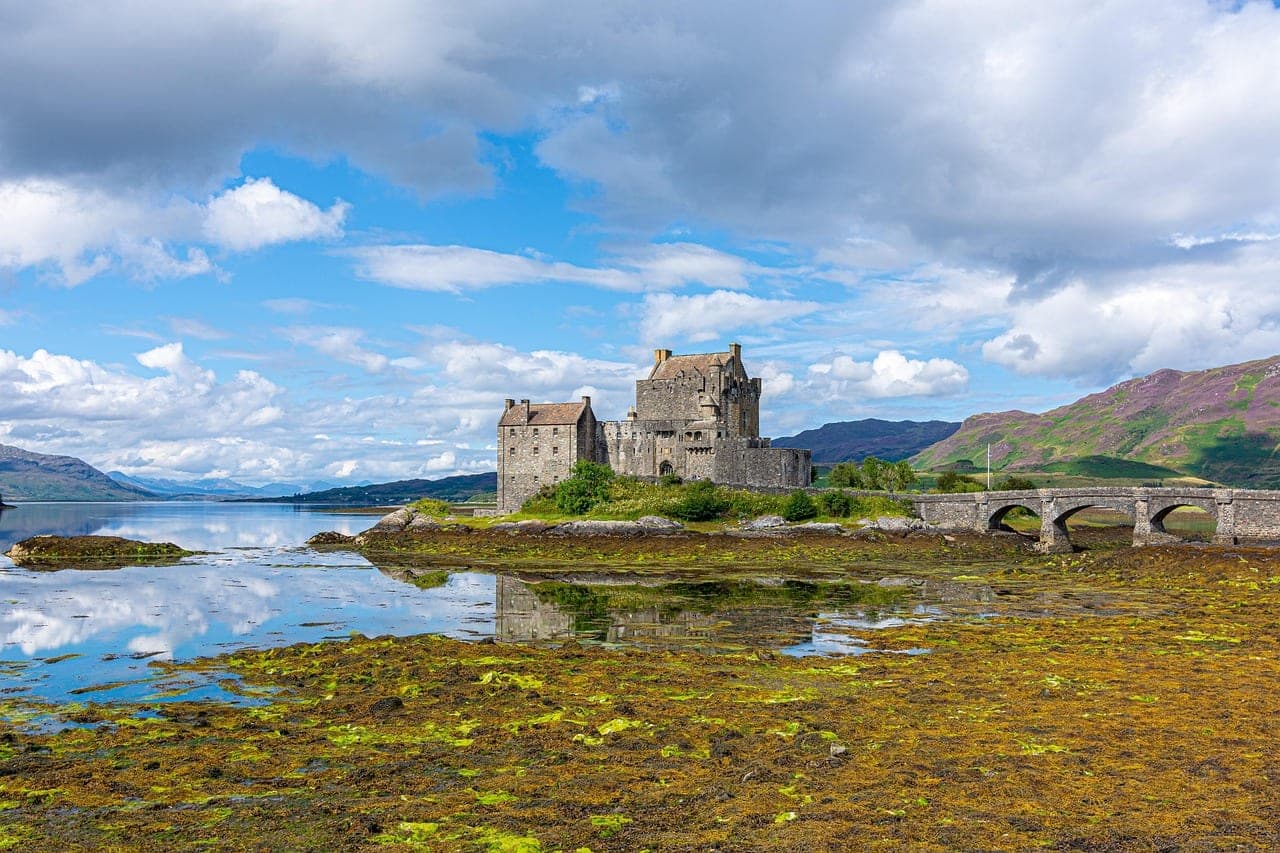
Scotland covers about 78,000 km² — slightly smaller than South Carolina — with a population of roughly 5.5 million and a capital, Edinburgh, that stacks a medieval Old Town and a Georgian New Town on top of an extinct volcano. The country has around 790 offshore islands, some 31,000 freshwater lochs, and 282 Munros (peaks over 3,000 feet), which is to say it packs wildly different landscapes into a country you can cross by coach in a single morning. For a school group that makes it rare: a walled Old Town on Monday, a glaciated Highland valley on Tuesday, a sea loch on Wednesday.
Scotland is one of the most-booked destinations in our British Isles educational travel catalog, and for many teachers it's a natural first international trip — English is the working language, there's no visa, no currency juggling, and the curricular fit runs wide. Edinburgh and Stirling anchor British-history and literature units; the Highlands put glaciation and plate-tectonics diagrams in front of the class in three dimensions; the Scottish Enlightenment gives AP Euro and economics teachers a ready-made field seminar. A teacher-led student group trip to Scotland reads as a coherent history-and-literature week from the airport on.
Scotland by the numbers
A week with a Passports group
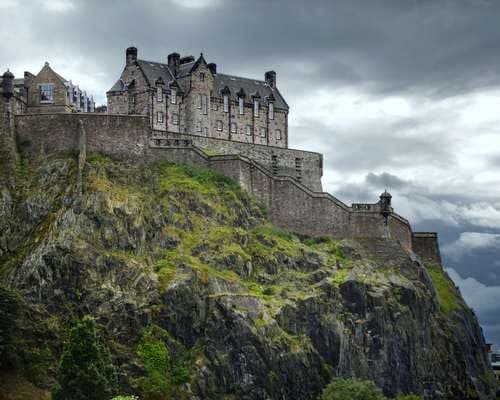
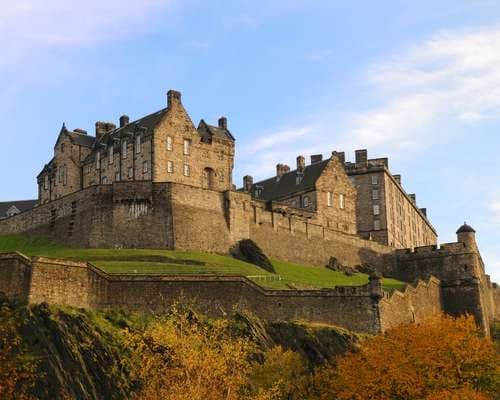
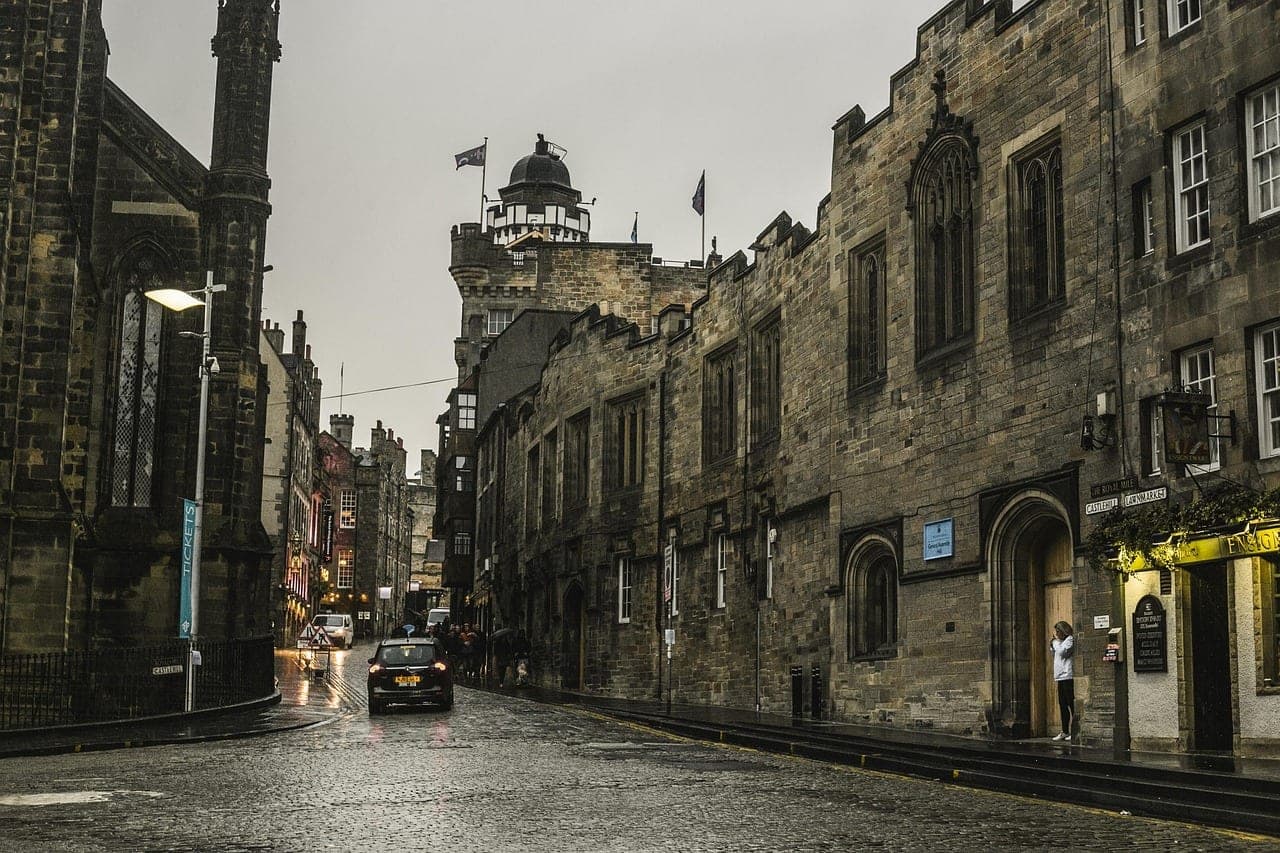
A typical Passports high school group trip to Scotland runs seven to nine days and lines up well for April or late June — the two windows when daylight is long and most school calendars open up. Day one is Edinburgh: arrival, a Royal Mile walking tour from the Castle down to Holyrood, dinner with the Tour Director who stays with the group for the full week. Day two is the Old Town in depth — the Castle's Honours of Scotland, a Writers' Museum stop for Burns, Scott, and Stevenson, and an evening ghost tour through the closes if the group wants it.
The middle of the week is the heart of the curriculum. A private coach north through Stirling — Bannockburn and Stirling Castle together make a tight Wars-of-Independence lesson — then on into the Highlands via Loch Lomond and Glencoe. Two nights around Fort William or Inverness put the group within reach of Ben Nevis, Loch Ness, and the Culloden battlefield. An Isle of Skye day (the Cuillin ridge, the Old Man of Storr, Dunvegan Castle) is the student-group favorite; a St Andrews or Fife coast stop on the way back gives the group its first look at the North Sea and the home of golf.
We've run student group travel to Scotland for enough years that every moving part has a backup plan: the Skye bridge closed for wind, a Highland road iced over in early spring, a student who didn't realize how much they'd need their rain jacket until day three. The educational travel piece is real — most itineraries include a Gaelic-language session, a clan-history workshop, and optional ceilidh night with a local caller — but the part teachers remember is that the logistics simply work.
Top things to see and do


When to go
- Apr - May — spring, long daylight, few midges
Days stretch to 15+ hours of usable light by early May. Bluebell woods in the Borders, lambs on the hillsides, highs of 10-14°C. Midges haven't hatched yet, which matters in the Highlands. A favorite window for teacher-led trips working around Easter break.
- Jun - Aug — peak summer, Festival season
Seventeen-plus hours of daylight at midsummer, highs of 15-19°C, and Edinburgh in full Fringe mode through August (the world's largest arts festival). This is the main summer-break window for educational travel and our most-booked Scotland slot — book early, as hotels sell out a year ahead in Edinburgh.
- Sep - Oct — autumn, heather and quiet glens
The Highlands turn purple with late heather and the birches yellow out through October. Crowds thin sharply after the Fringe and midges die off after the first cold snap. Genuinely the best photography window and an excellent option for fall-break school group tours.
- Nov - Feb — winter, short days, Hogmanay
Daylight shrinks to 7 hours in late December, highs 4-7°C, and snow dusts the higher Munros. Edinburgh's Christmas market and the Hogmanay street party (December 30 – January 1) are worth planning a January interim trip around; otherwise a tight fit for standard school calendars.
Food and culture

Haggis, neeps and tatties
The national dish: spiced sheep's offal steamed in a casing, served with mashed turnip ("neeps") and potato ("tatties"), often with a whisky cream sauce. Better than it sounds and a rite of passage — most students order seconds.

Fish and chips
Battered haddock (not cod — this is Scotland) with thick-cut chips, salt, and malt vinegar. Best eaten from paper on a sea wall in Anstruther or Stonehaven. The unbeatable end to a coast day.

Cullen skink
A thick soup of smoked haddock, potato, onion, and milk from the Moray Firth fishing village of Cullen. Appears on every pub menu in Fife and the north-east; the savoury answer to clam chowder.

Shortbread
Butter, sugar, flour — nothing else. Walkers in their tartan tin is the souvenir; a bakery round cut into petticoat tails is the real thing. Pairs with tea at every castle café on the itinerary.

Scotch broth
A hearty soup of lamb (or mutton), pearl barley, leeks, carrots, and neeps. Warms up a rainy Highland lunch and scales well for a student group — every café in Fort William or Inverness has a pot on.
Classroom connections
What to pack
- Documents
Passport valid 6+ months past travel date, two printed copies (one for the student, one for the Tour Director's file), insurance card, and the Passports group packet. No visa required for US citizens on stays under 6 months; the UK's new ETA is handled at the trip-planning stage.
- Clothing — layers, always
Scotland's weather can cycle sun, wind, rain, and hail inside an hour. Pack layers: thermal base, fleece or wool mid, and a waterproof shell. A warm hat and gloves matter even in June at altitude. Skip the cotton hoodie — it stays wet for days.
- Footwear
Broken-in waterproof walking shoes or light hiking boots for castle cobbles, Highland trails, and reliably wet grass. A second comfortable pair for city days in Edinburgh and Glasgow. Leave the white sneakers at home.
- Rain gear
A properly waterproof jacket with a hood (not a poncho) and packable waterproof over-trousers for the Highlands day. A dry-bag or zip-locs keep phones and passports dry on Skye and loch-cruise days.
- Tech
UK plugs are Type G — three rectangular pins — so US travelers need an adapter (not a converter; modern chargers handle 230V). A portable battery is worth its weight on long coach days. T-Mobile and Google Fi work out of the box; other carriers should pick up a UK eSIM before departure.
- Extras
A small tube of midge repellent (DEET or Smidge) if traveling June through August in the Highlands, a reusable water bottle (tap water is excellent everywhere), motion-sickness tablets for Highland switchbacks, and a paperback of Burns or Stevenson to read at the actual location.
Is it safe?
Yes. The United Kingdom — and Scotland within it — is rated Level 2 ("exercise increased caution") by the US State Department, the same category as France, Germany, and the Netherlands, and the advisory language is driven by general terrorism posture rather than any Scotland-specific concern. In practical terms Scotland is one of the safest student-travel destinations in Europe; Edinburgh and Glasgow both score below most US cities on violent-crime metrics, and the Highlands and islands are effectively risk-free on that axis. Petty theft in tourist corridors — Princes Street, the Royal Mile, Glasgow's Buchanan Street — is the main risk profile, and the countermeasures are the same as anywhere: cross-body bags, valuables in the hotel safe, and a buddy system in crowded venues.
On a Passports teacher-led trip, the group is never on public transport, never splits up without a defined meetup time, and never out of reach of a named Tour Director who stays with the group 24/7 for the full week. We operate a 24/7 emergency line staffed out of our Boston HQ, keep parents on a daily-update channel, and every Highland-itinerary day has a UK emergency number (999) plus a vetted local medical contact in the day packet. For most teachers running school group tours to Scotland, the logistics feel lighter than a US out-of-state field trip.
Practical tips
- Plan for four seasons in one day
"If you don't like the weather, wait five minutes" is a local joke that is also a packing instruction. Even mid-July can deliver a 9°C, wind-driven morning. Every Passports teacher-led trip carries a weather-alternate for each outdoor day, but the group still needs to dress for it.
- Traffic drives on the left
Coach drivers handle the driving; students just need to remember which way to look when crossing. Tour Directors run a five-minute briefing on the first morning in Edinburgh and remind the group every time they step off the coach. Look right, then left, then right again.
- Card is king, tipping is lighter
Contactless is universal — even a rural pub in Skye takes tap. Tipping is 10-12% in restaurants when service isn't already included; rounded-up coffee change is fine for cafés; no tipping on the NHS, in pubs at the bar, or on public transport. Bring a single £20 note for emergencies and let students use cards.
- Distances are short, roads are slow
Edinburgh to Skye is 200 miles but six hours with stops — single- track stretches in the Highlands and passing places on Skye slow everything down. Hand out motion-sickness tablets at the start of each transfer and build a proper lunch stop into every Highland day.
- Place names look harder than they sound
Gaelic and Scots spellings (Edinburgh, Milngavie, Auchtermuchty, Ecclefechan) fool US tongues. A thirty-minute pronunciation game on the first coach leg — led by the Tour Director — pays off in every subsequent stop and earns the group serious local goodwill.