Country guide

Czech Republic

Czech Republic student group travel for teachers: Prague, Bohemia, and Moravia plus the history curriculum behind our top teacher-led high school trips.

All countries
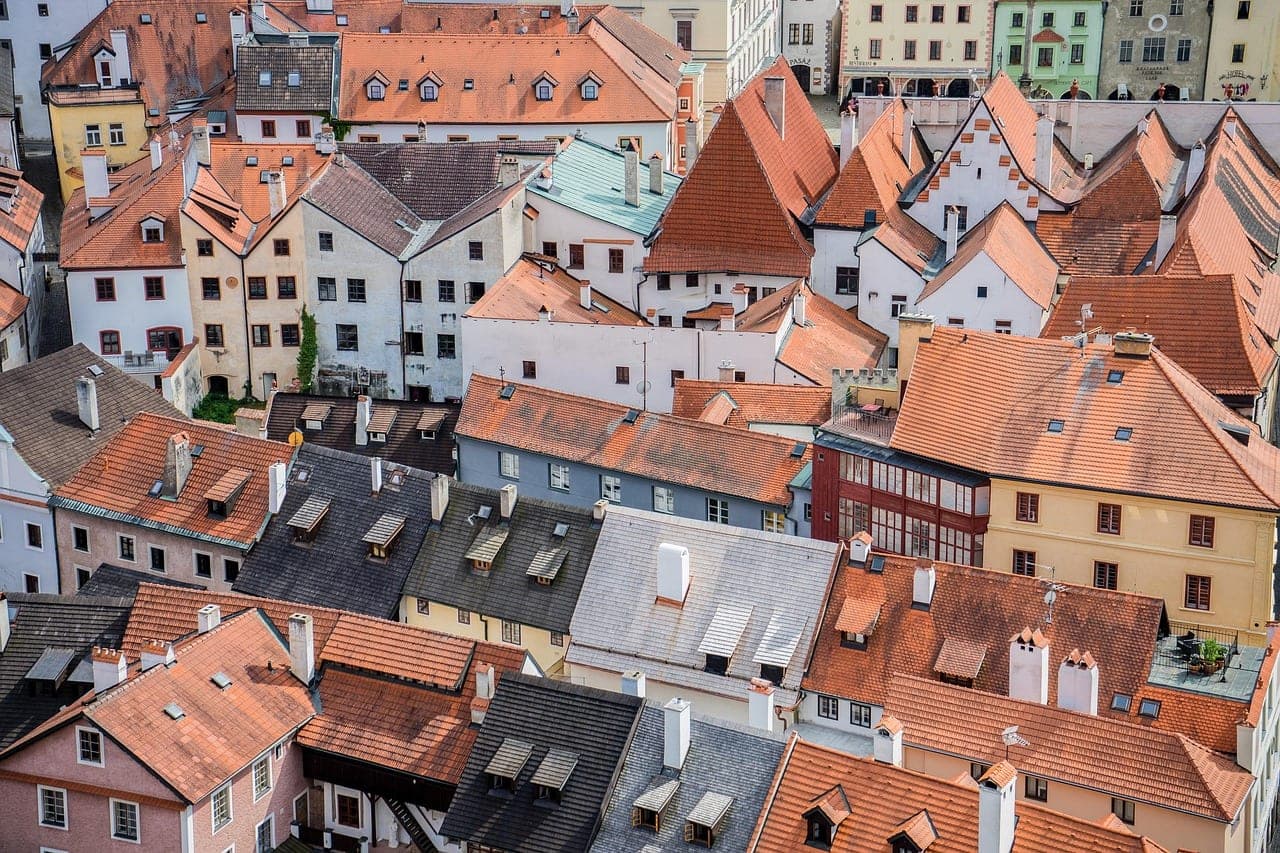
Medieval Bohemian town of Cesky Krumlov above a bend in the Vltava River with castle tower and red rooftops
On this page
  • Where the Czech Republic sits and why a school group can see Prague, Bohemia, and Moravia in a single week
  • Six regions worth a day each — Prague, Český Krumlov, Karlovy Vary, Kutná Hora, Olomouc, Brno
  • What's on the menu: svíčková, goulash, knedlíky, trdelník, and Pilsner-style beer culture
  • Practical logistics for teachers: Schengen rules, koruna vs. euro, tram etiquette, church dress codes
  • Five facts that land after you've stood under the Astronomical Clock and walked Charles Bridge at dawn

A quick introduction

The Czech Republic is compact — 78,866 km², roughly the size of South Carolina — with a population of about 10.9 million and a capital, Prague, that holds a UNESCO-listed historic core nearly untouched by the bombs of the 20th century. The country splits cleanly into three historic lands: Bohemia in the west (Prague, Český Krumlov, Karlovy Vary), Moravia in the east (Brno, Olomouc, the wine country), and a sliver of Czech Silesia in the northeast. Sixteen UNESCO World Heritage sites sit inside that footprint, more per square kilometer than anywhere else in Europe.

For a school group, the Czech Republic is one of the best-priced entries on our central-Europe educational travel catalog and an easy pairing with Vienna, Berlin, or Budapest on a longer high school group trip. English is widely spoken in Prague's tourist core, the country sits inside Schengen so there's no second visa to manage, and the curricular fit is unusually deep — World History from the Holy Roman Empire to the Velvet Revolution, AP European History coverage from Jan Hus to Václav Havel, art-history layers from Gothic to Cubism to communist-era socialist realism. Most teacher-led tours we run here are three to four nights in Prague plus a Bohemian day-trip; the country handles a first international trip and a returning-group itinerary equally well.

Quick facts

Czech Republic by the numbers

📐

78,866 km²

Roughly the size of South Carolina. The longest single transfer on a typical itinerary — Prague to Český Krumlov — runs under three hours, which keeps a student group fresh for the next stop.

👥

~10.9 million

Population of the whole country, with about 1.3 million in greater Prague. The other major cities — Brno, Ostrava, Plzeň — each sit well under half a million.

🏛️

16 UNESCO sites

From the entire historic center of Prague to the painted village of Holašovice. One of the densest UNESCO concentrations in Europe — an art-history teacher's syllabus on a map.

🏰

2,000+ castles & chateaux

More castles per capita than any country on earth. Karlštejn, Konopiště, Český Krumlov, Hluboká — the "and another castle" problem is real on a Czech itinerary.

Inside the trip

A week with a Passports group

A typical Passports high school group trip to the Czech Republic runs four to seven days inside the country, often as the second leg of a Vienna–Prague or Berlin–Prague itinerary. Day one in Prague is arrival, a walking orientation across Charles Bridge into Old Town Square for the Astronomical Clock, and dinner with the Tour Director who stays with the group for the full trip. Hotels are pre-vetted in Nové Město or Malá Strana — both walkable to everything, both inside the metro/tram network for the longer-leg days.

The middle of the week is the curricular heart. A guided morning at Prague Castle and St. Vitus Cathedral, an afternoon at the Jewish Quarter (Josefov) with the Old-New Synagogue and the Old Jewish Cemetery, a Communism-era walking tour through Wenceslas Square that lands at the Velvet Revolution monument, and a half-day to Terezín — the former concentration camp 60 km north of Prague — that almost every history teacher we work with builds in. A full-day excursion to Český Krumlov or Kutná Hora gives the group a second city, a coach ride through the Bohemian countryside, and a completely different urban scale from the capital.

We've run student group travel to the Czech Republic for enough years that every moving part has a backup plan: tram strike day, Charles Bridge construction scaffolding, a student who lost a passport at the Old Town Square pickpocket-density bullseye. The educational travel piece is real — most itineraries include a Terezín visit with a survivor-testimony component, optional classical-music evenings (the Czech Philharmonic, organ recitals at St. Nicholas), and debrief journaling time on the bus — but the part teachers remember is that the logistics simply work.

Region by region

Top things to see and do

Prague & the historic core

Prague & the historic core

The capital, the UNESCO old town, Charles Bridge, the Astronomical Clock, Prague Castle, and the Jewish Quarter. Three to four nights here is the norm; everything inside the historic center is walkable.

Český Krumlov

Český Krumlov

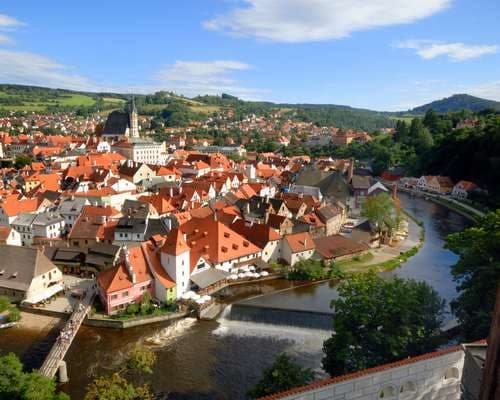
A Renaissance-era town wrapped in a hairpin bend of the Vltava, 90 minutes south of Prague. Castle, painted tower, and a Baroque theater that still uses its original 1766 stage machinery. Best as a day-trip or an overnight on the way to Austria.

Kutná Hora & Sedlec ossuary

Kutná Hora & Sedlec ossuary

The medieval silver-mining town that bankrolled Bohemia. St. Barbara's Cathedral, the Italian Court mint, and the Sedlec bone church — a chapel decorated with the remains of 40,000 plague and Hussite-war dead. Polarizing for student groups in the best way.

Karlovy Vary spa towns

Karlovy Vary spa towns

The colonnaded spa town in West Bohemia where Goethe, Beethoven, and Peter the Great all came to take the waters. A Habsburg-Empire time capsule and the easy add-on for groups heading toward Bavaria.

Brno & South Moravia

Brno & South Moravia

The country's second city and the gateway to Moravian wine country. Tugendhat Villa (UNESCO Bauhaus landmark), a Gothic cathedral on a hilltop, and Mendel's monastery garden where genetics was born.

Olomouc & Holy Trinity Column

Olomouc & Holy Trinity Column

Often called "Prague without the crowds." A massive Baroque Holy Trinity Column (UNESCO), a working astronomical clock rebuilt in socialist-realist style after WWII, and a university town energy that feels nothing like the tourist core of the capital.

Weather by season

When to go

  • May - Jun — spring sweet spot

    The classic window for educational travel to the Czech Republic. Daytime highs 18-25°C, long daylight, gardens at Prague Castle and the Wallenstein Garden in full bloom. Crowds build through June but Charles Bridge at 7 AM is still empty. The most-requested window for our spring high school group trips.

  • Jul - Aug — summer peak

    Daytime highs 25-30°C, museum lines deepest at the Castle and the Jewish Museum, and a heavy concentration of school groups from across Europe. Still works for summer student groups, but pre-book Castle entry and start the walking days before 9 AM to beat the heat and the crowds.

  • Sep - Oct — shoulder-season gold

    The best-kept secret among teacher-led tours to Central Europe. Temperatures drop to 15-22°C, Bohemian countryside turns gold, Moravian wine harvest kicks off, and the tourist volume drops sharply after the second week of September. A late-September / October high school trip is the move if your school calendar allows it.

  • Nov - Mar — Christmas-market winter

    Short daylight (sunset around 4:00 PM in December), occasional snow, and Old Town Square turning into one of Europe's most photographed Christmas markets from late November through early January. Cold but workable for interim-term groups; pack seriously for -5 to 5°C with a damp wind.

What to order

Food and culture

Svíčková

Svíčková

Beef sirloin in a root-vegetable cream sauce with bread dumplings, a dollop of whipped cream, and a spoon of cranberries. The unofficial national dish; on every traditional menu in Prague.

Guláš s knedlíky

Guláš s knedlíky

Czech goulash — beef-and-paprika stew, thicker and less tomato-forward than the Hungarian version — served over sliced bread dumplings (knedlíky). Default lunch order.

Smažený sýr

Smažený sýr

A thick slab of Edam-style cheese, breaded and deep-fried, served with potato or fries and tartar sauce. The student-group favorite once the first brave eater orders one.

Trdelník

Trdelník

The cinnamon-sugar "chimney cake" you'll see rolling on every Old Town Square food stall. Not actually a traditional Czech pastry — Hungarian-Slovak in origin — but it's the iconic walk-and-eat snack.

Pilsner & Czech beer culture

Pilsner & Czech beer culture

Pilsner Urquell was invented in Plzeň in 1842 and reset the template for the entire global lager category. Beer is a national-pride conversation here, not a recreational one — a good cultural-context note for an 18+ portion of a college group.

Curriculum tie-ins

Classroom connections

📜

AP European History

A live syllabus map: Holy Roman Empire at Prague Castle, the Hussite reformation at Bethlehem Chapel, the Defenestration of Prague at the Castle's Old Royal Palace, the Habsburg-era Bohemian Crown, the 1848 revolutions at Wenceslas Square, the First Republic under Masaryk, the Munich Agreement, and the 1989 Velvet Revolution — all walkable inside Prague.

🕯️

Holocaust & Genocide Studies

Terezín (Theresienstadt) is 60 km north of Prague — the former ghetto and transit camp where 33,000 died and 88,000 were deported east. A visit with a survivor-testimony component is the curricular anchor of most of our teacher-led trips here, paired with the Pinkas Synagogue's wall of 78,000 names in Prague's Jewish Quarter.

🏛️

Comparative Government

The Velvet Revolution as the textbook case of nonviolent regime change — a six-week transition from communist one-party state to multiparty democracy in 1989, with Václav Havel moving from prison to the presidency. Pairs with the Museum of Communism and a Wenceslas Square walking tour.

🎨

Art & Architecture History

Romanesque, Gothic, Renaissance, Baroque, Art Nouveau (Mucha), Cubist (yes — Czech Cubist architecture is a real thing), and socialist realism, all inside a 30-minute walk in Prague. A walking-syllabus city for AP Art History or a humanities elective.

🎼

Music & Performing Arts

Smetana's Má vlast, Dvořák's New World Symphony, Janáček's operas, and Mozart's Don Giovanni (premiered at Prague's Estates Theater in 1787). The Czech Philharmonic and the Estates Theater both welcome student-group bookings — a strong add-on for music programs.

📚

Literature & Philosophy

Kafka, Kundera, Havel, Hašek's Good Soldier Švejk, Rilke writing in German across the river. The Kafka Museum in Malá Strana and a Jewish Quarter walking tour together make a tight half-day for an AP Lit or world-literature group.

Packing essentials

What to pack

  • Documents

    Passport valid 3+ months past the planned departure date from the Schengen area, two printed copies (one for the student, one for the Tour Director's file), insurance card, and the Passports group packet. No visa required for US citizens on a Schengen stay under 90 days; ETIAS pre-authorization expected to apply later in 2026 — your trip lead will flag it if it's live by your dates.

  • Clothing

    Layers for variable shoulder-season weather; modest dress (shoulders and knees covered) is enforced inside St. Vitus Cathedral and the Old-New Synagogue. A light scarf that doubles as a shoulder cover solves most dress-code moments on the fly. Add a warm jacket for any October-or-later trip.

  • Footwear

    Serious, broken-in walking shoes. Prague's historic core is cobblestones end-to-end and a student group will log 10,000-13,000 steps a day, including the Castle climb. Do not buy new shoes for the trip. Ankle-support sneakers beat fashion sneakers by a wide margin on uneven Old Town pavers.

  • Rain layer

    A lightweight, packable rain jacket beats an umbrella on a group walk — the Old Town's narrow lanes turn into umbrella collisions in a downpour. November-through-March groups should add a warm hat and gloves; January in Prague routinely sits at -3°C with a wet Vltava wind.

  • Tech

    Czech Republic uses Type C / E plugs (European two-prong) — bring a universal adapter. A portable battery earns its weight on full walking days. T-Mobile and Google Fi work out of the box; other carriers should buy an O2 or Vodafone CZ eSIM on arrival.

  • Extras

    A small daypack for museum days (anything larger has to be checked at the Castle and the Jewish Museum), a reusable water bottle (tap water is excellent), a compact umbrella for shoulder-season groups, and a small notebook — Terezín and the Jewish Quarter are debrief-journal moments, not phone-camera moments.

The parent-meeting question

Is it safe?

Yes. The Czech Republic is consistently one of the safest countries in Europe and the US State Department rates it Level 1 ("exercise normal precautions"), the same rating as Japan, Norway, or Switzerland. Violent crime against travelers is rare. The actual risk in Prague is pickpocketing and ATM-skimming at a handful of predictable hotspots: Old Town Square around the Astronomical Clock, Charles Bridge after dark, the trams running between Malá Strana and the Castle, and the Hlavní nádraží main train station. Currency-exchange scams along Wenceslas Square are the second-most common issue and are easily avoided by using ATMs from Czech-bank networks (Komerční, ČSOB, Česká spořitelna).

On a Passports teacher-led trip, the group is never on public transport without staff, the Tour Director runs a pickpocket- awareness and currency briefing on the first evening, and every hotel is pre-vetted for 24-hour reception and secure room storage. We operate a 24/7 emergency line out of our Boston HQ, keep parents on a daily-update channel, and have English-speaking medical contacts in every city we visit. For most teachers running their first school group tours to Central Europe, the on-the-ground logistics in the Czech Republic feel easier than a domestic field trip.

🛡️

Personal safety

Pickpocketing on Charles Bridge, in Old Town Square, and on the #22 tram up to the Castle is the real risk; violent crime is rare. Cross-body bags worn in front, phones off café tables, and a Day 1 briefing handle 90% of it. Hotels are vetted for 24-hour reception, in-room safes, and English-speaking front desks.

⚕️

Health & medical

Tap water is excellent everywhere on a standard itinerary. No special vaccinations required beyond CDC routine. Na Homolce Hospital and Motol University Hospital in Prague both run 24-hour emergency rooms to international standards and accept US travel insurance. EU pharmacies (lékárna) are dense and well-stocked.

🚐

Roads & transport

Group transport is always by private coach with a professional, vetted driver — never public bus for inter-city legs. Inside Prague, the Tour Director uses the metro and tram with the group when it's the smarter option (the Castle climb on the #22, e.g.), with tickets pre-purchased and validated as a group.

🌪️

Natural hazards

The Czech Republic sits in a low-seismic, low-hurricane zone. Winter cold and shoulder-season rain are the only real environmental factors. Vltava flooding (2002 was the dramatic one) is now well-managed by the city's mobile flood defenses; we plan around any active alerts.

Practical tips

  • Koruna, not euro — and not the storefront exchanges

    The Czech Republic kept the koruna (CZK) when it joined the EU. Use ATMs from Czech-bank networks (Komerční, ČSOB, Česká spořitelna) for the best rate. Avoid the "0% commission" exchange windows on Wenceslas and Old Town Square — the spreads are brutal. Cards are accepted nearly everywhere a Passports group eats or shops.

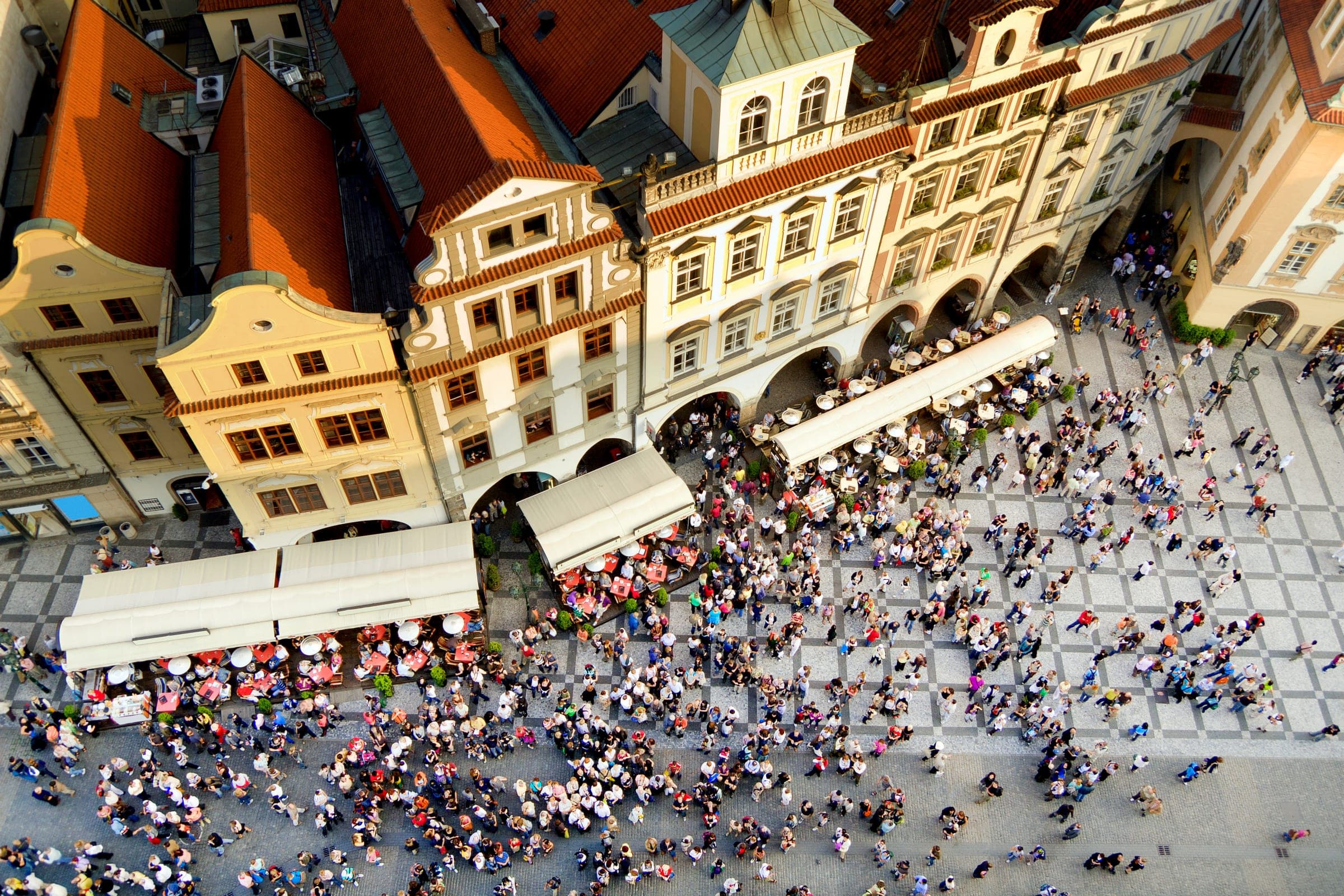
  • The Astronomical Clock at the top of the hour

    The Apostles parade lasts about 45 seconds. The square fills densely 5 minutes before the hour and clears within two — plan the rest of the Old Town Square circuit around it rather than the other way around.

  • Trams are the fastest way across Prague

    The metro is fine but the tram network is the actual circulatory system of the city. The #22 from the National Theater up to Prague Castle is the most-used line on a school group itinerary — your Tour Director will pre-load group tickets and validate them at boarding.

  • Churches and synagogues enforce dress codes

    Shoulders and knees covered inside St. Vitus Cathedral, the Old-New Synagogue, and the Loreta. The Jewish Quarter sites additionally ask men to wear a kippah (loaners at the entrance). A light scarf solves it for the women in the group.

  • Czech, not Russian — and a little of it goes far

    A "dobrý den" (hello), "děkuji" (thank you), and "prosím" (please / you're welcome) earn genuine warmth. Don't default to Russian phrases — the historical baggage is real. English is widespread in the tourist core; less so in Brno, Olomouc, and smaller Bohemian towns, where the Tour Director bridges.
Five facts

Good to know

🍺

Highest beer consumption per capita on Earth

About 180 liters per person per year — has been #1 globally for three decades. Beer is cheaper than bottled water at most pub lunches. A cultural-context note, not a programming note for a high school group.

🗺️

Czechia is the short name

Officially adopted by the government in 2016 as the one-word English name for the Czech Republic. Both are correct; "Czechia" is gradually winning. Maps and atlases printed before 2016 still use the longer form.

🤖

The word 'robot' was coined here

Karel Čapek's 1920 play R.U.R. introduced the word — from the Czech robota (forced labor). A great hook for a STEM or world-literature classroom connection on the way home.

🪟

Defenestration is a Prague specialty

Throwing political opponents out of a window has a long Czech résumé — the First (1419) and Second (1618) Defenestrations of Prague both kicked off European wars. The Old Royal Palace window from 1618 is on the Castle tour.

🕊️

The Velvet Revolution lasted six weeks

November 17 to December 29, 1989: from a beaten student demonstration on Národní třída to Václav Havel sworn in as president, with no shots fired. The textbook case of nonviolent regime change.

Tours that go here

Tours that visit Czech Republic

See all tours →
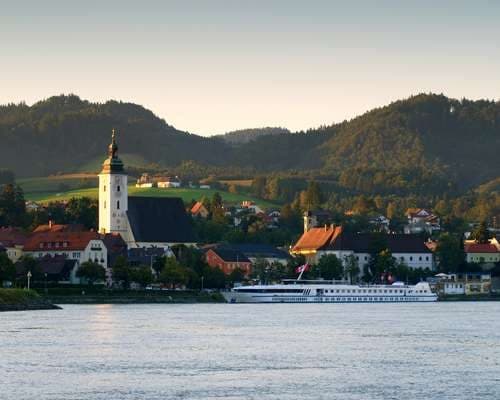
Danube River Cruise
Austria · Hungary · Czech Republic · …

Along the Danube

Salzburg · Vienna · Budapest · Prague · Munich

Adult-recommendedLarge-group
See itinerary
Cesky Krumlov
Poland · Hungary · Austria · …

Bohemian Rhapsody

Cracow · Zakopane · Budapest · Vienna · Cesky Krumlov · Prague · Berlin

Adult-recommendedLarge-groupCustom & private
See itinerary
Prague
Germany · Czech Republic · Hungary

The Cold War

Berlin · Dresden · Prague · Budapest

Custom & private
See itinerary
Classroom material

Lesson plans about Czech Republic

See all →
RussiahistoryGrade 11-12

Cold War (1947-1991): Russia's Iron Curtain in Eastern Europe

Through the use of various primary and secondary sources, including a full text reading of the Yalta Agreement from 1945, students in this lesson will identify, understand and be able to explain the basics behind how the Russians came to do…

View lesson
Czech RepublichistoryGrade 11-12

Communist Czechoslovakia (1948-1989) - Prague Spring of 1968

Through an in-depth analysis of various primary and secondary sources, students in this lesson will identify, understand and be able to explain the story behind the Prague Spring of 1968, what reforms Dubcek and his comrades tried to implem…

View lesson
Czech RepublichistoryGrade 11-12

Interwar Europe (1919-1939) - Munich Accords of 1938

Through an analysis of primary and secondary sources, students in this lesson will identify, understand and be able to explain the Munich Accords of 1938, what issues were inherent with the "Czechoslovakian Question" and how Chamberlain's p…

View lesson
From the Tour Directors

Tour Director lectures about Czech Republic

See all →
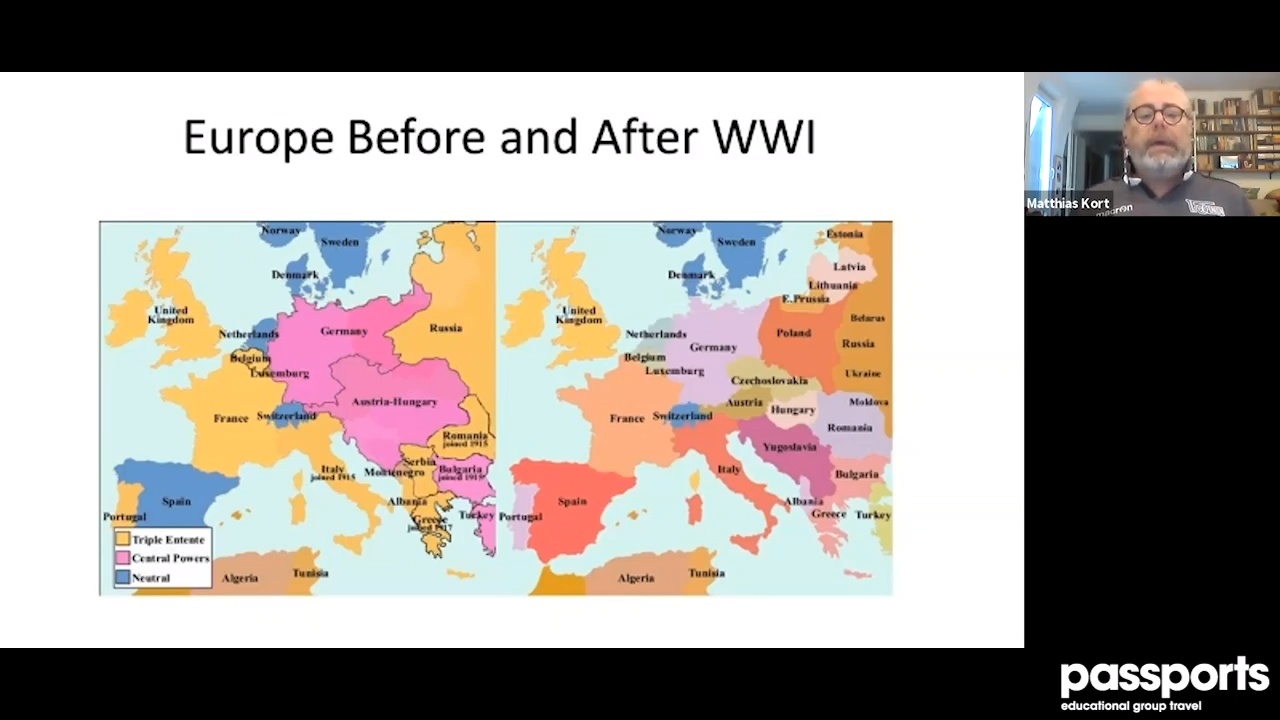
Prague – A Historical Center of Europe — Passports Tour Director lecture
Matthias KortGermanyOtherHistory

Prague – A Historical Center of Europe

As a capital of a kingdom for 800 years, the home of one of the oldest universities in Europe (founded 1348), as a center of Jewish life and culture till today, a cradle for Reformation in the Christian church from the 15th to the 17th century, a place of revolution against a brutal dictatorship in 1968 - till the MUST-SEE tourist hot spot today – Prague has a lot to offer!

Watch lecture
From our blog

Blog posts about Czech Republic

See all →
Europe’s Most Beautiful Libraries and Bookstores
destinations

Europe’s Most Beautiful Libraries and Bookstores

Europe's most stunning libraries and bookstores span Dublin's Long Room to Paris's Shakespeare and Company — each a landmark of architecture, history, and literary culture

Read post
The Best European Cities for Art Lovers
destinations

The Best European Cities for Art Lovers

Europe's best cities for art lovers span from Paris's Louvre to Prague's National Gallery, covering must-visit museums, galleries, and street art scenes across 10 destinations

Read post
Top 10 Literary Destinations in Europe
destinations

Top 10 Literary Destinations in Europe

Europe's top literary destinations span ten cities, from Shakespeare's Stratford-upon-Avon to Joyce's Zurich, each offering author museums, landmarks, and cultural history

Read post
Exploring Europe’s Historical Treasures: A Guide for History Enthusiasts and Educators
destinations

Exploring Europe’s Historical Treasures: A Guide for History Enthusiasts and Educators

Europe's most historically rich cities offer student groups vivid, hands-on learning across ancient, medieval, and Renaissance eras. This guide covers Rome, Athens, Prague, Edinburgh, Florence, and Paris

Read post
Top 10 European Walking Tours for Students: A Journey Through History
destinations

Top 10 European Walking Tours for Students: A Journey Through History

Ten European walking tours ideal for student groups span Rome's ancient ruins to Hamburg's Hanseatic port, blending history, culture, and hands-on learning across the continent

Read post
travel inspiration

Living Abroad in Childhood Inspired Travel Professional's Career

Living Abroad in Childhood Inspired Travel Professional's Career - a first hand perspective from one of our own!

Read post
On the ground

Places we go

Browse all destinations →
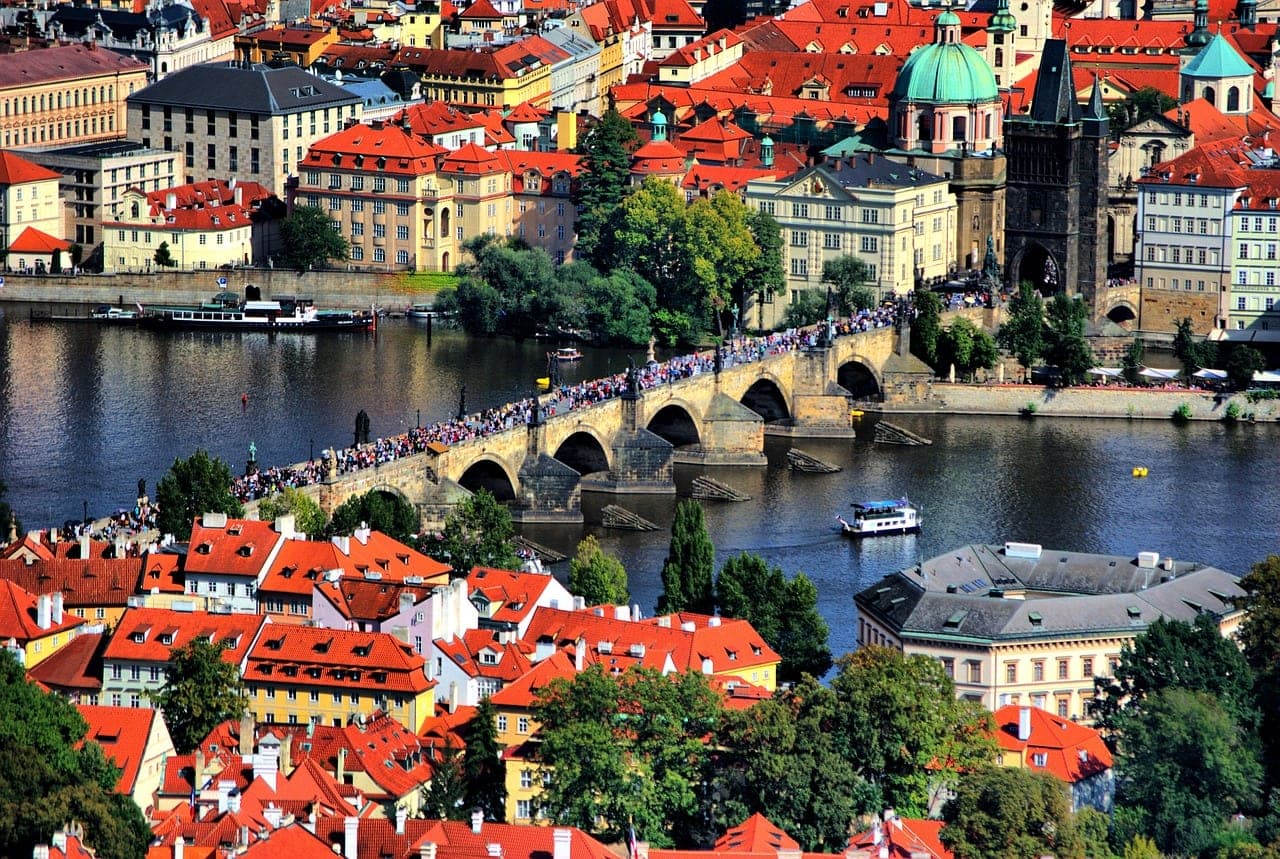
Charles Bridge over the Vltava with Prague Castle and Gothic towers at sunrise

Prague, Czech Republic

Prague student group travel guide for teachers: Charles Bridge, the Old Town, and Prague Castle on a teacher-led high school educational travel itinerary.

Take your students to Czech Republic.

Every Passports trip is built around a teacher and a group — from first itinerary sketch to the last day on the ground. Tell us what you have in mind and we’ll take it from there.

Plan a trip