Currently exempt
Travelers from 22 regions are exempt — including the US, Canada, UK, Japan, Taiwan, Australia, New Zealand, and most of Western Europe. Confirm exemption status on the K-ETA portal before you fly.

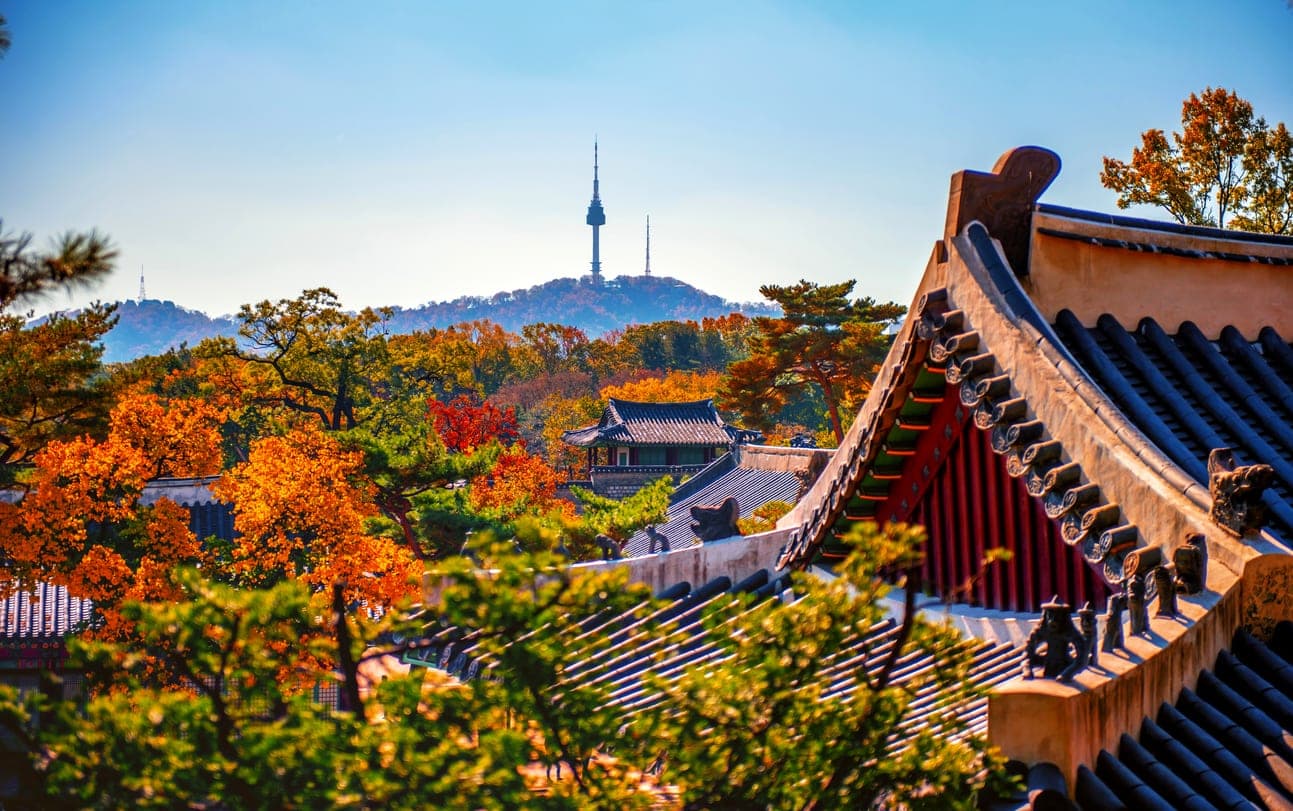
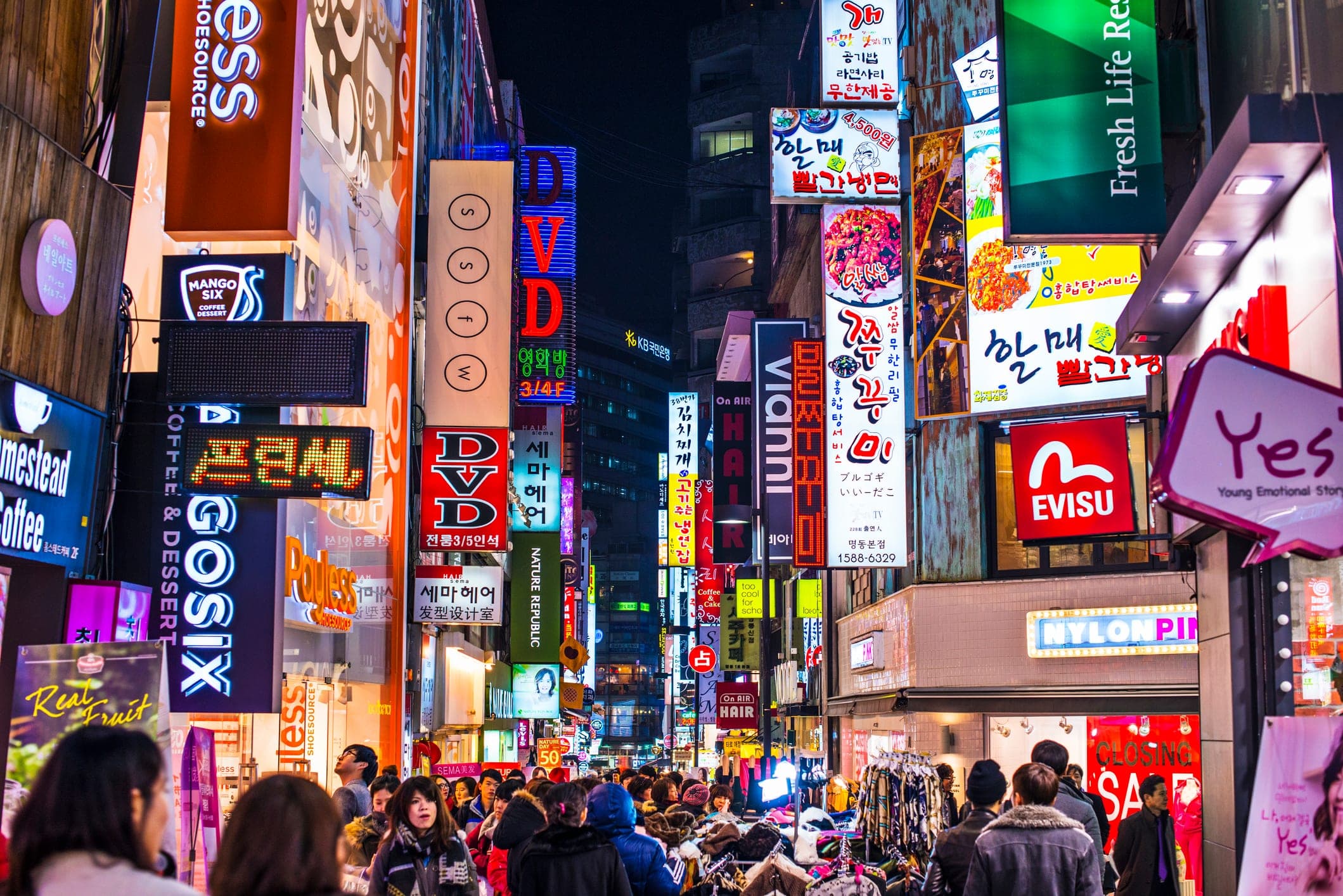
Four sharp seasons, palace gates and skyline glass, K-pop storefronts and street-food tents. Korea rewards a curious traveler — start with the entry rules below, and the rest unfolds.
Korea has a temperate continental climate, four very distinct seasons, and a quiet, modern travel infrastructure. Spring (late March–April) and autumn (October–November) are short and pleasant. Summer (June–September) is hot, humid, and includes monsoon rains. Winter (December–March) is dry and freezing with icy winds.
Your trip dates determine half of what you pack. The other half is universal — and that's what this guide covers next.
Passport first, then K-ETA (if it applies), then the e-Arrival Card. The third one is the most important — and the newest.
From 2026, every foreign national entering the Republic of Korea is required to submit the e-Arrival Card before arrival. The form is free and takes about five minutes.
Submit on the official government portal up to 3 days (72 hours) before your arrival in KST. You'll need your passport, flight number, accommodation address, and travel dates. Save the confirmation to your phone — you don't need to print it.
Korea operates an electronic travel authorization called K-ETA. For most groups Passports brings to Korea, you won't need one — but you should confirm before you fly.
Travelers from 22 regions are exempt — including the US, Canada, UK, Japan, Taiwan, Australia, New Zealand, and most of Western Europe. Confirm exemption status on the K-ETA portal before you fly.
Visa-free travelers 17 and younger or 65 and older are exempt from K-ETA. Most of the students Passports brings to Korea fall in the first category.
K-ETA costs roughly 10,000 KRW (~$9–10) and is filed on the official portal. Apply before you fly. The Tour Advisor will flag this if it applies to your group.
Latest details on the official K-ETA portal.
Korea's continental climate means hot, humid summers and dry, freezing winters. Pack to the season.
Short and pleasant. Mild temperatures. March still runs cold — pack a warm layer.
Hot and humid with a monsoon rainfall season. A waterproof rain jacket is essential.
Pleasant, generally short. The best photography season — pack layers for cool mornings.
Dry and freezing with icy winds. A proper winter coat, gloves, hat. Hand-warmer packs are sold at every convenience store.
Students should be able to lift their own luggage to overhead storage and carry it up at least one flight of stairs without help. Multiple suitcases per person are not supported.
Layers are your friend. Korean weather can shift fast — especially in spring and autumn.
You'll walk a lot. Break them in before the trip.
Especially important in summer — monsoon-season rain comes hard and fast.
Stay hydrated; refill where it's safe to do so.
Korean summer sun is no joke. Same goes for ski-bright winter glare.
Toothbrush, toothpaste, basic toiletries. Masks are still common in crowded spaces.
A small backpack for daytime — water bottle, camera, raincoat, snack. Big bag stays at the hotel.
Korea uses Type C / F plugs (round 2-pin) at 220V, 60Hz. US devices need an adapter.
For journaling, sketching, jotting down vocabulary. Old-school but underrated.
From the moment your wheels touch the runway, here's what the next 90 minutes look like.
Confirm passport, file e-Arrival Card 72 hrs out, check K-ETA exemption, pack to the season. Make sure your roaming-enabled phone is in your carry-on. (Hotel phone numbers won't be accepted as a contact.)
No COVID test required. No quarantine. Some travelers may go through a temperature check. If you're coming from a quarantine-inspection-required area, registering Q-Code in advance still applies.
Follow officer instructions and the appropriate clearance lane signage. Your e-Arrival Card confirmation should be accessible on your phone — not buried in email.
Your Tour Director knows the local hospital nearest your program location. These two large international-friendly hospitals in Seoul are widely recommended.
Korea has some of the fastest mobile internet in the world, but you have to be on a plan that works there. Three options in rough order of cost:
Korea is one of the safer destinations in the world. The numbers below are for the rare moments when something does go wrong.
112 · Police
119 · Ambulance / Fire
Your Tour Director's direct number is provided in your pre-trip materials. Save it to your phone before you fly.
For any travel emergency, call Passports at 1-800-332-7277 and press 1.
US passport holders generally don't need a visa for short-term tourist visits — but you do need either K-ETA approval or an exemption. Travelers 17 and under, 65 and older, and citizens of 22 designated regions (including the US) are currently exempt. Always verify with the K-ETA portal before flying.
Starting in 2026, every foreign national entering Korea must submit the e-Arrival Card — a free digital form on the official government portal — up to 3 days before arrival in Korea Standard Time. Save the confirmation to your phone.
Tap water in Korea is generally treated and safe by national standards, but most locals drink filtered or bottled water. Bottled water is inexpensive and widely available — your Tour Director will guide you.
South Korean Won (KRW). Korea is more card-friendly than Japan, and contactless cards work in major cities. Still, bring some won for street food, smaller shops, and transit top-ups. ATMs are widely available.
Yes, with international roaming. An eSIM (HolaFly partners with TLA on Korea trips and offers 5% off through their referral link) is the cleanest option for keeping students reachable without a roaming bill.
Every Korea itinerary is a starting point — a Tour Advisor tailors the cities, pace, and departure date around your group.
Korea blends old palace stones and new skyline glass, quiet mountain temples and loud convenience-store snacks. Embrace every moment with respect, curiosity, and enthusiasm.
Our Tour Advisors answer the phone in person. Call between 9–5 ET on weekdays, or shoot us a message any time.