- RegionEast Asia
- LanguageKorean
- CurrencySouth Korean won (KRW, ₩)
- Best seasonApr - May & Sep - Oct
- TimezoneKorea Standard Time (UTC+9)
A quick introduction
South Korea covers about 100,400 km² on the southern half of the Korean Peninsula — slightly larger than Indiana — with a population near 52 million and a capital, Seoul, whose metropolitan area packs roughly 26 million people into a Han River basin ringed by granite mountains. The country has gone from one of the poorest economies on Earth in 1953 to a top-12 GDP and a global cultural exporter inside a single human lifetime — the so-called Miracle on the Han. For a student group, the contrast between 14th-century palaces and 5G skyscrapers is the whole curricular hook.
South Korea is one of the fastest-growing destinations in our East Asia educational travel catalog, and for a lot of teachers it's the first international trip they've ever led to the region. The infrastructure makes it easy: the KTX bullet-train network reaches most of the country in under three hours, English signage covers every metro station and major sight, and the curricular fit cuts across world history, geopolitics, AP Human Geography, and the K-culture and language tracks that high school groups now arrive pre-loaded with. If you're weighing South Korea against a Japan or China alternative for a high school group trip, the on-the-ground runway here is short and the safety profile is unusually clean.
South Korea by the numbers
A week with a Passports group
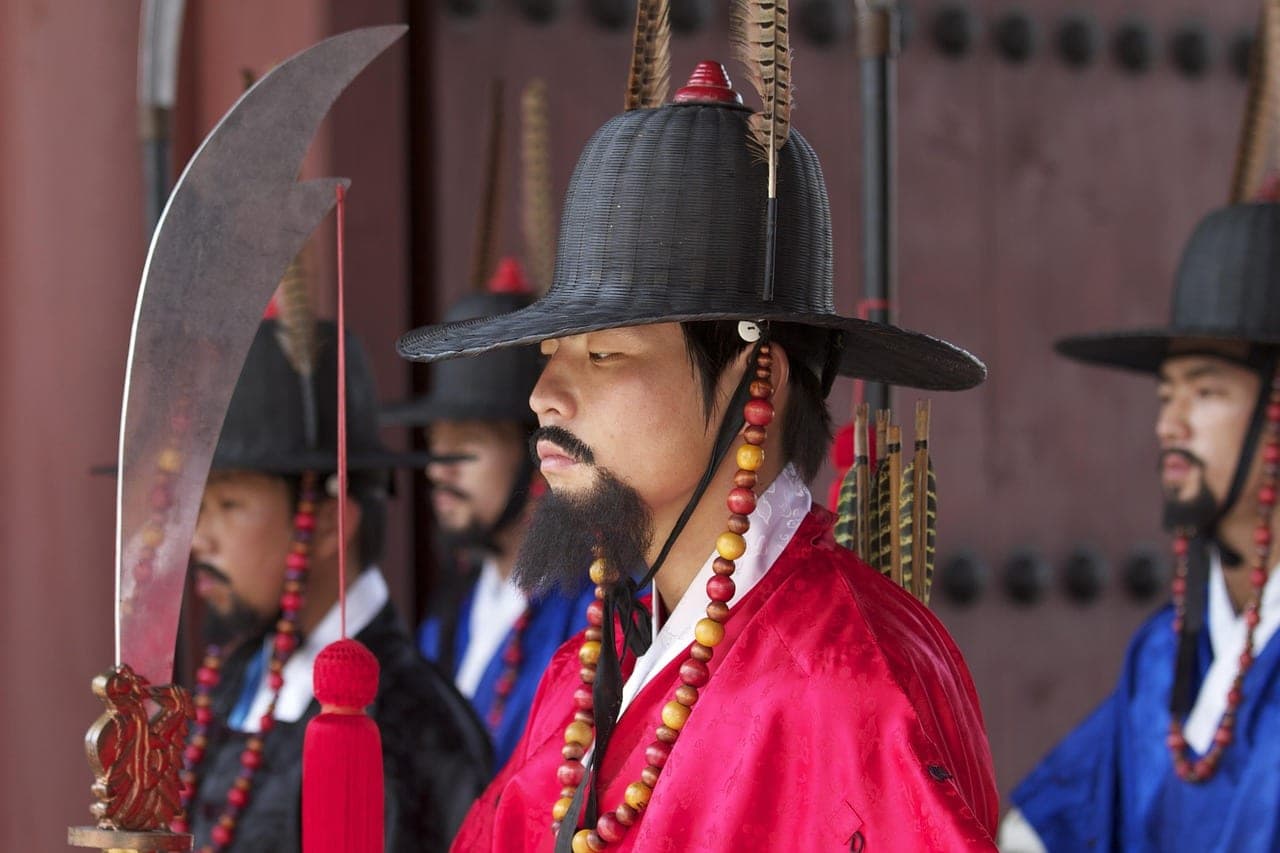
A typical Passports high school group trip to South Korea runs eight to ten days and lines up cleanly for spring break, late June, or the early-October Chuseok shoulder. Day one is Seoul: arrival at Incheon, the express train into the city, and an evening orientation walk through Insadong with the Tour Director who stays with the group for the full week. Day two opens with Gyeongbokgung Palace and the changing-of-the-guard ceremony, then on to the National Museum, Bukchon Hanok Village, and a hands-on hanbok rental for the afternoon photo run.
The middle of the week is the curricular heart. A day-trip to the DMZ and the Joint Security Area is the single most powerful classroom-linked stop our teachers report from anywhere in Asia — students walk into a North Korean-built infiltration tunnel, look across the 38th parallel from the Dora Observatory, and debrief over dinner that evening. From Seoul the group boards the KTX south to Gyeongju, the Silla-dynasty capital, for a slow-paced day among burial mounds, the Bulguksa temple, and the Seokguram grotto Buddha. Busan and the south coast close the loop with seafood markets, Beomeosa temple, and a free afternoon at Haeundae Beach that students consistently rank as the trip's best surprise.
We've run student group travel to South Korea long enough that every moving part has a backup: a DMZ tour cancelled by short-term inter-Korean tension (rare but real), an air-quality day requiring a museum pivot, a student whose dietary restrictions nobody flagged until the first Korean BBQ. Most of our Korea itineraries include a service-learning or cultural-exchange component — a calligraphy or taekwondo workshop, an English conversation session with a local high school, a temple-stay overnight on longer programs — and the educational travel piece is real. What teachers tell us after the trip is that Korea is one of the calmest day-to-day school group tours we run anywhere in the world.
Top things to see and do


When to go
- Mar - May — cherry blossoms, the spring sweet spot
Cherry blossoms (beotkkot) peak early-to-mid April from Busan up to Seoul, with the Yeouido and Jinhae festivals drawing the photo crowds. Daytime highs 12-22°C and the lowest rainfall of the year. This is the #1 spring-break window for educational travel and books out fastest — lock dates early.
- Jun - Aug — monsoon then hot, humid summer
Late June through July is jangma (Korean monsoon) — humid and genuinely wet. August is hot (28-33°C) and crowded with domestic vacationers. Summer-break student group trips work if the itinerary leans on AC-friendly museums, palace mornings, and an indoor-cultural workshop slot in the afternoon.
- Sep - Nov — autumn foliage, the other sweet spot
Typhoon risk fades after mid-September, then six weeks of crisp, dry weather and danpung (autumn leaves) peaking late October at Seoraksan and early November in Gyeongju. Our favorite alternative to spring — same temperatures, smaller crowds, no cherry-blossom hotel scrum.
- Dec - Feb — cold, dry, and ski season
Seoul winters are cold (-5 to 4°C) but mostly dry and bright; PyeongChang and the Gangwon mountains run a serious ski season. Christmas-illumination season runs city-wide through mid-January. Tight for US school calendars but a strong fit for January interim terms or a winter-break short-program.
Food and culture

Bibimbap
A warm stone bowl (dolsot) of rice topped with seasoned vegetables, a fried egg, gochujang chili paste, and your choice of beef or tofu. Mix it all together at the table — the rice crisps against the hot stone. A Gyeongju and Jeonju specialty.

Korean BBQ
Marinated bulgogi or thin-sliced galbi short rib grilled at the table, wrapped in lettuce with garlic, ssamjang, and rice. The group meal that ties the trip together — every Passports Korea itinerary includes at least one BBQ dinner.

Kimchi & banchan
Fermented napa cabbage and a constellation of free side dishes (banchan) that arrive with every meal. There are over 200 named kimchi varieties; students will quietly pick a favorite by day three.

Tteokbokki & street food
Chewy rice cakes in a sweet-spicy gochujang sauce, served at every market stall in the country. Pair with hotteok (sweet pancakes), odeng (fish-cake skewers), and a paper cup of broth. Myeongdong and Gwangjang markets are the Seoul classroom.

Bingsu
Shaved-ice dessert mounded with red bean, condensed milk, fresh fruit, mochi, and ice cream. The summer reset after a hot palace morning and the dessert students Instagram most.
Classroom connections
What to pack
- Documents
Passport valid 6+ months past travel date, two printed copies (one for the student, one for the Tour Director's file), insurance card, and the Passports group packet. Most US passport holders need a K-ETA (electronic travel authorization) approved before departure — currently waived for many short visits, but check the Korean Embassy site 60 days out.
- Clothing
Layers across every season — palace courtyards run cold even in April, KTX cars are heavily air-conditioned in summer. Modest shoulders-and-knees inside Buddhist temples; a light scarf solves most issues. Korean street style is sharp — students will up their game by day three on their own.
- Footwear
Slip-on shoes are a quiet must — students will take them off at temples, traditional restaurants, and any hanok homestay. Add broken-in walking shoes for 15,000-step palace days. Skip flip-flops; Seoul sidewalks are unforgiving in summer rain.
- Rain gear
A packable rain jacket and a small umbrella — late-June jangma and early-autumn typhoons are real. Every convenience store sells a 3,000-won clear umbrella if the group gets caught out between subway stops.
- Tech
South Korea uses Type C / F plugs (European two-prong) at 220V — bring a universal adapter and check that hair dryers and curling irons are dual-voltage. Pocket-Wi-Fi or a KT/SKT eSIM preloaded before departure beats US carrier roaming. Public Wi-Fi is genuinely fast and ubiquitous.
- Extras
A small gift if the itinerary includes a homestay or school exchange (US team-logo gear lands well), a reusable water bottle (tap is safe but most Koreans drink filtered or bottled), KF94 face masks for high-pollen or yellow-dust spring days, and a portable battery for long temple-and-palace days.
Is it safe?
Yes. South Korea is one of the safest countries on Earth for travelers, and the US State Department keeps it at Level 1 ("exercise normal precautions") — the lowest advisory level, the same rating as Japan, Switzerland, or Norway. Violent crime against travelers is exceptionally rare; lost phones and wallets routinely come back through the Seoul Metro Lost & Found. The risk profile to brief parents on is mostly natural — typhoons in September, occasional yellow dust and PM2.5 air-quality days in spring — plus the symbolic North Korea question, which on the ground translates to a structured DMZ tour with a vetted operator and not much else.
On a Passports teacher-led trip, the group never rides public transport solo, never splits up without a defined meetup time on the Tour Director's phone, and is never out of reach of a named Tour Director who stays with the group 24/7 for the full trip. We operate a 24/7 emergency line staffed out of our Boston HQ, monitor air-quality bulletins daily and pivot itineraries when the AQI spikes, and maintain pre-vetted English-speaking medical contacts in Seoul, Busan, and every region we visit. For most teachers leading school group tours to Korea, the day-to-day logistics feel calmer than a US domestic field trip.
Practical tips
- T-money is the universal tap card
Buy a T-money card at any convenience store on day one and load it at the kiosk. It covers Seoul Metro, buses nationwide, most taxis, and convenience-store snacks. Cards are accepted everywhere else; cash is rarely needed beyond a small palace-entrance buffer. Every Passports teacher-led trip pre-loads T-money for the group.
- The KTX is the spine of any itinerary
Korea's high-speed rail network reaches most major stops in under three hours. Seoul to Busan is 2:40, Seoul to Gyeongju about 2:00. Reserved-seat tickets are purchased at the station or on the KORAIL app; the Tour Director handles platform routing. Trains leave on the minute — no late boarding.
- Etiquette: bow, two hands, no shoes inside
A small bow is the default greeting. Pass and receive money, business cards, and gifts with two hands or with the right hand supported at the wrist. Shoes off at temples, traditional restaurants, and homestays. No tipping in restaurants — the service charge is built in and tips actively confuse staff.
- English signage is excellent — Korean basics still help
Every metro station, museum, and major sight signs in Korean, English, Japanese, and Chinese. Younger Koreans handle English well; older shopkeepers may not. A 30-minute Hangul workshop on day one (the alphabet is genuinely teachable that fast) pays off every time a student reads a menu.
- Café culture and convenience stores run the day
Korea has more cafés per capita than any country on Earth and the 24-hour convenience store (CU, GS25, 7-Eleven) is a legitimate meal stop — kimbap, ramyeon, triangle gimbap, and a hot-water kettle on the counter. Build in unstructured café time; students use it.