- RegionNorth Africa
- LanguageArabic & Berber (French widely spoken)
- CurrencyMoroccan dirham (MAD)
- Best seasonMar - May & Sep - Nov
- TimezoneWestern European Time (UTC+1)
A quick introduction
Morocco is 446,550 km², about the size of California, with a population of roughly 37 million and a capital — Rabat — that most Americans confuse with Casablanca, the larger commercial city up the Atlantic coast. The kingdom sits where Atlantic, Mediterranean, Sahara, and Atlas Mountains all meet on a single map, and it has nine UNESCO World Heritage sites packed into a country a US group can comfortably circle in nine days. Arabic and Berber are the two official languages, French is the working second language of business and education, and a working high-school Spanish vocabulary will get a student further than expected in the north.
Morocco is the most-requested non-European destination on our catalog, and for a lot of teachers it's the first time they've taken a group outside the EU comfort zone. The curricular fit is unusually deep: world history (Roman Volubilis, the Almohad and Saadian dynasties, French and Spanish colonial overlays, the 2011 constitutional reforms), comparative religion (a Muslim-majority society with a long Jewish history visible in every former mellah), architecture and design (the geometry of zellige tile and Moorish courtyards), and Arabic / French language all line up on a single itinerary. For a high school group trip that needs to read as educational travel rather than recreational, Morocco delivers the classroom-to-ground connection in nearly every section of the day.
Morocco by the numbers
A week with a Passports group
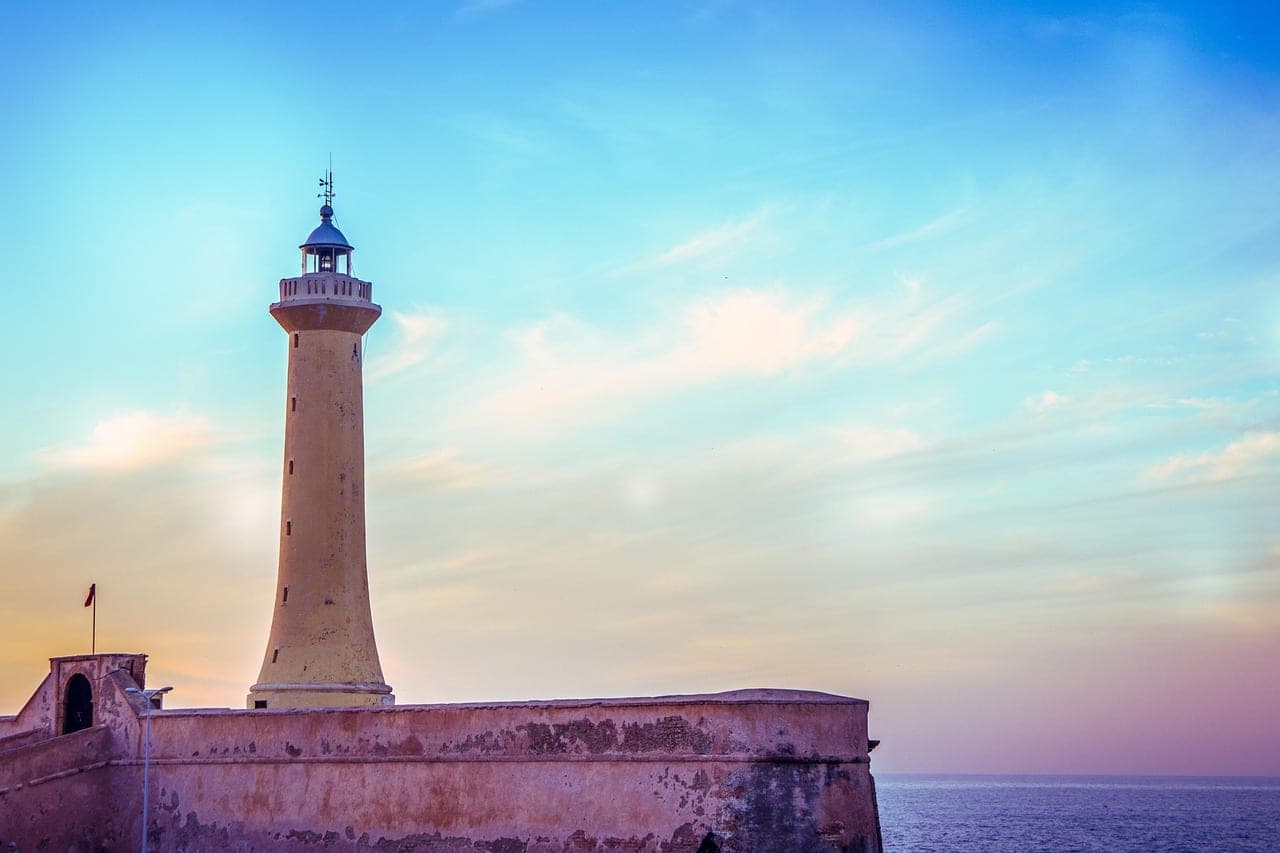
A typical Passports high school group trip to Morocco runs eight to ten days and tends to fly into Casablanca (Mohammed V is the country's main long-haul gateway) or Marrakech direct from Europe. Day one is a slow arrival day: a guided walk past Hassan II Mosque on the Casablanca corniche, dinner with the Tour Director who stays with the group for the full week, and an early lights-out for jet lag. Day two the group boards a private coach for Rabat — the capital, the Hassan Tower, the Kasbah of the Udayas overlooking the Atlantic — then on to Fez for two nights inside the medieval medina.
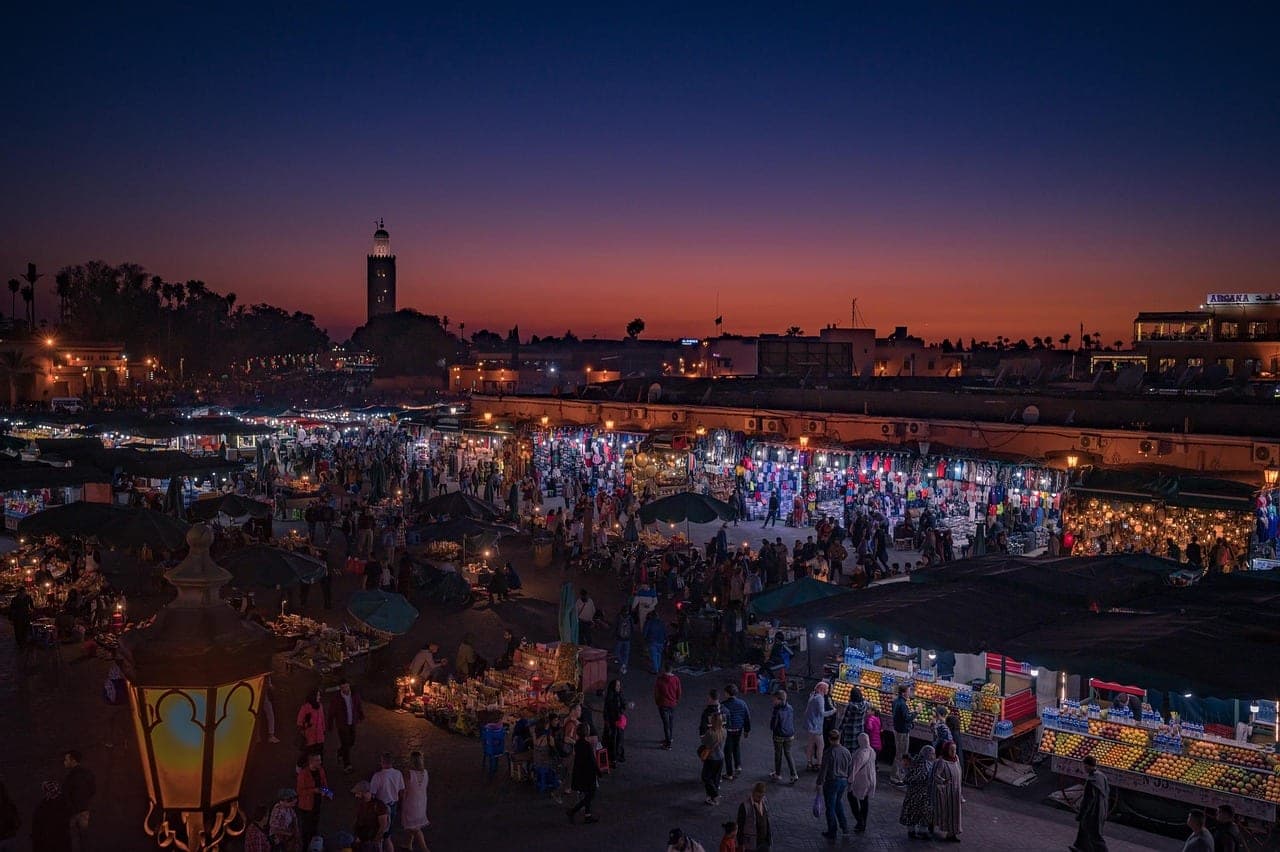
The middle of the week is the curricular heart of the trip. A full Fez medina day with a licensed local guide threads the Karaouine University (founded 859, often cited as the oldest continuously operating university in the world), the tanneries, the artisan cooperatives, and a working madrasa with the geometric tilework students keep photographing. A driving day south crosses the Middle Atlas through cedar forest and Berber market towns, lands at a Sahara-edge camp for camel trekking and a star-program night that every group ranks as the trip's standout, then climbs back over the High Atlas via Aït Benhaddou (the kasbah from every desert film you've seen) into Marrakech for the last two nights.
We've run student group travel to Morocco for enough years that every part of the operation has a backup plan: a medina alley that closes for a wedding, a sandstorm that bumps the desert overnight, a student who's never haggled and freezes in a souk. Every itinerary includes at least one service-learning or homestay-adjacent component (Berber village lunches, an artisan-cooperative workshop, or an Arabic-language session with a Rabat partner school on longer programs). The educational travel piece is real, but the part teachers remember at the post-trip parent meeting is that the logistics — the police-licensed local guides, the modesty briefings, the women-on-the-aisle-near-the-Tour-Director coach seating — simply work.
Top things to see and do


When to go
- Mar - May — spring sweet spot
The single best window for school groups. Daytime highs 20-26°C in Marrakech and Fez, the Atlas snowmelt is feeding green valleys, and the Sahara is hot but tolerable in the daytime and cool at night. The April spring-break and Easter window is our most-booked Morocco departure block.
- Jun - Aug — hot, but workable for summer programs
Marrakech and the Sahara hit 38-42°C; the coast (Casablanca, Rabat, Essaouira) stays in the high 20s. We re-pace itineraries to morning medina walks and afternoon riad time. The summer-break window suits longer educational travel itineraries that combine the coast with one inland stop.
- Sep - Nov — second sweet spot
The other shoulder season. Temperatures back into the 20s, the desert nights warm enough that a fleece and a sleeping bag are plenty, and the souks settle back into a normal rhythm after the summer. A great fit for a fall-break high school group trip.
- Dec - Feb — coolest and wettest
Rabat and Fez can drop to 5-8°C overnight; the High Atlas gets real snow and the ski station at Oukaïmeden opens. Daytimes are mild but the riads are stone-cold without heating. Tight fit for US school calendars; works for a January interim term if the group brings real layers.
Food and culture

Tagine
The conical clay-pot stew that gives the dish its name. Most common variants on a group menu: chicken with preserved lemon and olives, lamb with prunes and almonds, or a vegetable-only version that solves most dietary restrictions in one move.

Couscous
Steamed semolina with seven vegetables and a meat broth, the traditional Friday lunch after midday prayers. If your group is in-country on a Friday, the riads will serve it — and the students will remember it.

Harira
The tomato-lentil-chickpea soup eaten to break the daily fast during Ramadan and on cold winter evenings the rest of the year. Cheap, filling, and a quiet way to introduce the religious calendar to a class.

Mint tea
Green tea brewed strong with fresh spearmint and a startling amount of sugar, poured from a meter above the glass to aerate it. Offered constantly — at the riad, at every souk negotiation, at every Berber-village stop. Refusing is the rude move.

Pastilla
A sweet-savory phyllo pie traditionally made with pigeon (now usually chicken), almonds, eggs, and dusted with cinnamon and powdered sugar. The dish that makes students ask "wait, is this dinner or dessert?" — a useful entry point into Andalusian culinary history.
Classroom connections
What to pack
- Documents
Passport valid 6+ months past travel date, two printed copies (one for the student, one for the Tour Director's file), insurance card, and the Passports group packet. No visa required for US citizens staying under 90 days; entry stamps are issued on arrival.
- Clothing — modesty matters
Morocco is a Muslim-majority country and the medinas are working neighborhoods, not theme parks. Shoulders and knees covered for everyone (students and chaperones, all genders). A lightweight scarf for women lets you adapt fast for mosque courtyards and conservative villages. Loose, breathable layers beat tight or transparent fabric in the heat — and they read as respectful at every stop.
- Footwear
Broken-in walking shoes with grip — Fez and Marrakech medina stones are uneven and worn slick. A second pair (sandals or slip-ons) for the riad and the desert camp. No flip-flops for city walking; the souks are wet in the leather quarter and slippery in the dyers' street.
- Tech
Type C and E plugs (the European two-round-pin) — bring an adapter. 220V, so US phone and laptop chargers are fine. A portable battery is worth its weight on long medina days. T-Mobile and Google Fi work; other carriers should pick up an Inwi or Maroc Telecom prepaid SIM at the airport for under $10.
- Extras
Sunscreen and a brimmed hat for the Sahara, a fleece for desert nights and Atlas elevations, motion-sickness tablets for the mountain switchbacks, hand sanitizer, a refillable bottle (we provide bottled water on the coach — tap is not recommended for drinking), and a small headlamp if the itinerary includes the desert camp.
- Cash — a real category here
Morocco is more cash-based than students expect. Dirhams are a closed currency (you can't get them outside the country), so everyone exchanges at the airport on arrival. Bring small USD bills as a backup; ATMs are reliable in the four big cities and scarce on the desert leg.
Is it safe?
Yes. Morocco is currently a US State Department Level 2 ("exercise increased caution," primarily due to the risk of terrorism — the same advisory level as France, Germany, and the United Kingdom). Violent crime against foreign visitors is rare; the realistic on-the-ground risk profile is petty theft and aggressive sales pressure in the medina souks, neither of which is new for any teacher who has run a school group through a major European city. The 2023 High Atlas earthquake affected mountain villages south of Marrakech; reconstruction is well underway and our routes use cleared, government-certified roads only.
On a Passports teacher-led trip the group is never on public transport, never splits up without a defined meetup time, and is accompanied at every medina stop by both a US-trained Tour Director and a Moroccan-government-licensed local guide whose job is partly navigation and partly running interference with over-eager vendors. We operate a 24/7 emergency line out of our Boston HQ, keep parents on a daily-update channel, brief every group on modesty norms and call-to-prayer expectations on night one, and seat female students near the Tour Director on the private coach at every transfer. For most teachers leading school group tours to Morocco, the on-the-ground experience reads as notably more managed than a domestic field trip — which is the standard Passports holds itself to on every educational tour we operate.
Practical tips
- Cash culture, small bills, and tipping
Outside the four big cities, dirhams in cash are the default currency. Keep small bills (10, 20, 50 MAD) for tea stops, bathroom attendants, and the rooftop tip plate. The Tour Director runs a group tipping kitty for guides and drivers so students don't have to calculate it.
- Medina navigation is a skill
Fez and Marrakech medinas have no street grid and GPS gives up inside the walls. Stay with the licensed local guide; if a student gets separated, the standing rule is to ask a shopkeeper (not a stranger on the street) to call the guide using the number on the back of every Passports ID card.
- Ask before you photograph people
Especially women, especially in the Berber villages, especially at the tanneries. A small dirham tip is sometimes expected for a portrait. Landscapes, food, doors, and tilework are all fair game and make better photos anyway.
- Mint tea is a yes
Refusing a glass of tea — at a riad, at a workshop, at a Berber house — is the closest thing to a faux pas your group can commit. Brief students before day one. Three sips is plenty if they don't want the whole glass; the gesture is the point.
- French opens more doors than English
Working professionals in hotels, restaurants, and tourism speak French as the second language; English fluency drops outside the Marrakech tourist core. A high school French student will be mid-conversation by day three. Five Arabic phrases — salaam alaikum, shukran, la shukran, bismillah, inshallah — go a surprisingly long way.