- RegionNorte, Portugal
- LanguagePortuguese
- CurrencyEuro (€)
- Best seasonMay - Jun, Sep - Oct
- TimezoneWestern European Time (UTC+0)
A quick introduction
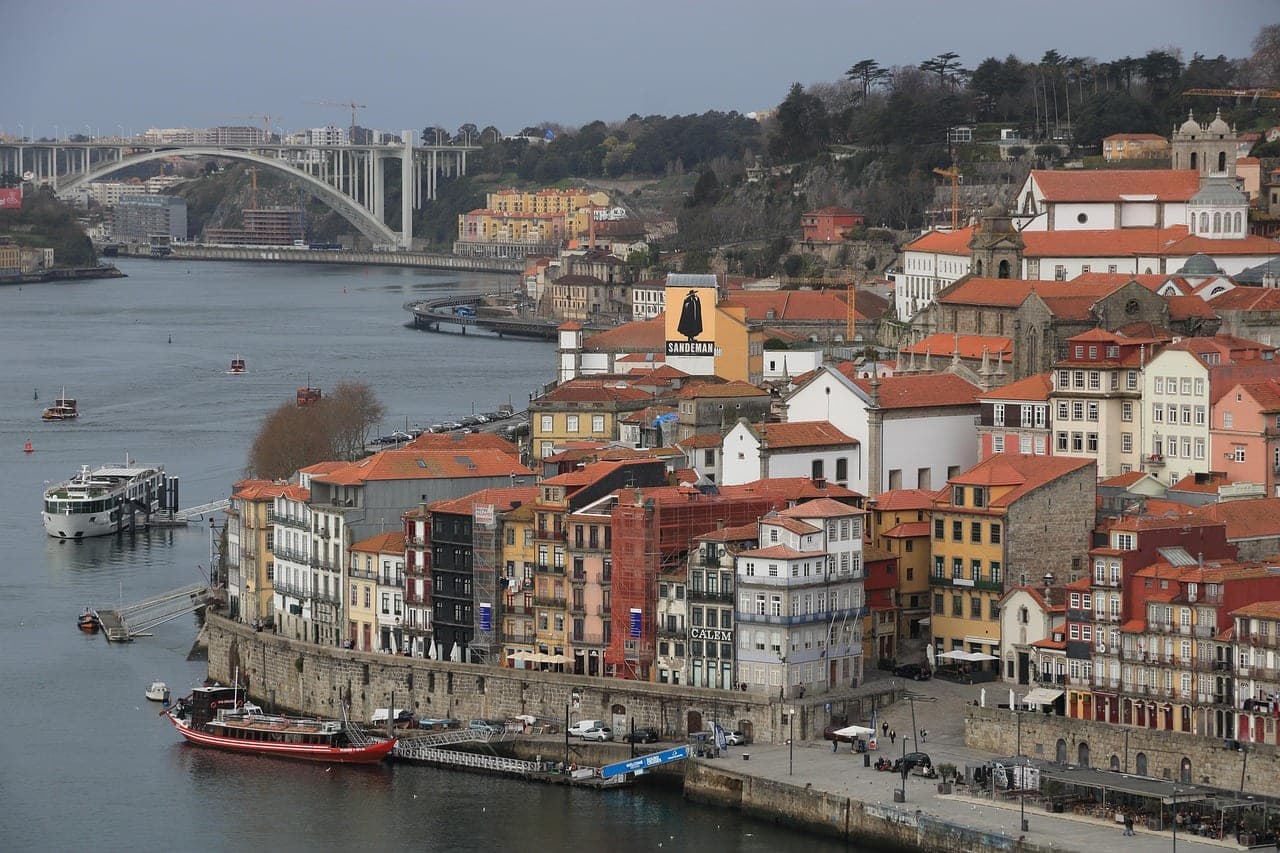
Porto is Portugal's second city — about 1.7 million in the metro area — and the country's industrial, commercial, and creative counterweight to Lisbon. It sits at the mouth of the Douro, the river that drains the upstream port-wine country, and the historic center on the north bank stares directly across the water at the port lodges of Vila Nova de Gaia on the south bank. Porto is older than the country it gave its name to: "Portugal" is a contraction of Portus Cale, the Roman-era port settlement on this stretch of river. The historic center has been a UNESCO World Heritage Site since 1996.
For a student group, Porto pairs three layered curricular angles in a tight footprint: maritime trade history (the port wine trade was effectively run by British merchants from the 1700s onward), Portuguese tile and Beaux-Arts architecture, and a working contemporary food scene that's easier to engage with than Lisbon's. Porto is the standard northern leg on a Portugal educational travel itinerary — typically three days bracketing a Douro Valley day trip — and it gives a high school group trip a working-city counterpoint to Lisbon's capital polish. Costs run roughly 15-20% lower than Lisbon, which stretches a teacher-led trip's daily budget noticeably further.
Top things to see and do


When to go
- May - Jun — late spring sweet spot
The strongest window for educational travel to Porto. Daytime highs climb from 20°C in May to 24°C in June, the rains taper off, and the São João festival on June 23-24 turns the entire city into an open-air street party (plastic hammers and grilled sardines included). Crowds build but don't overwhelm.
- Jul - Aug — warm and busy
Daytime highs 24-28°C — cooler than Lisbon thanks to the Atlantic breeze — and the city fills with European visitors. Workable for summer student groups.
- Sep - Oct — harvest and shoulder gold
The best window for teacher-led tours that can move on the school calendar. Air temperatures drop to 20-24°C, the Douro Valley grape harvest (vindima) runs through September into October, and the light along the river turns gold by 5 PM. A September high school group trip almost always pairs Porto with the upriver Douro for this reason.
- Nov - Mar — wet Atlantic winter
Porto is the rainiest major city in Iberia — 12-15 rainy days a month November through February, daytime highs 13-15°C, and the Douro running high and brown. Indoor stops (Bolsa Palace, Clérigos church, port cellars, São Bento) carry the day. A reasonable choice for interim-term school group tours that are weather-flexible.
Food and culture

Francesinha
Porto's signature sandwich: layers of cured ham, sausage, steak, and melted cheese on bread, smothered in a beer-and- tomato sauce, often topped with a fried egg and surrounded by fries. Invented in the 1960s; locally a one-person meal, sensibly a split-between-two for a student.

Bacalhau à Gomes de Sá
Salt cod baked with potatoes, onions, olives, and hard-boiled egg — invented in 19th-century Porto by the merchant Gomes de Sá. The classic city version of bacalhau, more accessible to a first-time-eating-cod student than the shredded brás style.

Tripas à moda do Porto
Tripe and white-bean stew that gives Porto residents their nickname tripeiros ("tripe-eaters"). The dish dates to 1415, when the city sent its meat to Henry the Navigator's fleet and kept the offal. A culture-and-history stop more than a first-pick lunch.

Port wine
The fortified wine that gave the city its global identity. Aged in oak in the Gaia lodges across the river; ruby, tawny, vintage, and white styles each tell a different chapter of the trade. Tasting is for legal-age students only; the cellar tour history is for everyone.

Pastel de nata
The national custard tart — caramelized top, puff-pastry shell, custard set just enough to hold a spoon. Manteigaria on Rua de Santa Catarina runs the most consistent Porto version; every group goes back for a second one.
What to pack
- Documents
Passport valid 6+ months past travel date, two printed copies (one for the student, one for the Tour Director's file), insurance card, and the Passports group packet. No visa required for US citizens on a stay under 90 days in the Schengen area.
- Clothing
Layers and a real waterproof outer shell. Porto's Atlantic microclimate runs cooler and wetter than Lisbon year-round; even May and September have rain risk. Modest cover (shoulders and knees) for the Sé Cathedral, Igreja do Carmo, and any church visit.
- Footwear
Serious, broken-in walking shoes with deep grip. Porto's calçada portuguesa (hand-cut limestone cobbles) is polished slick by foot traffic and treacherous in the rain, and the Ribeira-to-Clérigos climb is a steep one. Do not buy new shoes for the trip.
- Rain gear
A compact, packable umbrella and a real waterproof jacket November through April, and not a bad idea even May and October. Porto's rain comes in fast bands off the Atlantic; a midmorning sunshine slot can flip to soaking by lunch.
- Tech
Portugal uses Type C / F plugs (European two-prong) — bring a universal adapter. A portable battery covers monument-heavy Ribeira-to-Gaia walking days. T-Mobile and Google Fi work out of the box; others should grab a MEO, NOS, or Vodafone eSIM on arrival at OPO.
- Extras
A small daypack for monument days, a reusable water bottle (Porto tap is excellent), sunscreen and sunglasses (Atlantic UV runs higher than US travelers expect), and a light scarf that doubles as a church shoulder cover.
Is it safe?
Yes — Portugal is one of the safest countries a school group can travel to, and Porto is consistently ranked the safest big city in the country. The US State Department rates Portugal at Level 1 ("exercise normal precautions"), the lowest of its four advisory tiers, an assessment it rarely hands out anywhere in Europe. The Global Peace Index has ranked Portugal in the world's top seven safest countries for a decade running. Violent crime against travelers is genuinely rare in Porto; the practical risk is minor pickpocketing in the Ribeira tourist crush at sunset and on the busiest sections of Rua de Santa Catarina.
On a Passports teacher-led trip, a Tour Director travels with the group every day, runs a pickpocket-awareness briefing on the first evening, and every transfer (including the upriver Douro Valley day trip) runs on a private coach. Every hotel is pre-vetted for 24-hour reception and secure room storage. We operate a 24/7 emergency line out of Boston, keep parents on a daily-update channel, and have English-speaking medical contacts in every city we visit. For most teachers running their first student group travel to Portugal, a Porto school group tour feels easier to manage than a domestic field trip.
Practical tips
- Eurozone and contactless by default
Portugal is on the euro and contactless card and phone payment is near-universal, even at the smallest tasca. A small amount of cash helps at the Bolhão market and the odd Ribeira cervejaria, but students rarely need to change money beyond the airport.
- Tipping is low-key
Portuguese tipping culture is softer than the US — rounding up to the next euro at a café, 5-10% at a sit-down dinner for good service. The couvert (bread, olives, cheese brought to the table) is not free; send it back if the group doesn't want it.
- Hills and the Dom Luís deck
Porto is properly hilly — the Ribeira-to-Clérigos climb is a real workout. The Dom Luís bridge has a pedestrian upper deck that doubles as a metro line; walking across the upper deck from Sé Cathedral over to the Mosteiro da Serra do Pilar is the cleanest way to swap riverbanks for sunset.
- Portuguese first, English second
English is widely spoken in central Porto, almost universally under 40, but the polite move is still to open in Portuguese: bom dia, boa tarde, obrigado (male) / obrigada (female). Students who try get visibly warmer service.
- Lean on your Passports Tour Director
Every Passports educational travel itinerary to Portugal includes a full-time Tour Director who handles coach logistics, restaurant reservations, the Livraria Lello timed-entry, and the Douro Valley day-trip pacing. Teachers lead the learning; we run the ground operations.